
No More Wet Filament! Top Filament Dryers from Sunlu, Creality, Bambu Lab & More

We break down the best active drying systemsfrom budget-friendly units to automatic materials stations—to keep your filament in perfect printing shape.
Although many print quality issues can be solved by tuning your slicer settings or fixing your printer’s hardware, sometimes the culprit is invisible: moisture in your filament. When water molecules bond to the polymer chains in your 3D printing filament, you’ll notice telltale signs during printing:
- popping and hissing sounds as trapped moisture vaporizes in the hot end
- visible stringing between parts
- rough or blistered surface finishes
- fuzzy surfaces
- brittle parts
- poor layer adhesion
- clogs that halt your print entirely.

Some materials are more vulnerable than others: hygroscopic filaments like nylon (PA), PETG, TPU, and PVA absorb moisture rapidly, sometimes within hours of exposure to humid air, while even “stable” materials like PLA will eventually succumb to moisture over time.
If you’re experiencing these frustrating problems, a filament dryer is the solution. In fact, more 3D printer makers today, such as Bambu Lab and Anycubic, have integrated filament-drying functions into their material-handling units.
These specialized devices use controlled heat (typically between 40°C and 85°C depending on the material) to break the molecular bonds between water and polymer, driving moisture out of the filament without damaging it.
Modern dryers have evolved far beyond simple heated boxes. Today’s units feature active air circulation for even drying, precise temperature control with material-specific presets, humidity sensors to monitor progress, and the ability to print directly from the dryer to maintain optimal conditions throughout your print job. Some advanced models even offer annealing capabilities to strengthen printed parts or inline drying systems that condition filament on-demand as you print.
However, drying filament is only half of the battle—keeping it dry matters just as much. That’s why many manufacturers now offer dual-purpose solutions or companion storage systems. After drying, filament immediately begins reabsorbing moisture from the air, so sealed storage with desiccant or continuous low-level heating helps maintain its desired dry condition until you’re ready to print.
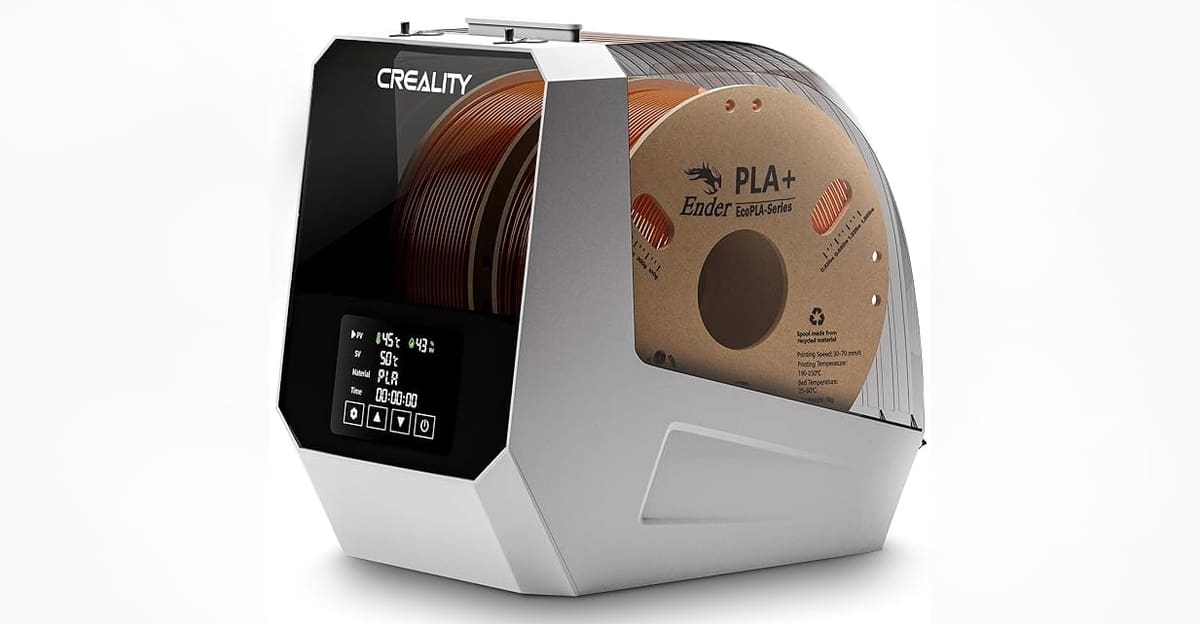
Yes, you can dry filament in your oven, a food dehydrator, and other DIY solutions we cover in “How to Dry Filament: PLA, ABS, Nylon & More,” but here we assume, you’re in the market for the most reliable, convenient, and efficient solution: a dedicated filament dryer.
Below, we explore some of the best filament dryers on the market, from budget-friendly single-spool options to professional multi-chamber systems capable of handling engineering-grade materials.
*Prices are approximate manufacturer or retailer list prices in US dollars.
What We’ve Changed Since The Last Update
We’ve added Sunlu’s FilaDryer S4 Pro, Sovol’s SH03, and PrintDry’s Pro 4. We’ve also included Polymaker’s PolyDryer Box XL, which can accommodate spools weighing up to 3 kg, and replaced the Anycubic ACE Pro with the Anycubic ACE 2 Pro. The Elegoo H1 HT and Sunlu AMS Lite are also included. Although they have not yet been released, both are available for preorder.

What to Look for in a Filament Dryer
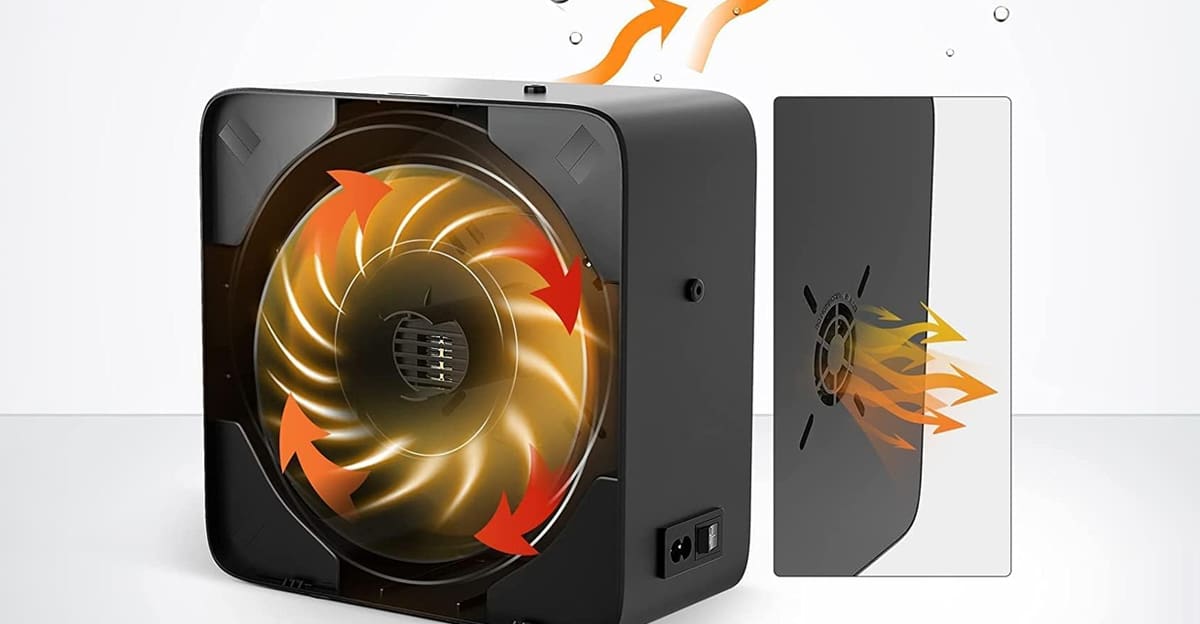
A filament dryer is a small, heated enclosure designed to pull moisture out of 3D printer filament so it behaves as if it were new and dry. A dedicated dryer gently warms the spool for several hours while giving moisture a way to escape, often with a fan, vents, and sometimes desiccant to speed things up, and many models let you print directly from the chamber so filament stays dry the entire time.
People often use “dryer” and “dry box” interchangeably, but there is a useful distinction: a filament dryer actively removes moisture, while a dry box is mainly for keeping already‑dry filament from getting wet again.
Dry boxes are usually sealed containers with desiccant and feed‑through holes so you can print from storage; they are excellent for long‑term humidity control but are slow or ineffective at rescuing a badly saturated spool. By contrast, powered dryers run higher temperatures for set periods, with timers, temperature controls and airflow specifically tuned to “bake out” moisture, and some high‑end units add profiles for different plastics.
- Temperature Range & Control
Although PLA often drys well around 40-50 °C, some filaments, such as TPU, benefit from higher temperatures (≈ 70–80 °C). Good dryers let you adjust the temperature precisely (not just “low / high”), so you can match the drying profile to the filament type. - Airflow & Moisture Removal (not just heating)
A dryer should actively remove moisture, which means good air circulation, ventilation, or airflow design so the humid air doesn’t linger inside the chamber. Without active airflow, you risk drying unevenly or not drying effectively, which may still result in printing problems (moisture-related defects). - Humidity Monitoring
Some dryers include humidity monitors or moisture sensors called hygrometers. These helps you know whether the filament is truly dry, not just warmed up. - Spool Capacity & Compatibility
Consider how many spools the dryer can hold (single-spool vs. multi-spool). If you often print with many filaments or with a multi-printer setup, a multi-spool dryer can save time. Also check filament sizes supported since many dryers support common 1.75 mm, but if you use unusual diameters, make sure the dryer is compatible. For convenience: some dryers let you ’print directly from the dryer’ (i.e. filament feeds from the dryer into the printer), which helps prevent re-absorption of moisture mid-print. - Usability Features: Timer, Noise, Safety
A timer lets you run the dryer for the appropriate duration (many filaments require hours of drying). A clear display helps you set temperature, humidity, time easily, which is handy if you dry different materials or run multiple jobs. Also consider the noise level (especially for home use), power consumption, and safety certifications, especially if you dry overnight or frequently. - Storage vs. Drying — Does it do both?
Understand the difference: a dryer actively removes moisture via heat and airflow, while a dry box or sealed container (with desiccant) simply keeps filament from absorbing more moisture. If you want long-term storage and printing readiness: a system that combines drying + sealed storage (or pass-through to printer) is often ideal.
Sunlu FilaDryer E2
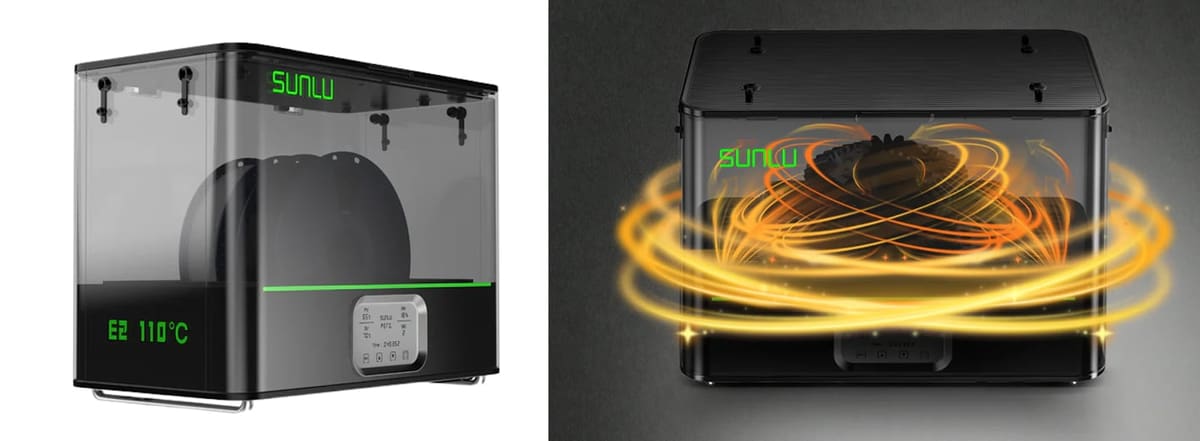
The Sunlu FilaDryer E2 is a pioneering dryer designed for engineering-grade materials, reaching temperatures up to 110 °C, among the highest in the desktop class. This makes it ideal for demanding filaments like PA-CF, PA-GF, and PC. The 500 W PTC heating system reaches 70 °C in 30 minutes and features 360 ° hot-air circulation for even drying.
In addition to its high-temperature drying, what makes the E2 unique is its annealing capability, enabling you to heat-treat finished prints to improve their mechanical strength. The dual-chamber insulation keeps the exterior cool (below 60 °C) even at maximum temperature. It holds two 1 kg spools or one 3 kg spool (up to Ø250 ×153 mm) and includes built-in preset settings for common materials. The sealed design with silicone gaskets and magnetic closures prevents moisture reabsorption. Compatible with 1.75 mm and 2.85 mm filaments, the E2 includes intelligent protection with automatic shutdown if overheating occurs.
For users who need greater capacity, Sunlu offers the FilaDryer S4 Pro. It can dry up to four 1 kg spools simultaneously and features two independently controlled heating zones, enabling different materials to be dried at separate temperatures and durations. With a maximum temperature of 85 °C, it is suitable for common filaments as well as many moisture-sensitive engineering materials. Its large capacity makes it particularly useful for multicolor printing systems, print farms, or users running several printers at once.
Sunlu also offers the FilaDryer S2, a more affordable option with 360° heating, temperatures from 35-70 °C, and a large touchscreen with preset drying parameters for common materials. It can work with all mainstream 3D filament brands and all standard filament diameters of 1.75 mm, 2.85 mm, and 3 mm.
Many hobbyists using one spool at a time will be perfectly happy with the S2. The S4 Pro is better suited to multicolor printing and high-volume workflows, while the E2 is the strongest option for users working regularly with engineering-grade plastics that require higher drying temperatures.
Creality Space Pi X4
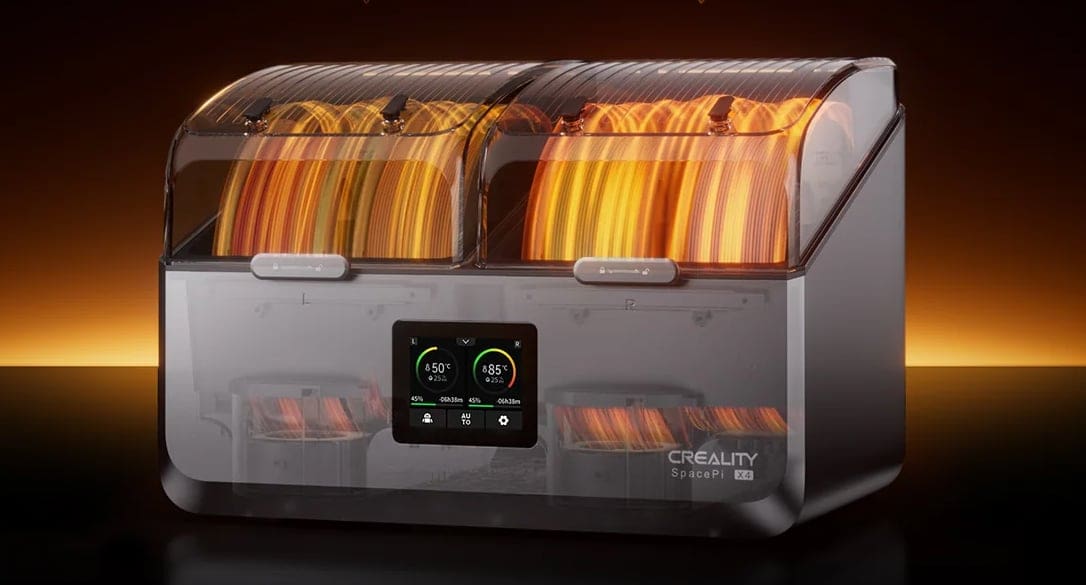
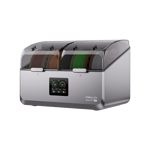
Creality’s Space Pi X4 is a four‑spool “command center” for filament, with two independent heated chambers that can dry and feed up to four 1 kg spools at once. Each chamber has its own 200 W PTC heater (400 W total), reaching temperatures up to 85 °C, which Creality says is sufficient for engineering filaments such as PA-CF and PATT. The dryer is aimed at multi‑printer or multi‑material setups rather than a single desktop machine.
The Space Pi X4 isn’t tied to a specific printer brand and has controls right on the unit, so feeding filament directly to a printer through a PTFE tube may require a standard compatible filament path. It can also be used as a standalone dryer.
Creality also offers single-spool and double-spool versions of the Space Pi dryer that reach 70 °C.

Polymaker PolyDryer
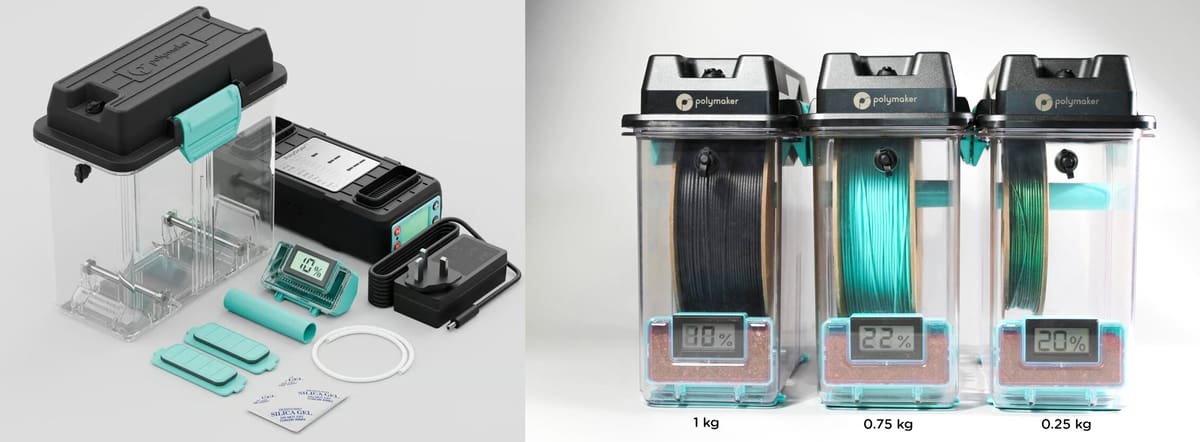
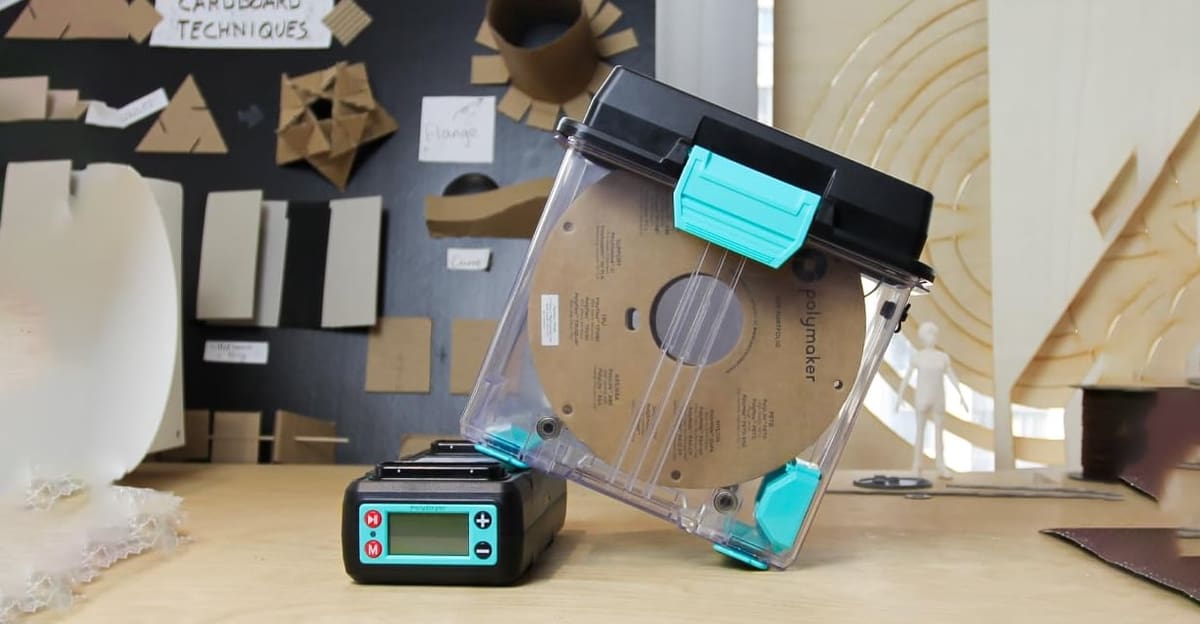
Polymaker’s PolyDryer pairs a heated base (“dock”) with a sealed storage box that can be stacked or used as a passive container. The idea is to dry filament on the dock, then leave it in the same box for low‑humidity storage and direct feeding to the printer.
It targets the mainstream range (PLA, PETG, ABS, ASA, PA, TPU, PC) according to Polymaker, rather than extreme‑temperature filaments, and is especially attractive for users already invested in Polymaker materials who like the idea of matched profiles and always‑ready spools.
Rather than setting a specific temperature, the 360 ° airflow system has three power levels. Each box comes with moisture-absorbing desiccant. When you notice that most of the desiccant has changed color from orange to dark green, it must be regenerated by placing it back on the dry dock at power level three for around eight hours.
For larger spools, Polymaker offers the PolyDryer Box XL. It accommodates spools weighing up to 3 kg and measuring approximately 300 mm in diameter and 118 mm wide. It is compatible with 1.75 mm, 2.85 mm, and 3.00 mm filament and includes sealed filament-feed openings, an integrated carrying handle, a built-in hygrometer, and up to 110 g of color-changing silica-gel desiccant.
The Box XL is primarily a passive storage solution rather than a standalone dryer. It can be placed on the standard PolyDryer Dry Dock for active drying, but this requires a Dock Adapter that is sold separately.
eSun eBox Lite
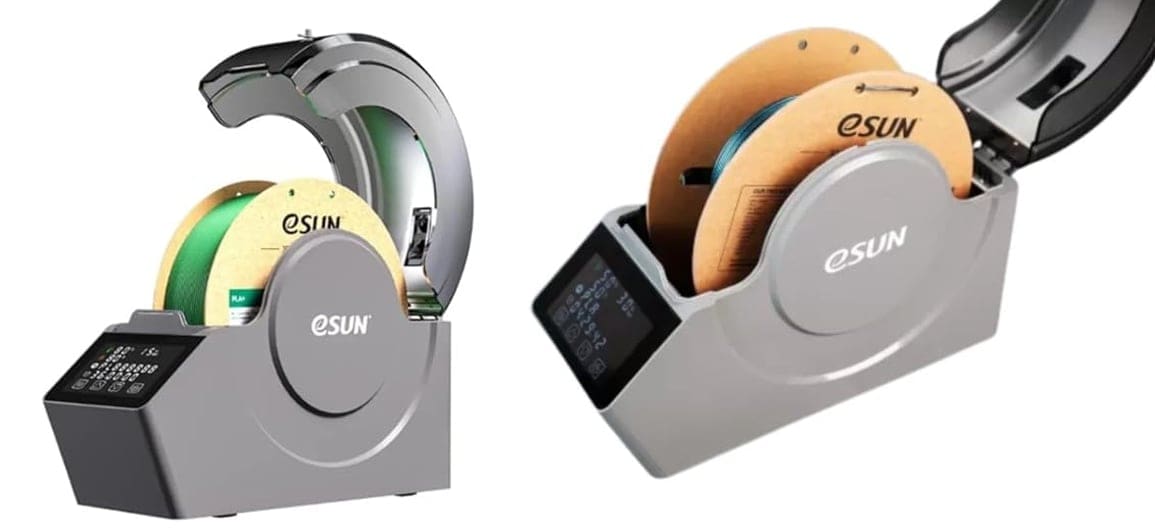
The eSUN eBOX Lite is the company’s widely available, budget-friendly filament dryer and storage box. It holds one 0.5 kg or 1 kg spool and supports 1.75 mm, 2.85 mm, and 3.0 mm filament. A transparent lid lets you monitor the spool, while a curved heating plate, metal heat-conduction panel, insulation, and a low-noise circulation fan help distribute warmth more evenly.
It can feed filament directly from the enclosed box while printing, and the box provides three heating levels with temperatures of approximately 40 °C, 50 °C, and 55 °C. This 55 °C is best intended to maintain warm, dry conditions during printing and may not be powerful enough to dry heavily saturated materials, but remains an ideal option for budget conscious consumers.
The newer eBOX Pro features 360 ° surround heating using a “PI heating film,” a turbo fan, and metal heat conduction plates for uniform drying. It reaches a maximum of 70 °C and supports drying times of up to 99 hours, making it suitable for for engineering materials like PA, PC, and TPU. The large color LCD touchscreen displays real-time temperature, humidity, and remaining time, with intelligent recommendations for different materials.
Chitu Systems FilaPartner E1
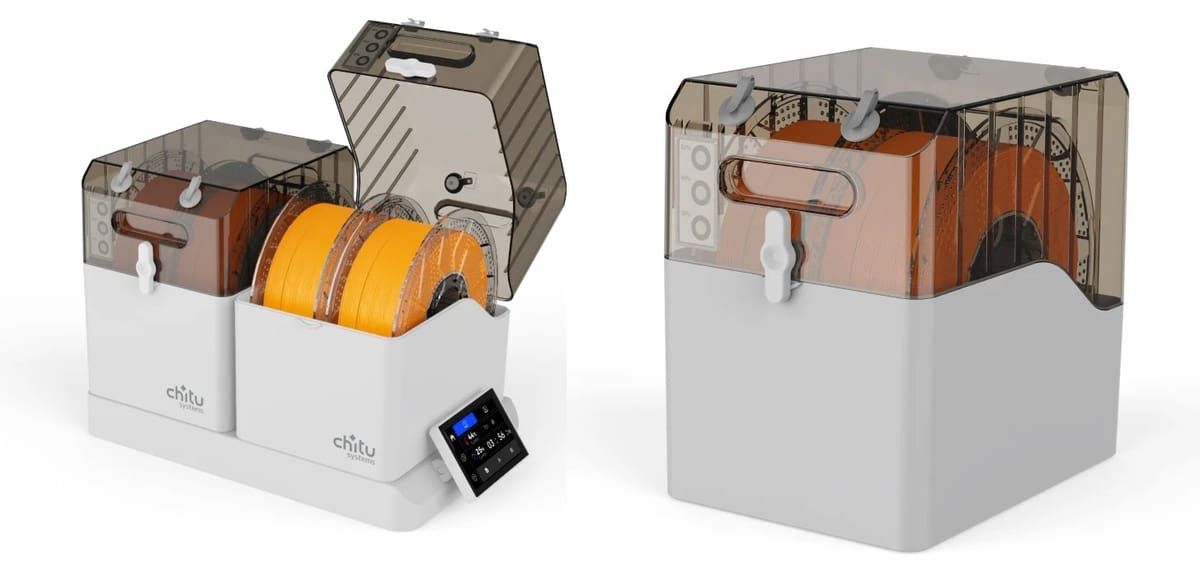
The Chitu Systems FilaPartner E1 is a modular, dual-chamber filament dryer and storage system that can dry up to four filament spools at once. Each chamber features independent temperature control, adjustable up to approximately 70 °C, and built-in airflow. Together, these features ensure rapid and even moisture removal. The company says this helps filaments remain dry and print-ready.
The E1 automatically monitors humidity and can be set to “auto-dry” mode, which triggers drying when humidity rises above a threshold and stops once optimal dryness is reached, helping prevent moisture-related print defects like bubbling, stringing, and weak layer adhesion. Because each chamber is removable and stackable, the system is flexible enough to handle multiple filament types or feed multiple printers, all while preserving spool quality and reducing waste over time.
You can print directly from the E1 storage boxes depending on your printer type.
Sovol SH03
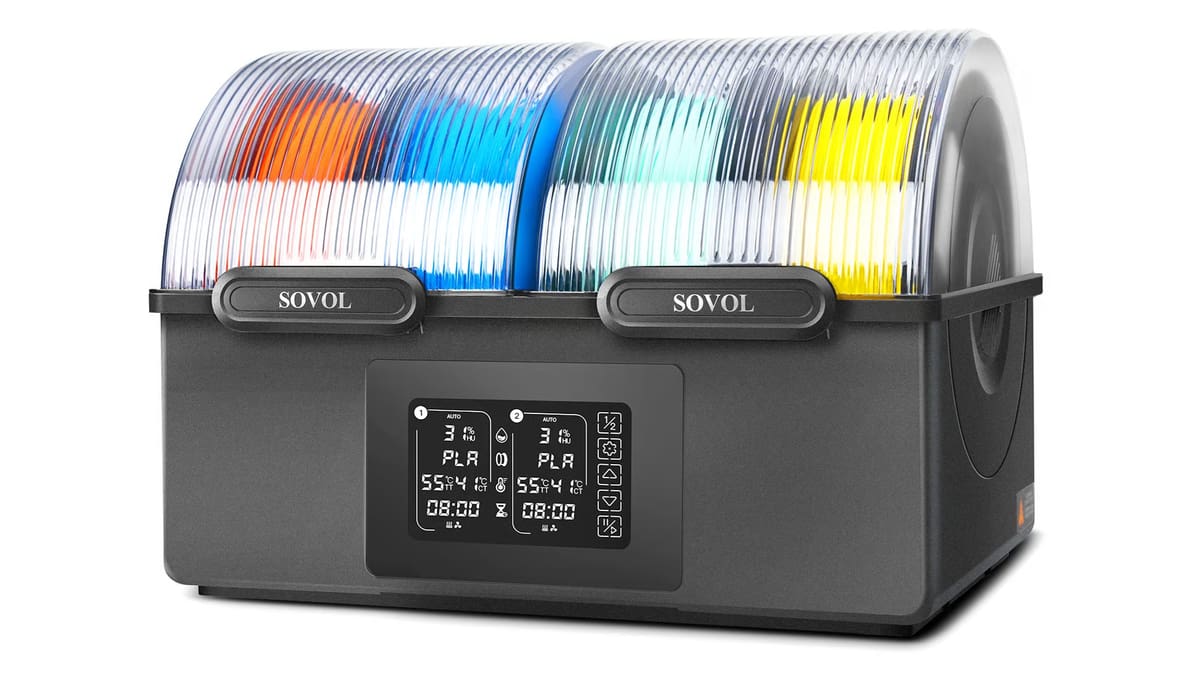
The SH03 is Sovol’s flagship dryer, combining four-spool capacity with substantially higher temperatures. It uses two independently controlled chambers, each powered by a 200 W PTC heater. Each chamber can be set separately so different materials can be dried at different temperatures simultaneously. Its adjustable range of 45–85 °C makes it better suited than the SH01, SH02, or SH04 to moisture-sensitive materials such as nylon and polycarbonate.
The SH03 can hold four standard 1 kg spools up to 70 mm wide, or two wider spools up to 150 mm. It also includes presets for ten common filament types, automatic dehumidification, real-time temperature and humidity monitoring, and support for both 1.75 mm and 2.85 mm filament. Its combination of independent chambers, higher temperatures, and active moisture removal makes it particularly suitable for multicolor printing, users operating several printers, or those working with a mixture of standard and engineering-grade materials.
Sovol offers other dryers aimed at different budgets and workflows. The SH01 is the budget entry, holding two 1 kg spools with temperatures of 40-50 °C. It has a 2-inch LCD screen, silicone sealing, and four outlet holes for flexible filament routing. It is simple and affordable but limited to basic materials.
The SH02 is a two-spool performance model with 150 W PTC heating reaching 50 °C in 7 minutes and 70 °C in 25 minutes. A temperature range of 40-70 °C supports materials like ABS, TPU, PETG, PA, and PC. The 3.9-inch touchscreen has one-key presets for nine filament types. Triple sealing rings provide better moisture protection than the SH01, and safety features include PTC overheat protection (cuts off at 130 °C) and fan monitoring.
The SH04 takes a different approach: maximum simplicity with capacity for four spools. With 690 W of power from dual heating bars, it reaches 50 °C in 13 minutes, faster than the SH01. The one-knob control is simple: set drying time (up to 120 minutes) or turn to “Stay On” for continuous operation. Temperature is fixed at 50 °C (maintained between 45-55 °C), which works for most common materials including PLA, PETG, ABS, and TPU. It is ideal for multicolor printing or running multiple printers.
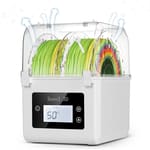
PrintDry Pro 4
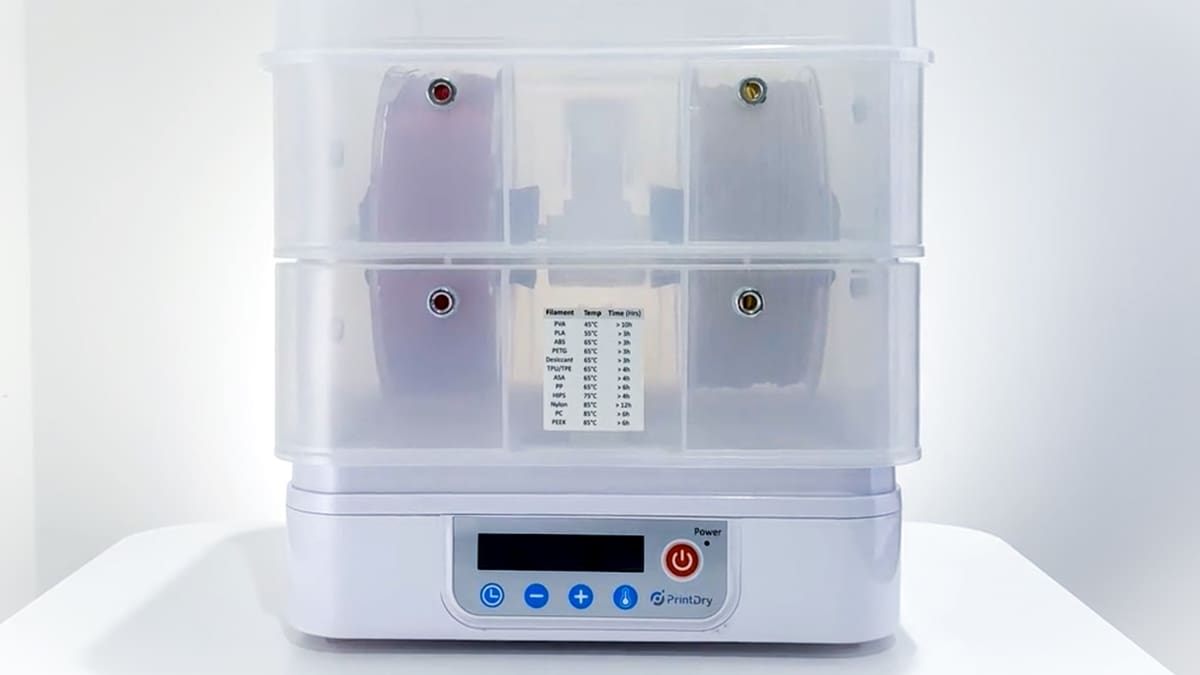
The Pro 4 is designed to dry filament before printing and feed filament directly from the dryer during a print. It uses closed-loop temperature control with six preset levels: 35 °C, 45 °C, 55 °C, 65 °C, 75 °C, and 85 °C. The built-in timer runs up to 48 hours with auto shut-off. Air circulation moves heat throughout the double-wall insulated chamber. The base model holds two spools up to 200 mm in diameter.
What makes it stand out is expandability. The optional Large Spool Kit handles spools up to 5 kg and 300 mm (12″) diameter. The Additional Chamber Kit expands capacity to four total spools. This stackable, modular design lets you customize based on your needs. You can print directly from the dryer while maintaining optimal conditions.
It retains many of the same features of its predecessor, the Pro 3, but comes with a built-in real-time humidity monitor that displays relative humidity from below 15 % to 99 %. This gives users direct feedback as moisture is removed from the chamber instead of requiring a separate hygrometer.
The Pro 4 also uses a larger PTC heating unit intended to reach the selected temperature faster and maintain more consistent drying conditions. A revised heating-control algorithm improves temperature stability while reducing thermal stress on the heater.
Existing Pro 3 owners do not necessarily need to replace the entire dryer. PrintDry offers a Pro 4 base unit as an upgrade so owners can reuse their existing chambers and accessories when acquiring the newer heater, humidity display, and control system.

Eibos Polyphemus
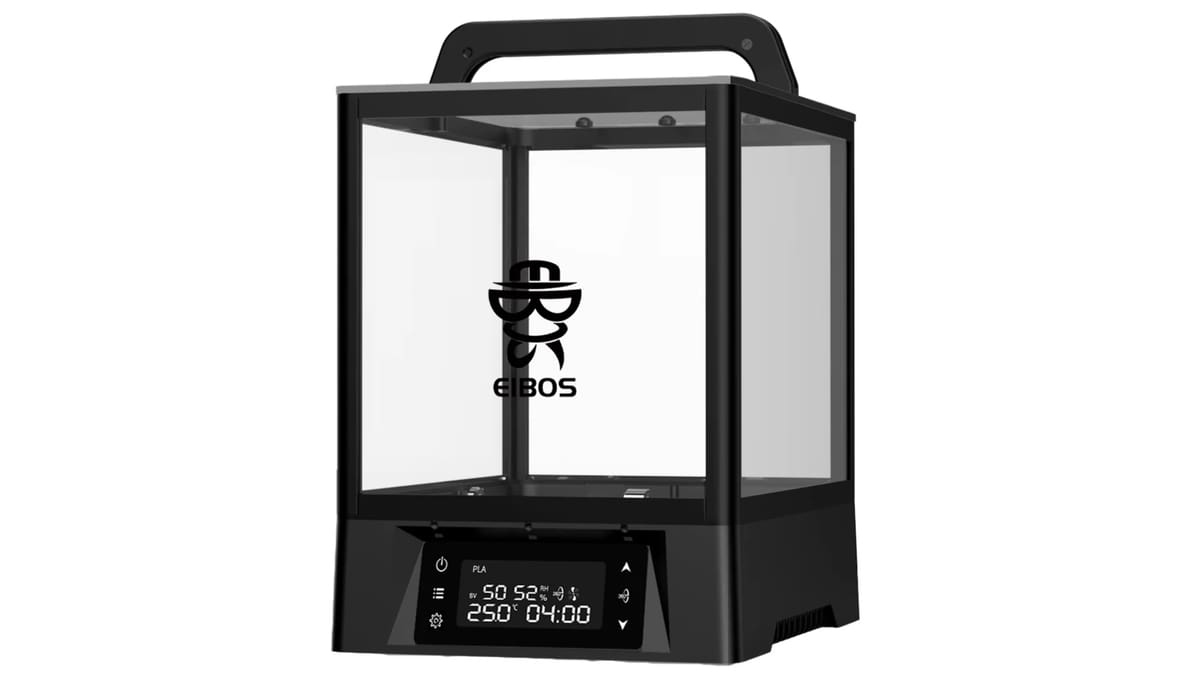
The Eibos Polyphemus is a dual-spool dryer with unique 360 ° automatic rotation driven by a motor. It is sold in versions with temperature ranges of 30-80 °C or 30-70 °C and can hold two 1 kg spools or one larger spool (expandable to Ø210 × 170 mm). Its distinguishing feature is a motorized roller system that continuously rotates up to two standard spools during drying, helping expose the filament more evenly to the heated airflow. EIBOS claims that this reduces temperature variation around the spools compared with stationary drying. It has eight filament outlet holes for flexible routing and built-in parameters for eight materials plus three custom slots.
EIBOS offers notably different filament-drying solutions. Series X Tetras is designed specifically to add active drying to the Bambu Lab AMS. It replaces the original AMS top cover and divides the system into four independently controlled drying chambers, enabling four different materials to be dried at separate temperatures. It is compatible with AMS 1 and with the AMS 2 Pro when a self-printed adapter is installed.
Each of the four independent chambers has its own 60 W heating unit and control panel with temperatures from 20-65 °C, drying times from 30 minutes to 24 hours, and three power levels (low, medium, and high).
External air circulation forces dry air into each sealed chamber while evacuating moisture. Two-stage drying first removes moisture aggressively, then applies gentle heat to maintain consistent feeding. After drying, it automatically switches to Smart Storage Mode, monitoring humidity and restarting if moisture rises above your set threshold.
Modifying it for an AMS printer involves removing four screws and installing new foot pads. No firmware modifications are needed; it runs on its own power and control system.
The company’s most economical solution is the single-spool Easdry, which reaches 65 ºC with hot-air circulation. The chamber accommodates spools up to approximately 220 × 72 mm and includes two spaces for desiccant, functioning as both a dryer and a basic storage box.
Multi-Material Systems That Also Dry
There are a lot of reasons to have a standalone filament dryer even if your multi-material filament system also dries, but the fact that it does dry is certainly handy. While these systems dry filament well, in our experience, they have some drawbacks. The main drawback is that they can be operated only through a compatible printer, making them brand-specific.
Still, the integration of dryers into these multi-material systems indicates the growing understanding that wet filament is the cause of many poor-quality prints.
Bambu Lab AMS 2 Pro
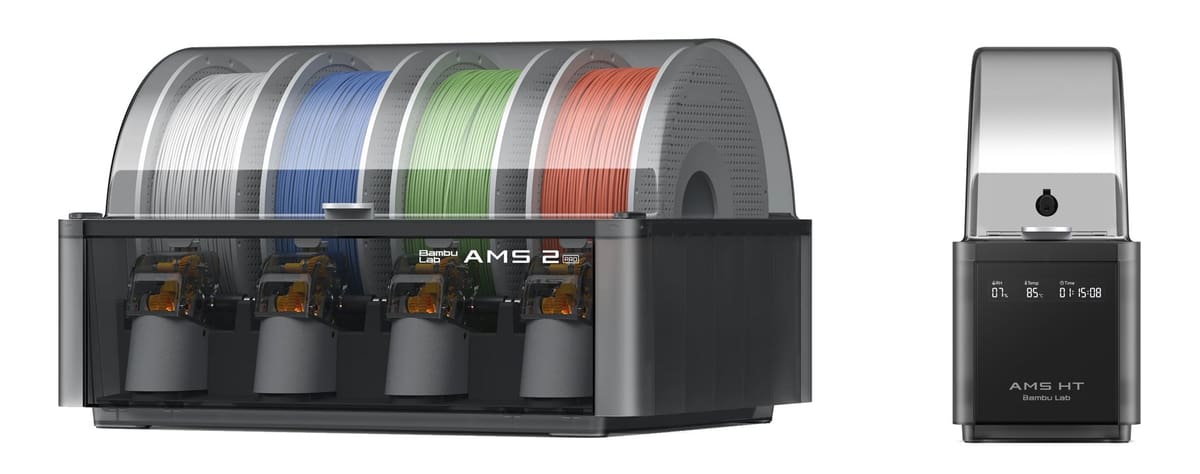
Bambu Lab’s AMS 2 Pro is a multi-filament system that combines airtight spool storage with active drying to keep filament in optimal condition. AMS 2 Pro uses active air venting and controlled heat up to about 65 °C to remove moisture from up to four spools at once, helping prevent moisture-related printing issues like poor extrusion or nozzle clogs.
The system also regularly rotates spools during drying for more even dehumidification and monitors internal temperature and humidity to support reliable moisture control. Its drying functions are integrated with sealed storage and RFID tracking, making it a convenient solution for maintaining filament readiness and consistent print quality if you have a Bambu Lab 3D printer.
Bambu Lab notes that the AMS 2 Pro doesn’t get hot enough to fully dry certain materials, like ABS, ASA, PA, PC, PET, PVA, BVOH, POM, HIPS, and carbon-fiber filled materials. For those, the company offers a high-temperature (HT) unit called the Bambu Lab AMS HT, which has all the drying features of the AMS 2 Pro but is a single-spool dryer that can reach 85 ºC.
Anycubic Ace 2 Pro
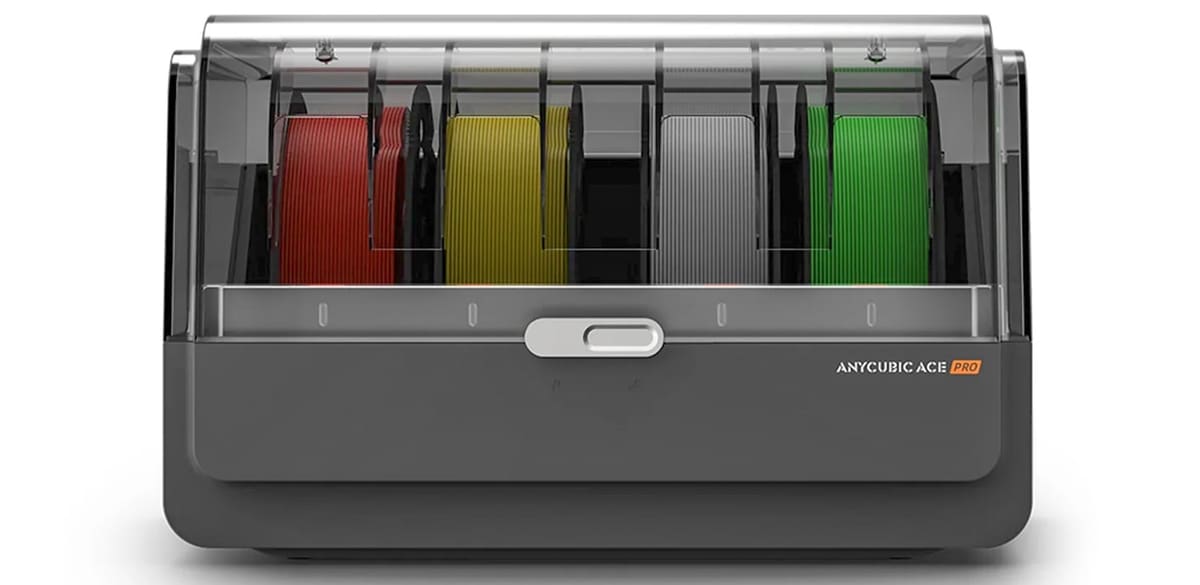
Anycubic Ace 2 Pro is an upgraded multi-filament system designed for multicolor and multi-material 3D printing for Anycubic printers. It combines automatic filament feeding, sealed filament storage and active drying. It is capable of 65 °C high-temperature drying while printing, meaning the filament can continue to be dried throughout a print job.
The Ace 2 Pro offers an adjustable drying temperature of approximately 35–65 °C. Built-in temperature and humidity sensors monitor the chamber conditions, while a sealed enclosure and electromagnetic valve help prevent external moisture from entering and actively expel moisture from inside the unit. This helps reduce moisture-related printing problems such as stringing, bubbling, inconsistent extrusion and nozzle clogs.
The feeding system has also been upgraded with four independent brushless motors and a redesigned filament buffer mechanism, providing faster and more reliable filament loading, unloading and switching. It also has the ability to connect up to four Ace 2 Pro units to print up to 16 colors.
Although the ACE 2 Pro includes a standalone drying mode, it is not a completely independent filament dryer. It must remain connected via a signal cable to a compatible Anycubic printer, and the printer must be powered on while drying. Compatible printers include the Kobra 3, Kobra 3 V2, Kobra 3 Max, Kobra S1, Kobra S1 Max, and Kobra X.
Qidi Box
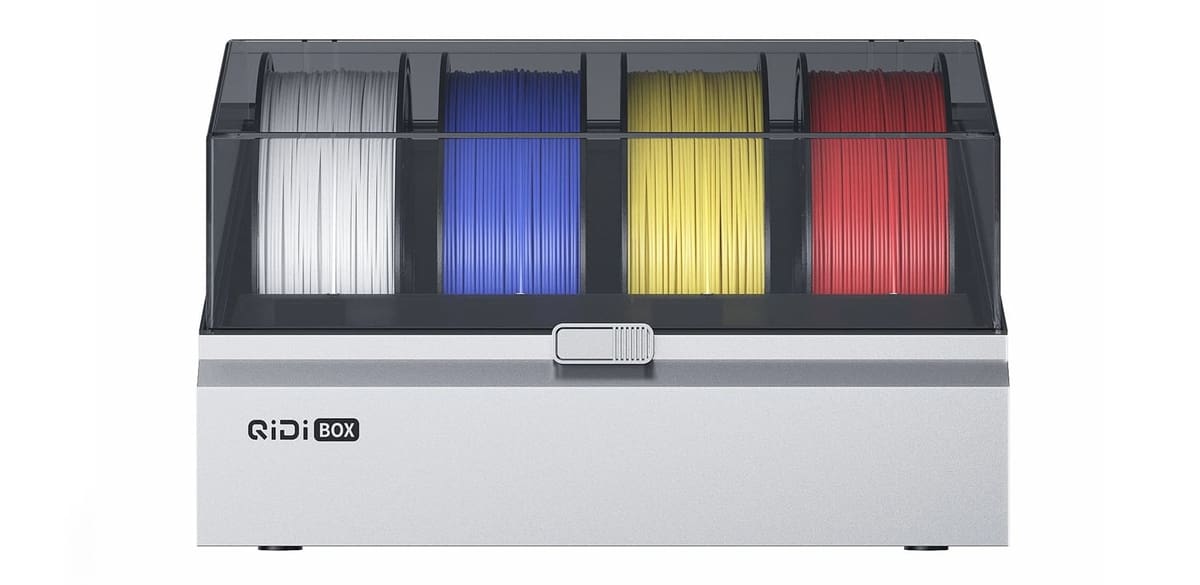
The Qidi Box is a multi-filament management system that doubles as an active filament dryer but is compatible only with certain Qidi printers. It maintains a sealed internal chamber and heaters that raise the temperature to as much as 65 °C, continuously drying spools, even while printing, so hygroscopic and moisture-sensitive filaments stay ready for quality extrusion. The system monitors temperature and humidity in real time, rotates the spools periodically to ensure uniform drying, and offers sealed storage to prevent reabsorption of moisture.
It is compatible with the Qidi Plus4, Q2, and Max4, but with each printer requiring specific signal-cable accessories, and the system can be controlled only through the Qidi software suite.
Coming Soon
The filament-dryer market continues to grow, with manufacturers preparing new models that promise greater capacity, smarter moisture control, and closer integration with multi-material printing systems.
The products below have been announced but are not yet widely available or fully tested, so specifications, pricing and release dates can change. With this is mind, its heating uniformity, drying speed, noise level, and long-term reliability remain to be seen.
Elegoo H1 HT
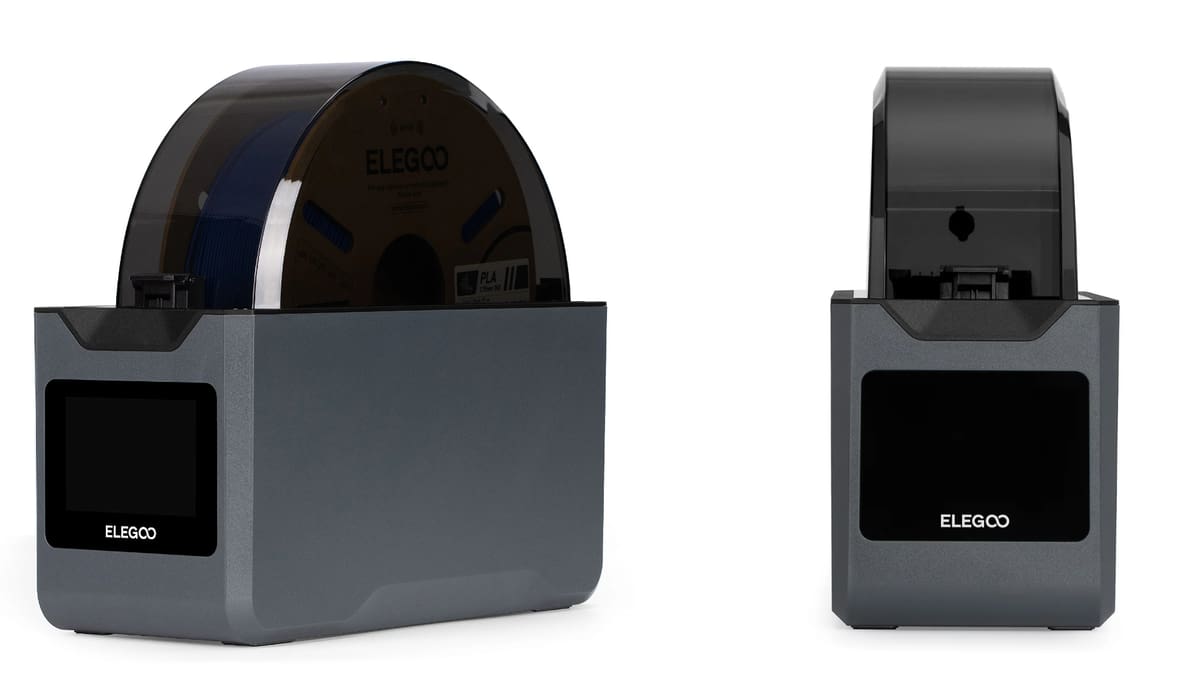
The Elegoo H1 HT is a single-spool filament dryer designed for both everyday and engineering-grade materials. It can heat its chamber to 85 °C, allowing it to dry common filaments such as PLA and PETG as well as more moisture-sensitive materials, including PA and PC.

To remove moisture rather than simply circulate warm, humid air, the H1 HT uses two automatic vents. These open during drying to release humid air before sealing once the cycle is finished. It also rotates the spool automatically during operation, which exposes the filament to heat more evenly throughout the drying cycle.
It features a separate bypass outlet for flexible and abrasive filaments such as TPU and fiber-reinforced materials, allowing users to feed filament directly from the dryer with less resistance. Settings are managed using a 3.5-inch color touchscreen, with 11 material presets and customizable temperature and drying-time controls. Elegoo has also included overheat protection, a flame-resistant inner shell, lid-open and fan-failure detection, and audible fault warnings.
The dryer is not tied to Elegoo printers and is intended to work with virtually any FDM machine.
At the time of writing, the H1 HT is listed for preorder in Elegoo’s store for $70, with shipping scheduled for August 20, 2026.
Sunlu AMS Lite
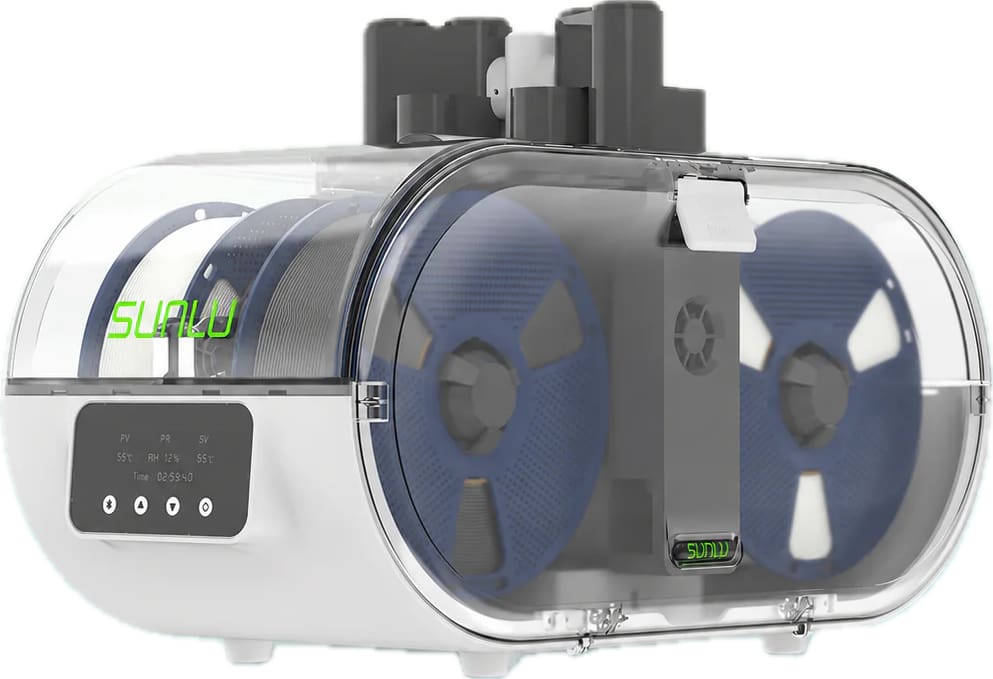
The Sunlu AMS Lite Heater is an enclosure designed to turn Bambu Lab’s open-frame AMS Lite into a four-spool filament dryer and dry-storage system. It installs around the existing AMS Lite while retaining its automatic material-switching functions, allowing users to dry filament while printing. The AMS Lite itself is not included, and the enclosure is designed specifically for this system.
The heater reaches temperatures of up to 70 °C and uses a dual-channel airflow system to distribute heat evenly throughout the enclosure. An automatic vent releases moisture during drying, while real-time humidity monitoring can automatically activate the heater when the humidity exceeds a preset level.
The AMS Lite Heater is available for pre-order at $119.99, down from its listed price of $129.99. Sunlu says orders placed between July 20 and 31 will begin shipping on September 15 in the US, Canada, and Australia, or September 20 in Europe and the UK.
You May Also Like:

License: The text of "No More Wet Filament! Top Filament Dryers from Sunlu, Creality, Bambu Lab & More" by All3DP is licensed under a Creative Commons Attribution 4.0 International License.
CERTAIN CONTENT THAT APPEARS ON THIS SITE COMES FROM AMAZON. THIS CONTENT IS PROVIDED ‘AS IS’ AND IS SUBJECT TO CHANGE OR REMOVAL AT ANY TIME.