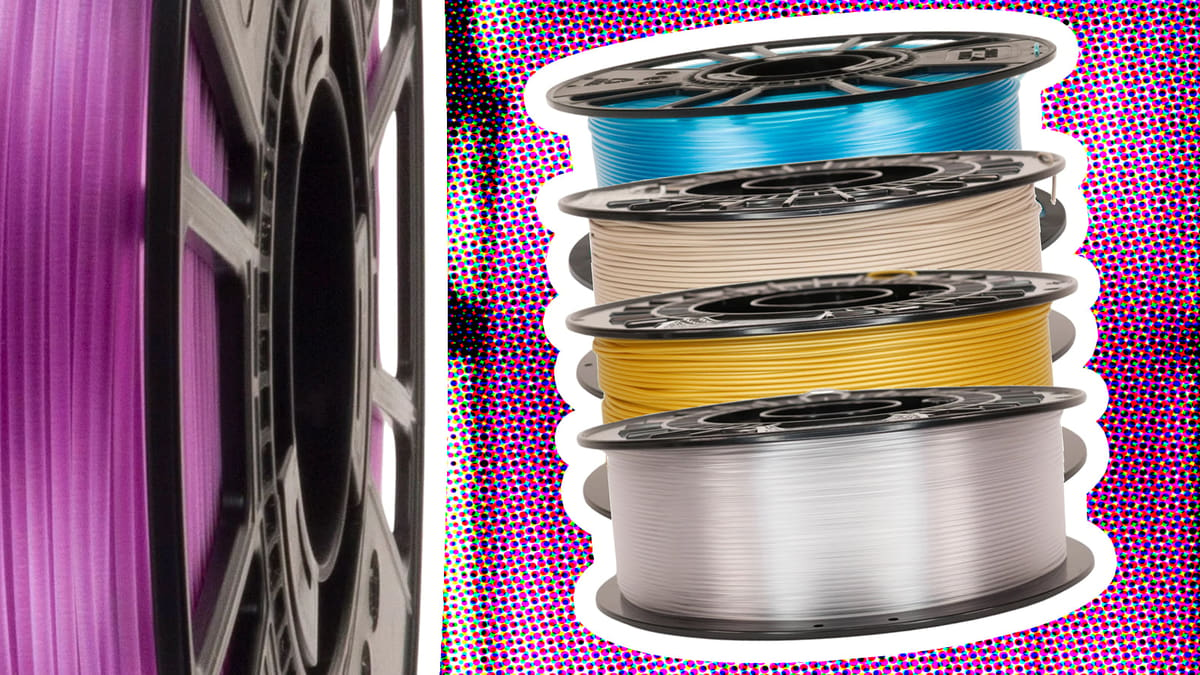
Why PCTG Filament Is the Underrated Workhorse Your 3D Printer Deserves

If PETG feels too soft and ABS feels too fiddly, give PCTG a spin — it might just redefine what “easy, strong, and beautiful” means for your next print.
In the world of FDM 3D printing, PLA rules the hobby tier, PETG is the next step up for functional-parts, and for engineering plastics there’s nylon and PC. But there’s a newish kid on the block you may be hearing more about: PCTG. This filament, typically around $30 to $60 per kilo, is quietly bridging the gap between everyday printability and solid performance.
PCTG Snapshot
- Optical Clarity: Better than PETG, PC, and PP
- Toughness: Better than PLA, Tough PLA, and PETG
- Standout Feature: Impact resistance

For designers, engineers, and makers tired of deciding between ease of printing and performance, PCTG offers an attractive compromise. It combines the forgiving nature of PETG with enhanced toughness, clarity, 20x the impact resistance of PETG, and good chemical resilience, all while being easy to print with.
Whether you’re pushing the boundaries of functional prototyping, printing robust end-use parts, or just exploring more versatile materials, PCTG deserves a spot in your filament arsenal.
Our friends at Protopasta and 3D-Fuel were kind enough to send us some of their PCTG, so we put it to the test.
Should you give it a spin? Let’s find out.
The Case for PCTG: Do You Really Need It?

At its core, PCTG (Polycyclohexylenedimethylene terephthalate Glycol-modified) is chemically similar to PETG but engineered for more toughness, clarity, and chemical resilience.
Generally, think of PCTG as PETG with performance upgrades: enhanced impact resistance, better clarity, strong layer adhesion, and reliable dimensional stability. But other polymers have those qualities, too, so how do you know when PCTG is ideal for your part and not a waste of money since it is generally a bit more expensive than PLAs and PETGs?
Say you’ve decided that PLA is too brittle for your parts and not heat resistant or durable enough. You’ve decided against ABS because of it’s odor and it can get brittle over time. PETG prints are also not durable enough; small snap-fit tabs break, the screw holes chip with repeated use, or your battery housing on your drone cracks on crash landing. That’s when you need PCTG.
There are arguably tougher and more impact resistant materials, like nylon and polypropylene, but then you’re sliding into engineering-grade filament that are tricker to print, and often required an enclosed chamber and a hardened stainless steel nozzle.
PCTG is has that elusive balance of mechanical properties and easy-of-use that makes it feel both approachable and genuinely capable.
Ease of Printing with Some Trade-Offs

One of PCTG’s biggest strengths is that it prints on most standard FDM machines without exotic hardware. Recommended temperatures hover in the mid-to-high PETG range (~250-290 °C), with a heated bed around 80 – 100 °C, which is manageable for hobby and prosumer printers alike.
Material manufacturers say you won’t need a heated chamber to achieve great results. But you should still strive to avoid drafts in your workspace and keep a consistent temperature. Our lamp print with Protopasta PCTG clear showed a noticeable layer shift when we opened the chamber door to our Prusa CoreOne L for four minutes to take a video while it was printing. The chamber temp was about 40ºC and dropped with the door open.
In fact, slicer profiles may be sparse, so you’ll need to develop your own for your specific machine. There was a profile for Spectrum PCTG on our Prusa CoreOne L but we had to tweak it for the preferred setting for Protopasta. Some slicers don’t include PCTG presets at all, so you may start from a PETG profile and tweak from there according to the PCTG manufacturer.
3D-Fuel says PCTG is a “powerful upgrade from PETG when printed properly,” and by”properly” they mean:
- Hot end: 250 – 280 ºC (hotter for fast/thick layers, cooler for slow, thin layers)
- Bed: 80 ºC, textured PEI
- Fan: As low as possible or 50% less than PETG
- Enclosure: Optional, but ideal heated temp is 45 ºC
Test prints and temperature towers are a good idea to keep from wasting filament.
We had no adhesion issues printing Protopasta PCTG on a smooth PEI plate but the 3D-Fuel has some problems sticking, which were solved by switching to a textured PEI plate and some glue.
PCTG solves a lot of practical problems, but it isn’t flawless:
- Moisture Sensitivity: Like many copolyesters, PCTG absorbs moisture over time. Drying or a dry box can help preserve print quality.
- Not the Absolute Toughest: While strong, PCTG doesn’t match the high-temperature resilience of materials like PC.
20x Higher Impact Resistance

Based on the data sheets we reviewed, PCTG’s notched Izod impact strength is roughly 20 times higher than typical PETG.
In practical terms, this means the big difference is not that PCTG magically holds more weight, but that it is much harder to crack from a sudden hit. Parts are more likely to bend or deform before breaking, which makes it attractive for tool holders, RC parts, protective covers, and anything that might be dropped or knocked around.
PCTG shows impact resistance that exceeds both PETG and Tough PLA.
*Izod Impact Strength Notched @ 23°C ISO 180. Some brands of PCTG do not provide impact strength on their technical data sheets.
PCTG’s durability is one of its high points. In functional applications like brackets, fixtures, and end-use housings it can better resist cracking and deformation compared to Tough PLA or PETG.
You’d choose PCTG over Tough PLA when you need better resistance to heat, chemicals, and long-term use. If your part doesn’t need any of these qualities, PCTG isn’t worth the price.
Higher Chemical & Moisture Resistance

PCTG isn’t just tough, it’s also chemically resilient, which opens up potential use cases in packaging, kitchen or bathroom accessories, labware, and bicycle accessories that might otherwise degrade PLA or even PETG.
This property carries over into moisture resistance too. While PCTG — like other glycol-modified polyesters — can be somewhat hygroscopic, it generally handles humid environments better than many hobby filaments and tolerates brief outdoor exposure with less property loss.
Glass-Like Clarity

PCTG’s balance of mechanical strength, clarity, and printability makes it a compelling choice across a broad spectrum of applications from functional prototypes to enclosures to jigs & fixtures, but where it really shines is in transparency.
PCTG is typically better than PETG or Polycarbonate (PC) for optical clarity combines with ruggedness.
PCTG can offer better optical clarity because it tends to stay clear after processing, with less internal structure that scatters light and makes parts look cloudy. In clear plastics, the enemy is not just color — it is light scattering from crystallites, internal stress, phase separation, bubbles, and rough printed surfaces. PCTG has less of these than other materials.
- PETG: clear, but can still develop more haze depending on formulation and processing.
- PCTG: usually more strongly biased toward amorphous, low-haze behavior.
PCTG often has lower stress whitening than PC, which means it resists the stress from extrusion, cooling, and layer bonding that can affect PC’s clarity. Some PCTG-family materials are frequently used in injection molding and thermoforming for optical applications such as lenses and safety eyewear because they combine clarity, impact resistance, chemical resistance, and hydrolytic stability.
- PC: intrinsically very clear as a resin, but harder to print clearly and more stress-sensitive.
- PCTG: may look clearer in hobby FDM use because it prints with less haze, less warping stress.
A spool of clear PCTG does not automatically make a glass-clear printed part. FDM parts look cloudy mostly because of layer lines, surface roughness, and inconsistent extrusion.
PCTG helps because the polymer itself is low-haze, but the print still needs the right settings. For maximum clarity, use a large nozzle, single-wall/vase mode where possible, high extrusion temperature within the filament’s range, slow printing, 100% flow consistency, and very dry filament.
Fiber-Filled Composite & Recycled PCTG
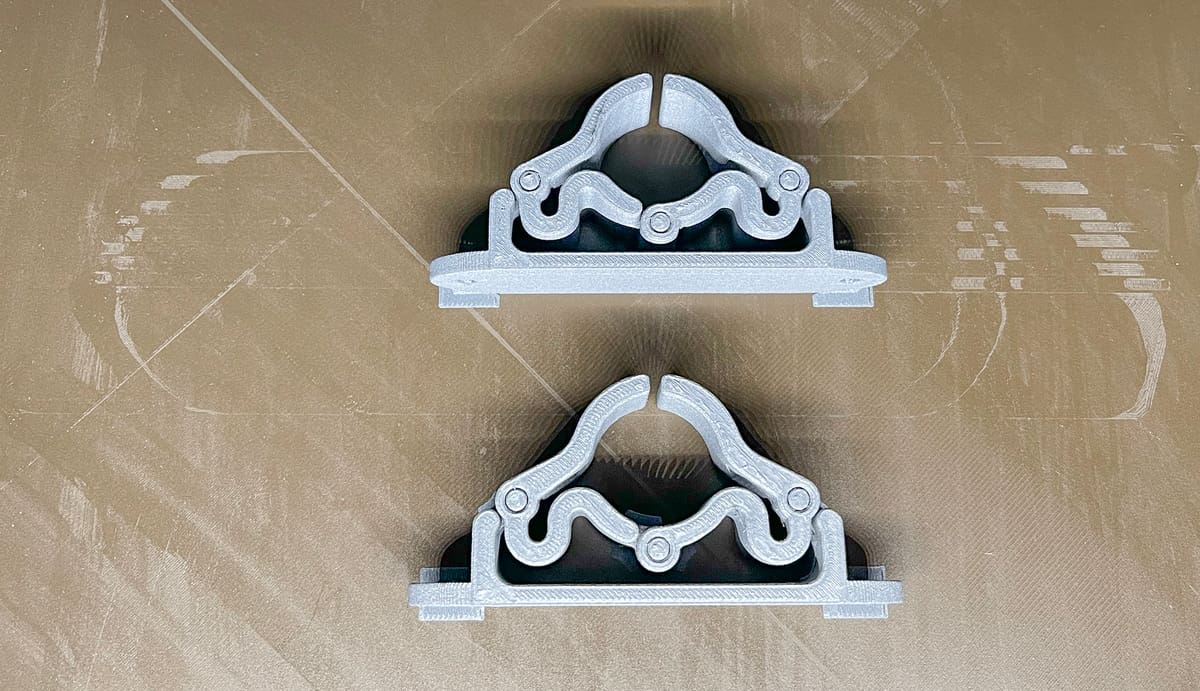
PCTG is already good, but it could be even better. That’s the thought behind some “enhanced” versions we got our hands on from Protopasta. The company makes a glass-fiber and a carbon-fiber PCTG.
Why? Because compared to the company’s HT PLA, unfilled PCTG “is actually lower in ultimate strength and stiffness,” the company says. “What if we could boost stiffness and strength of PCTG?”
Protopasta created two PCTG-CF loading levels: one optimized to retain ductility and impact durability (HIG) in gray and a second formulation with higher loading (HSB) that sacrifices some ductility for even higher strength and stiffness without feeling too brittle in black, they say.
Printing with composite materials required a hardened nozzle, which reduces the ease-of-use, but if your application needs that sweet spot of mechanical properties that fiber-filled PCTG offers, than this is for you.
You’ll also find a carbon-fiber filled PCTG from 3D-Fuel and material maker Rosa3D. It boasts 10% carbon fibers, which Nobufil PCTG is a sustainable PCTG made from recycled industrial waste sourced in Europe.
PCTG Brands & Prices
License: The text of "Why PCTG Filament Is the Underrated Workhorse Your 3D Printer Deserves" by All3DP is licensed under a Creative Commons Attribution 4.0 International License.