How Much Is the 3D Printing Industry Really Worth in 2025?

These top eight 3D printing market research reports differ widely — what’s behind the big gaps and which report should you follow?
Most industry projections indicate a robust growth trajectory for additive manufacturing, with varying estimates based on the scope of analysis and market segments considered.
Despite varying predictions, some consensus centers around the integration of artificial intelligence (AI) and machine learning (ML) to enhance various aspects of AM, including design optimization, process control, and quality assurance. There’s also general agreement that the development of multi-material and large-format 3D printing is expanding the capabilities of AM for more complex, high-performance parts suitable for aerospace, automotive, and healthcare applications.
No one doubts that the AM industry faced challenges in 2024, including a slowdown in hardware sales and company consolidations. Analysts anticipate a rebound in industrial 3D printing, with some expecting a recovery by the end of this year and others predicting 2026 as the more likely beginning of growth.
Key indicators that will affect the market’s trajectory include growth in the Asian market. The region has an increasing demand for metal 3D printing and supportive government policies, but true global expansion has yet to emerge, analysts say.
Key segments that many market watchers are focused on include healthcare, aerospace, defense, and automotive. The speed of adoption in these key markets will predict overall growth in the next decade.
Although additive manufacturing market forecasts provide helpful directional insight, they are flexible and subject to revision. Disruption, innovation, regulation, macroeconomic shifts, and market behavior can all dramatically reshape the landscape in ways even the most informed projections may not fully capture.
What These Predictions are Based On
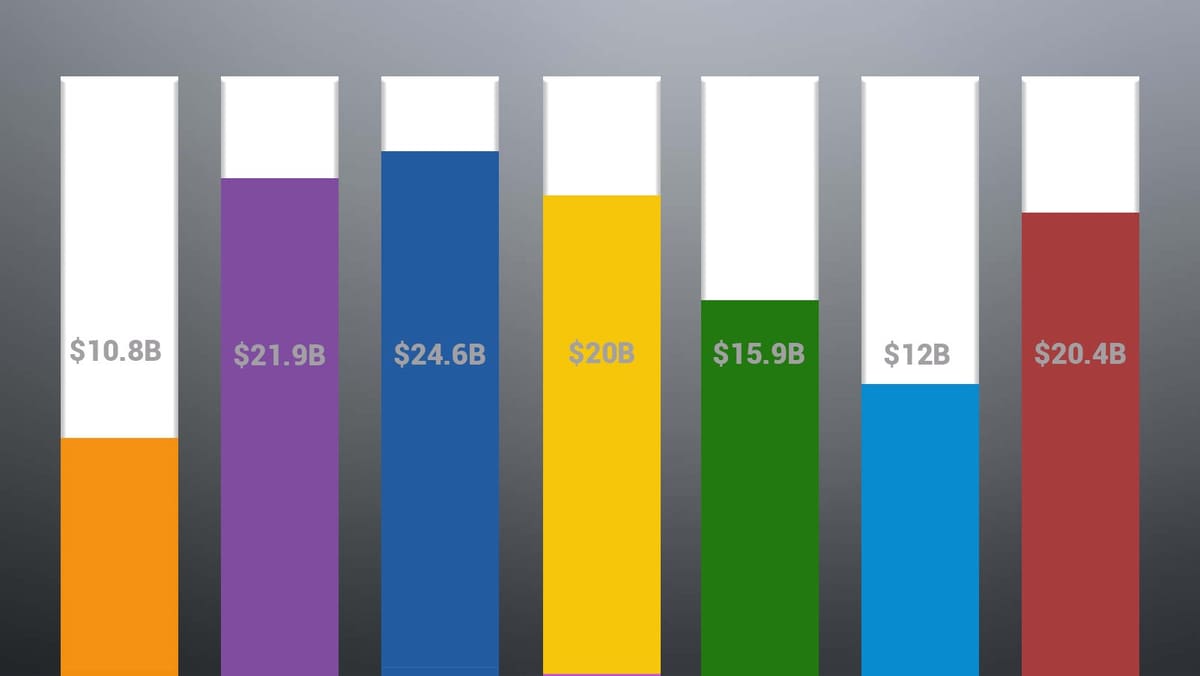
Every AM market report has its own proprietary blend of ingredients, and we venture to guess no two are the same. Some include consumer or “prosumer” 3D printer sales, while others exclude them. Some may include 3D printing services but not industry-related software. In all, below are just some of the categories of products these reports can include.
- Industrial printers (e.g., metal, polymer, ceramic systems, bio, etc.)
- Consumer printers
- Hardware revenue for new unit sales and upgrades
- Materials (Polymers, metals, ceramics, composites, and bio-inks)
- On-demand 3D printing services
- Contract manufacturing with 3D printing services
- Additive manufacturing consulting services
- Maintenance and support services
- Software for design and modeling tools (CAD, slicers)
- Software for simulation and build optimization
Why These Predictions are Sure to Change Often
Today’s market informs the predictions for the future, so as the market rises or falls over the coming years, these predictions of growth rate will rise or fall. Just take a look at the reports based on 2023 data versus 2024 data. Three of the 2023 data report project growth rates in the low 20s, while three of the four reports based on 2024 data predict future growth in the upper teens.
Change due to a combination of technological, economic, and industry-specific factors that make long-term forecasting challenging for any industry. One of the most significant drivers of unpredictability is the rapid pace of technological advancement in additive manufacturing.
Innovations in hardware, software, or printable materials can emerge quickly and reshape the whole industry’s direction. For example, a breakthrough in low-cost metal printing or the development of a new composite material could suddenly open up previously untapped market segments and accelerate adoption well beyond what forecasts anticipated.
Another source of volatility is the uncertainty around how quickly various industries will embrace additive manufacturing. Many projections assume widespread adoption across sectors like aerospace, healthcare, and automotive, but these industries often move slowly due to regulatory hurdles, stringent qualification processes, and the inertia of established production methods. Conversely, AM could see unexpected growth in niche areas such as defense, dental, or consumer products, where implementation barriers are lower and demand is rising.
Broader economic and geopolitical forces also play a major role in altering market trajectories. Recessions, inflation, global supply chain disruptions, or armed conflicts can dampen or boost demand unpredictably. For instance, global supply chain fragility during the COVID-19 pandemic highlighted the value of local, on-demand production, which spurred renewed interest in 3D printing. Similarly, government initiatives promoting domestic manufacturing or offering incentives for advanced manufacturing adoption can accelerate regional growth in ways forecasts may not have anticipated or even have the opposite effect.
The actual viability of additive manufacturing for large-scale production remains a moving target. As more production-level use cases become economically viable, especially for durable or high-performance parts, market growth could exceed expectations.
Competitive pressures, business consolidation, and startup failures also influence these projections. A high rate of startup closures, for example, can diminish investor confidence and slow progress, while major acquisitions or shifts by key players might either inflate or contract market share projections.
Reports based on data up to the end of 2024:
- Wohlers Report 2025
- Additive Manufacturing Research
- AMPower
- Presidence Research
Reports based on data up to the end of 2023:
- VoxelMatters Research
- GrandView Research
- Spherical Insights
- IDTechEx
Which Report Should You Follow?

The report you follow is determined by not only what specific data you need, but also by the market segments and sources included. Here at All3DP, we tend to favor the market insiders; the research and analysis coming from organizations that are within the additive manufacturing industry. They have a better understanding of the market and deeper access to stakeholders with the insights they need to shape accurate predictions.
Our favorites come from Additive Manufacturing Research, VoxelMatters Research, Wohlers Associates, and Context World, specifically for its close tracking of 3D printer sales.
You May Also Like:



License: The text of "How Much Is the 3D Printing Industry Really Worth in 2025?" by All3DP Pro is licensed under a Creative Commons Attribution 4.0 International License.