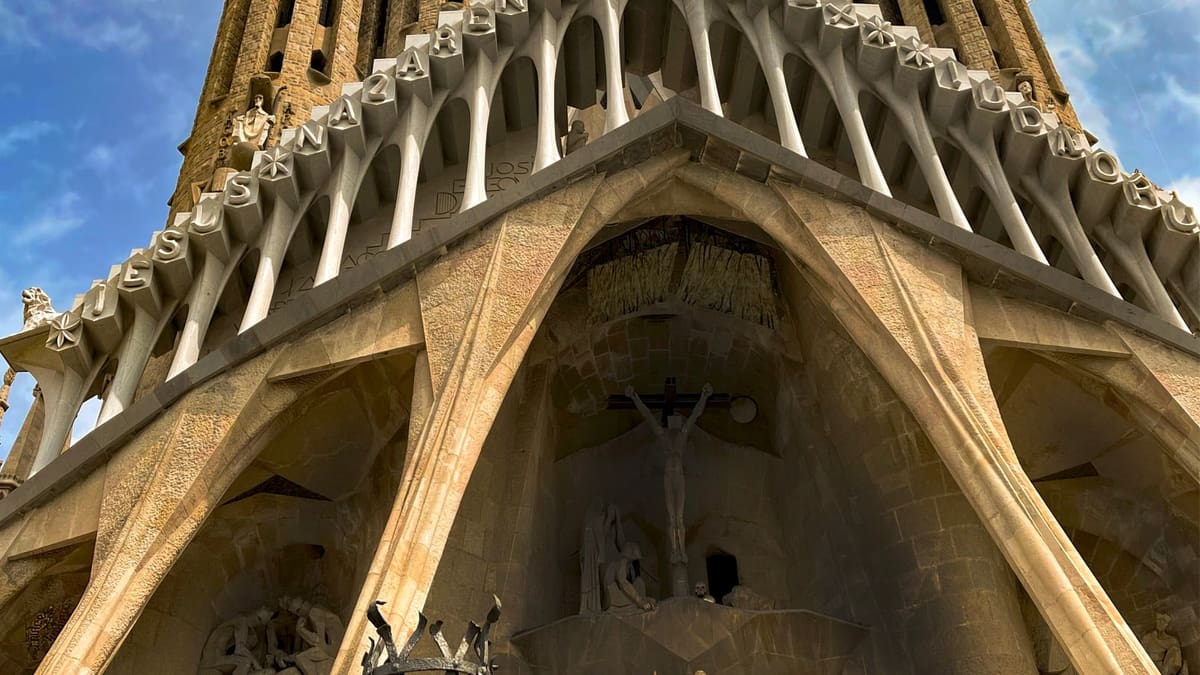
The Brilliant Geometry Secret Behind Gaudí’s Architecture & Your Next Support-Free 3D Print

Eric Utley, applications engineering manager at Protolabs, explains the engineering principles behind Gaudí's architecture and how they can help you design better support-free 3D prints.
Antoni Gaudí designed La Sagrada Família using hanging chains to model catenary curves, which are forms that become naturally strong, stable arches when turned upside down. The same principle can help you create stronger, more efficient, and potentially support-free 3D prints. Catenary shapes can be printed without internal support structures even when scaling large distances.
Here in this article explains, we dive into the geometry behind catenary curves, how to model arches and surfaces in Blender, and the practical dimensions and manufacturing limits to consider when 3D printing them.
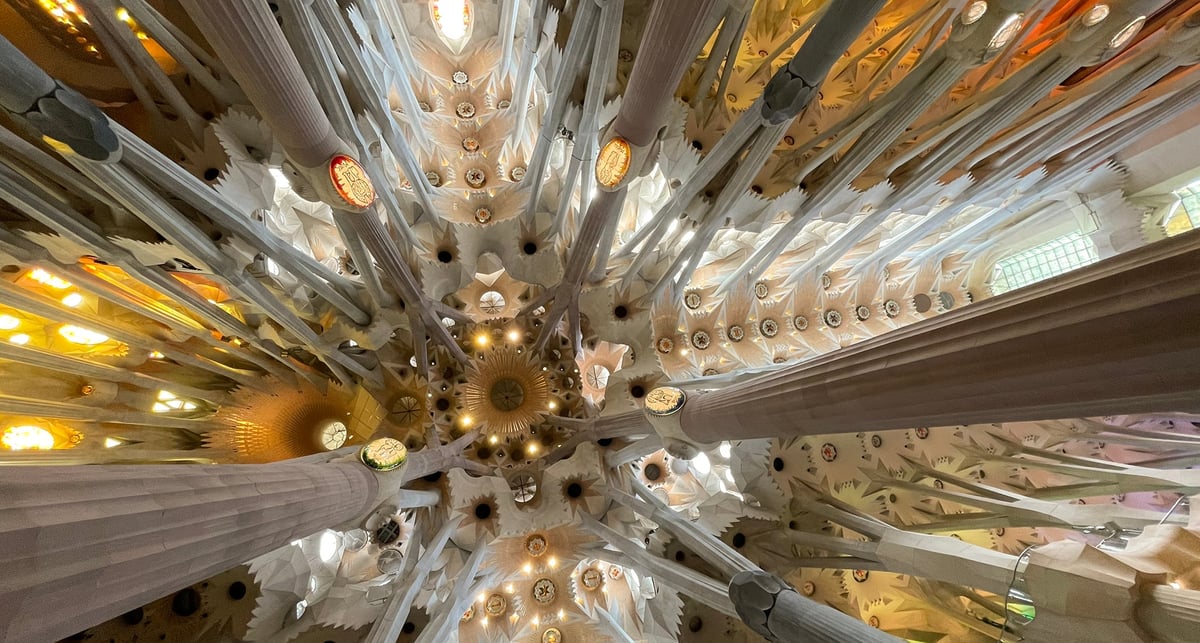
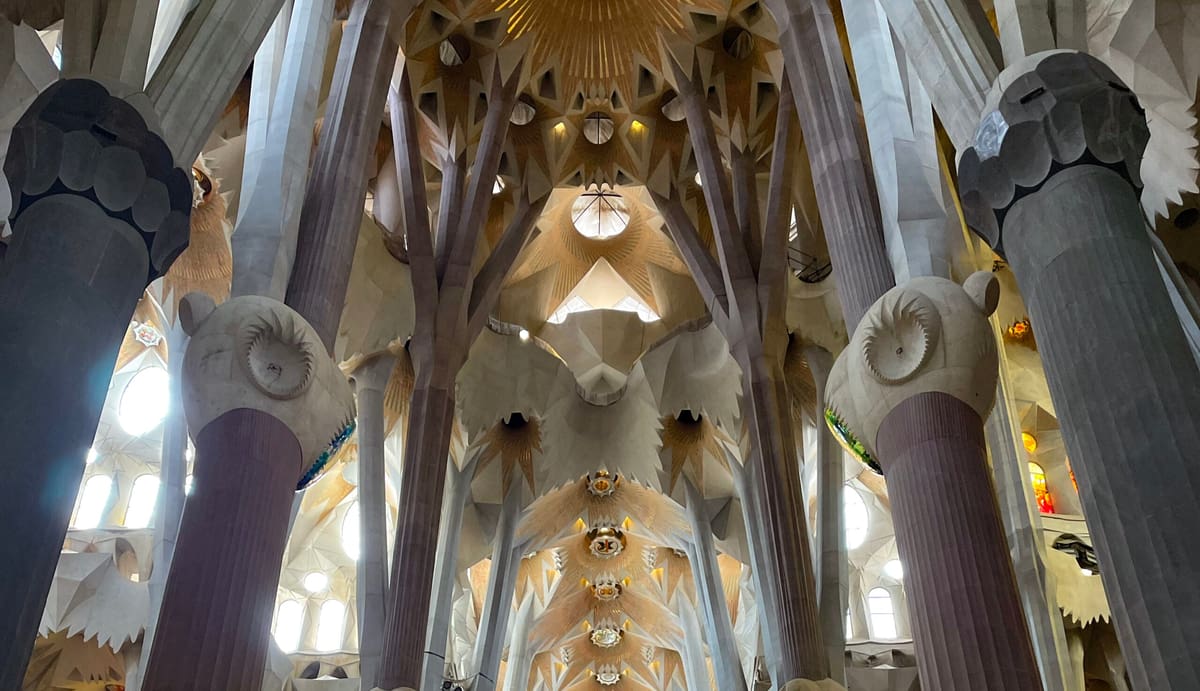
La Sagrada Familia cathedral in Barcelona reached a construction milestone in 2026, coinciding with the centenary of architect Antoni Gaudí’s death, it is finally complete. The addition of the central Tower of Jesus Christ elevated the structure to the status of the tallest church in the world. This, and the celebrations that followed, renewed global interest in the incredible creation of an architectural genius.
Although construction began more than a century ago, the cathedral’s design is surprisingly modern. Many casual observers will believe the cathedral to be designed using modern CAD or even generative AI. Those familiar with additive manufacturing may notice much of the design is self-supporting and is surprisingly well-suited to 3D printing.
Catenary Curves in 3D Printing
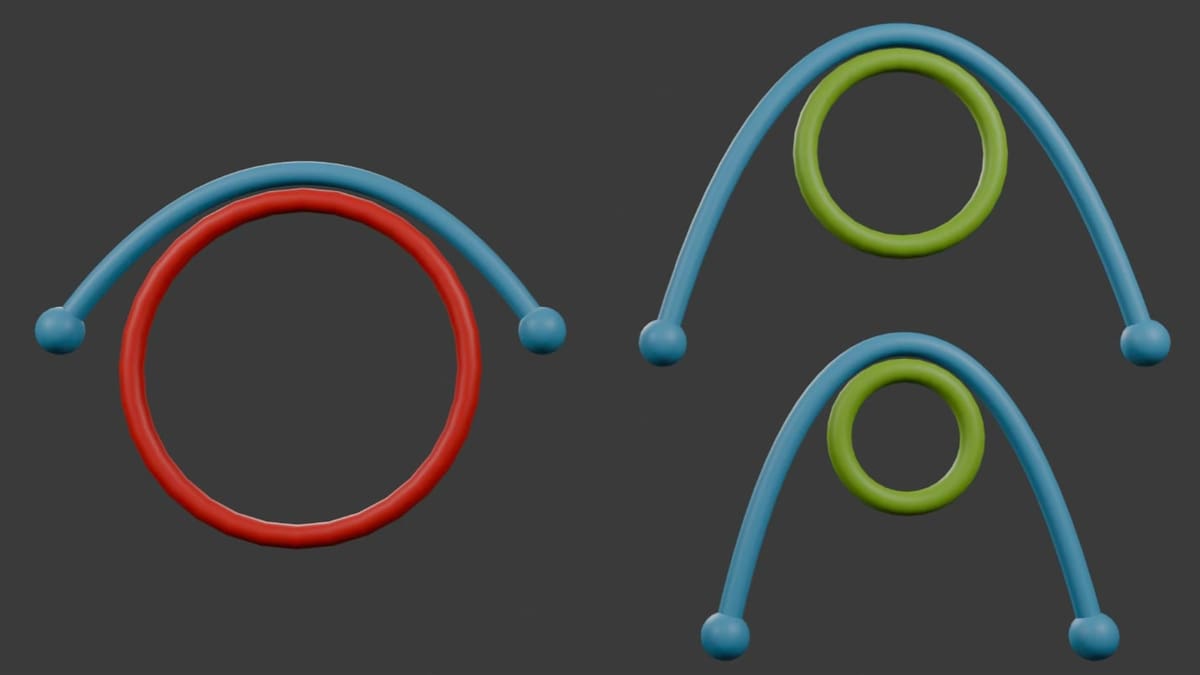
In the design, Gaudi cleverly used hanging chains and weights to set the shape of his cathedral. These hanging cables form ‘catenary’ curves, which when flipped upside down form naturally strong and stable arches. Catenary curves have been a powerful design tool for architects for centuries but are very under-utilized in 3D printing. More 3D printing enthusiasts should understand the power of these shapes since they work exceptionally well with our favorite manufacturing process.
Why Catenary Curves Matter
A hanging chain naturally settles into a catenary curve under its own weight. Flip that curve upside down, and the forces travel primarily through compression rather than bending. For 3D printing, this can produce arches that are both structurally efficient and easier to manufacture.
La Sagrada Familia is one of the earliest examples of the ‘Art Nouveau’ design movement starting in the late 19th century. This movement sought to blend modern technology with organic, natural forms. This design mindset works with modern 3D printing technologies as well. We can learn a lot from Gaudi’s use of natural forms, and now we can use technology to help achieve them.
For example, whereas Gaudi hung physical cables to design his cathedral, we can instead leverage modern simulation software to hang our cables to create novel designs. In fact, because we are simulating the hanging cables and leveraging modern additive manufacturing, we can create even more designs than were possible in Gaudi’s time.
Strength and Printability Aren’t the Same Thing
A catenary curve can offer two separate advantages. Its shape may carry certain loads efficiently, while its gradually changing slope may also reduce severe overhangs during printing. However, a structurally optimized curve is not automatically support-free—the result still depends on its proportions, orientation, material, and printing process.
The Fun Part (It’s Math)
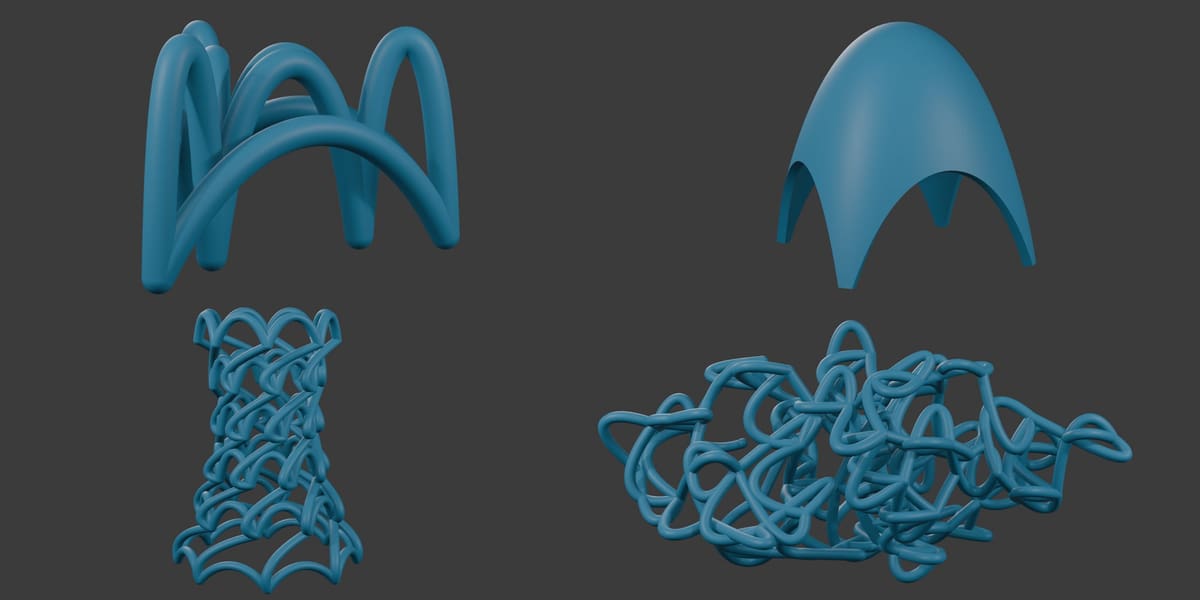
The models featured here above were all designed in the open-source program, Blender, and its powerful Geometry Nodes system. Though these could all be made with native functionality, here we used the Geometry Nodes Toolset made by Higgsas which includes an excellent catenary curve tool. Note that although catenary curves resemble a parabola, and are related, they not the same.
Catenary vs. Parabola
Catenary curves and parabolas can look nearly identical, especially when they are shallow, but they describe different things. A catenary is the shape formed by a freely hanging chain, while a parabola is defined by a mathematical relationship between a point and a line. For design work, use a true catenary function when you want to reproduce hanging-chain geometry.
The equation to plot a catenary curve is:
y = acosh(x/a)
Where a is a variable to control the distance between the ends of the curve.
What the h is cosh()?
You have likely seen cos() or cosine before, but there is an unusual ‘h’ in the cos() which makes it ‘hyperbolic cosine’. If you have never seen or used cosh() before, you are not alone. The good news is many CAD programs, including Blender, have cosh() as a built-in function, and you don’t necessarily need to fully understand what it entails. The most intuitive explanation maybe to think of the curve traced by the focal point of a parabola as it rolls along a flat surface.
If your design software does not have the cosh() function, you can use this equation instead:
y = (a/2)(e^(x/a)+e^(-x/a))
More ambitiously, the catenary curves can be calculated dynamically by applying forces on the individual nodes of the chain or cable. MTR Animation provides an excellent tutorial on this.
Catenary Surfaces
Beyond arches resembling hanging cables, catenary curves can be composed into surfaces similar to forms created by draping fabric. These are constructed by creating two curves that represent opposite edges of the surface, and a mapping between the two edges via catenary curves to ‘loft’ the curves into a continuous surface. These surfaces are initially zero thickness, but in Blender they can be given thickness with the Solidify modifier.
Manufacturability Considerations
How wide and tall can the curves be? The easiest way to answer is to see how large of a circle can be inscribed inside the curve. Depending on the material and printer settings, only up to a certain radius sidewall hole can be printed without supports. This is effectively the limit before the arch will require additional supports during printing.
A Practical Design Workflow
- Set the required span and height.
- Generate the catenary curve in CAD or Blender.
- Give the curve or surface sufficient thickness.
- Check overhangs in your slicer.
- Adjust the curve’s height, spacing, or orientation if supports are required.
- Validate load-bearing parts with simulation or physical testing.
If additional supports are unacceptable, then it can be made self-supporting by putting the ends of the curve closer together or making the length of the curve longer. If the pattern is repeating, it can often be made self-supporting by simply increasing the number of elements and maintaining the same height for the arches. Although technically, the curve would no longer be a true catenary curve, the design can also be scaled taller in Z to become more self-supporting.
With support-free technologies like SLS and MJF, you don’t have to worry about whether a catenary arch can be printed without supports, resulting in much greater design freedom.
When to Use This Approach
Catenary-inspired geometry is especially useful for openings, lattice structures, lampshades, architectural models, and lightweight decorative parts. It can also be applied to functional parts, but the loads must match the assumptions behind the design. A curve optimized for one loading direction may perform poorly when forces come from another direction.
If you’re wondering how thick to make the arches: for most 3D printing processes, .030″ (.75 mm) should be the lower limit or even .040″ (1 mm) to avoid fragility for most 3D printing processes. For larger designs, 1% of the maximum dimension of the part should be the minimum thickness. For example, if the printed part is approximately 6 inches, the arches should be at least .060″ thick.
What’s most impressive about Gaudí’s work is that he was using physical models to solve the same structural optimization problems that engineers still tackle today. By applying these principles to additive manufacturing, we can design parts that work with the physics of the application and achieve stronger, innovative, and more efficient designs.
About the Author:
Eric Utley is an applications engineering manager at Protolabs with over 16 years of experience in additive manufacturing and has manufactured products for the medical, consumer products, aerospace, and automotive industries. A passionate evangelical of digital manufacturing methods, Utley manages an applications engineering team of both 3D printing and CNC machining manufacturing experts.
You May Also Like:
License: The text of "The Brilliant Geometry Secret Behind Gaudí’s Architecture & Your Next Support-Free 3D Print" by All3DP Pro is licensed under a Creative Commons Attribution 4.0 International License.