Best Metal 3D Printers in 2026: Systems to Know by Budget, Technology & Use Case

Our decision maker’s guide to the best metal 3D printers for small parts, batch manufacturing, and aerospace & defense. Plus, a metal 3D printing tech primer.
If you’re still relying strictly on traditional casting, metal injection molding, or CNC machining, you’re losing out on the speed, complex geometry, and economy of metal 3D printing. Boosted today, on the entry-level, by more affordable and accessible hardware and on the industrial level by huge defense industry investments, metal 3D printing is reshaping the factory floor.
The technology has proven itself in rocket engines and replacement parts, medical implants and mold tooling, in industries from automotive and defense to healthcare and light manufacturing. Not only can you create parts with shapes and internal structures not possible with metal injection molding, casting, or machining, but metal 3D printing is a faster and cheaper (at low- to mid-volume) solution, making it possible to deliver metal parts in hours or days, not weeks.

Metal 3D printing has a host of other benefits over traditional manufacturing, such as the ability to easily outsource for local production to service providers worldwide, along with less waste and a higher sustainability profile. In fact, nearly every industry that uses metal parts has benefited from the time, money, labor, and material savings offered by metal 3D printing in all of its various forms and technologies.
Third-party 3D printing services have also matured in their offerings, eliminating the overhead of maintaining your own system. Through on-demand metal part 3D printing services, you can get guidance on materials and design or opt to simply upload your part’s digital file, select your metal material, and have your parts shipped from a provider near you.
What’s New in 2026?
Every few months, we update our extensive coverage of the most trusted names and most innovative machines in metal 3D printing. We have not personally tested all of these machines, rather, based on published specs, manufacturer case studies, process type and market positioning, these are the most relevant metal 3D printing systems to consider. These are not all the printers on the market, and not all may be available in your country, but when starting your hunt for a metal 3D solution, this is a good place to start.
Since our last update, new metal 3D printers were launched from
- One Click Metal, MPrint Pro
- Xact Metal, XM200G µHD
- Atlix, TruPrint 5000
- EOS M4 Onyx
- UnionTech, Muees430 Pro
- Farsoon, FS721M-8-CAMS
- BLT, BLT-S210 and BLT-S400
- Eplus3D, EP-M3050
The metal 3D printer industry is increasingly competitive as the top players court the same aerospace, defense, automotive, and manufacturing customers, all contemplating moving from prototype to production. A truly low-cost entry to metal 3D printing remains elusive, but more compact metal machines in the sub $100K range are gaining traction.
Which Metal 3D Printing Is Right for You?
If you’re looking for your first metal 3D printer, ask yourself these questions to narrow down your options:
- What metal(s) do I want to print with?
- What mechanical properties do my final prints need?
- How much do I expect to print in a week, and how fast do I need them?
- Are my final metal parts for a regulated industry?
- Can existing staff operate the machine or do I need new expertise?
- Does my printer maker or distributor offer consulting and support?
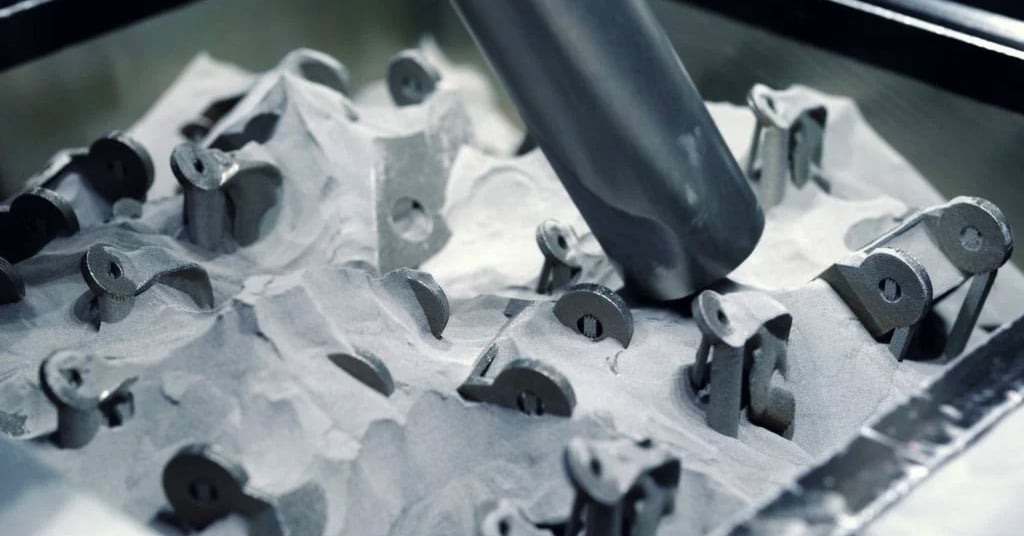
The Hidden & Not-So-Hidden Costs
The purchase price of a metal 3D printer is only part of the investment. Even entry-level systems can require added equipment, materials, safety measures, software, training, and post-processing before you produce your first usable metal part.
For metal powder bed fusion, budget for:
- metal powder & powder storage
- inert gas
- filters & sieving equipment
- PPE & fire-safety measures
- ventilation
- software licenses &. service contracts
- build-plate handling
You may also need depowdering, heat treatment, support removal, machining, surface finishing, inspection, and, for critical parts, HIP or certification testing.
Bound-metal extrusion systems can look far cheaper upfront, but most require debinding and sintering, either in-house or through a service provider. That adds cost, turnaround time, shrinkage compensation, and design constraints. A lower-cost printer can become expensive quickly if the required ecosystem is missing.
All3DP covers all the ins and outs of purchasing a professional 3D printer in our popular guide: “Business 3D Printers: How to Make a Purchasing Decision”.
Should you buy a printer or use a service?
Turning to a metal 3D printing service bureaus is often the better first step before buying a six-figure or seven-figure metal system.
Investing in a metal 3D printer is no small decision, and part of any good due diligence is comparing the cost to ordering parts. For smaller projects, one-offs, and tests, outsourcing your 3D prints to a metal 3D printing service can dramatically save on the capital cost and overhead of operating your own system.
Third-party print services, such as Shapeways, Materialise, and 3D Hubs, also offer metal printing. However choosing the right printing service for your needs can be a challenge. The best first step is to visit Craftcloud, the 3D printing service marketplace by All3DP, where you can instantly compare metal 3D printing prices for multiple parts in the same basket. The Craftcloud platform mixes and matches offers to give you the lowest cost and quickest turnaround time. Unlike other services, you can choose the specific service that will print your part.

The 7 Major Metal 3D Printing Technologies
If you’re unfamiliar with your metal 3D printing technology options, skip to the overview section on metal technology. This guide only covers three of the metal technologies, extrusion (and FDM), binder jetting, and laser powder bed fusion (LPBF), leaving the rest to our speciality guides on wire arc additive manufacturing (WAAM), electron beam melting (EBM), cold spray, Cold Metal Fusion, and directed energy deposition (DED).
| Metal 3D Printer | Technology | Build Volume in mm | Feedstock | Used For | Aprox. Price* |
|---|---|---|---|---|---|
| BCN3D Epsilon W27 with Metal Pack Upgrade | FDM IDEX | 420 x 300 x 220 | metal-infused polymer filament | Spare Parts, Prototypes, Tooling | $7,400 |
| UltiMaker S7 with Metal Expansion Kit | FDM | 330 x 240 x 300 | metal-infused polymer filament | Spare Parts, Prototypes, Tooling | $8,300 |
| Raise3D Forge1 | FDM | 300 x 300 x 300 | metal-infused polymer filament | Spare Parts, Prototypes, Tooling | $10,000 |
| Markforged FX10 with Metal Kit | FDM | 375 x 300 x 300 | bound powder filament | Spare Parts, Prototypes, Tooling | $120,000 |
| Rapidia Conflux 1 | FDM | 200 x 280 x 150 | metal paste | Spare Parts, Prototypes, Tooling | $18,000 |
| EasyMfg M200Eco | Binder Jetting | 200 x 140 x 100 | metal powder | Spare Parts, Prototypes, Tooling | $70,000 |
| Additive Plus' AO Metal A30 | LPBF | Ø30 x 60 mm | metal powder | Spare Parts, Prototypes, Tooling | $70,000 |
| One Click Metal MPrint Pro | LPBF | 150 x 150 x 150 | metal powder | Spare Parts, Molds, Low-Volume Tooling | $150,000 |
| Xact Metal XM200G | LPBF | 150 x 150 x 150 | metal powder | Spare Parts, Prototypes, Dental | $110,000 |
| Kurtz Ersa Alpha 140 | LPBF | 140 x 140 x 200 | metal powder | Spare Parts, Tooling, Machinery | $165,000 |
| Additec Fusion S | LPBF | Ø100 x 185 | metal powder | Spare Parts, Prototypes, Tooling | $129,000 |
| Ermaksan Enavision 120 | LPBF | Ø120 × 80 | metal powder | Spare Parts, Tooling, R&D, dental | $200,000 |
| BLT S210 | LPBF | 160 x 160 x 200 | metal powder | R&D, Spare Parts, Tooling | $180,000 |
| 3D Systems DMP Flex 200 | LPBF | 140 x 140 x 115 | metal powder | Spare Parts, Prototypes, Dental | $400,000 |
| Atlix TruPrint 1000 | LPBF | 100 x 100 x 100 | metal powder | Spare Parts, Tooling, Dental | $170,000 |
| Eplus3D EP-M150 | LPBF | 153 x 153 x 120 | metal powder | Spare Parts, Tooling, Machinery, Medical/Dental, Aerospace | $145,000 |
| HBD 150 | LPBF | Ø158 x 100 | metal powder | Spare Parts, Tooling, R&D, Dental | $100,000 |
| 3D Systems DMP Flex 350 | LPBF | 275 x 275 x 420 | metal powder | Spare Parts, Tooling, Production Parts, Machinery, Medical/Dental | >$500,000 |
| Atlix TruPrint 3000 | LPBF | 300 x 300 x 400 | metal powder | Spare Parts, Tooling, Production Parts, Machinery, Medical/Dental | >$500,000 |
| UnionTech Muees430 | LPBF | 430 x 340 x 400 | metal powder | Spare Parts, Tooling, Production Parts, Machinery, Medical/Dental | >$500,000 |
| Renishaw RenAM 500 | LPBF | 250 x 250 x 350 | metal powder | Spare Parts, Tooling, Production Parts, Machinery, Medical/Dental, Aerospace | $250,000 |
| EOS M4 Onyx | LPBF | 450 x 450 x 400 mm | metal powder | Production Parts, Machinery, Medical/Dental, Aerospace | $390,000 |
| HP Metal Jet S100 | Binder Jetting | 430 x 309 x 170 | metal powder | Spare Parts, Tooling, Production Parts, Machinery, Medical/Dental | $399,000 |
| AddUp FormUp 350 | LPBF | 350 × 350 × 350 | metal powder | Tooling, Production Parts, Machinery, Medical/Dental, Aerospace, Heavy Industry | >$500,000 |
| EPlus3D EP-M3050 | LBPF | 3,050 x 3,050 x 1,200 | metal powder | Aerospace, Space, Energy, Automotive, Medical | >$500,000 |
| AMCM M 8K | LPBF | 800 x 800 x 1,200 | metal powder | Aerospace, Space, Energy, Automotive, Medical | |
| Nikon SLM Solutions NXG 600E | LPBF | 600 x 600 x 1,500 | metal powder | Spare Parts, Tooling, Production Parts, Machinery, Medical/Dental, Aerospace | >$500,000 |
| Velo3D Sapphire XC 1MZ | LPBF | Ø600 x 1,000 | metal powder | Tooling, Production Parts, Machinery, Medical/Dental, Aerospace, Heavy Industry | >$500,000 |
| Farsoon FS1521M | LPBF | 1,530 x 1,530 x 1,650 | metal powder | Aerospace, Heavy Industry, Production Parts, Machinery, Medical | >$500,000 |
| HBD 1600 | LPBF | 1,600 x 1,600 x 1,750 | metal powder | Tooling, Production Parts, Machinery, Medical/Dental, Aerospace, Heavy Industry | >$500,000 |
| BLT S1500 | LPBF | 1,500 x 1,500 x 1,500 | metal powder | Spare Parts, Tooling, Production Parts, Machinery, Medical/Dental, Aerospace | >$500,000 |
Entry Level Metal Extrusion
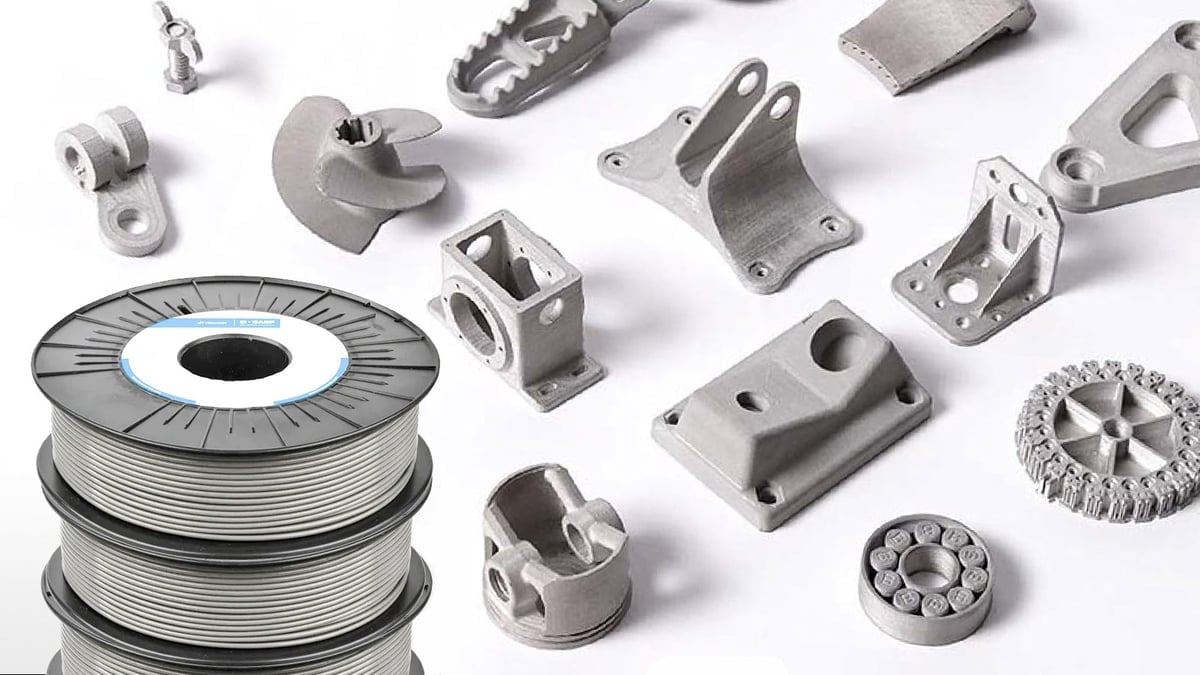
Solid metal parts from a roll of metal-infused polymer filament have dramatically expanded access to 3D printing metal for a wide audience of professionals who had been priced out of the technology. Today, it is used for mostly small replacement parts and injection molds.
Once a novelty, printing with metal filament, also called bound metal deposition (BMD) or metal deposition modeling (MDM), creates almost entirely solid metal parts on desktop- or benchtop-size 3D printers. These machines are not “print metal part and use it” systems. They must be debound (usually) and then sintered in a furnace, which requires that your send your printed parts to a third-party, unless you have the equipment — the same used for metal injection molding — in house.
While the ease of use of metal filament may have been overestimated by some users aiming to get metal parts from practically an desktop FDM, its benefits remain: It can be up to 90% cheaper than other metal 3D printing technologies for single pieces or low-volumes. It also eliminates many of the safety concerns associated with metal 3D printing, including loose metal powder and lasers, all while offering much if the same design freedom and part quality of other methods.
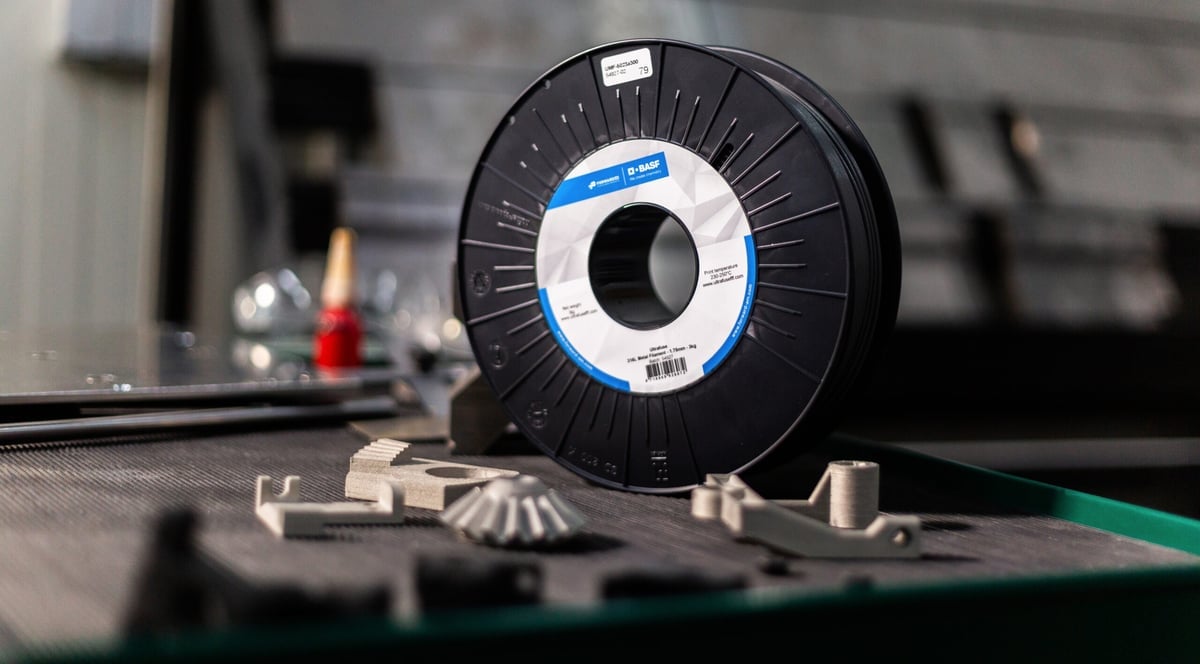
Metal filament 3D printing can be said to come in three levels. First, consumer desktop 3D printer makers today, including Anycubic, have launched printer profiles that enable you to print with metal filament, from Virtual Foundry or Forward AM (now owned by Stratasys), on their affordable machines. Next are the prosumer FDM printer manufacturers, such as UltiMaker, Markforged, and BCN3D, that have launched kits for metal 3D printing containing the profiles, the filament (also from Forward AM), nozzles, and coupons to have the parts sintered. The third level are professional FDM printers, from Markforged and Desktop Metal, that use their own proprietary metal filament.
A bit of an outlier in this category is Rapidia and its Conflux 1 that uses a proprietary water-based paste material inlaid with metal. A newcomer that’s also paste-based is South Korean company Ohsung System, which launched its Gauss MT90 compact metal 3D printer at the 2026 Consumer Electronics Show in Las Vegas.
BCN3D Epsilon W27 with Metal Pack Upgrade
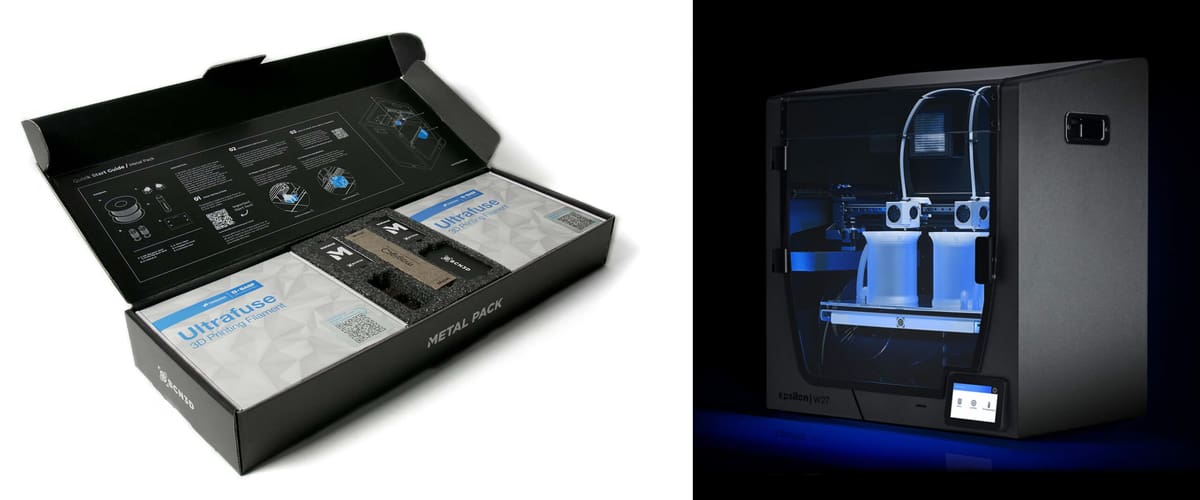
The Metal Pack is an upgrade for the current Epsilon W27 and W50 independent dual extruder FDM 3D printers. BCN3D says the parts produced by this process have practically identical behavior to those produced by metal injection molding “or CNC and offer an office-friendly solution with far more design freedom.”
BCN3D says that with its metal printing profile, it has established the shrinkage at 19% in XY and 24% in Z, meaning that it prints “more densely than other brands and therefore waste less printing time.”
The Metal Pack includes:
- Forward AM Ultrafuse 1316L (3 kg)
- Forward AM Ultrafuse 17-4 PH (3 kg)
- 2x Hotend M
- Magigoo Pro Metal (50 ml) adhesive
- 2x Brass Wiper
- BCN3D Stratos slicer print profile
- Activation code
After printing, the debinding and sintering processes can be carried out externally through the current Forward AM authorized limited network of service suppliers in Europe and North America. BCN3D says sintering and debinding typically costs between $50 and $80 per kilo.
UltiMaker S7 with Metal Expansion Kit
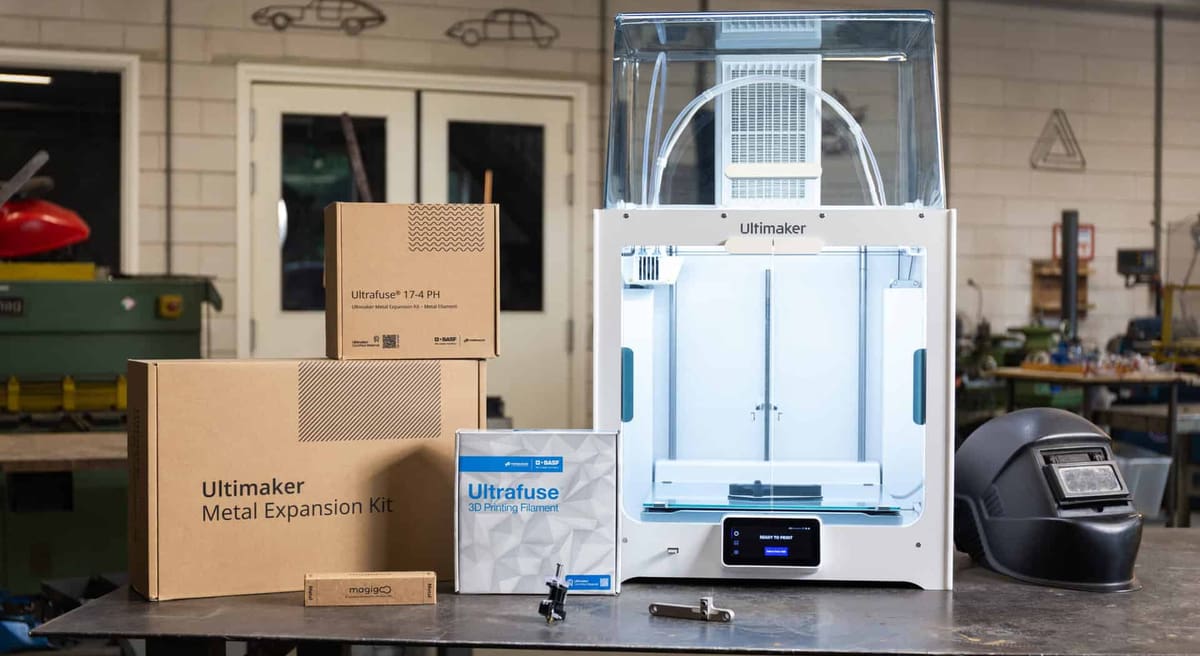
The UltiMaker S7’s Metal Expansion Kit turns the company’s polymer-focused S-series platform into an accessible metal 3D printing system for producing stainless steel parts. Because the S7 can switch between plastic and metal workflows by changing materials and print cores, the kit broadens the printer’s application range while keeping the system relatively compact and affordable. UltiMaker claims metal parts can be produced at up to 90% lower cost compared with CNC and other additive methods.
The UtliMaker S7 base model retails for about $6,700 while the Metal Expansion Kit retails for around $1,660.
Rather than printing fully dense metal directly, the workflow uses Forward AM Ultrafuse 17-4 PH, a metal-filled filament that is printed on the S7 and then sent through debinding and sintering at a third-party to become a finished steel components.
The Metal Expansion kit includes:
- Forward AM Ultrafuse 17-4 PH (1 kg)
- Forward AM Ultrafuse Support Layer (300 g)
- Packaging for green parts and a voucher toward post-processing
- Ultimaker Print Core CC 0.4 and DD 0.4
- Magigoo Pro Metal (50 ml) adhesive
- Ultimaker Cura software with optimized metal part slicing features
- Access to metal e-learning content on Ultimaker Academy
UltiMaker positions this solution for strong, complex 17-4 PH stainless steel parts, including tooling, functional prototypes, and auxiliary end-use components.
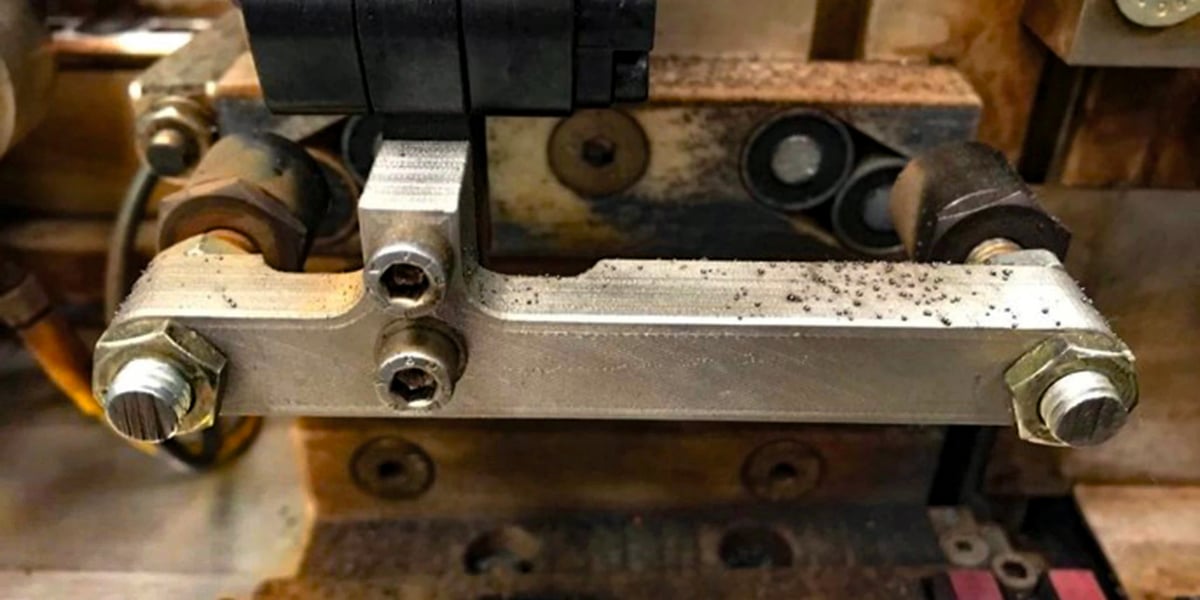
The Forward AM 316L stainless steel metal filament is about $565 per 3kg, while the Ultrafuse 17-4 PH stainless steel is about $449 per 3kg.
Raise3D Forge1
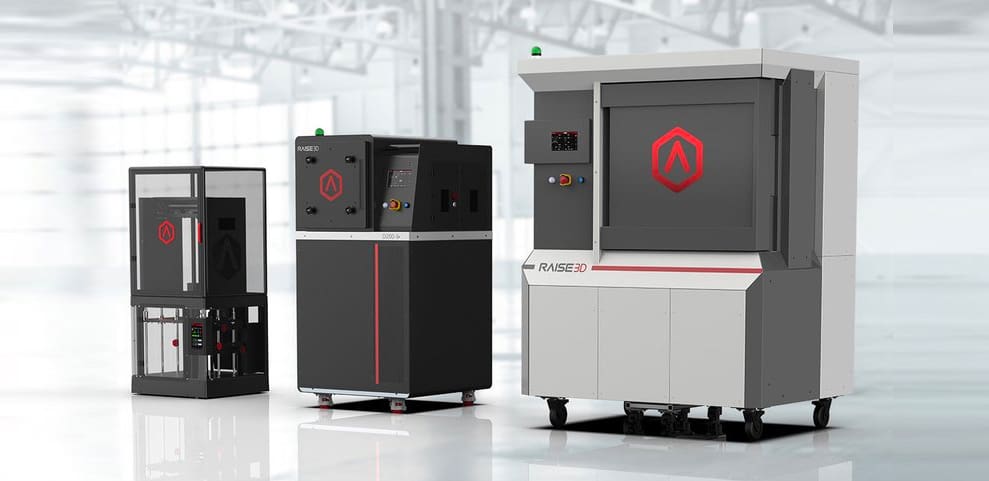
Rather than enabling metal filament on one of its current FDM 3D printers, Raise3D launched a dedicated solution, Forge1. This printer is part of the company’s MetalFuse solution, which includes the D200-E debinding device and the S200-C vacuum sinter furnace that can reach 1,500 ℃. The three machine solution retails for about $150,000. The printer alone is roughly $10,000.
The MetalFuse system prints with Forward AM Ultrafuse stainless steel filament, like the desktop FDM printers mentioned above, but Raise3D is the first company out of the gate with a complete three-part solution so you don’t have to send your parts to a third-party provider for post-processing.
Raise3D says it can offer a streamlined workflow for in-house metal part production that also includes software that automatically accounts for print shrinkage so that the final size after debinding and sintering will be accurate.
The Forge1 printer boasts a dual-extruder, automatic bed leveling, filament run-out sensor, and HEPA filter with activated charcoal.
The dual-extruder comes in handy for printing with the Ultrafuse Support Layer, currently only available in Europe, which is an aluminum oxide material used for “layer isolation”. In other words, it enables breakaway supports as a separation layer between the support and the prints after sintering.
The Raise3D aims the Forge1 at small-scale production of metal end-use parts. Printed metal parts are 97% dense metal. The company recently announced a new service where, for Forge1 owners, it validates and optimizes your 3D model design to ensure that it will achieve the best printing and post-processing results.
Markforged FX10 with Metal Kit
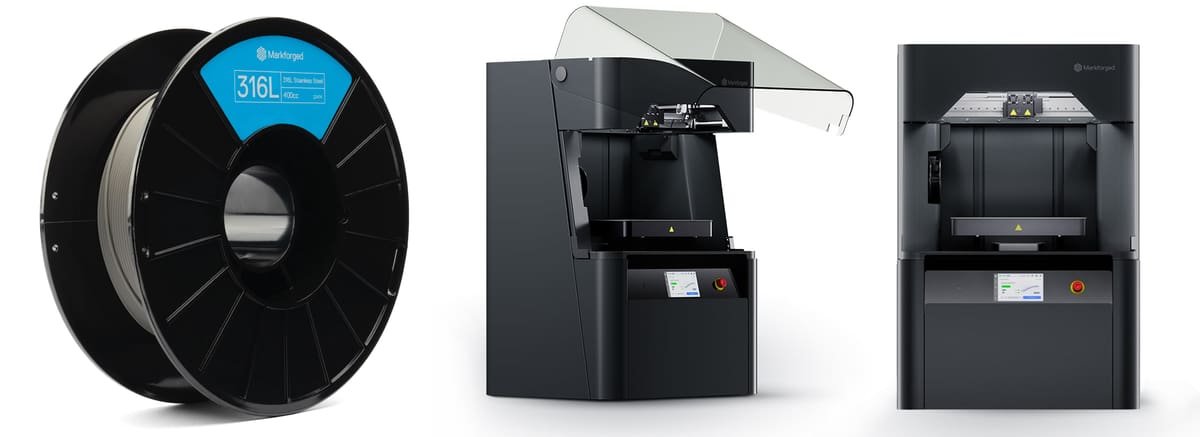
Markforged has been offering metal extrusion on desktop-size machines since 2018 with its popular Metal X, which uses a proprietary bound metal powder filament. More recently though Markforged debuted metal filament compatibility on its newer FX10, giving workshops the continuous carbon fiber or metal option many were looking for in one machine.
The FX10 Metal Kit ($19,000) consists of a swappable print “engine” that includes a metal-specific print head, material feed tubes, routing back, and dual pre-extruders. The swap takes about 15 minutes.
The Metal Kit, however, is not the same system as you’ll find in the Metal X 3D printer. Just as the FX10 is a step beyond the company’s previous composite 3D printers, the Metal Kit enables faster metal printing than the Metal X. Plus, the FX10’s print volume is larger than the Metal X’s (375 x 300 x 300 mm vs. 300 x 220 x 180 mm).
The Metal X however can printer with more metals, including copper, than the FX10 currently.
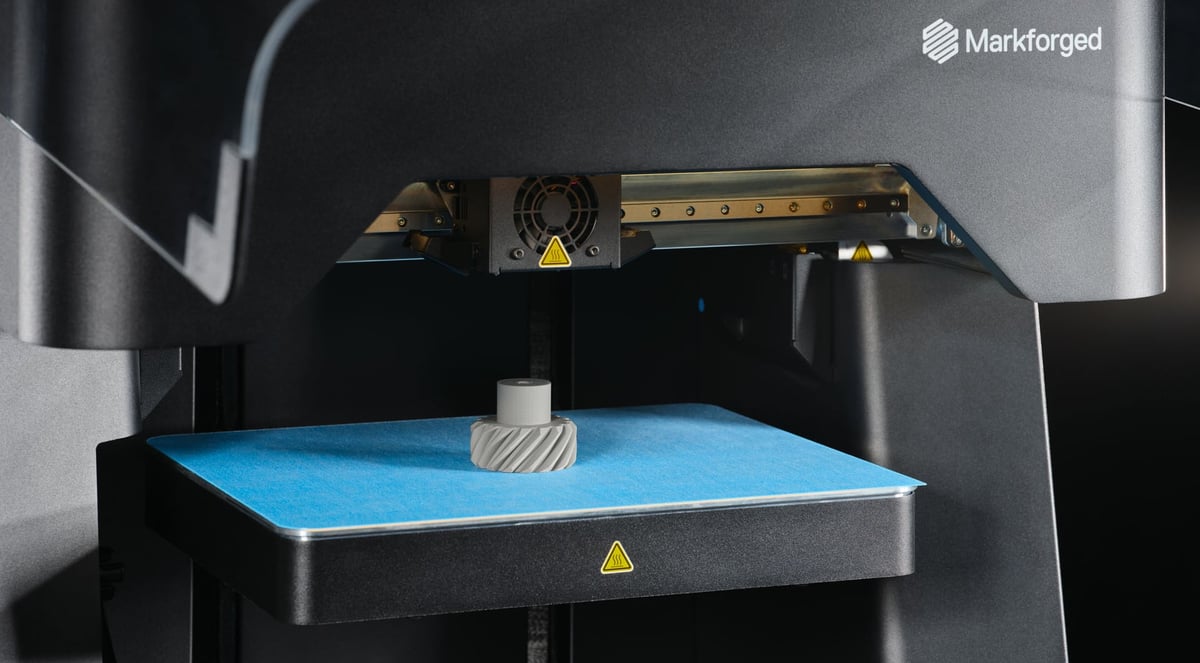
Metal prints are built from a new proprietary metal filament and a ceramic release filament that prints a barrier between part and support for easy removal. Markforged developed a new 316L stainless steel metal filament to be used with the FX10 Metal Kit. There’s also a 17-4PH stainless steel and more metal filaments in the pipeline.
Rapidia Conflux 1
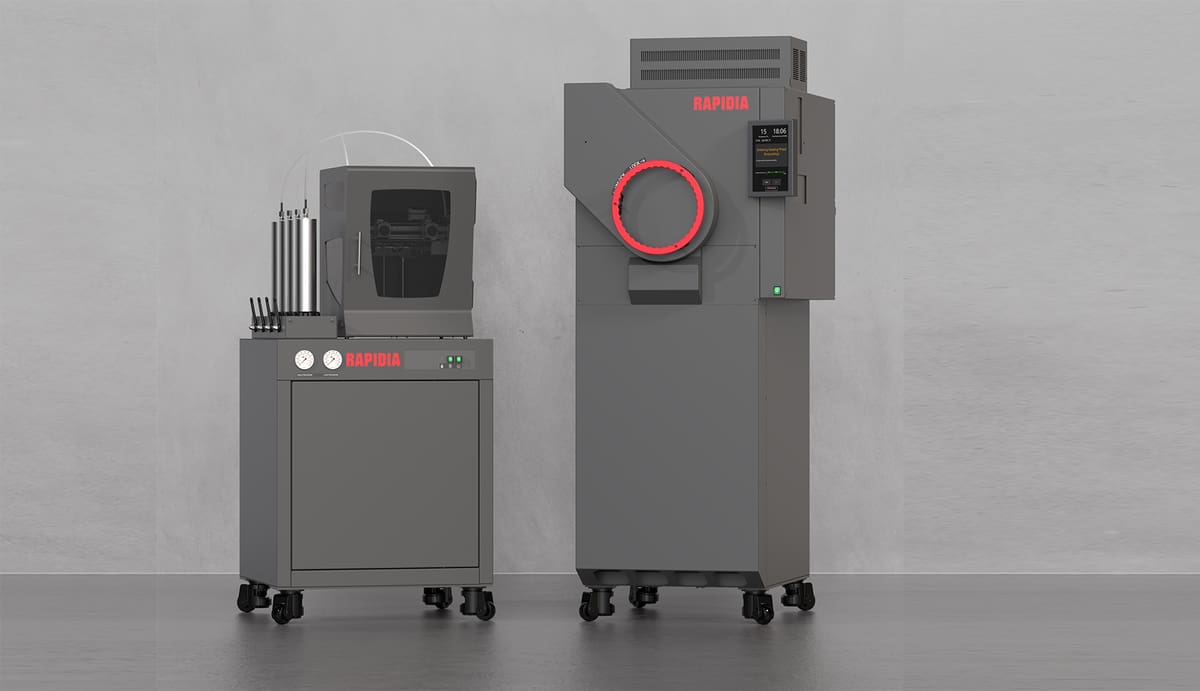
We haven’t heard much from Canada-based Rapidia since it launched the Conflux 1 from beta not that long ago, but its technology is too interesting not to mention here. It is a metal extrusion solution, like those above, but uses a water-based paste material inlaid with metal or ceramic powders. This “Metal Paste Deposition” does not involve any loose powder or hazardous debinding chemicals. Parts do not require a debinding step since the water evaporates while printing before sintering. This accelerates final part delivery times to simple overnight sintering, the company says.
Designed for an office environment and easy to operate, the company says, the Conflux 1 is offered with or without a sintering unit and has proprietary software.
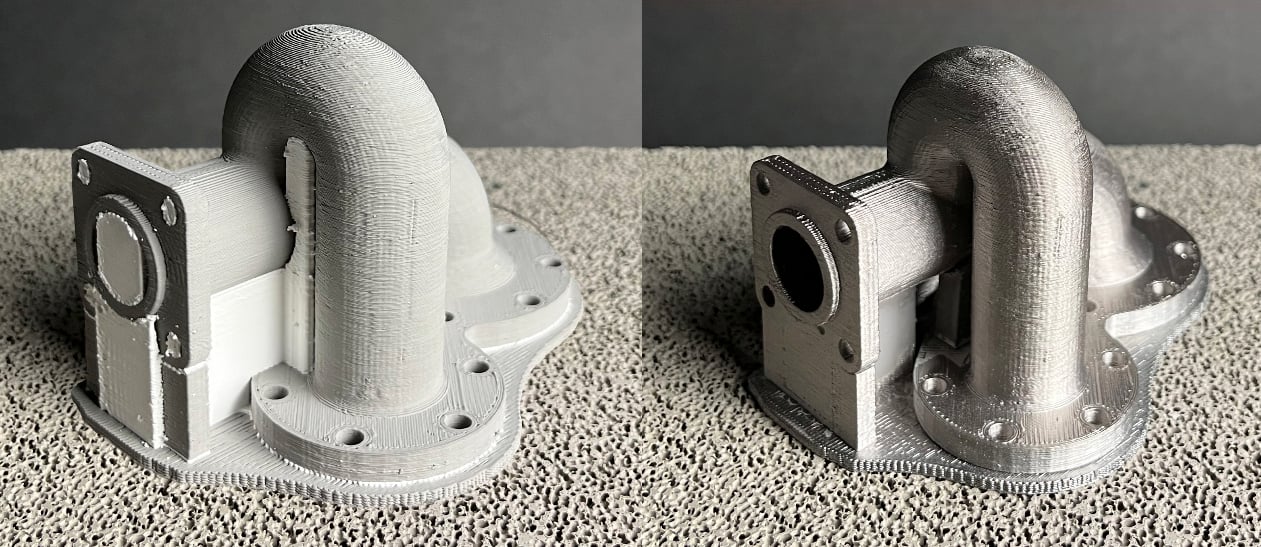
The Conflux 1 furnace sinters some common metals, such as 316L, in standard Argon gas. With a hot-wall furnace design, it is also much more energy efficient than typical sintering furnaces, the company says, using just 62kWh for a sintering cycle. Next to metal, gas is the second largest expense in a system that requires sinter post-processing.
Current materials include 316L stainless steel, 17-4PH stainless steel, and Inconel 625. In development, the company says, are copper, H13 tool steel, and cemented tungsten carbide.
Compact Metal LPBF
The compact metal laser powder bed fusion (LPBF) is one of the most interesting spaces in metal 3D printing right now. The race is on to shrink the technology used in industry for the past few decades into a format that more companies can afford.
The entry-level investment used to be the low six figures. Today, several companies are working to bring that figure down to even under $10,000 with smaller, ultra-compact LPBF machines aimed at R&D, low-volume, and specialty parts, such as dental implants.
Of course, before we go on with the small LPBF machines, it’s worth noting that if you’re looking to spend under $30K for a metal 3D printer, there’s the niche technology called Cold Metal Fusion to consider that turns your polymer selective laser sintering (SLS) 3D printer into a metal-compatible one.
What’s Considered Compact?
We’re defining “compact” as any unit with a build volume at or under 200 mm in any direction. But size may be all these machines have in common. This entry-level LPBF niche includes desktop-size bare-bones machines and sophisticated units with all the features you may find in the a larger versions, just in a small package.
Even these smaller machines require additional equipment for powder handling, ventilation, inert gas, PPE, and post-processing, so the prices we list per printer are not your total hardware investment.
Is Desktop LPBF Even Possible?
In the last year we’ve seen start-ups in the segment with machines that may not yet be commercially available, but are, nonetheless, attracting interest.
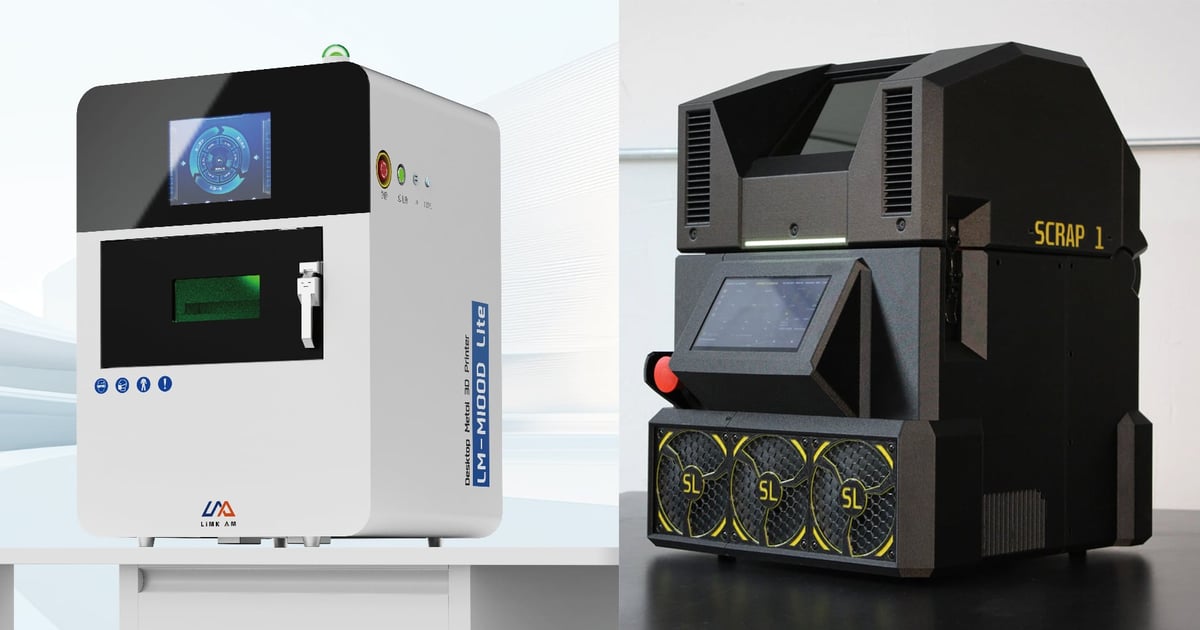
One example is the new desktop metal laser powder bed fusion 3D printer, the Scrap 1 ($9,600 as a kit or $17,990 fully assembled), debuted in April at the 2026 Rocky Mountain RepRap Festival in Loveland, Colo. The Metal 1.0 (<$10,000) from Metal-Base was recently a Kickstarter project. It has a 128 × 100 mm build volume and uses a 60W diode laser with a nitrogen gas environment.
At the 2025 Formnext Expo we also noticed new compact LPBF machine from India-based Amace Solutions. The STLR 120 has a Ø120 × 200 mm build volume and is equipped with a 400 W fibre laser capable of processing layers between 20 and 60 μm in aluminum alloys, stainless steels, CoCr, Inconel, and Ti-6Al-4V. We also clocked a few Chinese compact LPBF machines, including the LM-M100 DLite from Tianhong Laser/Linmu3D. This unit is aimed at dental labs with a build volume of about Ø100 × 80 mm and aa 300W laser.
EasyMfg M200Eco
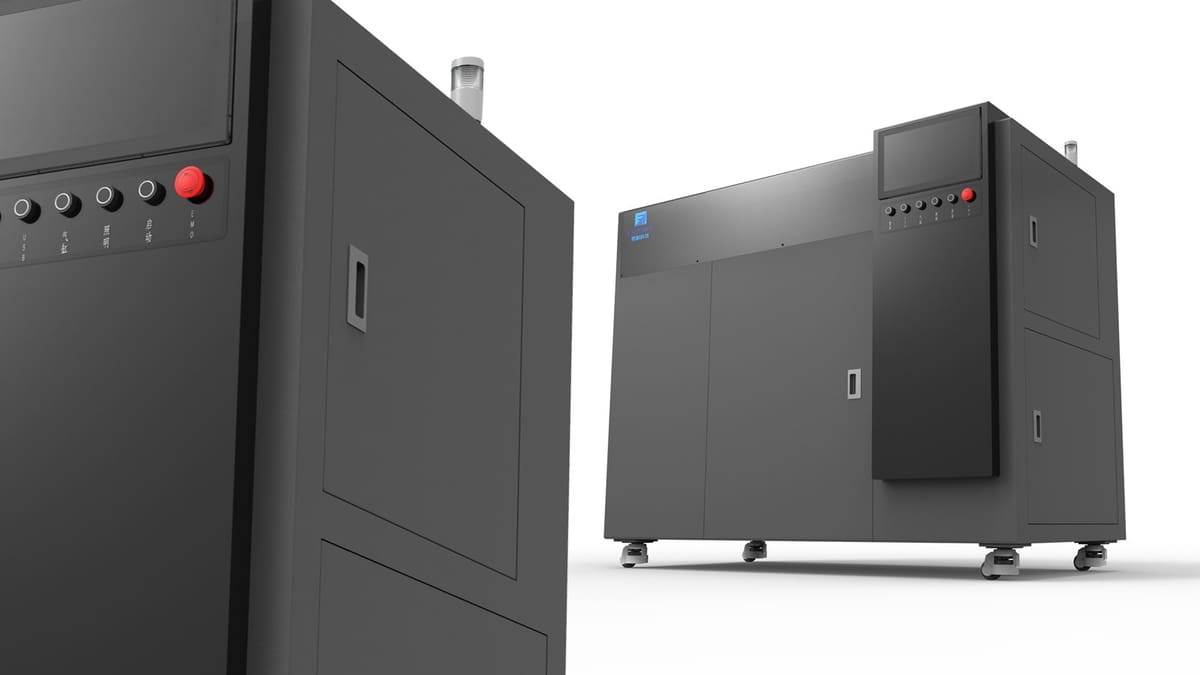
EasyMfg, the Chinese metal binder jetting 3D printer maker, has its sights set on expansion beyond China with with a new metal binder jetting 3D printers set to launched in 2025.
The M200Eco could be called a starter unit among the company’s previous metal binder jet machines and focuses on production.
The M200Eco targets fast 3D printing of small parts as “an essential partner for the MIM industry,” the company says. It has a 200 x 140 x 100 mm build volume and prints at 8 to 14 seconds per layer. The adjustable layer thickness ranges from 30 to 100 microns.
EasyMfg says the unit is energy efficient and has one-pass printing with simultaneous powder recoating for efficiency. The piezoelectric printheads are equal to the width of the build cylinder.
Binder jetting technology is generally faster than LPBF, but requires post-processing steps, including debinding and sintering in a furnace.
Additive Plus' AO Metal A30
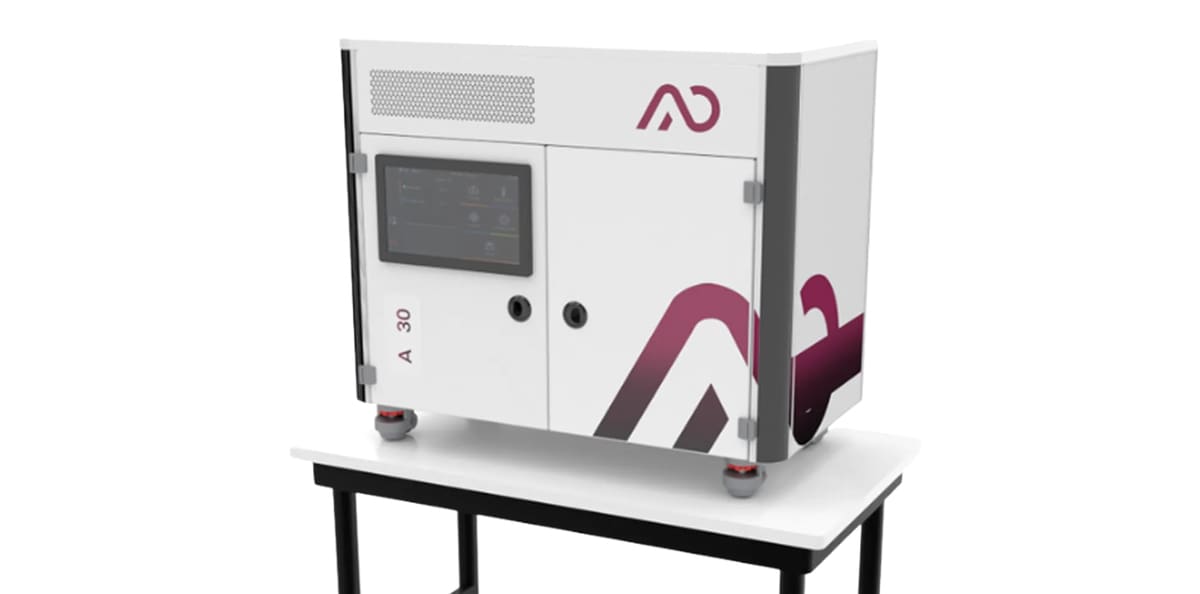
Launched in April 2025, the Additive Plus AO Metal A30 is a compact metal LPBF 3D printer manufactured in the U.S. Its cylindrical build volume of Ø30 x 60 mm is geared toward small, detailed parts such as functional prototypes, test coupons, lattice structures, jewelry, and intricate R&D geometries.
he system uses a 1064-nm fiber laser available in 200W or 300W configurations, with a standard 75-micron laser spot and an optional 55-micron spot for finer detail. A galvo scan head with F-theta lens enables scan speeds of up to 12 m/s, while layer thicknesses range from 15 to 100 microns.
The A30 supports a broad range of metal powders, including stainless steel, titanium, aluminum, Inconel, cobalt chrome, tungsten, NiTi, magnesium alloys, and ferromagnetic Fe-Co-V materials. Its heated build plate reaches up to 250°C, and the system operates under argon with consumption below 2 L/min, helping keep operating costs manageable, the company says. Powder changeover can be completed in around one hour, which is useful for labs working across multiple materials or research programs.
Additive Plus pairs the printer with AO Build Studio and AO Build Slicer, with STL file support. Power requirements are modest for a metal system, with 110V single-phase input and 2.5 kWh power consumption. Weighing just 64 kg, the A30 is positioned as an accessible, low-maintenance metal printer for users who need professional-grade surface quality, material flexibility, and precise small-part production in a compact package.
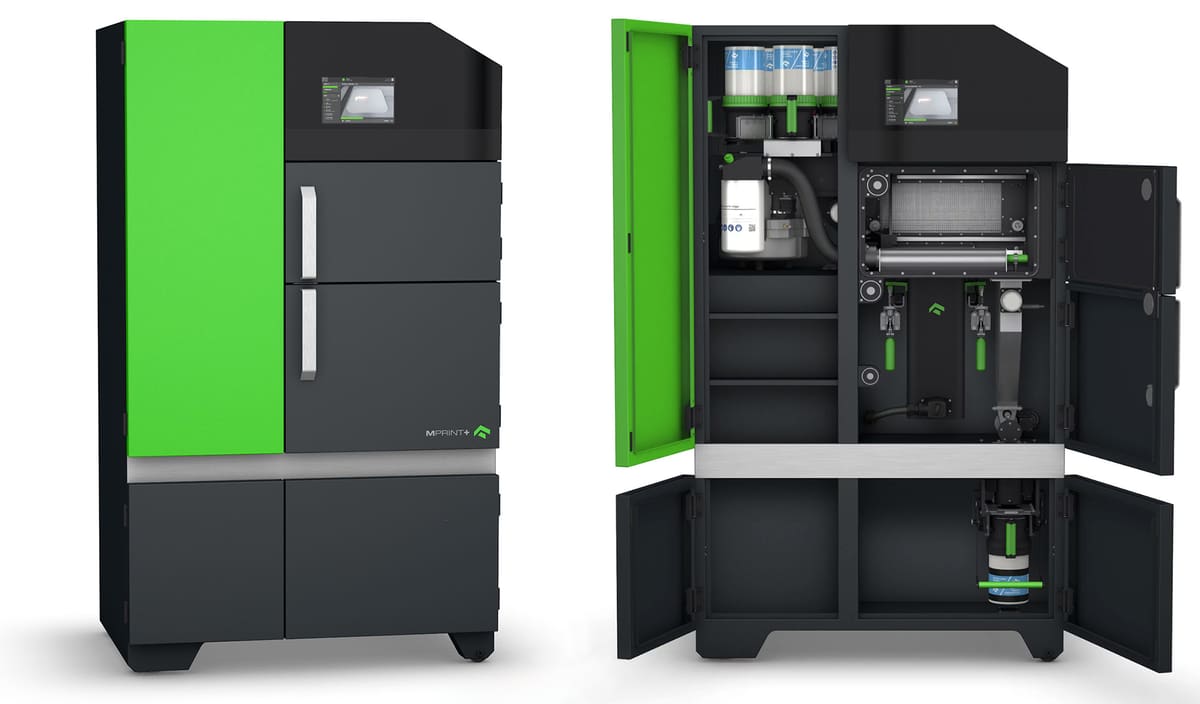
One Click Metal started as a spin-off from well-known printer maker Trumpf (which is now Atlix) with the goal of producing affordable, easy-to-use metal 3D printing systems perfect for companies new to metal laser powder bed fusion (LPBF) technology.
The company’s MPrint launched in 2020 and the MPrint Pro in 2025. Both work with cartridges of metal powder that the company says eliminates the mess, and it’s meant to be deployable with fewer requirements in terms of accessories and space.
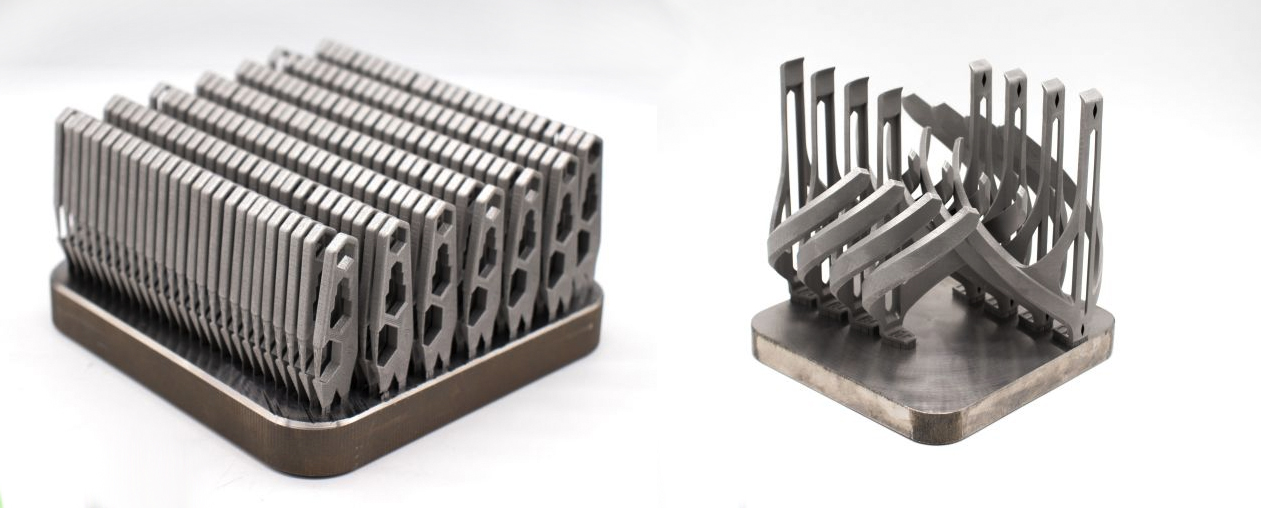
It has a build volume of 150 x 150 x 150, comes with the MPrep software, and is meant to be paired with the MPure ($38,000), which is the company’s 3-in-1 unpacking station that depowders the component, screens the powder, and provides recycled powder for reuse. The cartridge system of both the printer and the depowder station ensures easy and safer handling so that you have limited contact with the powder. With the side connection for a vacuum cleaner, you can remove excess powder from the unpacking chamber.
The MPrint 3D printer comes with a signal 200-watt fiber laser power, generating a spot size of 70 microns. This metal solution is also relatively zippy at a scanning speed of up to 12,000 mm/s and produces parts with a 20- to 80-micron layer height. Metal options include aluminums, coppers, steels, nickels, and titaniums. There’s also a new Lab Module, which is an interchangeable build module for our that lets researchers or labs experiment with various materials without the need to clean the entire machine between jobs.
The MPrint Pro has a 500W fiber laser for faster build rates.
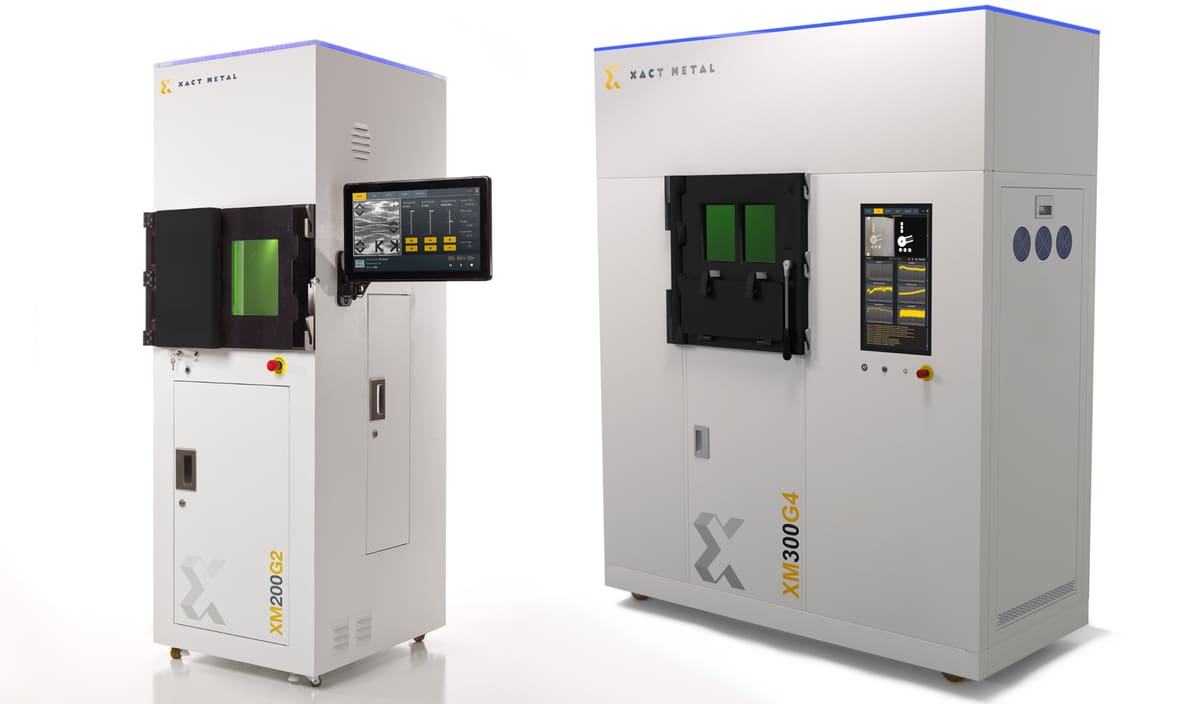
US-based Xact Metal offers two laser powder bed fusion 3D printers with the aim of offering “speed & performance at an affordable price,” the company says.
The XM200G was launched in 2021 and integrates the option of using two lasers simultaneously with either a 100% overlapping work area using a 100 µm spot size or a 66% overlapping work area using a 50 µm spot size. This multi-laser system further increases build print speeds. Plus, you can select from one or two 100-, 200-, or 400-watt fiber lasers.
Xact Metal says the XM200G is aimed at companies that are just starting their entry into metal 3D printing in various applications, including product development and tooling manufacturing. The machine is highly configurable to match different applications and to keep costs down. Some features are optional, such as the glovebox option to ease powder handling and additional sensors for build monitoring.
The XM200G is relatively small with a 150 x 150 x 150 mm build volume, yet well-suited to dental applications. The new XM300G is much bigger (300 x 300 x 350 mm) and features more powerful lasers 400W or 700W fiber lasers. Metal options include aluminums, coppers, steels, nickels, and titaniums. The laser scan speed is up to 34,600 mm/sec.
Kurtz Ersa Alpha 140
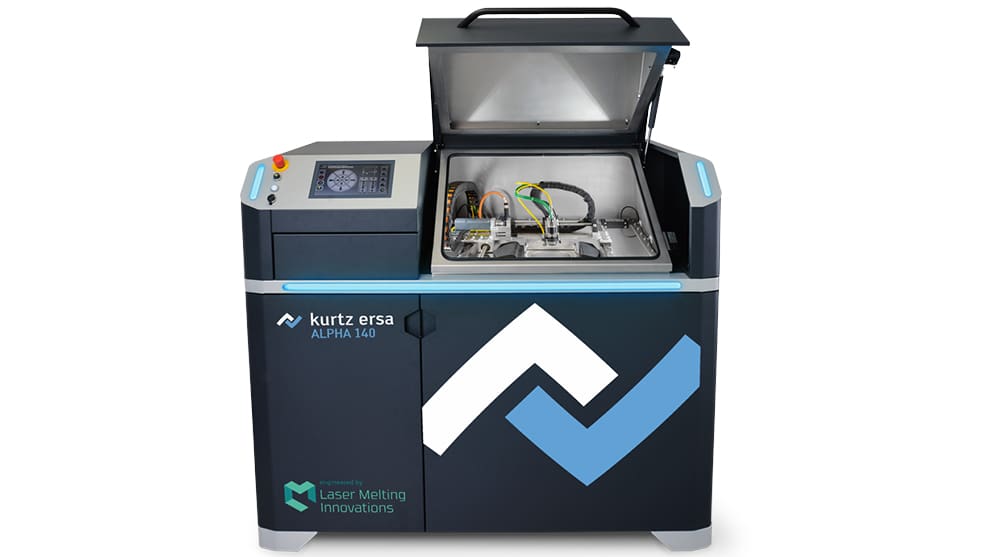
Kurtz Ersa, the giant German machine maker and technology corporation, got into the 3D printing market in 2021 with the Alpha 140. The aim, like the two above, was to deliver an entry-level metal printer with simple operation at a low cost for small and medium-sized companies.
Featuring an open perimeter system, you can develop your own processes by adjusting the slicer according to individual requirements. The machine features a 200W fiber-coupled diode laser with a 110-micron focus diameter for fine details and thin wall thicknesses.
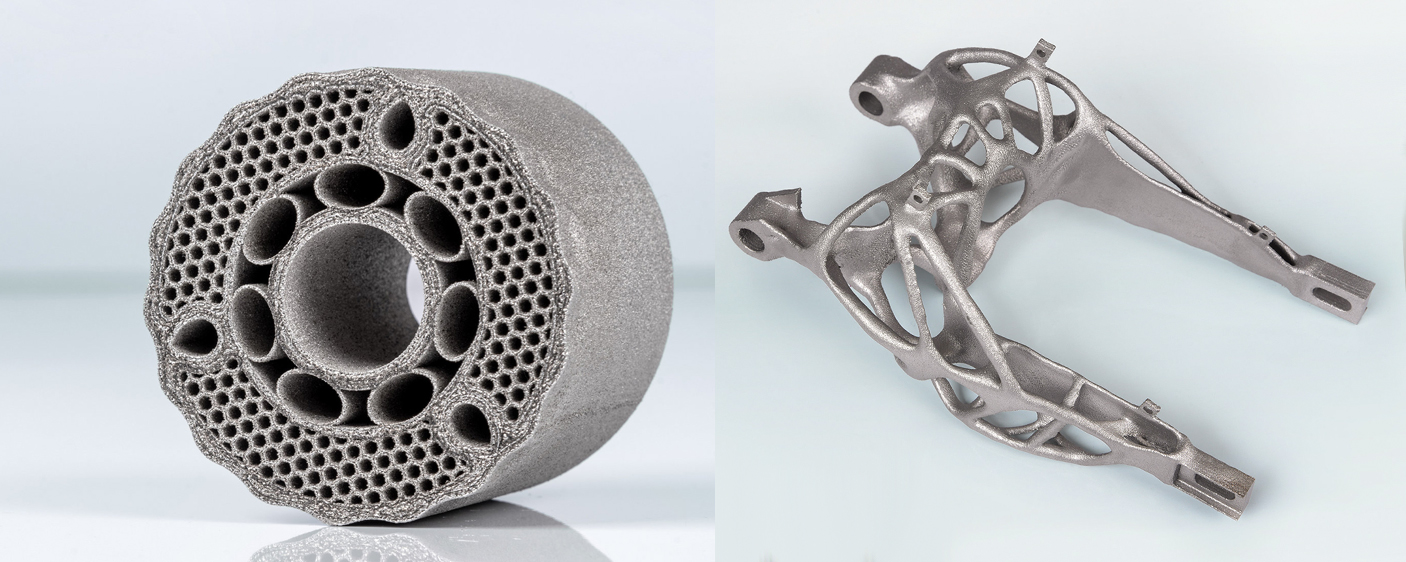
The Alpha has a small footprint so you can produce parts in stainless steels, tool steels, and nickel-based alloys on any size shop floor. Kurtz Ersa says the Alpha 140 can achieve metal part strengths comparable to larger LPBF machines and has a metal part density of up to 99.9%.
An optional laminar shielding gas flow creates more optimum conditions for the inert welding process while keeping the laser optics protected. There’s also a proprietary LMI SliceAM software that integrates with Autodesk Fusion.
Additec Fusion S
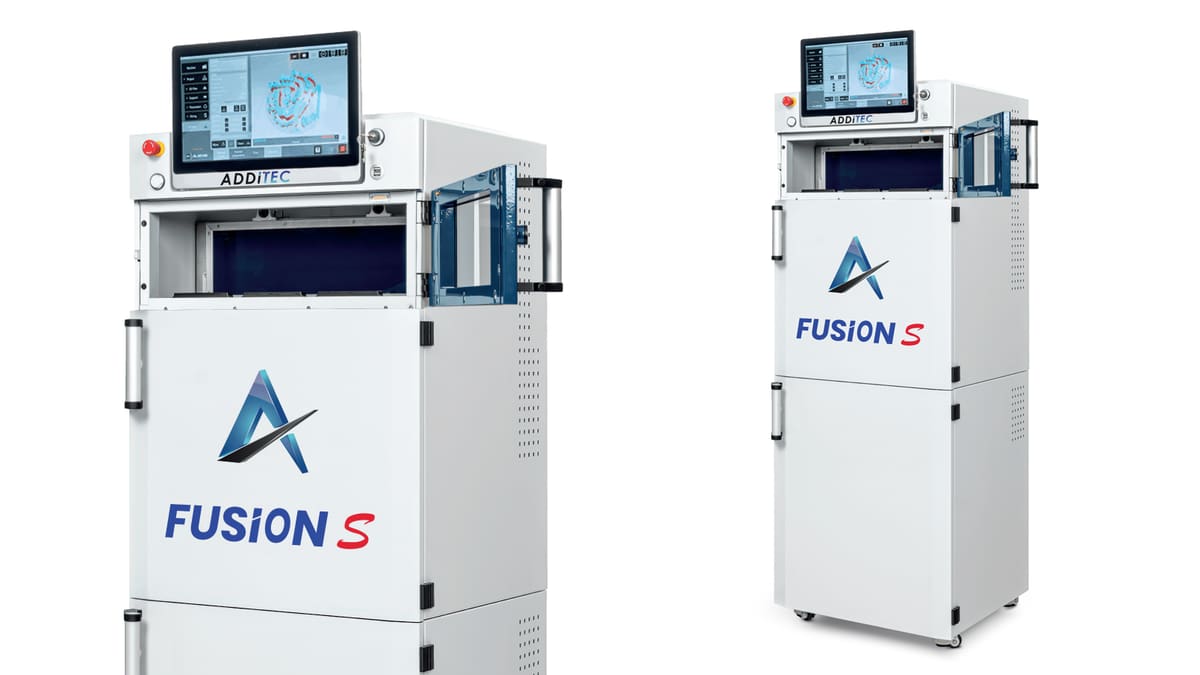
Additec, which made its name in laser directed energy deposition (DED), added a metal laser powder bed fusion 3D printer to its lineup in April 2025. The Fusion S is the company’s compact metal powder bed fusion printer, adding a fine-detail option to a portfolio better known for laser DED and liquid metal jetting systems. Launched in 2025, the Fusion S is aimed at precision parts in medical, dental, jewelry, research, aerospace, defense, energy, and tooling applications.
The machine uses a 200-W fiber laser with a roughly 50-micron spot size, 10- to 50-micron layer thicknesses, and scan speeds up to 5 m/s. Additec says the system can produce dense, high-resolution metal parts and comes with optimized parameters for materials including titanium, stainless steel, cobalt chrome, and precious metals.
Its standout feature is safety-focused powder handling. The Fusion S uses a closed powder circuit and intelligent cartridge system designed so operators do not directly handle loose metal powder during printing or post-processing. The matching Fusion Cabin unpacking station lets users remove parts and recover residual powder in a sealed process chamber, reducing exposure and material waste.
With a compact 600 x 600 mm footprint, standard 230-V power, closed-loop argon gas circulation, and a touchscreen interface, the Fusion S is positioned less as a massive production workhorse and more as a cleaner, lab-friendly way to bring industrial metal powder bed fusion into smaller facilities.
Ermaksan Enavision 120
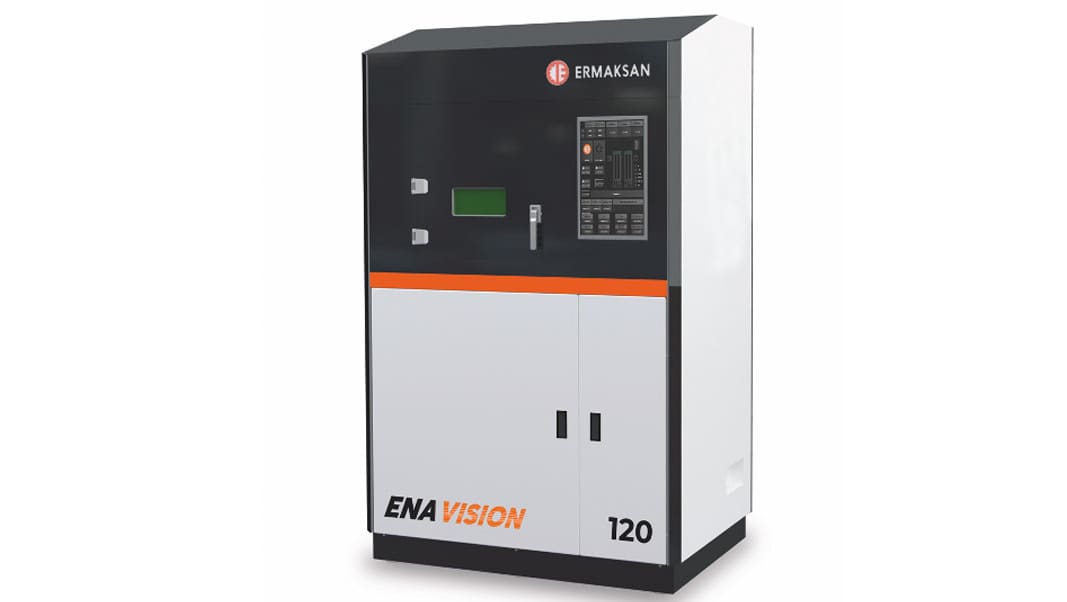
Turkey-based Ermaksan launched the Enavision 120, a compact metal LPBF 3D printer designed for laboratories, offices, universities, research institutes, and applications such as dental and medical production, in 2024.
It offers a Ø120 × 80 mm build volume, a 300 W Ermaksan fiber laser, adjustable 20-100 μm layer height, and a high-speed scan head with F-Theta lens reaching up to 5 m/s. The system supports open parameter control, argon or nitrogen inert gas operation, and production of dense metal parts with over 99% density, the company says.
Its compact footprint, user-friendly touch HMI, remote monitoring support, and low gas and energy consumption position it as an accessible machine for small-batch, cost-efficient metal additive manufacturing.
Ermaksan makes four larger metal LPBF machines.
Estimated price: ~€100k–€180k / US$110k–$200k; official price not publicly disclosed.
BLT S210
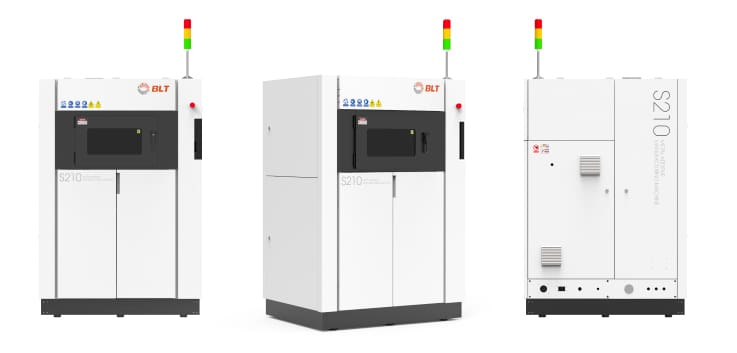
From one of the major company building some of the world’s largest metal 3D printers, comes this small LPBF machine, the BLT-S210, from China’ Bright Laser Technologies.
It’s a lab-scale metal printer with a 160 x 160 x 200 mm build volume, a single or dual 500W fiber laser, and an estimated build rate of around 15 cm³/h. It is positioned for R&D, medical, consumer goods, and small intricate parts, but mainly as a gateway to the company’s larger units.
It supports a wide material range including titanium alloys, aluminum alloys, superalloys, cobalt-chromium, stainless steel, high-strength steel, tool steel, copper alloys, tungsten alloys, tantalum, and magnesium alloys.
3D Systems DMP Flex 200
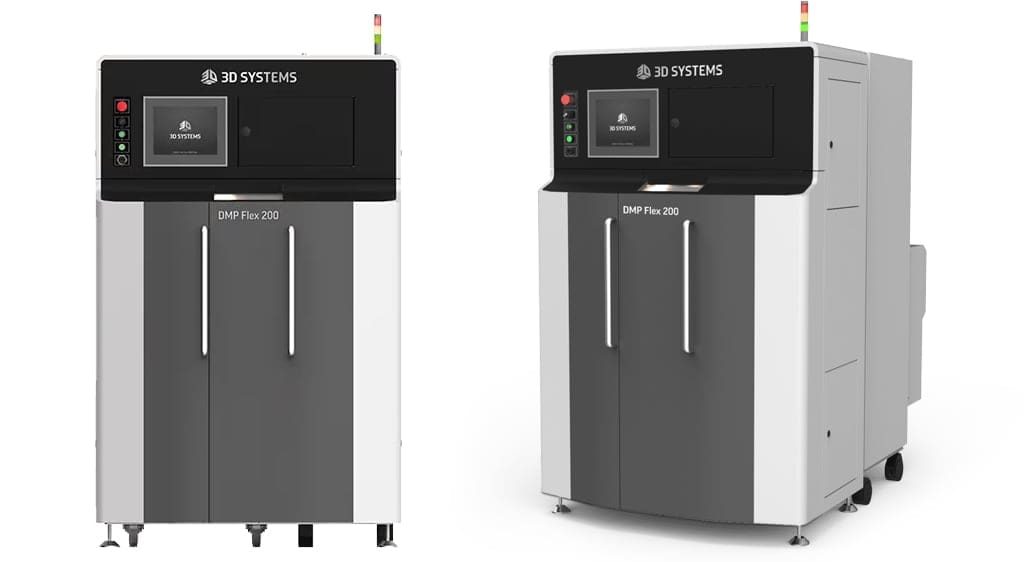
The entry-level offering from 3D Systems currently appears to be the DMP Flex 200 (after sunsetting the smaller 100), which offers a build volume of 140 x 140 x 115 mm. It has the ability to print parts with overhangs down to 20 degrees without supports. Surface features as fine as 5 microns should mean a minimal need for post-processing.
The system’s single 500-watt fiber laser is powerful enough to handle a broad selection of the company’s metal powder library, including a variety of titanium grades. The 200 boasts 60-70 micron laser sot size to create a layer thicknes of 30 microns and a minimum feature size of 10 microns on the Z.
The DMP Flex 200 makes use of dedicated gas lines to achieve the vacuum necessary to print 3D Systems’ additive manufacturing-optimized powders. As such, it requires the necessary building infrastructure to facilitate this.
3DXpert, an all-in-one software solution for metal additive manufacturing, is included with the DMP Flex 200 to ensure a streamlined and repeatable process for high-quality optimized prints, the company says.
Atlix TruPrint 1000
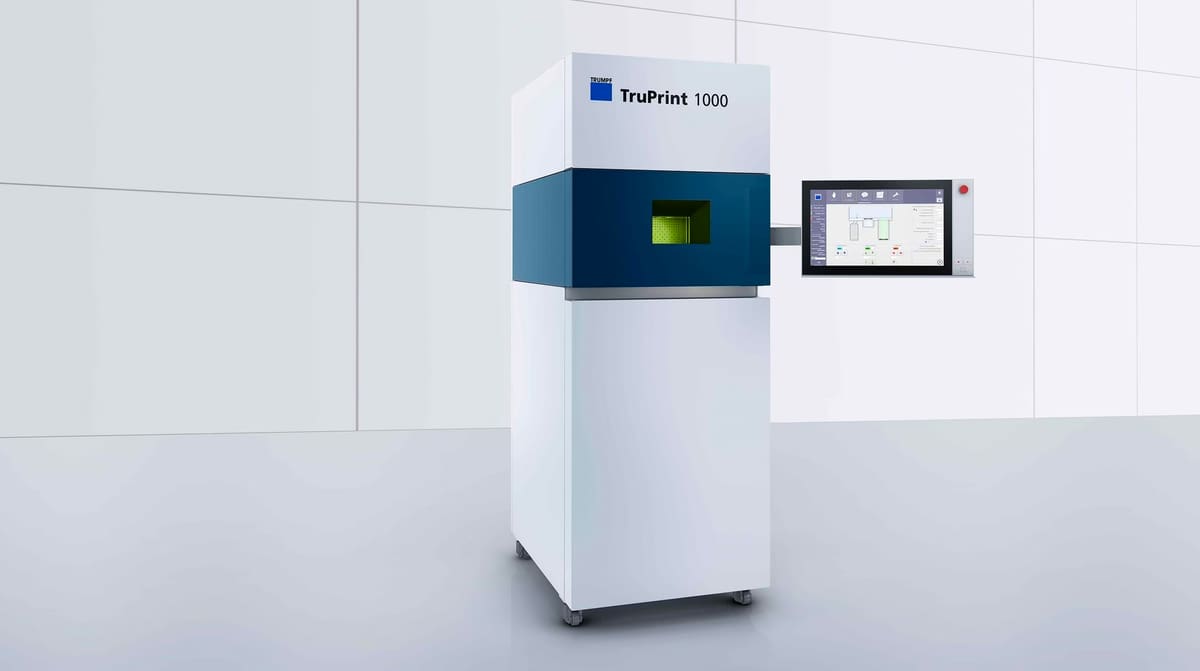
Germany-based Trumpf, which first launched the TruPrint 1000 LPBF in 2019 for the production of small industrial parts, sold off it’s entire 3D printer line to Italy-based Atlix in 2025.
Even though the branding is new, the company says it’s keeping the same focus on reliable metal 3D printing while becoming more “agile and customer-focused”.
For those looking to jump into metal LPBF, the TruPrint 1000, which has had several upgrade since launch, is still a good bet. It has a full-field multi-laser capacity and was recently reconfigured to fit through a standard door frame.
Although this printer is aimed primarily at the dental industry, its a versatile workhorse with two 200-watt fiber lasers that scan the build area simultaneously, which the firm claims can increase productivity by up to 80% when compared to similar machines with one laser. A powder bed monitoring system analyzes each layer for part quality. A tilting recoated makes the powder application process faster, which further increases production speed and cuts part costs, the company says.
There’s also a multiplate option for volume production. The build cylinder can optionally accommodate up to four substrate plates, meaning the substrate plate can be exchanged automatically without stopping the LMF process. The machine software provides fully automatic support once the first build job is complete and the next one is being started. Completed build jobs are collected in an overflow bin.
The TruPrint 1000 Green Edition features a green laser that enables it to 3D print highly reflective materials, such as copper and its alloys. Like other metal laser powder bed fusion machine manufacturers, there are larger machines in the company’s catalog.
Eplus3D EP-M150
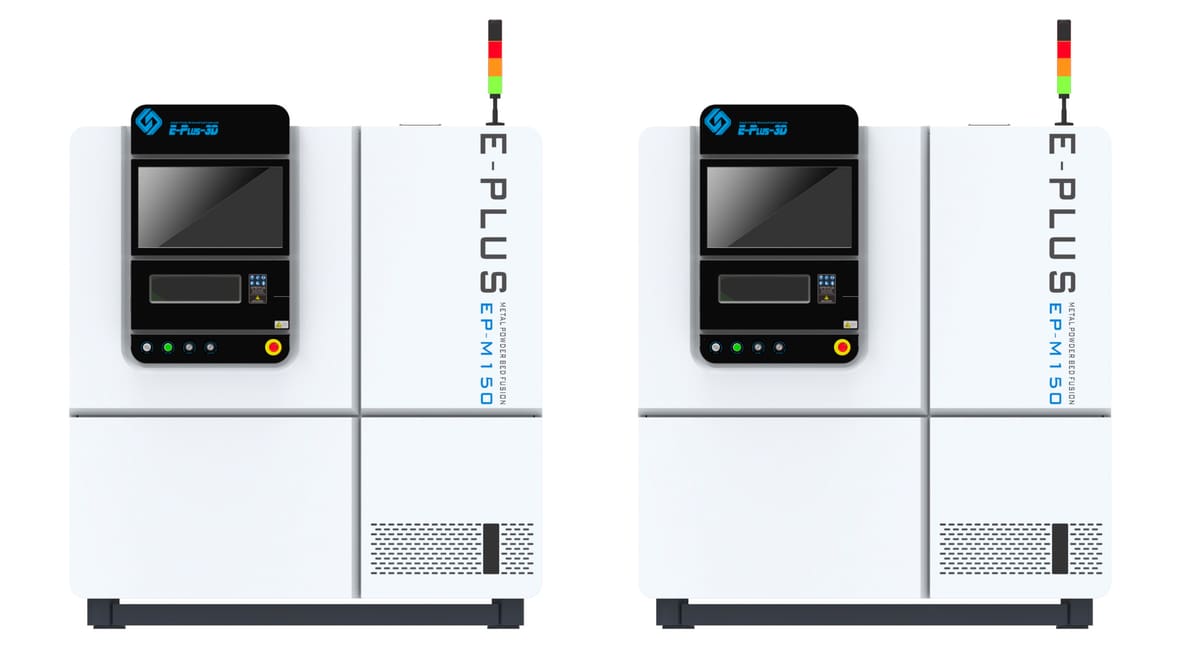
Eplus3D, based in China, now offers 12 industrial metal powder bed fusion machines, which begs the question: How many options do manufacturers need? The company offers a dizzying menu of build volumes and laser counts.
The smallest metal solution from Eplus3D is its EP-M150 LBPF machines designed for batch manufacturing of dental parts, medical implants, and material research, the company says. The EP-M150 is a low-cost machine to operate, the company says, which is a feature afterthought for many purchasers, but can drastically affect the bottom line. The machine has a powder feeding and sieving system that enables high material utilization, low gas consumption (0.8 l/min), and a tightly sealed chamber that minimizes gas leakage. The machine also features a clear UI and various security technologies for specialized industries.
HBD 150
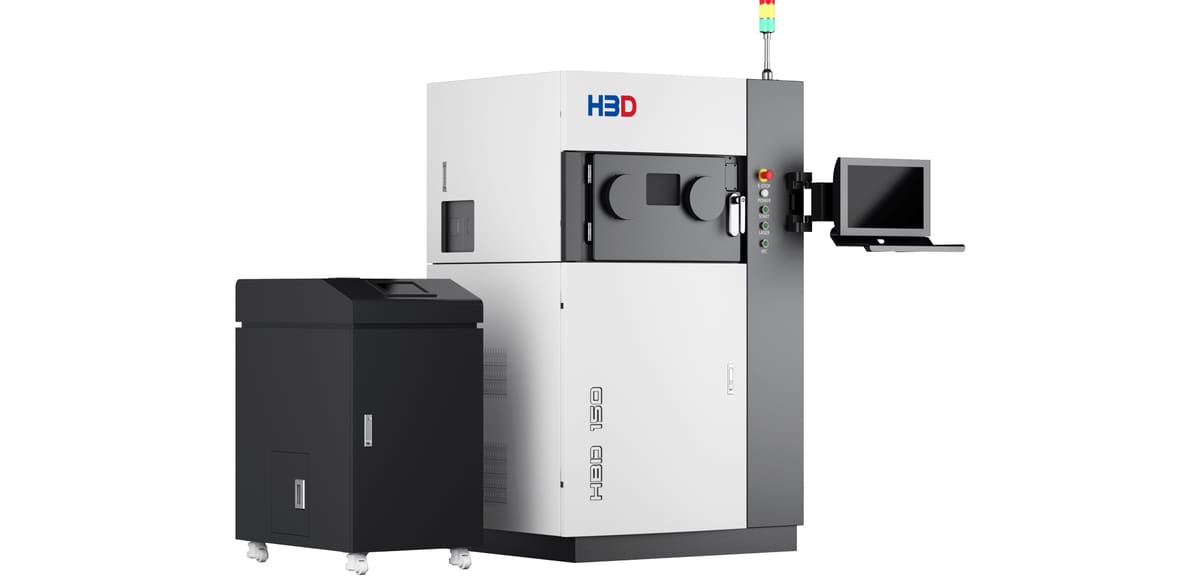
HBD’s compact metal 3D printers are the HBD 150 and HBD 150FLEX target education, research, and small-scale development work. Both are built around a round φ158 x 100 mm build volume for education, R&D, dental-style work, and small precision parts. Despite their size, both offer sealed protective atmospheres, automatic oxygen monitoring, powder recycling and cleaning, claimed 99.9%+ relative density, 0.05 to 0.1 mm accuracy, and scanning speeds up to 10 m/s.
The HBD 150 is the more versatile research platform, with one 300-W or 500-W laser, or two 300-W lasers, plus support for titanium alloy, cobalt-chrome, stainless steel, mold steel, and other powders. The HBD 150FLEX is the more space-conscious option, with a footprint under 1.5 square meters, two 300-W lasers, touchscreen-guided operation, safe-loop air purification, and multiple safety interlocks. Its listed material is cobalt-chrome alloy.
Industrial Metal LPBF & Binder Jet
Our categorization of industrial vs. aerospace & defense metal 3D printers is based on the idea that industrial-use machines are usually positioned as a flexible production tool for factories, R&D labs, service bureaus, tooling shops, medical & dental users, and general engineering teams. An aerospace & defense-focused LPBF printer is still an industrial machine, but it is optimized around certified, high-value, mission-critical parts where traceability, repeatability, material control, and qualification matter as much as the printed geometry.
That said, our categorization doesn’t mean these machines can’t service both purposes.
Again, we’re focusing mainly on the entry-level units from these manufacturers, but, in many cases, their offerings are vast.
3D Systems DMP Flex 350
3D Systems, based in Rock Hill, South Carolina, offers a focused lineup of metal powder bed fusion systems catering to various industrial applications from prototyping to full-scale production. The company calls its take on metal laser powder bed technology “Direct Metal Printing (DMP)”.
Unlike some competitors chasing ever-larger laser counts, 3D Systems leans into repeatability, validated materials, low-oxygen printing, and production workflows, the company says.
It’s range is the DMP Flex 350 and DMP Factory 350 family, available in single-, dual-, and, for the Flex line, triple-laser configurations. These machines feature 500-W lasers, a 275 x 275 x 420 mm standard build volume, removable print modules for faster material changeovers, bidirectional recoating, glove port access, and a vacuum chamber.
For users prioritizing integrated powder handling, the DMP Factory 350 and Factory 350 Dual add automatic powder management and sieving to reduce operator exposure and improve powder reuse. The Factory models are positioned for more demanding production environments, where uptime, repeatability, and safer powder workflows can matter as much as raw print speed, the company says.
The largest metal solution from 3D Systems is the DMP Factory 500, a modular production system with a 500 x 500 x 500 mm build volume and three-laser configuration. Designed for seamless large parts, the Factory 500 keeps powder under inert conditions across printing, depowdering, recycling, and transport, which the company says helps protect powder quality while lowering operational costs.
3D Systems also backs its metal printers with 3DXpert software, tested LaserForm metal materials, and application engineering expertise. Its materials portfolio covers aluminum, steels, maraging steel, titanium grades, nickel alloys, and cobalt chrome.
Atlix TruPrint 3000
Atlix, the independent metal additive manufacturing company born from Trumpf Additive Manufacturing, now offers three laser powder bed fusion systems beyond the TruPrint 1000 covered above. There’s the TruPrint 2000, TruPrint 3000, and TruPrint 5000. The company frames the lineup around industrial-grade quality, productivity, reliability, and innovation.
The smallest system in this Atlix selection is the TruPrint 2000, a compact machine for medium-sized parts with a 202 x 202 x 200 mm build module. It features two fiber lasers rated at 300 W, or optionally 500 W, with an 80-µm beam diameter, plus Automatic Multilaser Alignment, which Atlix says checks laser alignment every two layers with 40-µm accuracy. Atlix pitches the machine as a high-quality, lower-cost-per-part option for dental, medical, tool, and general industry applications, and says the square build plate can fit up to 36% more removable partial dentures than a comparable round plate.
The TruPrint 3000 is Atlix’s mid-size, more universal industrial machine, designed for flexible series production and broad material compatibility. The latest version offers a 300 x 300 x 400 mm build module, 500-W laser power as standard, and optional multilaser configurations with two 500-W or 700-W lasers.
At the top of the range is the next-generation TruPrint 5000, Atlix’s flagship system for larger parts and higher-volume production. The machine offers a 500 x 500 x 400 mm build module, four 1-kW fiber lasers, an 80- to 200-µm beam diameter, double-side recoating, and automatic job restart. Atlix says this setup is intended to lower cost per part and keep production moving by allowing a completed build module to be moved aside while a new job is loaded, with depowdering taking place in parallel.
Launched publicly under the Atlix name at Formnext 2025, the refreshed TruPrint 3000 and TruPrint 5000 underline the company’s shift from Trumpf-branded AM hardware to a standalone industrial metal 3D printing brand. Atlix also pairs the machines with TruTops Print software for data preparation, workflow management, laser splitting, remote monitoring, and build-job processing.
UnionTech Muees430
UnionTech, based in China, is best known for industrial resin 3D printers, but it also offers a compact metal powder bed fusion lineup under the Muees name. Its main metal system is the Muees430, a mid-size machine with a 430 x 340 x 400 mm build volume, one or two 500-W fiber lasers, 20- to 100-micron layers, scan speeds up to 6 m/s, and argon or nitrogen inert gas operation.
The newer Muees430 PRO, launched globally in April 2026, pushes the same platform toward higher-volume production with four 500-W fiber lasers and a 430 x 340 x 330 mm build area. It adds high-speed galvanometer scanners, bidirectional recoating, and atmosphere management designed to reach oxygen levels of 100 ppm or below in about 10 minutes.
UnionTech’s metal offering is not a sprawling catalog, but a focused industrial range aimed at molds, aerospace, automotive, medical, and other high-value parts. Its pitch is practical production hardware: powder handling, gas circulation, filtration, machine monitoring, and workflow software, rather than an endless menu of build volumes and laser counts.
Renishaw RenAM 500
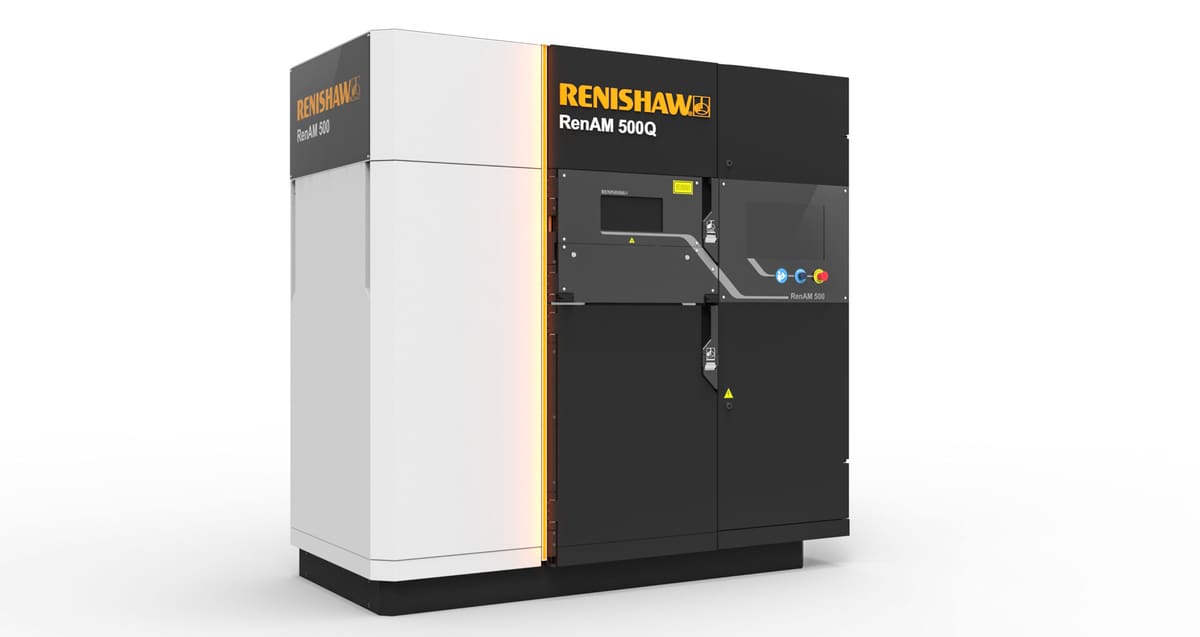
Placing emphasis on productivity, Renishaw’s RenAM 500 line of laser powder bed fusion 3D printers is available in several configurations of one or four 500-watt lasers, each capable of hitting the entirety of the build volume. This enables the RenAM 500 to accomplish full-layer sinters quicker than single-laser systems, increasing output and, consequently, reducing cost per part.
In late 2024, the new RenAM 500D debuted. It has the same “Tempus” technology that allows the lasers to fire while the recoater is moving, improving overall efficiency. The machine has two 500-watt ytterbium fiber lasers, a beam focus diameter of 80 microns with dynamic focus, and a build volume of 250 x 250 x 350 mm.
There’s an automatic or flexible powder and waste handling in the 500 line. The flexible option enables you to change powders in-house while the automated system ensures operator safety and reduces the time required to operate and maintain the machine by recirculating. An “intelligent” gas flow system reduces both argon consumption and emissions.
The RenAM 500 features a typical build volume of 245 x 245 x 335 mm (substrate dependent) and can output some 150 cm3 per hour, depending on the geometries being printed and other material variables. The RenAM 500 series enables the production of components with >99.9% density, the company says.
EOS M4 Onyx
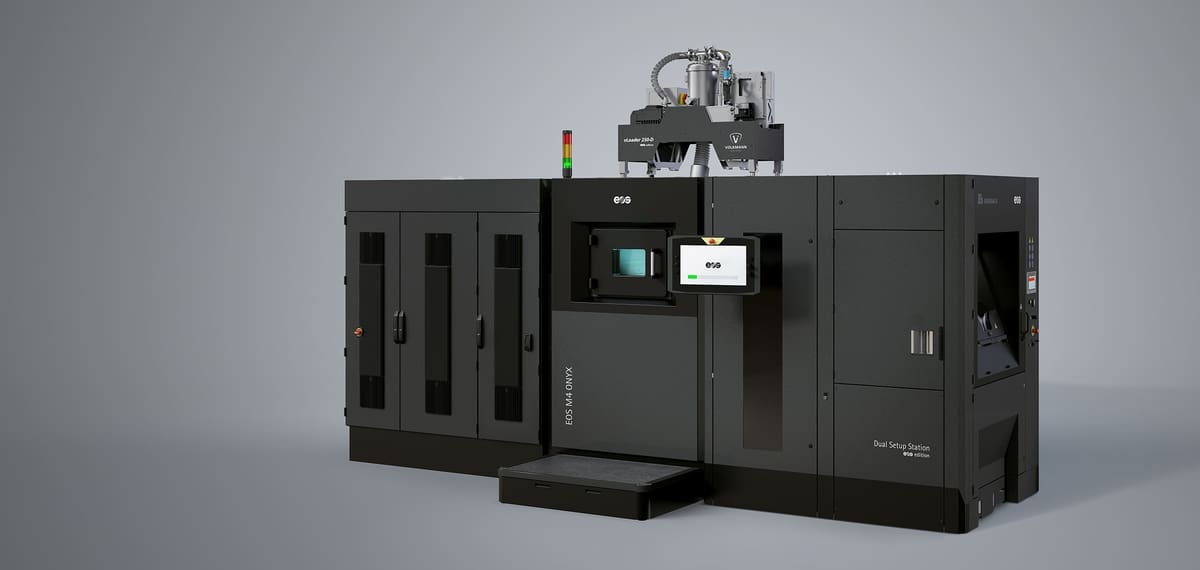
EOS, based in Germany, is one of the longest-established names in industrial metal 3D printing, and its current metal powder bed fusion lineup is built around four main families: the M 290, M 300, M 400, and newer M4 ONYX series. Rather than offering a maze of niche machines, EOS focuses on qualified materials, repeatable processes, production software, monitoring, and a large installed base.
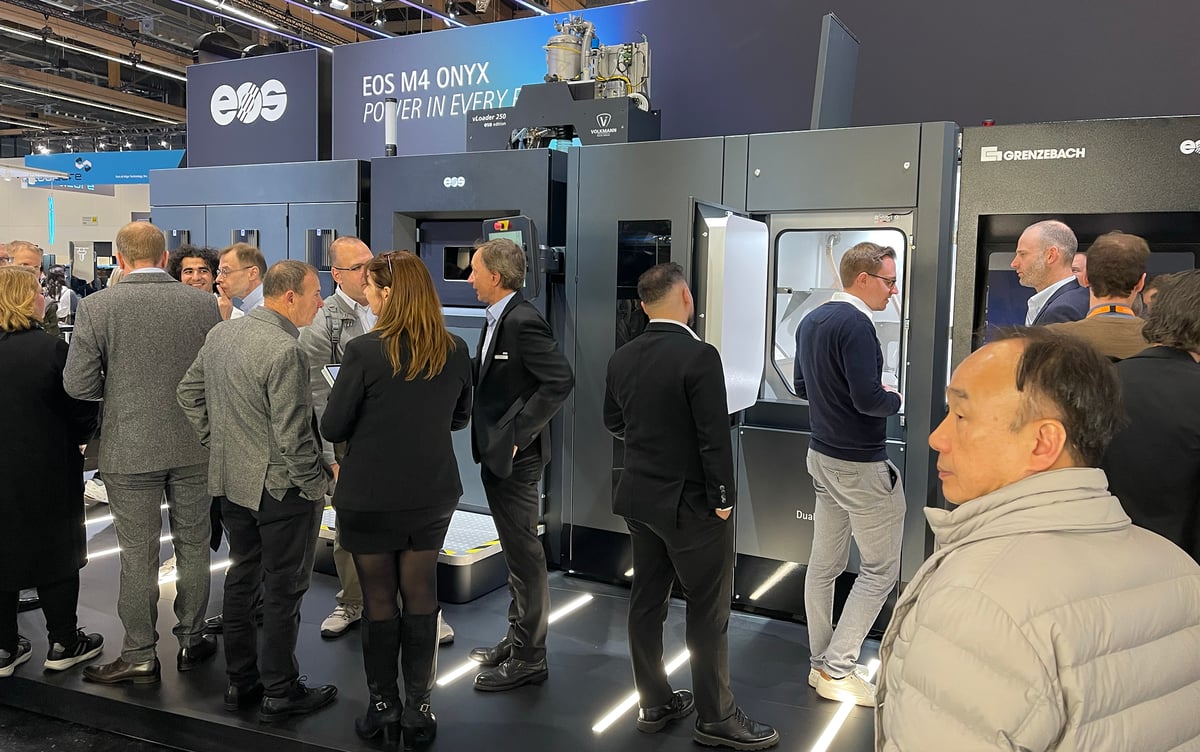
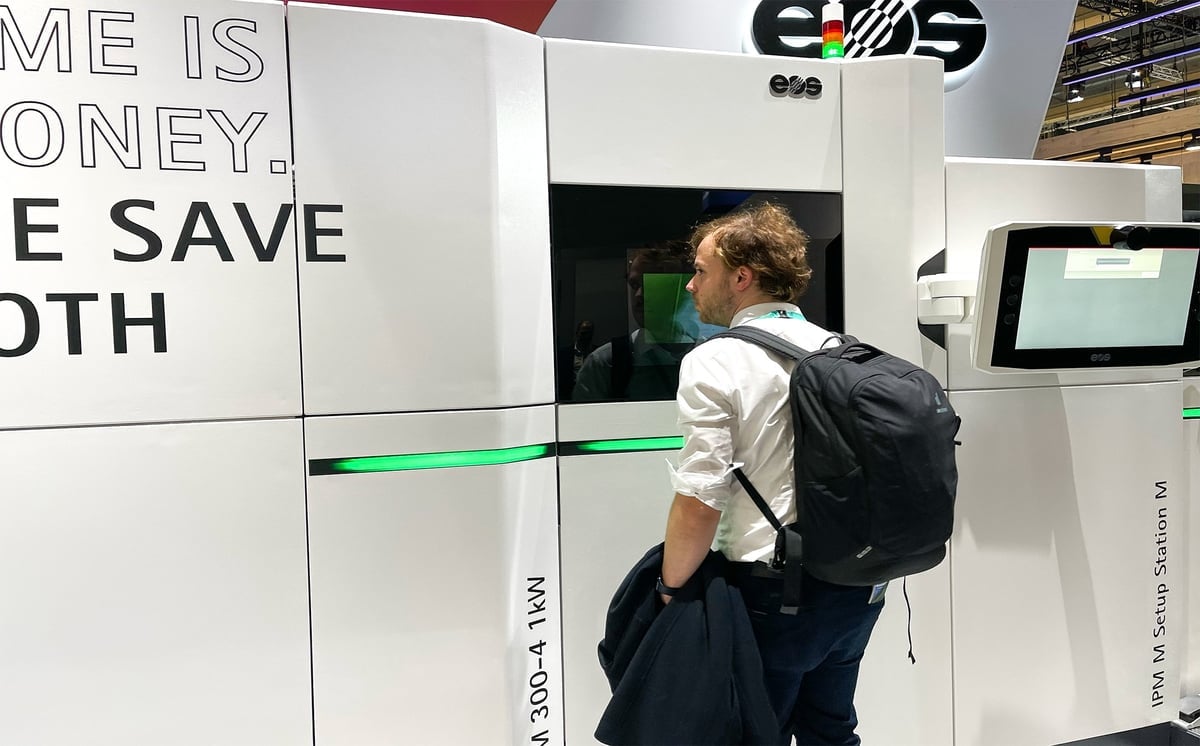
At the top of the current lineup is the EOS M4 Onyx, introduced in late 2025. It offers EOS’s largest standard metal build volume at 450 x 450 x 400 mm, with six 400-W lasers, automated job changeovers in under 30 minutes, more than 90% powder recovery, and a new filter system designed to reduce hazardous waste by up to 90%. EOS positions it as a high-volume production platform for aerospace, energy, and industrial applications.
The most familiar EOS metal printer is the EOS M 290, a mid-size workhorse with a 250 x 250 x 325 mm build volume and a 400-W fiber laser. It remains one of the benchmark systems for qualified metal parts, with a broad material portfolio and applications across medical, aerospace, tooling, automotive, and industrial production. EOS has expanded the M 290 family with a 1-kW version for higher-productivity copper and other materials, plus a dual-laser M 290-2 developed with AMCM for higher throughput.
Overall, EOS’s strength is the combination of mature hardware, materials, monitoring, software, service, and application support for companies that need repeatable parts rather than one-off experiments.
HP Metal Jet S100
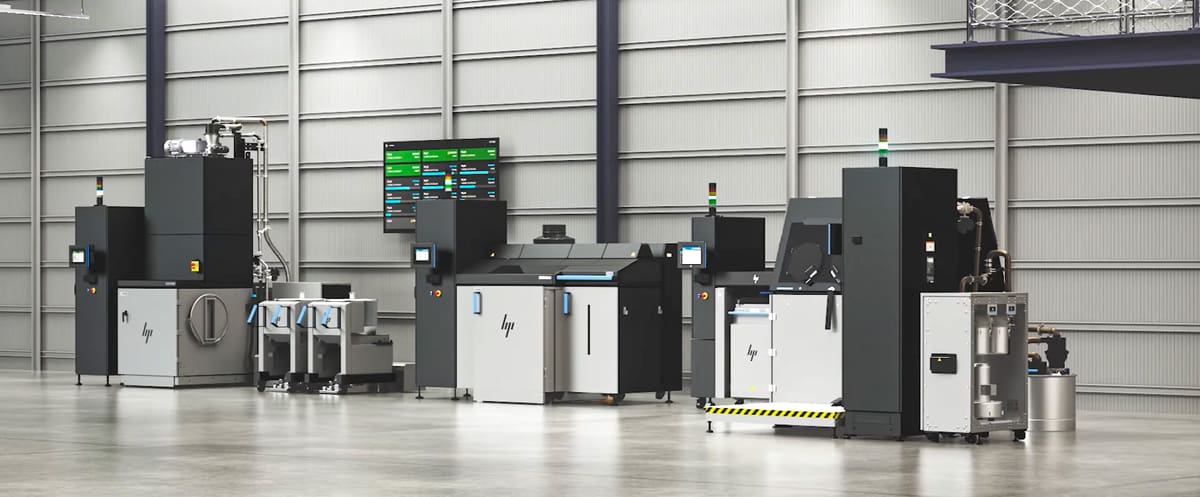
HP Additive – yes, a branch of the same HP that makes 2D printers, laptops, and ground-breaking polymer 3D printers – unveiled its new and improved metal 3D printer in 2022. Called Metal Jet S100, it’s aimed at industrial-scale metal part production. In 2024, HP boosted the print volume a bit adding 30 mm to the height, introduced new tool steel and 316L stainless steel materials.
The company debuted the Metal Jet technology in 2018 and had some high-profile applications (Volkswagen, Cobra Golf) but did not release the machine commercially. Instead, it has worked closely with select companies in various industries on beta testing new features and processes before rolling out the S100.
The HP S100 metal 3D printer uses binder jet technology, which is a method of 3D printing that uses a liquid binding agent deposited in tiny drops on powdered materials in layers to create solid, complex shapes. As the build progresses, the print layers are bonded together, resulting in a powder box with the desired part geometry inside. The process is similar (but not identical) to HP’s polymer Multi Jet Fusion (MJF), only that it uses metal powder, specifically stainless steel (316L and 17-4PH).
Binder jetting has several advantages over traditional metal injection molding and other forms of metal 3D printing, depending on your requirements. The technology especially shines regarding speed since printheads typically work faster than lasers or electron beams. There’s also a far lower material cost with binder jetting because it can use the same commonly available metal powder as injection molding.
Using a thermal inkjet to precisely deliver HP binding agent to a powder metal bed of industry-standard materials, the Metal Jet yields green state parts that are up to 99% metal by volume. This also cuts down on the time-to-part by drastically reducing the need for debinding. HP Metal Jet parts, once printed, need only decaking and can be directly sintered in a furnace before further finishing steps.
HP seems to have taken the typical metal powder bed printing hazards out of the equation with its integrated platform, but it does appear to require investing in seven or eight pieces of equipment. A powder management station mixes and sieves the powder (much of which can be reused from previous prints) and fills the build unit, which then goes to the 3D printer. After printing, the build unit goes to the curing station and then to the powder removal station. At this point, the part is ready to be sintered in any industry-standard sintering furnace, after which it can be machined or finished if necessary.
AddUp FormUp 350
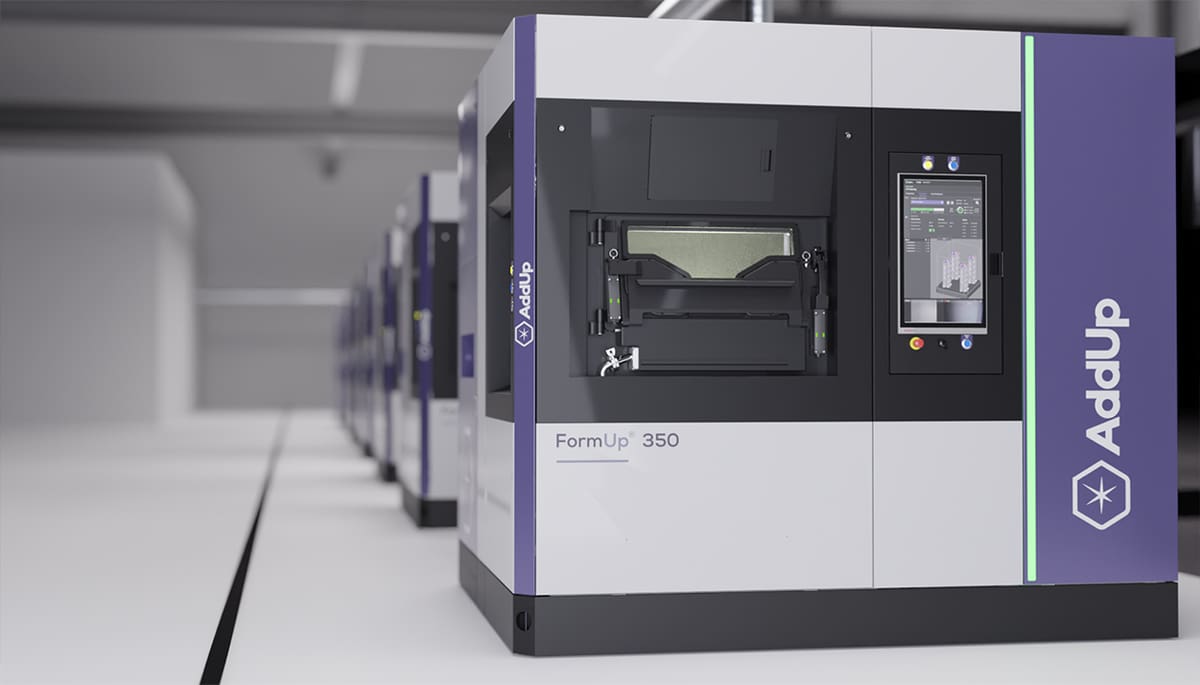
AddUp, based in France, offers metal 3D printers across two technologies: laser powder bed fusion and directed energy deposition. Its best-known powder bed fusion machine is the FormUp 350, while its BeAM-branded DED line includes systems such as the Modulo 400 and Magic 800.
The FormUp 350 is AddUp’s main metal powder bed fusion platform, with a 350 x 350 x 350 mm build volume for applications ranging from fine medical parts to aerospace hydraulic blocks. AddUp emphasizes repeatability, productivity, operator safety, and powder handling, including an autonomous powder module that stores, conveys, recovers, and sieves powder in a closed inert circuit. The machine can process reactive and non-reactive metal powders and is positioned for industrial users that need qualified, high-density parts rather than occasional prototypes.
AddUp’s upcoming FormUp 750 extends the FormUp platform to a larger 750 × 750 × 1,000 mm build volume.
For users who need to build onto existing parts, repair worn components, or produce larger near-net-shape metal parts, AddUp also offers DED machines. The Magic 800 is the largest of these, with a 2-kW laser, optional dual heads, and a large work area with up to 1,800 mm working height. AddUp says the inerted enclosure enables work with reactive powders, including titanium, making it suitable for aerospace, energy, repair, and large industrial applications.
In January, AddUp announced a partnership with Ohio-based Ravelin Inc. to scale metal additive manufacturing into serial production for mission-critical defense hardware. As part of the collaboration, Ravelin has selected AddUp’s FormUp 350 laser powder bed fusion system as the backbone of its serial production capabilities.
Large-Format & High-Productivity Metal LPBF
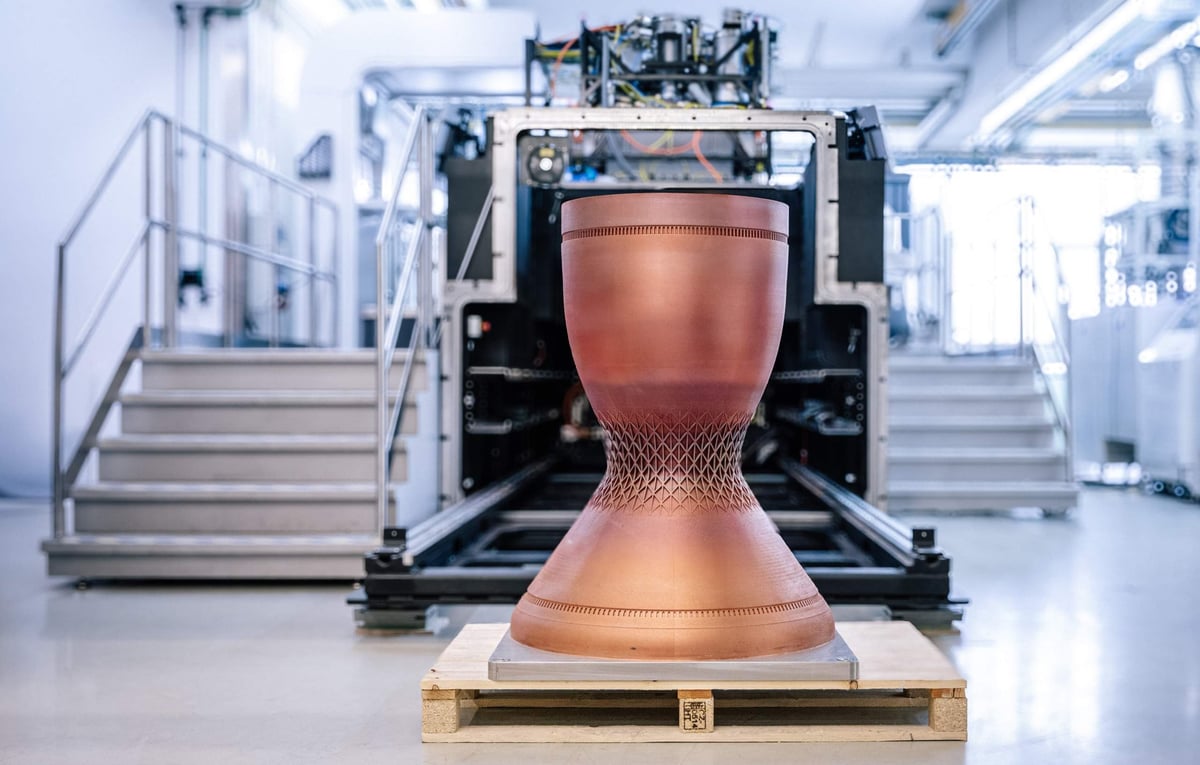
If one sector defines AM’s new reality, it’s defense. Metal 3D printer manufactures across the market are securing tens of millions of dollars in defense contracts to product everything from spare parts to propulsion engines to missile airframes.
The defense world isn’t just using AM, it’s shaping how the rest of the industry will qualify, certify, and scale it.
In this section, we’re featuring some of the largest LPBF 3D printers on the market.
EPlus3D EP-M3050
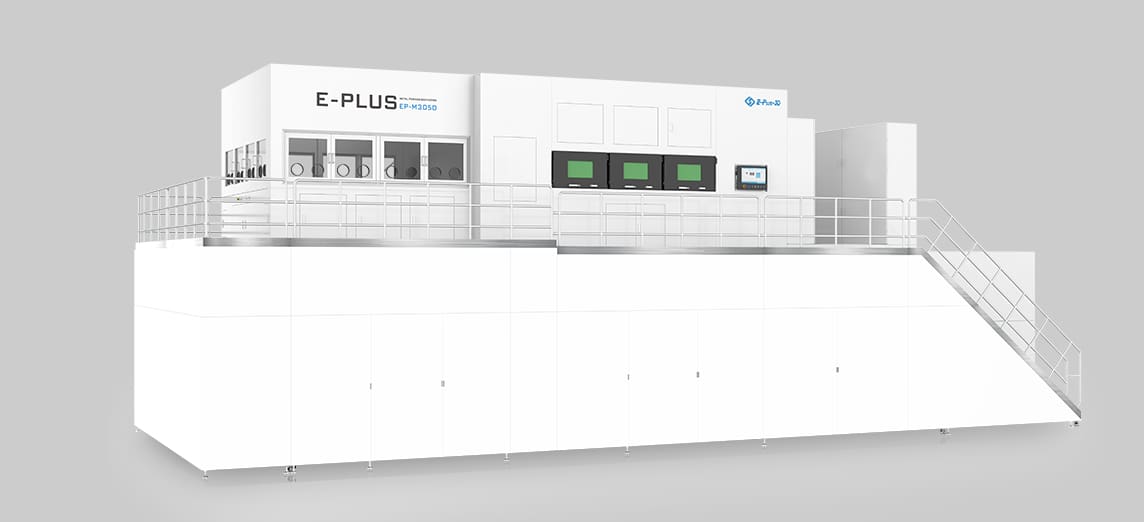
Eplus3D, based in China, now offers 12 industrial metal powder bed fusion machines, which begs the question: How many options do manufacturers need? The company offers a dizzying menu of build volumes and laser counts.
The latest addition, launched in early 2026, featured 100 lasers that coordinate across a massive 3,050 mm build plate. This ultra-large-format system called the EP-M3050, for titanium, aluminum, steel and more, eliminates the need for welding rocket thrusters or structural aerospace parts.
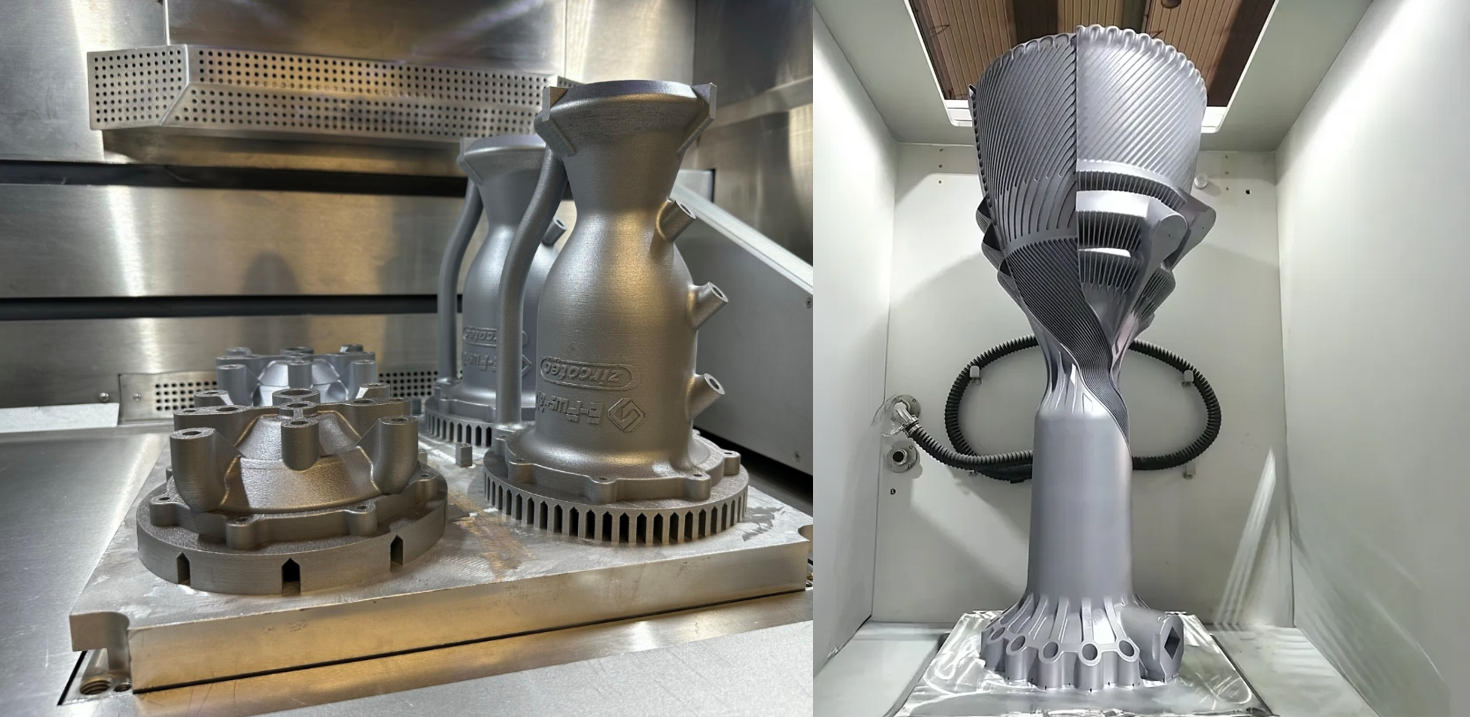
The company’s portfolio includes mid-size production machines in the EP-M300 and EP-M400 ranges, and large-format systems including the EP-M650, EP-M800, and EP-M1250.
Eplus3D also has a technical consulting team to help you select the right solution or to go with their contract additive manufacturing option. They can also help you figure out how to use advanced additive manufacturing to develop completely new business models, improve the efficiency of your existing productions, and create manufacturing innovations.
AMCM M 8K
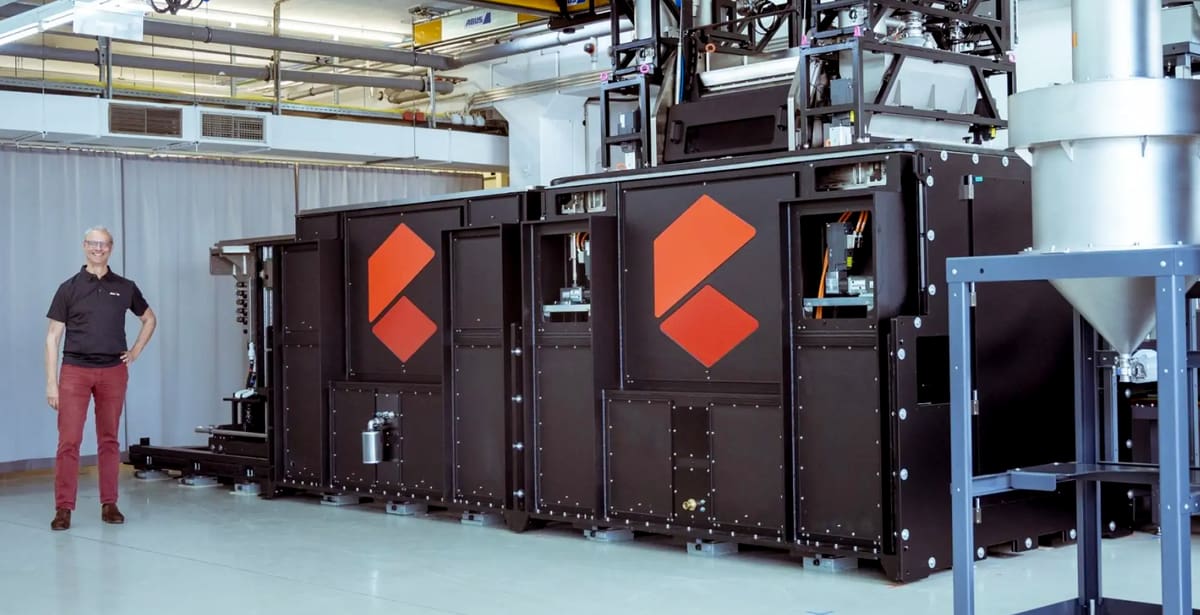
AMCM, an EOS Group company based in Germany, offers customized metal LPBF machines built on EOS platforms, but stretched with more lasers, larger build volumes, unusual beam profiles, higher-power lasers, open process development, and customer-specific hardware for aerospace, space, energy, automotive, medical, and advanced R&D applications.
The smallest AMCM machines are based on the EOS M 290 platform while for larger parts, AMCM offers the M 450 Series, with a 450 x 450 x 360 mm build volume, four fiber lasers, and compatibility with legacy EOS M 400 process parameter sets. AMCM positions it as a large-format production platform with more build area, more powder feeding capacity, and open software for process optimization.
The AMCM M 4K pushes much further, extending the EOS M 400 concept to a towering 450 x 450 x 1,000 mm build volume. It comes with four 1-kW lasers, or optional 1.2-kW nLIGHT AFX lasers with beam shaping from Gaussian to ring-shaped profiles, and AMCM says it can be further customized up to 1.5 m in Z-height and six 1.2-kW lasers. This is the kind of system designed for rocket chambers, large energy components, and other parts that are simply too tall for standard metal printers.
At the extreme end is the AMCM M 8K, a fully customized large-format platform with an 800 x 800 x 1,200 mm build volume and eight high-power lasers. AMCM developed it for high-end aerospace and defense applications, including very large metal components that would traditionally require assemblies or welding. The company also highlights its AirSword gas-flow concept for scaling the powder bed while maintaining consistent process conditions across the build area.
In short, AMCM is EOS for companies that have outgrown the catalog. Its machines are for users who need EOS-style reliability, but with custom build volumes, laser power, beam shaping, and process freedom for parts that standard metal powder bed fusion systems cannot easily handle.
Nikon SLM Solutions NXG 600E
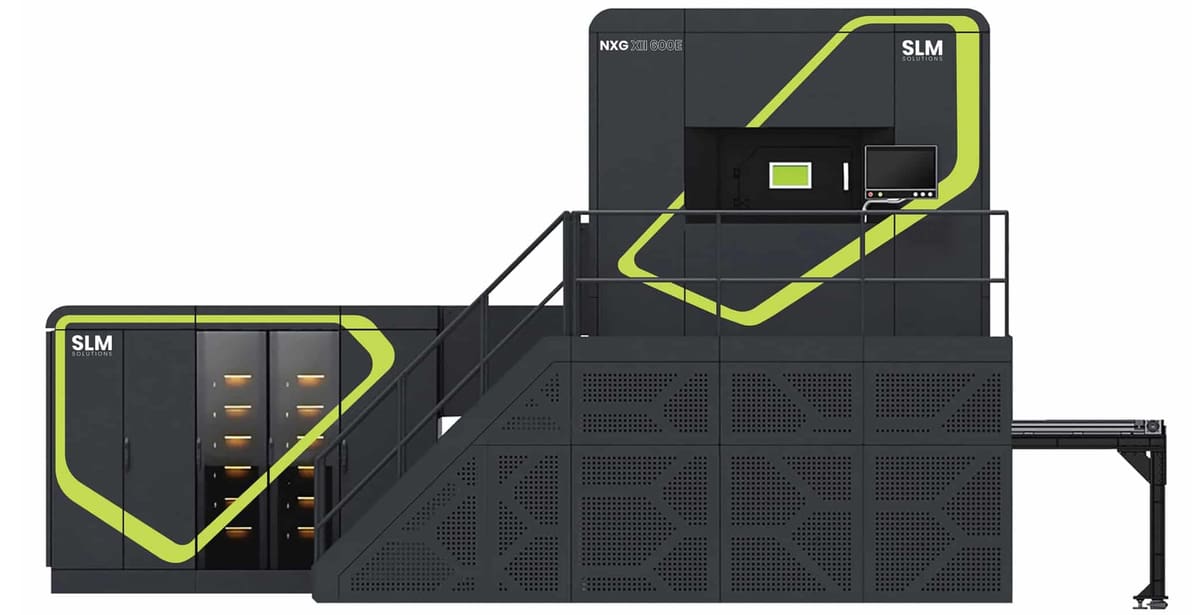
Nikon SLM Solutions, based in Germany and now part of Nikon, offers one of the more production-focused metal powder bed fusion portfolios on the market. Its current lineup includes the SLM 280 2.0, SLM 280 Production Series, SLM 500, NXG XII 600, and NXG 600E, ranging from flexible mid-size systems to very large 12-laser platforms for serial production.
The entry point is the SLM 280 2.0, a versatile system with a 280 x 280 x 365 mm build envelope and single- or dual-laser configurations. The newer SLM 280 Production Series pushes the same general platform toward higher throughput, with closed powder handling, patented laminar gas flow, a permanent filter module, and a build platform Nikon SLM says is 25% larger than comparable medium-format machines.
For larger industrial parts, Nikon SLM offers the SLM 500, a four-laser production machine positioned for high-performance metal additive manufacturing. It sits between the 280 series and the NXG machines, aimed at companies that need more throughput and automation than a mid-size system, but not the extreme scale of the 600-mm platforms.
At the top of the lineup are the NXG XII 600 and NXG 600E, both built around 12 lasers, each rated at 1,000 W. The NXG XII 600 offers a 600 x 600 x 600 mm build envelope, while the NXG 600E extends the concept for very large components, with Nikon’s technical paper describing parts up to 600 x 600 x 1,500 mm. These machines are aimed squarely at aerospace, defense, space, energy, and automotive production, where very high build rates, removable build cylinders, zoom functionality, and large-part capability can outweigh the high purchase price.
Nikon SLM’s differentiator is productivity at scale. The company promotes the NXG line as up to 20 times faster than a single-laser machine, while also emphasizing materials and parameter development for aluminum, copper, nickel, cobalt, titanium, steel, and niobium. In short, this is not a bargain metal printer brand; it is a high-end industrial portfolio for users who need repeatable, validated metal parts and are ready to pay for throughput.
Velo3D Sapphire XC 1MZ
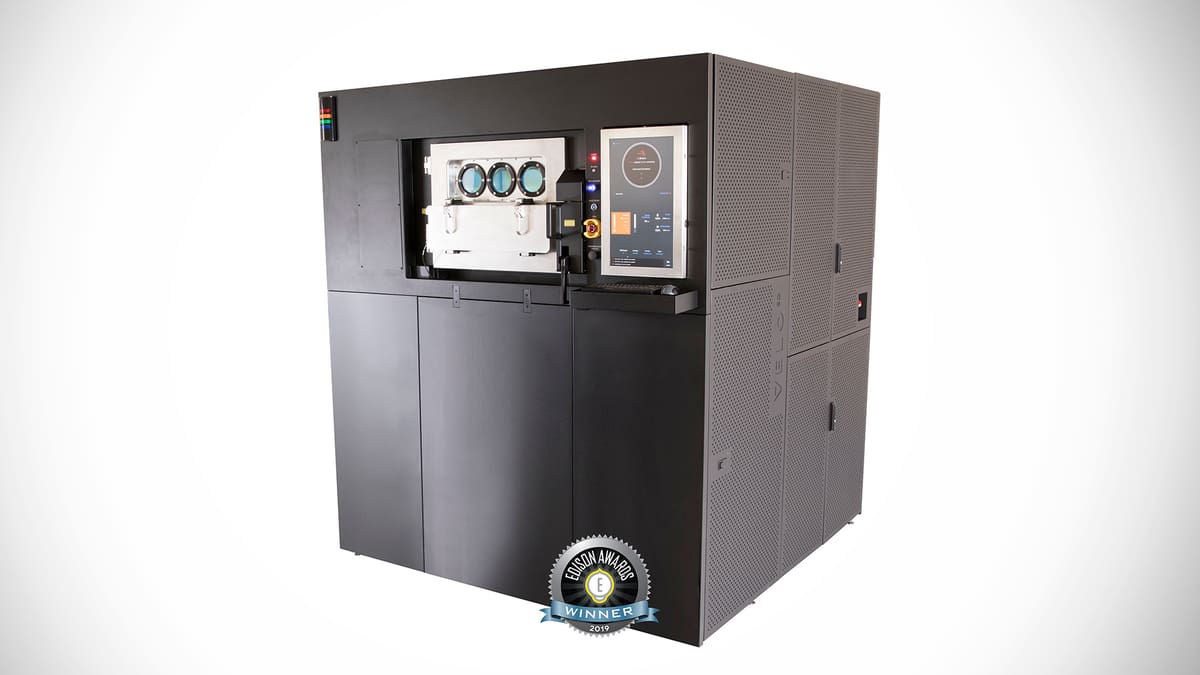
The Velo3D Sapphire is a production-focused metal LPBF 3D printer built around the company’s signature pitch: printing complex metal parts with far fewer supports than conventional laser powder bed fusion systems. Its low-angle and “zero-degree” overhang capability is designed to reduce post-processing and open up designs with internal channels, enclosed volumes, and other geometries that would otherwise be difficult or impossible to remove supports from.
Velo3D’s current Sapphire lineup includes the Sapphire and Sapphire 1MZ. The standard Sapphire offers a cylindrical Ø315 x 400 mm build volume, while the tall Sapphire 1MZ extends the Z height to 1,000 mm with the same Ø315 mm diameter. Both use dual 1-kW lasers, with the 1MZ aimed at tall aerospace, energy, and defense components such as housings, manifolds, turbine hardware, and propulsion-related parts. Velo3D lists throughput for the Sapphire family at up to 100 cc/hr and typical surface finish at 5–15 µm Sa.
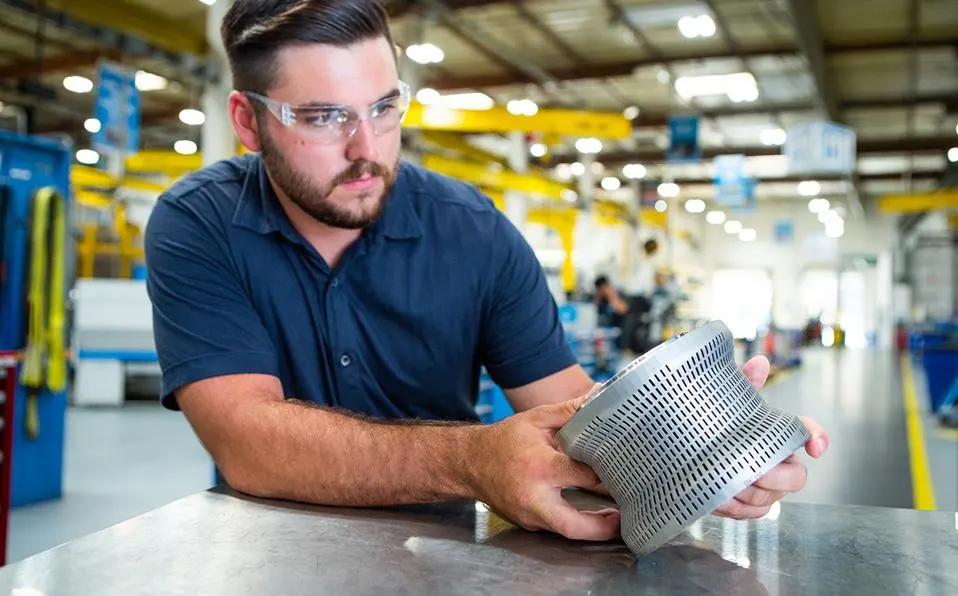
The company also offers the larger Sapphire XC line, with “XC” standing for Extra Capacity. The Sapphire XC has a Ø600 x 550 mm build volume and eight 1-kW lasers, while the Sapphire XC 1MZ increases the height to 1,000 mm, giving it a Ø600 x 1,000 mm build volume. Velo3D lists throughput for the XC family at up to 800 cc/hr, positioning it as the higher-volume production option in the range.
Qualified materials include nickel alloys such as Inconel 718, Inconel 625, Hastelloy C-22, Hastelloy X, forAM Haynes 282, and Haynes 214; aluminum alloys including F357, Scalmalloy, and Aheadd CP1; Ti-6Al-4V titanium; steels including M300 Steel and Stainless 415; and copper alloys including GRCop-42 and C18150. Velo3D continues to position the Sapphire platform as an end-to-end solution combining its Flow print-preparation software, Sapphire hardware, and Assure quality-control software for repeatable production of high-value metal parts.
Farsoon FS1521M
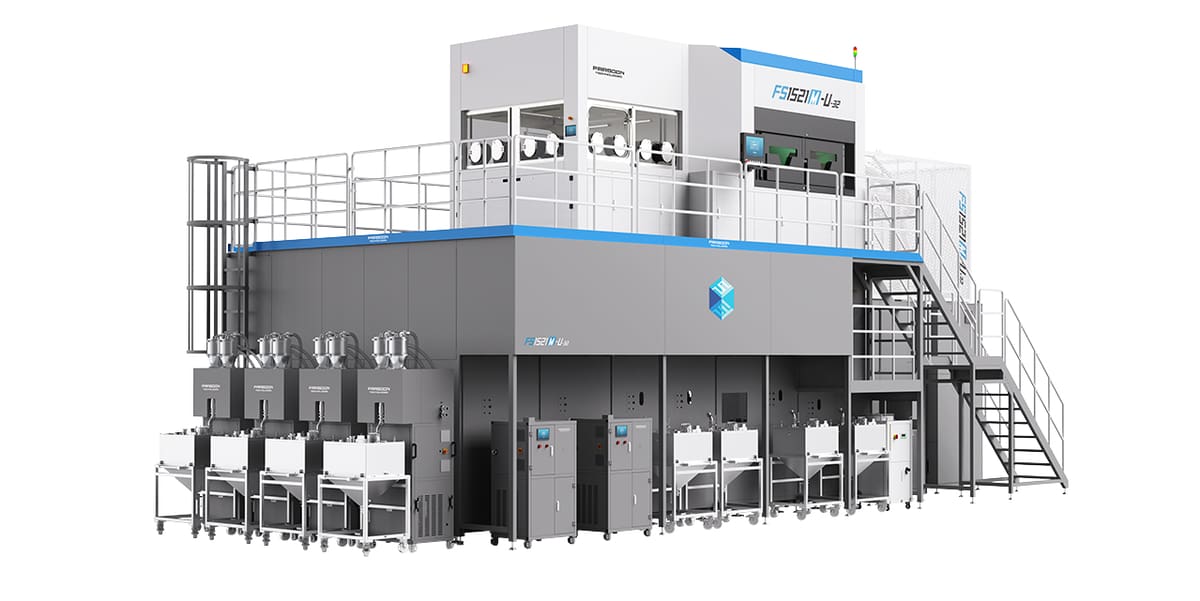
Farsoon, the large Chinese 3D printer manufacturer, offers one of the broadest metal LPBF portfolios on the market, spanning compact R&D systems, mid-size production machines, continuous manufacturing platforms, and very large multi-laser systems for aerospace, automotive, energy, tooling, and serial production.
The company’s metal range scales up through machines such as the FS273M, with a 275 x 275 x 355 mm build volume and single- or dual-laser configurations, and larger production platforms such as the FS422M, FS621M, FS721M-CAMS, and FS811M. Farsoon continues to emphasize open platforms, production flexibility, and multi-laser productivity, with its metal portfolio ranging from compact systems to extra-large platforms such as the FS1521M, which Farsoon lists with a 1530 x 1530 x 1650 mm build envelope and up to 32 lasers.
The FS721M-CAMS, short for Continuous Additive Manufacturing Solution, remains one of the more distinctive machines in the lineup. It is designed around production automation rather than simply adding more lasers. The system uses an internal conveyor to move a completed build unit into an inert breakout station and load the next build unit, reducing idle time between jobs. It also integrates closed-loop powder handling, including powder recycling, storage, sieving, and fresh powder supply. Farsoon lists the CAMS platform with a 720 x 420 x 650 mm build envelope and 8 x 1000W lasers.
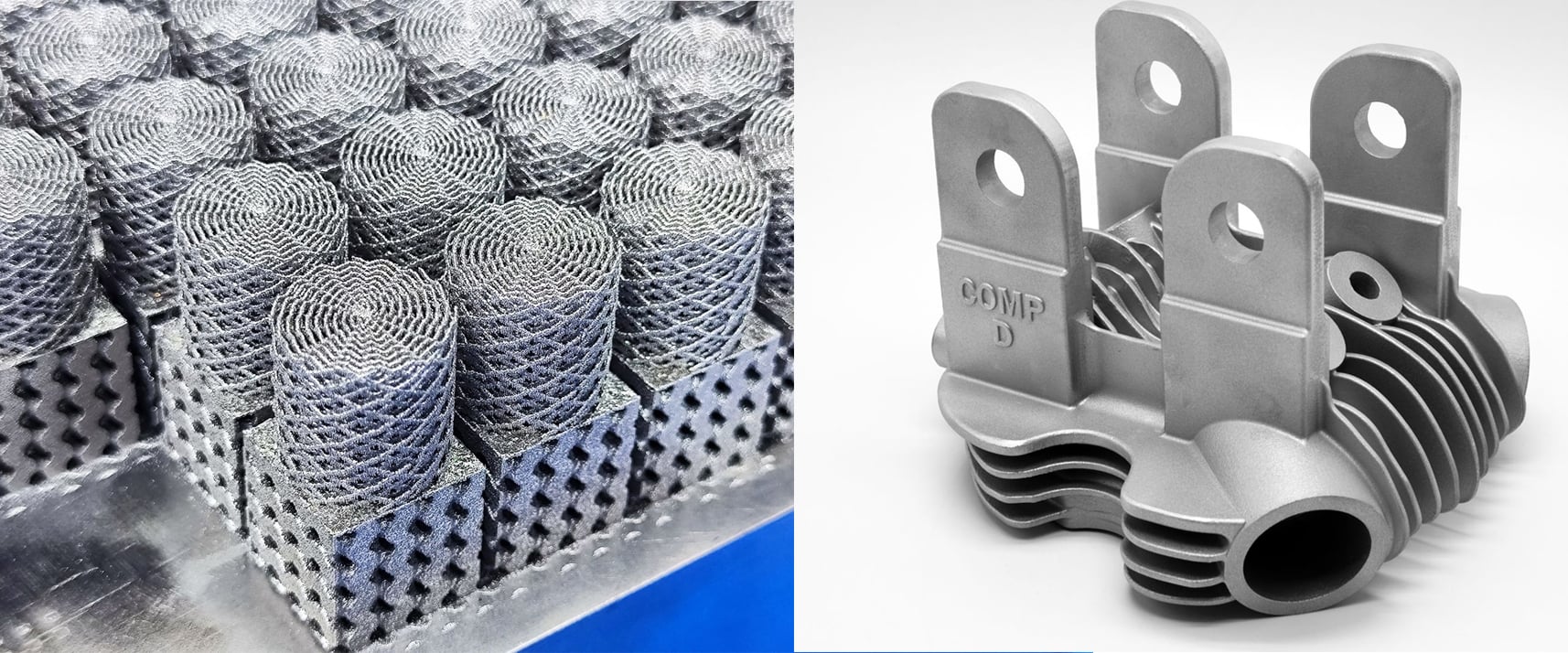
Farsoon’s newest metal launches are the FS812M-U and FS1311M-U, both announced in March 2026 for TCT Asia 2026. The FS812M-U updates Farsoon’s 800-series large-format metal platform with an 810 x 810 x 17,00 mm build volume, an 8- or 10-laser configuration, optional beam shaping, improved gas flow, closed-loop chamber pressure control, MES connectivity, and a claimed 41% smaller footprint than its FS811M predecessor.
The headline new machine, however, is the FS1521M is Farsoon’s next-generation 32 or 16 lasers metal AM system, designed for large-scale, high-efficiency production in aerospace, automotive, and energy.
Farsoon says the system can reach build rates of up to 1440 cm³/h in Ti-6Al-4V at 150-micron layer thickness, supported by optional beam shaping, intelligent recoating monitoring, closed-loop powder management, MES integration, and a three-station workflow for parallel operations.
Farsoon machines are also known for their open-platform approach, with unlocked parameters and an open material policy that appeal to manufacturers, universities, and research teams developing their own alloys, processes, and production workflows. Farsoon says its metal systems are supplied with pre-loaded parameter sets for qualified metal powders, while still allowing users to tailor processes for specific applications.
HBD 1600
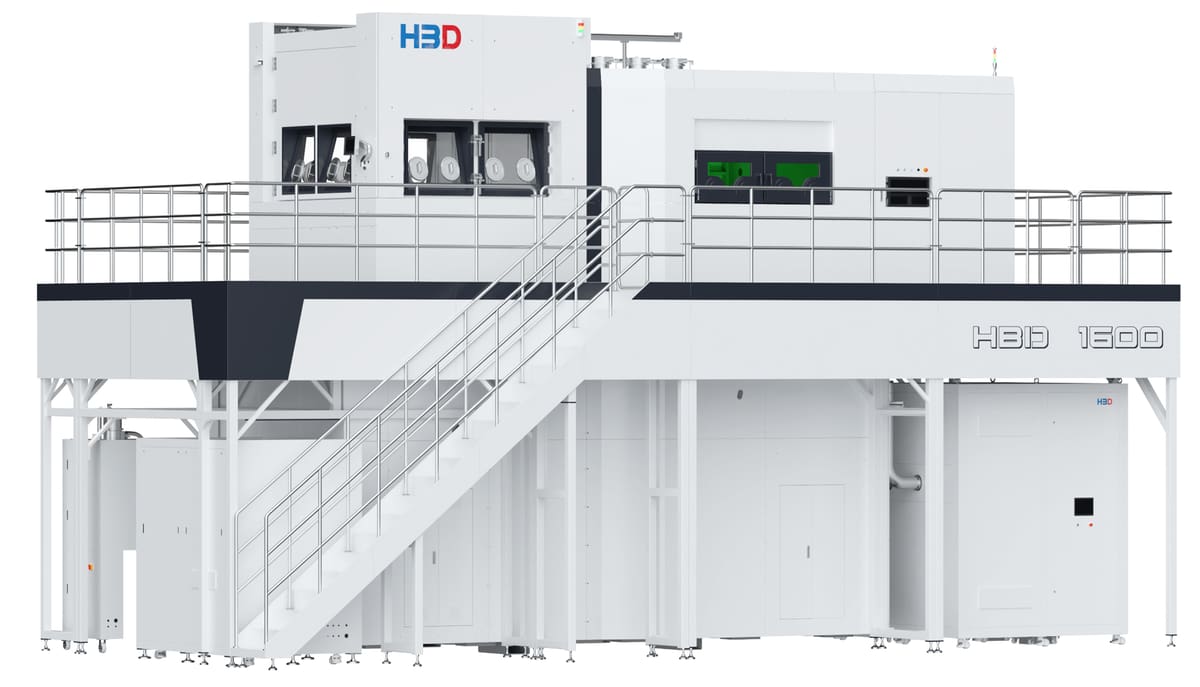
HBD, based in Guangdong, China, offers a surprisingly broad range of metal laser powder bed fusion machines, with 12 systems listed in its current lineup organized roughly from compact R&D and dental-style platforms to huge aerospace-oriented machines, covering applications in aerospace, electronics, sports, dental, energy, healthcare, mold and die, and transportation.
The largest metal system from HBD is the HBD 1600, a monster-scale LPBF machine with a 1,600 x 1,600 x 1,750 mm build volume and 28 500-W lasers. HBD positions it as a deeply customized aerospace solution for large, complex structural components, with a full-process intelligent closed-loop system, automatic powder recycling and sieving, automated powder feeding, automatic blade replacement, lens self-cleaning, and a filtration system rated to capture 99.9% of particles down to 0.3 µm. The company highlights rocket-engine-style parts and topologically optimized aerospace structures as use cases, including a liquid rocket engine model that reduces more than 200 traditional components to a single printed part.
At the other end of the lineup, HBD’s compact HBD 150 is covered in the compact section above, while the middle of the range is where HBD’s menu starts to feel crowded. The HBD 200 offers a 265 x 170 x 120 mm build volume with dual 300-W or 500-W lasers for prototyping, custom manufacturing, education, and R&D, while the HBD 400 jumps to 350 x 400 x 400 mm and up to six 500-W or 1,000-W lasers for higher-volume batch production. HBD says the HBD 400’s automatic laser stitching can cut calibration time from up to an hour to under five minutes, while its bidirectional recoater completes powder spreading in three seconds.
For larger production, HBD offers the HBD 500, 600, and 800, with build volumes and laser counts scale from up to four lasers on the HBD 500, to eight on the HBD 600, to 10 on the HBD 800, with 500-W or 1,000-W options depending on the model. These systems add stronger emphasis on serial production, closed-loop powder handling, long-life filtration, real-time monitoring, and large-format aerospace, automotive, and energy applications.
HBD also sells an ecosystem around the printers, including powder sieving, powder supply, suction, vacuum cleaning, drying, heat treatment, sandblasting, wire cutting, and other auxiliary equipment. It is clearly aiming to be more than a box seller: the company’s product pages repeatedly emphasize powder reuse, inert powder handling, filtration, safety, and production continuity, which are exactly the less glamorous details that can make or break metal additive manufacturing on a factory floor.
BLT S1500
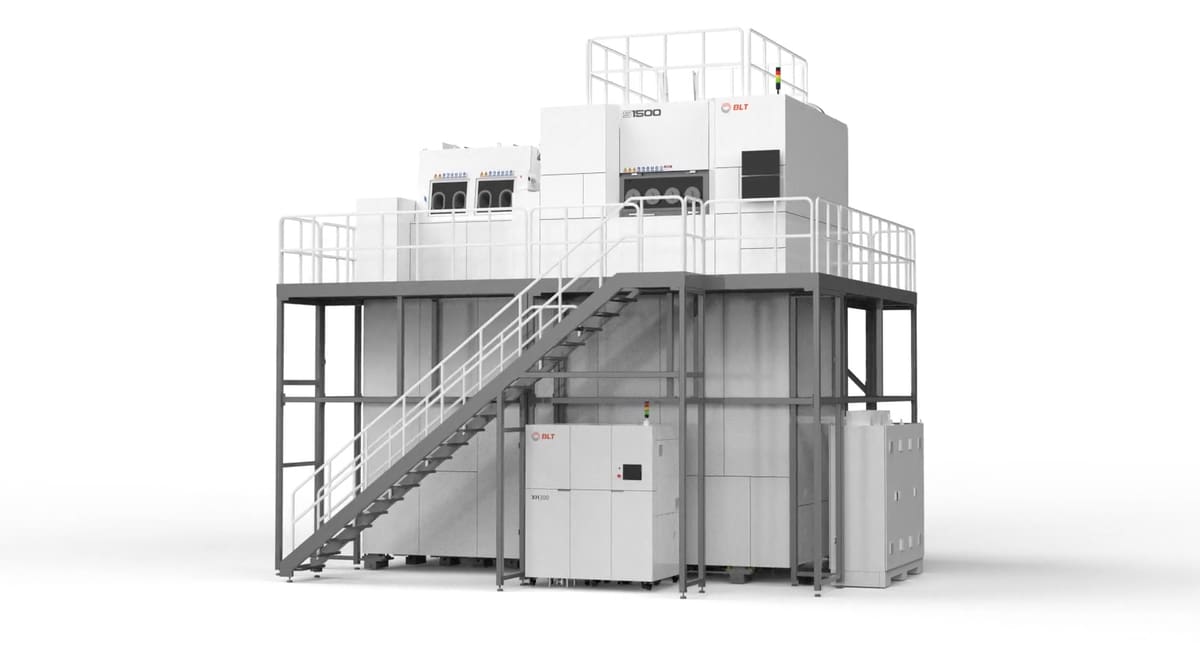
BLT, or Bright Laser Technologies, is one of China’s largest metal additive manufacturing companies, offering a broad lineup of laser powder bed fusion systems alongside metal printing services, powder production, software, and engineering support. Its machines target aerospace, aviation, automotive, medical, tooling, electronics, energy, and research applications, with its S-series now spanning compact systems such as the BLT-S210 through ultra-large multi-laser platforms such as the BLT-S1500.
The BLT-S310/S320 from Bright Laser Technologies (BLT) is a compact-to-mid-size metal LPBF 3D printer designed for industrial prototyping, R&D, and small-batch production. With a 250 x 250 x 400 mm build volume, it offers a practical step up from BLT’s smaller S210 while remaining suited to fine-detail metal parts in aerospace, medical, automotive, tooling, and research applications.
The system can be configured with single or dual 500W fiber lasers, giving users flexibility between lower-cost operation and higher productivity. BLT positions the S310/S320 as a versatile all-purpose platform for qualified metals including titanium alloys, aluminum alloys, superalloys, cobalt-chromium, stainless steels, tool steels, copper alloys, tungsten alloys, tantalum, and magnesium alloys.
Designed for production reliability, the S310/S320 includes process monitoring, BLT’s software ecosystem, and options for more automated powder and build management. Its relatively compact footprint, dual-laser option, and broad material compatibility make it a strong candidate for users that need a capable metal PBF system without moving into large-format, multi-laser production machines.
At the other end of the portfolio, BLT now offers very large multi-laser systems including the BLT-S1000 and BLT-S1500. The S1500 is listed with a 1500 x 1500 x 1200 mm or 1500 x 1500 x 1500 mm build volume and 18 or 26 500W lasers, with BLT positioning it for aerospace, aviation, engine, and automotive applications.
BLT has also been expanding internationally. In March 2025, it named GoEngineer as its official distributor for North America, giving the company a more visible U.S. sales and support channel.
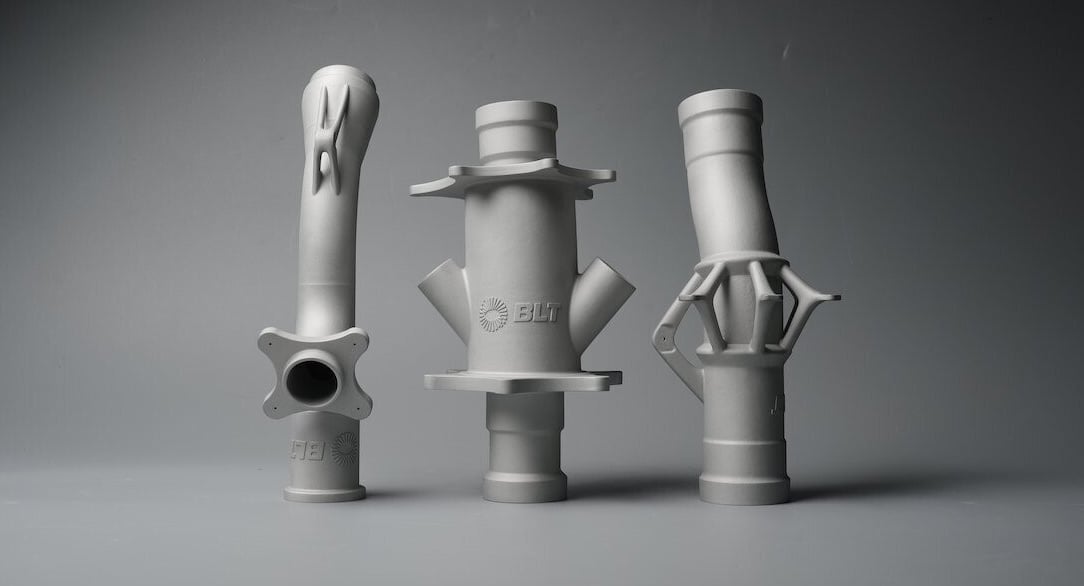
The company’s technology is increasingly visible in high-profile end-use applications. BLT says it helped OPPO develop the 3D printed aerospace-grade titanium hinge system for the OPPO Find N5 foldable smartphone, reducing hinge thickness from 0.3 mm to 0.15 mm while increasing structural strength.
Know Your Metal 3D Printing Tech
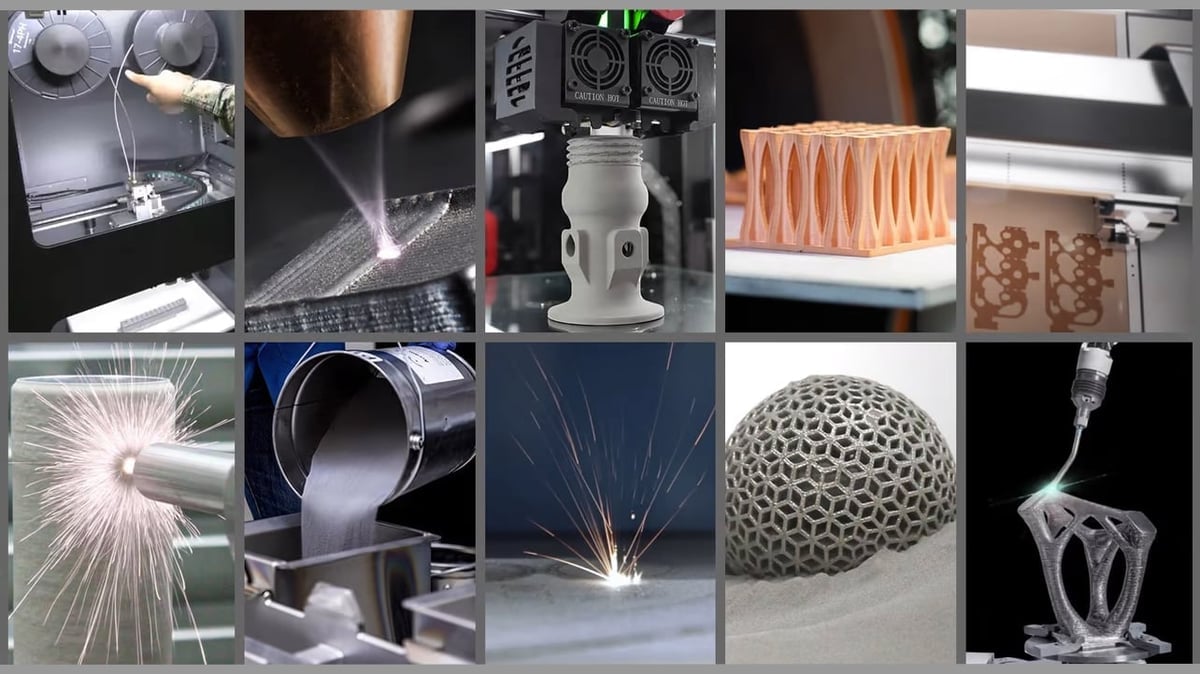
There are more than 10 ways to 3D print metal. The different technologies produce different parts and affect your overall cost, speed, and efficiency, so getting grounded in your options is essential. We’ll breeze over the options here, but we link to fuller coverage and explanations elsewhere at All3DP.
Laser Powder Bed Fusion (LPBF)
The most common metal 3D printing technology is laser powder bed fusion, more popularly known as selective laser melting (SLM) or simply metal fusion, which makes up about 80% of the metal 3D printer market.
LPBF can be used with a wide spectrum of materials – aluminum, titanium, steel, nickel, cobalt, copper-based alloys, and their composites – and involves a laser (or several) that slowly and steadily melts layer by layer of metal powder, fusing the tiny particles of metal.
Parts emerge from the LPBF processes ready to use without further steps required, except for possibly having to remove the support structures. However, the surface finish of the sintered parts is rough and may need some post-processing, depending on your requirements.

Fused Deposition Modeling (FDM) with Metal Filament
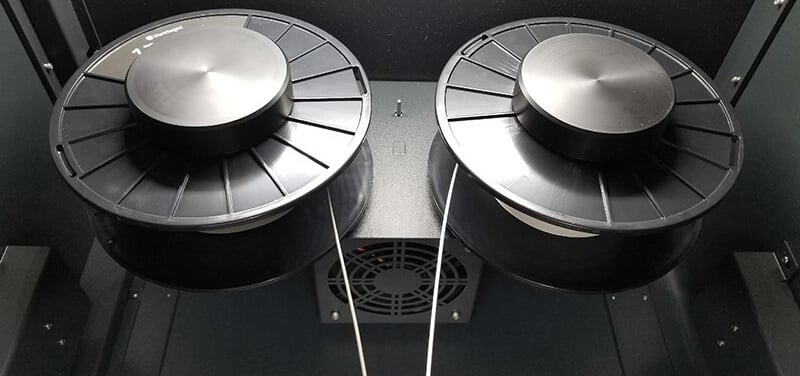
FDM, which uses filament extruded through a nozzle, is the workhorse of plastic 3D printing but turns into a metal printing technology with plastic filament infused with metal powder or nearly full-metal filaments. The plastic part of the filament (or binder) is removed in the post-processing to reveal a part that is up to 98% metal, although it can have relatively high porosity. Metal filaments are also abrasive to FDM machine extruders, so reinforced or hardened steel extruders are necessary.
Metal FDM is by far the least expensive way to produce metal parts because metal filament can be used on a wide range of desktop 3D printers originally designed for plastics, such as UltiMaker and Raise3D. In fact, there’s been a lot of buzz about using stainless steel filament on desktop 3D printers designed mainly for plastics. So what’s the difference between this method and the dedicated metal printers we feature below?
In short, it’s all about the structural and mechanical properties your parts require. That’s not to say that metal parts from these desktop printers are just decorative. They are real metal parts suited for a broad range of applications, including tooling, jigs and fixtures, small series production, functional parts, prototypes, and even jewelry. The FDM print method, however, is less accurate than other metal 3D printing technologies and this method requires supports, which can limit part geometry. Parts from metal filament also require debinding and sintering (often at a third party), slowing down your production.
Electron Beam Melting (EBM)
EBM (also called electron beam powder bed fusion) is another powder-based technology that uses an electron beam instead of lasers to melt and fuse the metal materials fully. It’s less accurate than its laser cousin but can produce larger parts faster. The EBM process occurs in a vacuum and at high temperatures, resulting in stress-relieved components with material properties better than cast and comparable to wrought material.
Metal Binder Jetting
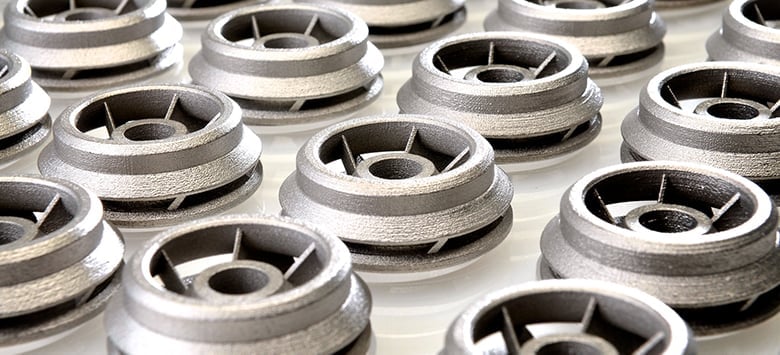
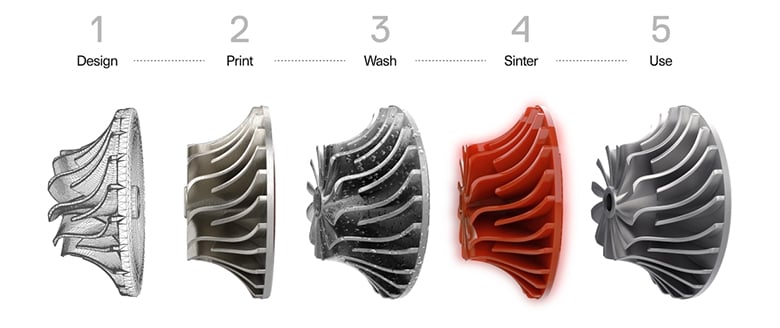
Binder jetting has really taken off in the last few years, potentially challenging LPBF in the next five to 10 years as the industry standard because of its speed and volume. A binder jet printer distributes a layer of metal powder and then uses a jetting head to deposit a binding polymer to create the geometry. Although the part is produced faster and in larger batches than any of the other powder bed processes, printing is only the first step. Just like FDM, post-processing, such as debinding, sintering, infiltration, and finishing the part, will often take more time than printing the initial part. This technology is used for batches of parts, so even with post-processing, it can be faster than other methods.
Cold Spray
Cold spray is a manufacturing technology that sprays metal powders at supersonic speeds to bond them without melting them, which produces almost no thermal stress. Since the early 2000s, it’s been used as a coating process, but more recently, several companies have adapted cold spray for additive manufacturing because it can layer metal in exact geometries up to several centimeters at about 50 to 100 times higher speed than typical metal 3D printers.
For additive manufacturing, cold spray is being used to manufacture metal replacement parts quickly and for on-location repairs and restoration of metal components, such as military equipment and machinery in the oil and gas industry, saving companies potentially millions in remanufacturing and interruptions in workflows. Repaired parts, in some cases, can be better than new ones.
Powder & Wire Direct Energy Deposition (DED)
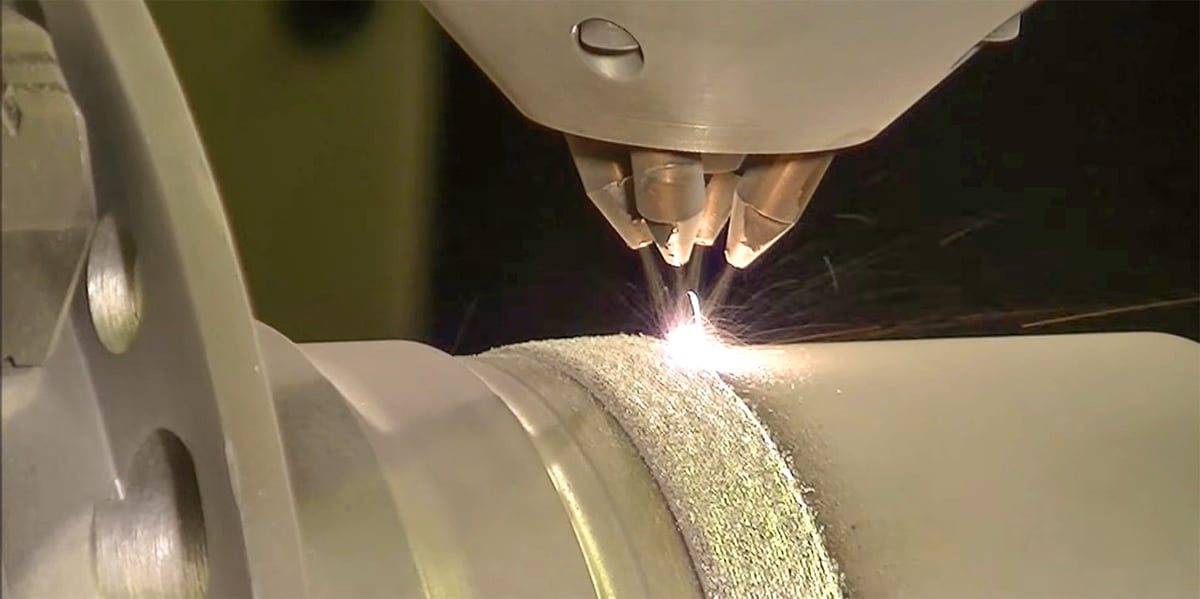
Directed energy deposition (DED) technologies fuse materials by melting them as they’re being deposited, similar to welding. It’s a manufacturing process, like Cold Spray, that’s often used to repair and maintain existing metal parts, but can also quickly construct metal parts.
Several processes fall under this category and differ in the heat source and raw material. One, called wire arc additive manufacturing (WAAM), uses a metal wire and an electric arc to fabricate large metal parts that can then be machined to a final shape. Other DED technologies use metal wire with plasma, laser, or electron beam energy sources. At the same time, there’s also a popular technology using metal powder shot from a nozzle and melted with laser energy.
This is not an exhaustive list of metal 3D printing methods. More specialized metal 3D printing technologies include metal lithography and micro selective laser sintering for tiny metal parts.

License: The text of "Best Metal 3D Printers in 2026: Systems to Know by Budget, Technology & Use Case" by All3DP Pro is licensed under a Creative Commons Attribution 4.0 International License.