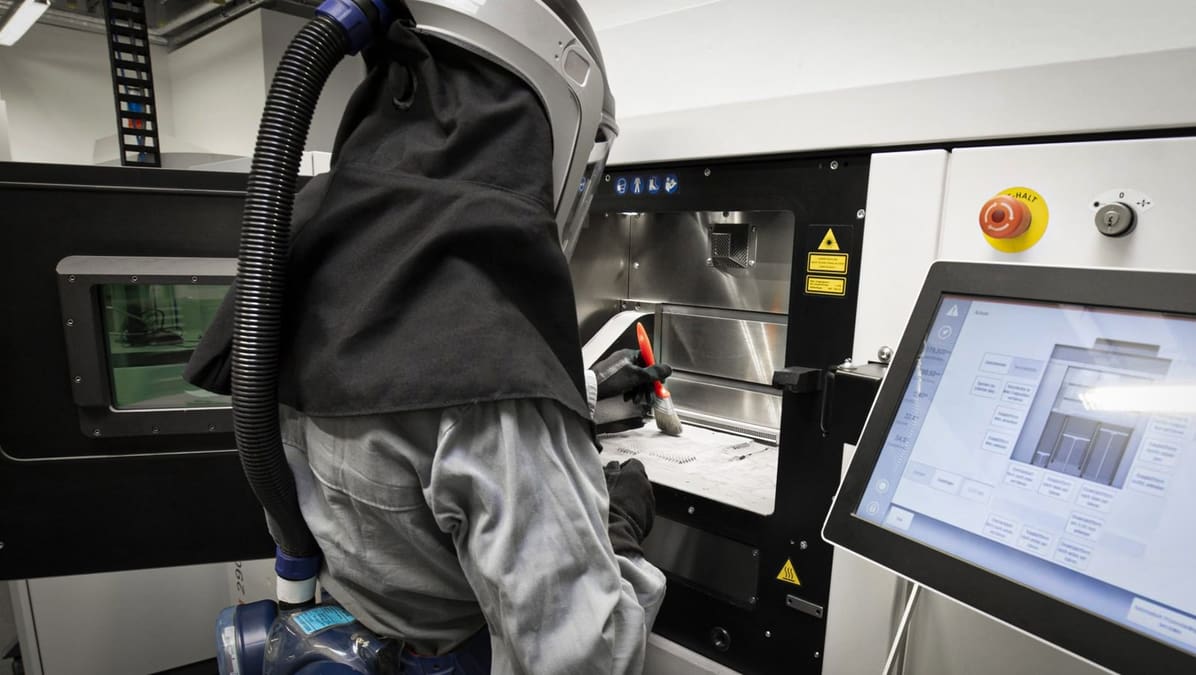
Why Certifying 3D Printing Operators Could Be the Key to Reliable Mass Production

Machines have gotten better. Operators haven't kept pace, and in aerospace and defense supply chains, that gap is starting to matter.
As additive manufacturing (AM) transitions from prototyping to production, the industry is entering a new phase defined less by whether a part can be printed and more by how reliably it can be produced at scale.
Across aerospace, defense, and other high-consequence sectors, that shift is closely tied to supply chain performance. While much of the conversation has focused on machines, materials, and monitoring, another factor is becoming more visible: the consistency and verifiability of the operator.
The Missing Link Between Capability and Repeatability
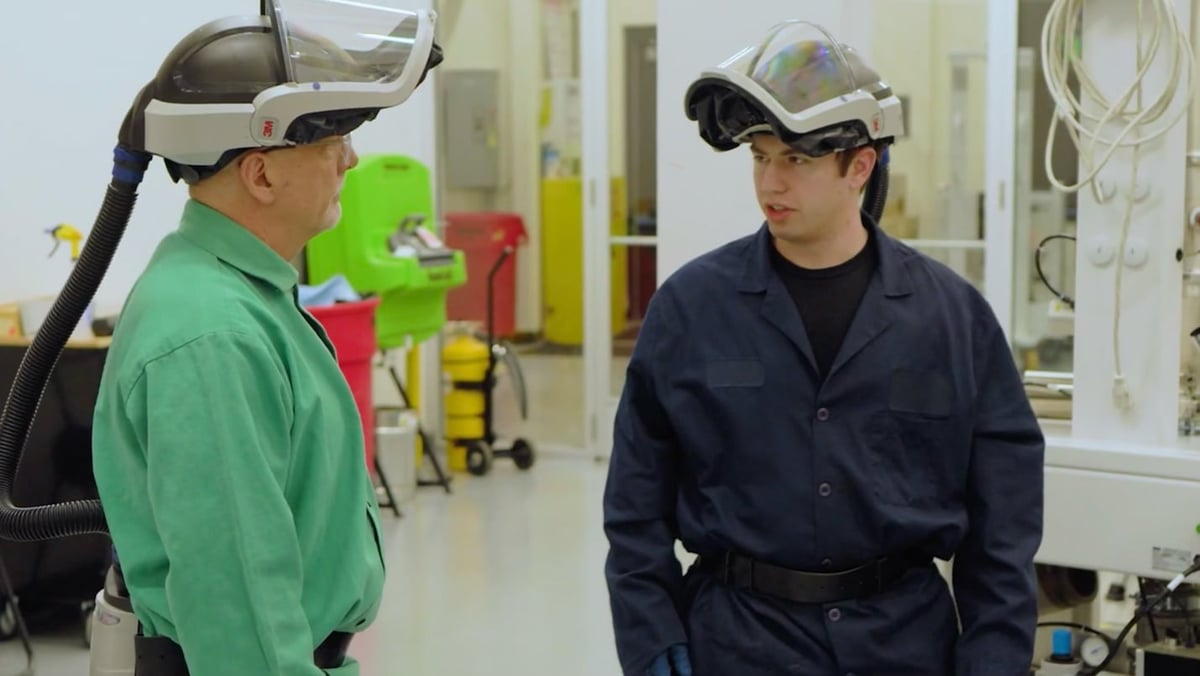
AM systems today are more capable than ever. Machine performance has improved, process monitoring is more sophisticated, and material datasets continue to expand. Yet production outcomes can still vary from site to site.
That variability often traces back to the human layer.
Operators control the conditions that determine build success, from machine preparation to parameter execution and real-time decision-making. In many organizations, these responsibilities are validated through internal training or experience-based trust. That approach can work in development environments, but production introduces additional requirements for repeatability, traceability, and auditability.
This creates a gap between demonstrated capability and consistently delivered outcomes.
From Training to Verification
Manufacturers are beginning to rethink workforce development as something more structured and more transparent. Training alone is no longer enough. What’s needed is verification.
Operator certification introduces a standardized, third-party benchmark for competency, transforming what has traditionally been an internal assessment into something that can be externally validated and consistently applied. It establishes a shared baseline across organizations that may otherwise operate with different assumptions about readiness.
This is particularly relevant in AM, where production is often distributed across OEMs, contract manufacturers, and end users.
Where ASTM’s Role Becomes Critical
Organizations like ASTM International’s AM Center of Excellence (AM CoE) are shaping the conversation through integrated qualification ecosystems that connect standards, certification, training, and deployment.
At the center of that effort is the Additive Manufacturing Certification Program, designed as an end-to-end framework spanning personnel, facilities, processes, and risk management.
Rather than treating operator qualification as a standalone checkbox, this approach embeds workforce certification into a broader system that aligns standards, OEM training pathways, and process requirements with audit-ready documentation.
Why OEMs and Supply Chains Are Leaning In
For OEMs, certification helps close the gap between machine capability and field performance by improving consistency across customer sites.
For supply chains, the implications are broader. As AM becomes more distributed, buyers are placing greater emphasis on demonstrated process control. Workforce certification becomes a visible and auditable signal of that capability.
This is already emerging in sectors such as defense and maritime, where certification frameworks are being used to strengthen supplier readiness.
A Workforce That Is Legible to the Market
For operators, certification provides a portable, standards-based credential that communicates proficiency across organizations.
That visibility is increasingly important as production roles become more structured and accountability requirements increase.
From Capability to Industrial Confidence
Workforce certification is moving from a supporting activity to a core component of how additive manufacturing systems are qualified and deployed.
ASTM’s model of linking standards, training, certification, and data into a unified framework reflects a broader shift toward integrated readiness, where the focus is on consistent, repeatable performance.
The Subtle Competitive Advantage
As AM becomes a larger part of modern supply chains, consistent execution becomes essential.
Standards and qualification systems define expectations, but outcomes are delivered on the shop floor. Workforce certification helps ensure those expectations are met in practice.
Organizations that invest in certified workforces are strengthening their ability to scale, meet regulatory expectations, and participate in high-value supply chains.
About the Author: Michael Molitch-Hou is a content strategy and marketing professional specializing in additive manufacturing. He currently serves as Content Strategy & Marketing Manager at the ASTM Additive Manufacturing Center of Excellence, where he focuses on communicating developments in standards, certification, and research within the field. He has also contributed as an additive manufacturing expert for Forbes and previously served as Editor-in-Chief of 3DPrint.com.
License: The text of "Why Certifying 3D Printing Operators Could Be the Key to Reliable Mass Production" by All3DP Pro is licensed under a Creative Commons Attribution 4.0 International License.