This School 3D Prints Violins at Just $50 Each, so Every Kid Can Play — Here’s How

Using an open-source design called the Hovalin, the district can produce a durable, functional violin for about $50 in materials, proving that affordable access to music is printable.
Teachers know that learning a musical instrument has cognitive benefits for children across memory, attention, language, reasoning, and brain development. Funding for instruments, however, is typically low. That hasn’t stopped an innovative school administrator in Pennsylvania with an idea to 3D print violins.
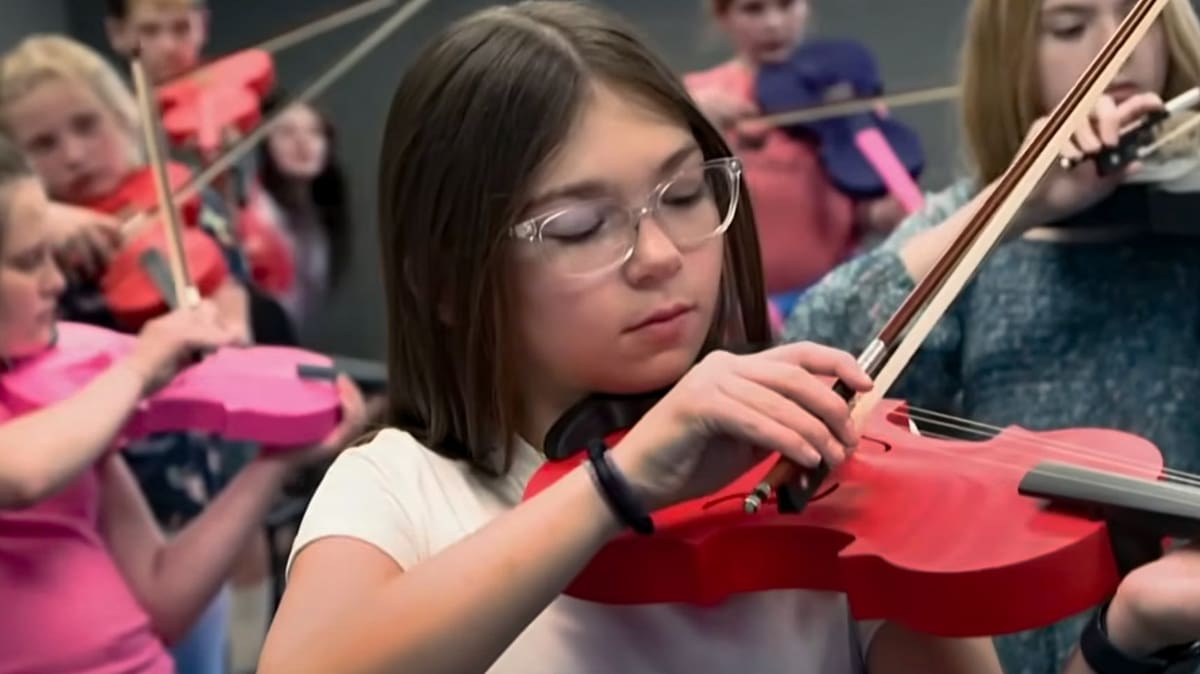
Laura Jacob, a school district superintendent in Washington County, launched a program that has provided hundreds of 3D printed violins to local kids at a cost of about $50 each. The grade school students get to use the instruments for free, saving hundreds of dollars in annual rental fees for traditional violins. Jacob’s violin program benefits from philanthropic support from the Benedum Foundation and the Grable Foundation to cover material and printer costs.
Cost Was the Breakthrough
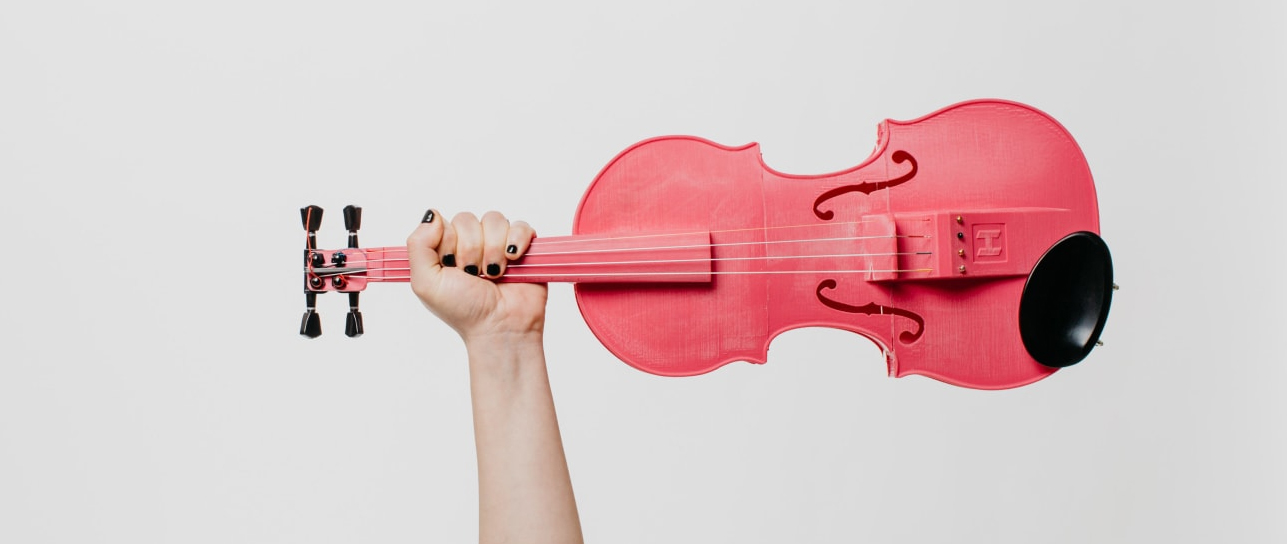

Jacob tried several digital files for violins without success before finding Hovalin—an open-source, widely used, 3D printable acoustic violin design from Hova Labs. This seven-part design was the base template that Jacobs had modified to a two-part instrument.
Parts are fabricated on consumer-grade printers, mostly Prusas, in PLA and assembled with off-the-shelf strings, a wooden bridge, and commonly available tuners. From first print to final setup, a single violin can be finished in about three days. The single-piece body takes two days to print, Jacob told CBS News, while the neck takes about eight hours.

Although student beginners often start on a printed instrument, they can then graduate to wood if they’re motivated to continue, but music mastery is not the point. Opportunity and access to instruments that are not affordable for the area’s lower-income families is the goal of the program. The school district’s approach sits inside a broader movement to democratize orchestral instruments with modern fabrication. In 2022, the AVIVA Young Artists Program presented a low-cost, 3D printed violin through the Acoustical Society of America that highlighted education-friendly durability and affordability; other university and maker projects have followed similar lines.
The school district also runs a Friday 3D Violin Orchestra club after school, which gives students regular practice time and an entry point into the broader music program. For a rural public district, the upshot is visible: more students trying strings, more instruments in circulation, and fewer families facing a paywall to participate.
How Do Plastic Violins Sound?
Videos, like this one below from the Ottawa Symphony Orchestra, demonstrate how strikingly close the 3D printed violins are to wood violins. The sound is comparably loud, and the overall experience for new learners is solid, even if the timbre isn’t identical. The Ottawa Orchestra used instruments printed on a Stratasys 400 FDM.
Violinist Ray Chen 3D printed his own Hovalin and put it to the test on YouTube with a Brahms violin concerto, switching back to his traditional wood violin for comparison. The sound difference is obvious, but he says, “It sounds a little better than I thought.”
The Model is Replicable
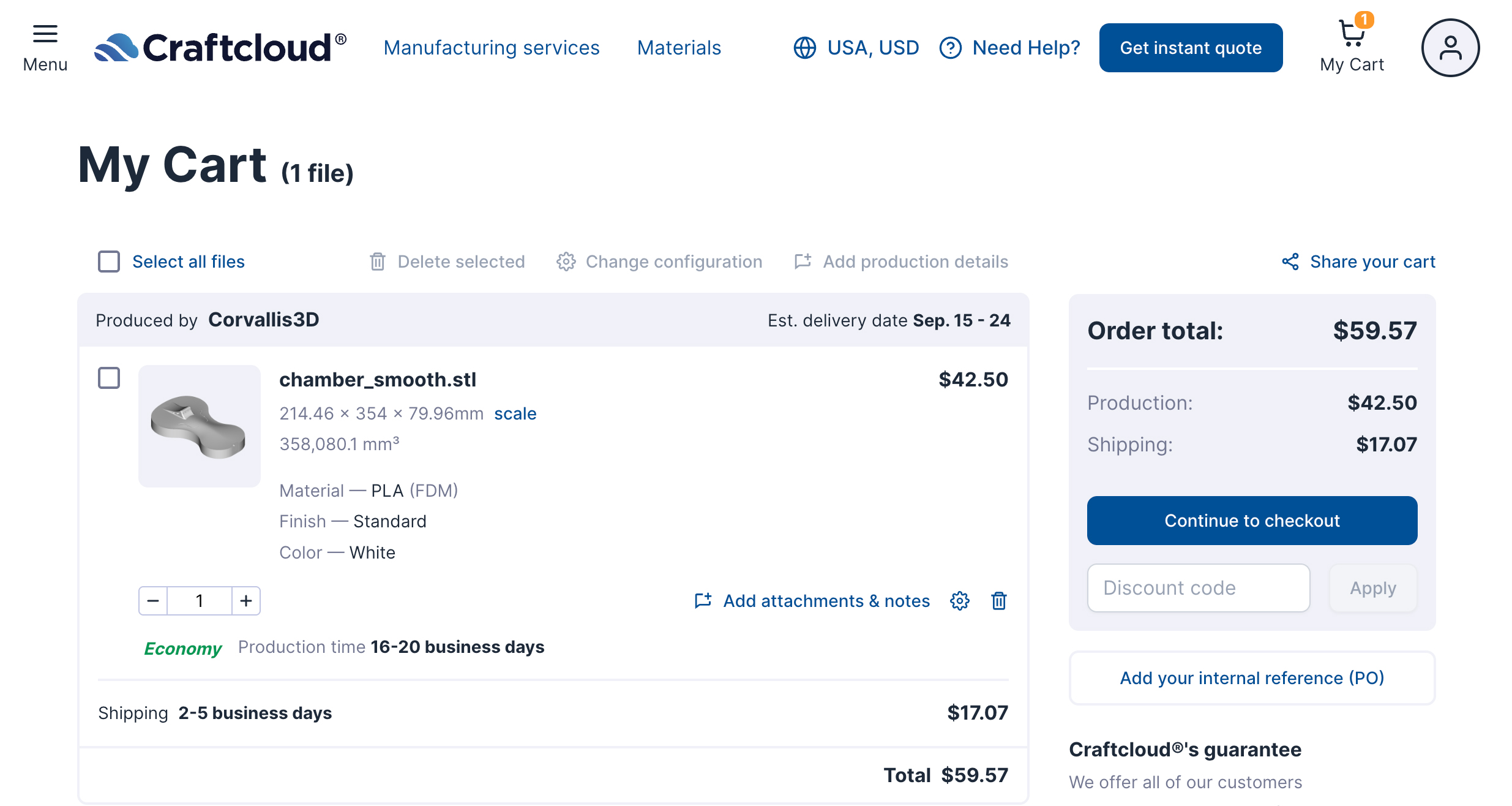
Although Jacob has access to 34 3D printers in-house, schools can also outsource to 3D printing companies, such as Craftcloud. The one-piece Hovalin body will cost just under $50 when ordered through Craftcloud.
3D Printed Violin Starter Guide
Primary 3D Violin Digital Design
Hovalin v5.1.0. is available in full (4/4), three-quarter, or half size at Printables. Jacob in Pennsylvania opted to use off-the-shelf components, including the bridge, instead of 3D printing them, which is also an option with the Hovalin design.
Find modified neck, head, bridge, and peg files designed for better string clearance and fit with standard peg hardware from Clogged_nozzl3x at Printables.
Off-The-Shelf-Component Shopping List
- Tuning pegs (black, chrome, or gold)
- Rosin
- Violin strings
- 8 mm × 500 mm carbon-fiber rod (serves as internal support for the Hovalin design)
- Violin bow
Tools for Assembly
- Socket wrench set
- Print support removal tools
- Sand paper
You May Also Like:


License: The text of "This School 3D Prints Violins at Just $50 Each, so Every Kid Can Play — Here’s How" by All3DP is licensed under a Creative Commons Attribution 4.0 International License.