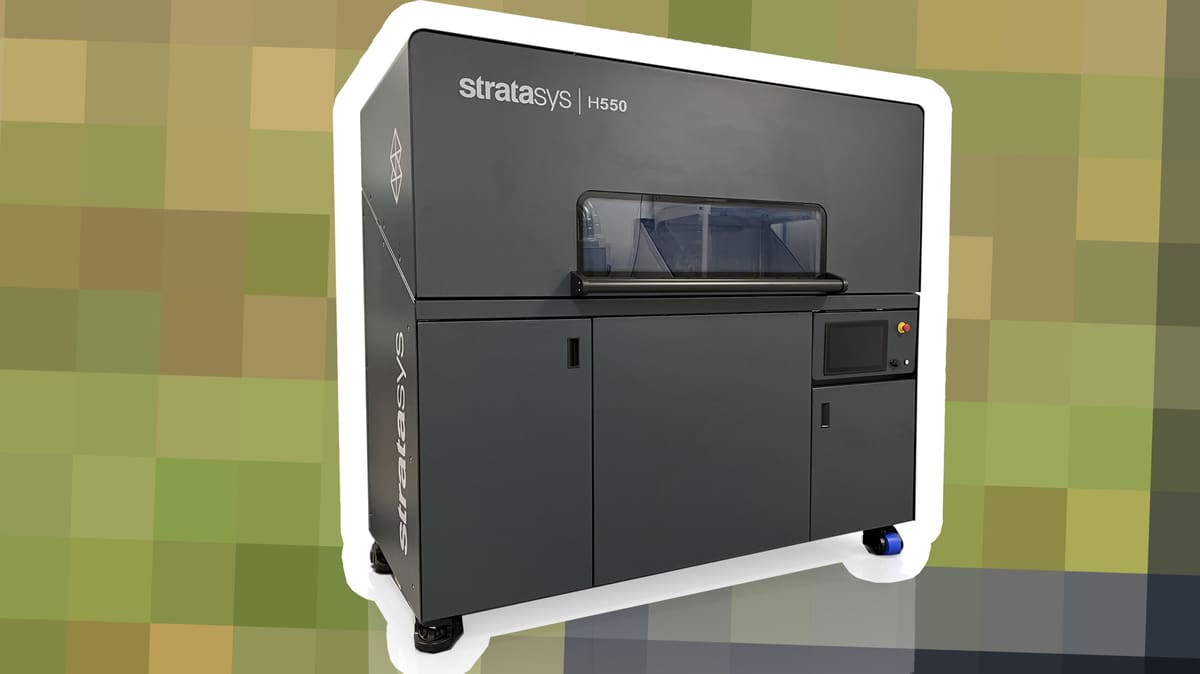
Stratasys’ New H550 Targets HP MJF with Claims of High Capacity & Lower Cost Per Part

The new powder-based industrial 3D printer promises larger parts, higher production capacity, and a lower total cost of ownership than competing systems.
Stratasys is taking direct aim at HP’s Multi Jet Fusion dominance in industrial polymer 3D printing with the launch of the H550. By squeezing 80% more build volume into the exact same physical footprint as its predecessor, the H350, the new powder-bed system promises a massive leap in production capacity and a lower total cost of ownership. But is it enough to convince manufacturers to make the switch?
Speaking to All3DP ahead of its Formnext 2026 launch today, Neil Hopkinson, inventor of the High Speed Sintering technology behind Stratasys’ process, revealed that the new machine delivers a 34.2-liter build volume, a 450 mm long axis, and a fixed 16-hour print cycle, regardless of how many parts are produced.
If you only know Stratasys for its FDM and PolyJet machines, you’re not alone. The company’s polymer powder fusion technology called Selective Absorption Fusion (SAF), which is very similar to HP’s Multi Jet Fusion, is lesser known. Like MJF, it uses inkjet-deposited agents and infrared energy to selectively fuse polymer powder, rather than the fusing lasers used in the other polymer powder tech, selective laser sintering (SLS).
Inkjet-based thermal powder bed fusion technologies—Stratasys SAF, HP MJF, and ExOne voxeljet HSS—are designed to achieve higher production throughput than conventional laser-based SLS.
Going up against HP has been an uphill battle for Stratasys since the launch of its first SAF machine, the H350, in 2021. There are real customers, repeat orders, and promising production applications, but can Stratasys turn SAF from an established alternative into a more widely adopted industrial production platform?
Stratasys is betting that size may have been part of the hurdle, launching the H550 with 78% increase in build volume compared to the H350. Stratasys told All3DP that existing customers wanted to build larger parts and have bigger throughput.
Comparing the H550 to HP’s largest machine, the MJF 5600, it’s 18.4% longer at 45 cm, but has a slightly smaller overall build volume (34.2 liter vs. HP’s 41 liter). Looking at the SLS competition, if your only aim is a long part, EOS offers 70-cm long parts and Farsoon maxes out at 100 cm.
More Than Just Bigger? We Asked Stratasys
While the larger build capacity is the most obvious change, Stratasys says the new system is designed to deliver up to 30% lower total cost of ownership (TCO) “than comparable print-and-fuse systems currently on the market.” More specifically, Stratasys says the 30% figure is based on a like-for-like cost-per-part comparison between the Stratasys H550 and the HP Jet Fusion 5200, using the same representative part and a consistent set of production assumptions.
Reducing cost per part is the goal of all production additive manufacturing. And while Stratasys’ didn’t release any more details on it’s head-to-head test with HP, there are several assumptions underpinning its logic.
All3DP sat down with Hopkinson to talk specifics. He identified a few main factors behind Stratasys’ claim that the H550 can delivers a lower total cost of ownership than comparable print-and-fuse systems:
- fewer consumables
- higher powder reuse
- more parts per build
- automated depowdering
First, the lower consumable costs: SAF uses a single, highly concentrated absorption fluid, unlike HP’s MJF, which uses two.
Then there’s the higher powder recyclability, according to Hopkinson. SAF operates at lower bed temperatures, reducing thermal degradation of unused powder, and has an elongated (rectangular) build geometry that also helps limit powder thermal exposure. These allow more powder to be reused without compromising part quality, Stratasys says. Hopkinson recommended a 70% recycled / 30% virgin powder mix at a typical 12% nesting density. (Stratasys is releasing the H550 with only PA12 nylon to start.)
Plus, Stratasys says its technology enables higher nesting density (parts can be closer together). Hopkinson claimed SAF can pack 20 % to 30% more parts into a build than competing systems, even where those machines have larger total build volumes. This improves productivity and reduces the machine depreciation cost allocated to each part, the company says.
Unlike, SLS systems that use lasers, SAF (and MJF) have a fixed build time. Regardless of the part geometry or number of parts, the each H550 takes 16 hours to complete a build. Increasing the number of parts therefore improves output without increasing printing time.
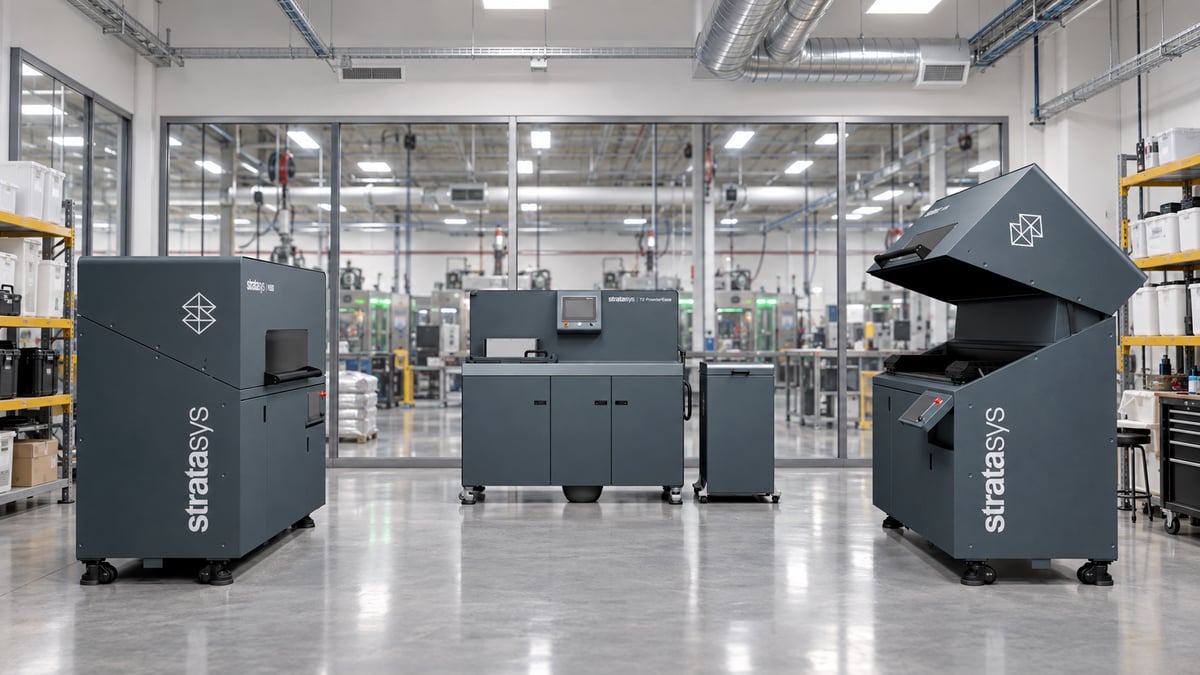
Stratasys says it new powder handling machine, the PowderEase T2, also lowers cost per part since it automates powder removal and recovery. Hopkinson described an approximately 20-minute automated breakout process, reducing manual handling and associated labor costs.
According to Stratasys, a single T2 station can support up to six H550 printers, provided they are using the same material.
Your savings, of course, will depend on factors such as part geometry, build utilization, production volume, and operating assumptions.
Who & What Is the H550 Make For?
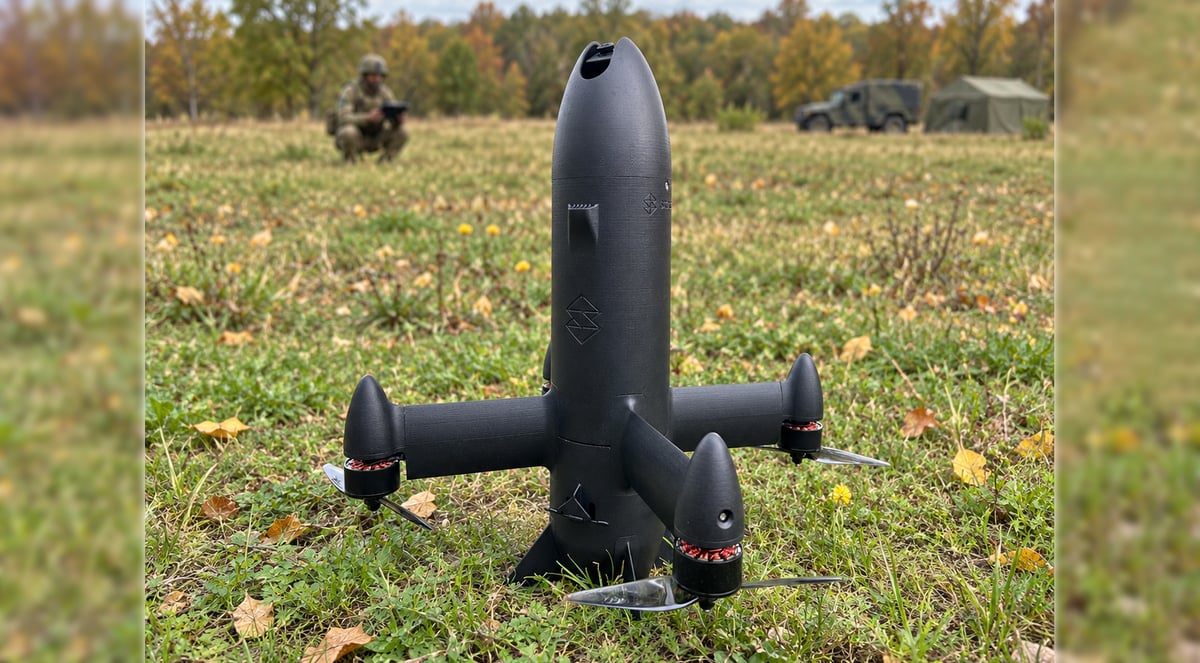
With the H550, Stratasys is seeking to extend SAF technology into applications where larger components, repeatable production, and competitive per-part costs are essential. Beta customers aren’t named, but Stratasys told All3DP that they are in the defense and automotive sector.
The H550’s 450 mm build axis accommodates longer or flatter components, including UAV assemblies, automotive manifolds, ducts and tooling, while its 34.2-liter build volume also allows hundreds of smaller parts to be produced in a single batch. According to Stratasys, the machine is intended to appeal both to existing H350 users seeking additional capacity and to manufacturers considering a move from SLS or HP’s Multi Jet Fusion technology.
Hopkinson said the initial customer mix is roughly evenly split between existing customers and newcomers, with many prospective users already familiar with MJF. For these manufacturers, Stratasys is emphasizing higher part-packing density, reduced material consumption, and automated powder handling as ways to lower production costs.
The longer-term question is whether these improvements can encourage more manufacturers to adopt Stratasys’ polymer additive manufacturing over HP or SLS systems from Formlabs, EOS, 3D Systems, and others.
Pricing has not been announced, but Stratasys says it’s “competitive” within the marketplace.
Pre-orders open Nov. 17, with commercial availability planned for the second quarter of 2027.
License: The text of "Stratasys’ New H550 Targets HP MJF with Claims of High Capacity & Lower Cost Per Part" by All3DP Pro is licensed under a Creative Commons Attribution 4.0 International License.