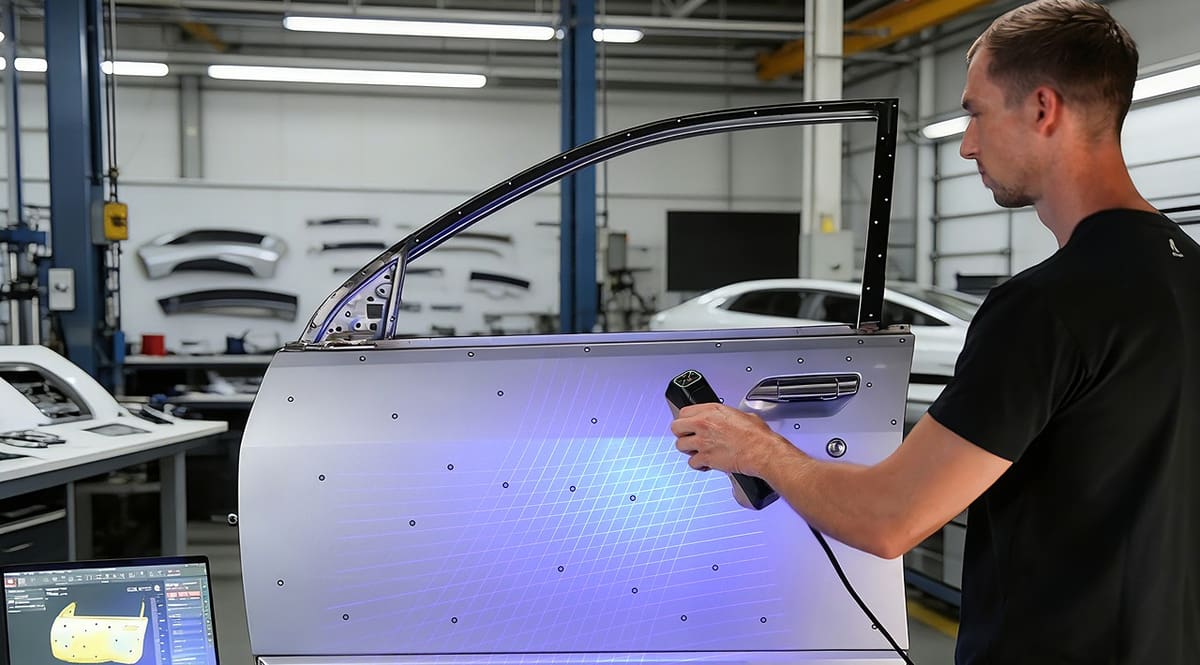
Reverse Engineering Without CAD Data: How MetroY Ultra Turns Physical Parts into Digital Designs

From custom motorcycle seat trays to classic VW Golf grilles, Revopoint’s MetroY Ultra 3D scanner brings real-world components seamlessly into a digital environment.
Reverse engineering often starts with a physical part but no reliable digital data. In restoration and customization, manual measurement can provide basic dimensions, but it becomes limiting when complex curves, mounting points, and tight clearances need to be captured accurately.
Revopoint’s MetroY Ultra captures the actual three-dimensional geometry of a part, providing a reliable digital reference for reverse engineering, custom design, and manufacturing. By pairing precise hardware with intuitive software, the system streamlines complex workflows, as shown in the following real-world applications.
Designing a Custom Motorcycle Seat Tray from Accurate Scan Data
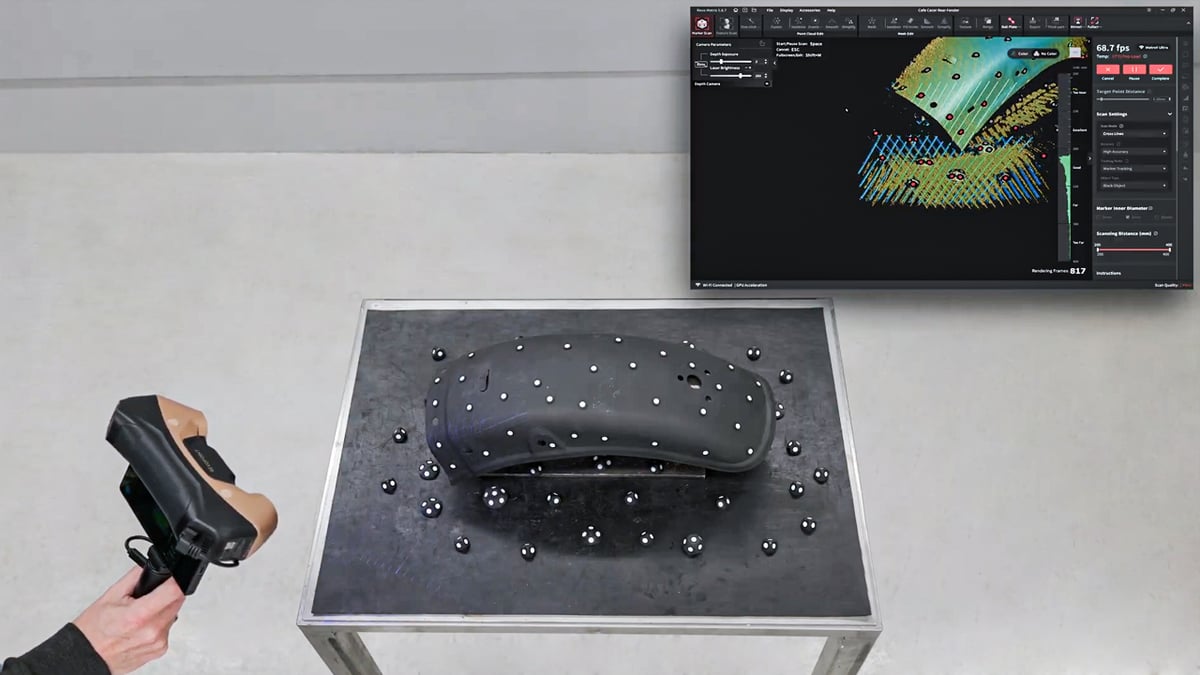
In a custom 1984 Honda CB400 build, DIYer KI Hestad needed to create a seat tray and seat pan for a custom seat while integrating the rear fender into the modified rear subframe. The challenge was not simply designing a new part, but making that part accurately fit a motorcycle whose geometry had already been modified.
Traditionally, this kind of work is often done with welded sheet metal or fiberglass layup. Both methods can produce strong parts, but they also require cutting, trimming, sanding, fitting, and repeated manual adjustment. When the geometry of the existing structure is not fully known, these adjustments are often part of the design process itself.
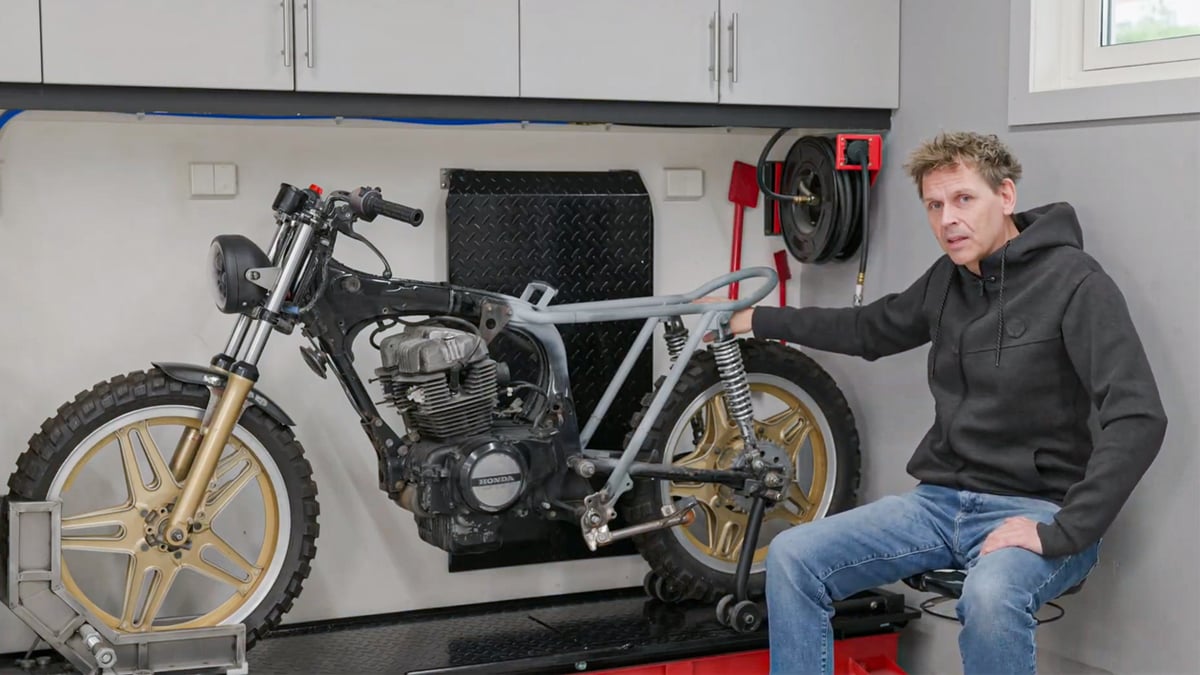
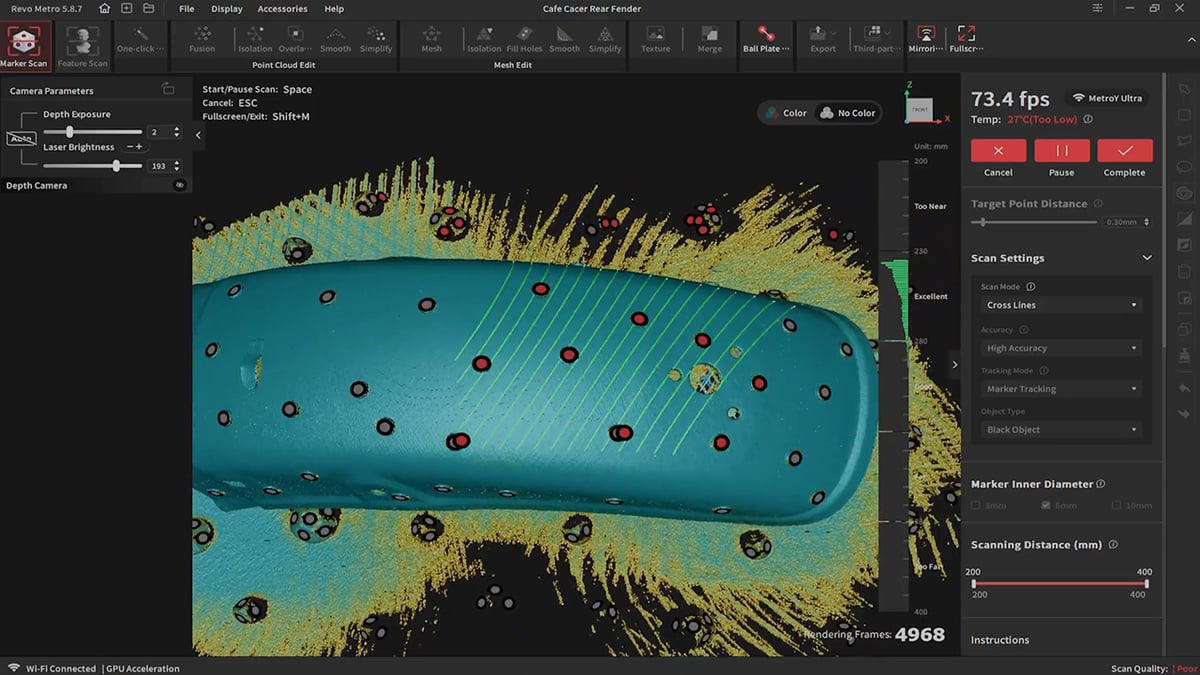
Instead of starting with metalwork or fiberglass, the builder moved the project into a digital workflow. The motorcycle had already been 3D scanned, and MetroY Ultra was then used to capture the rear fender from multiple angles, including both the top surface and underside. Markers were placed on and around the fender to support stable tracking, and enough overlap was captured so the scan data could be merged into a complete model.
Capturing both sides of the fender was important because the part’s overall shape, mounting features, and relationship to the surrounding frame all needed to be represented in the digital model.
The scan was captured and initially processed in Revo Metro, Revopoint’s software for MetroY Ultra. From there, the data could be reviewed and prepared before moving into further cleanup. One practical challenge was that some marker-related holes were similar in size to the real mounting holes on the fender, so the model had to be cleaned carefully: unwanted holes and scan artifacts were removed, while actual bolt holes were preserved. This distinction was important for the downstream design: preserving the actual mounting geometry while removing scan artifacts ensured that the digital model remained a useful representation of the physical part.
Once cleaned, the rear fender scan was combined with the full motorcycle scan in CAD software. This gave the builder an accurate digital reference of how the fender, frame hoop, and seat area related to one another.
Instead of working from a series of measurements and trying to reconstruct these relationships manually, the builder could now design against the actual geometry of the modified motorcycle. Using the scanned frame geometry as a guide, he designed a 3D printable seat tray with cutouts matching the actual frame, along with cable routing holes and mounting points for brass inserts.
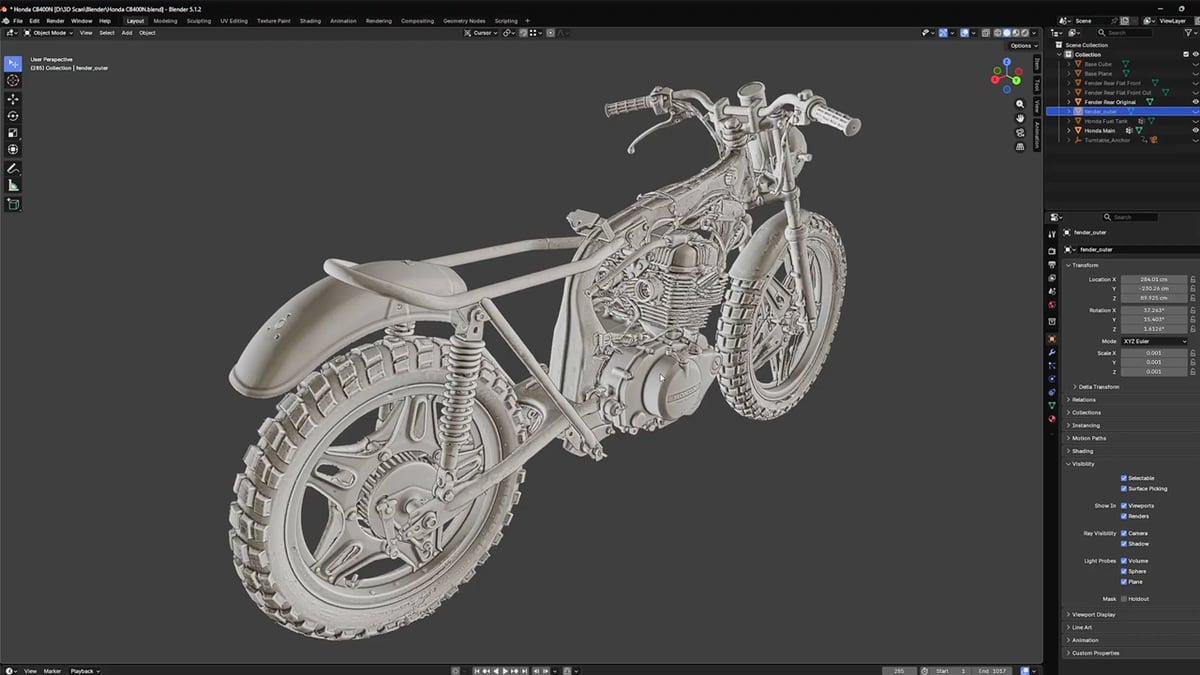
For this type of custom-fit design, MetroY Ultra provides accurate scan data that gives the early design stage a more reliable foundation. The value is not simply having a 3D model of the fender, but having its actual geometry available as a design reference. Instead of starting with rough measurements or repeated trial fitting, the builder could test and adjust the design digitally before cutting metal, laying fiberglass, or moving toward a full-size 3D print. For a one-off custom build, this helps move fitment from a physical trial-and-error process into a digital design process.
Accurate Digitization of a Classic Car Part
A radiator grille may look like a simple exterior component, but in classic vehicle restoration it can be a fitment-critical part. In this project, Jan Proschenski from Proschi 3D used MetroY Ultra to scan a radiator grille for a VW Golf MK1 Convertible, creating a high-accuracy digital reference for a part that may be difficult to source, repair, or reproduce.
For older vehicles, original CAD data is often unavailable, and replacement parts can vary in condition, shape, or fit. For a grille, accuracy matters beyond overall dimensions: edge profiles, mounting points, openings, surface transitions, and connections with surrounding bodywork all affect fitment.
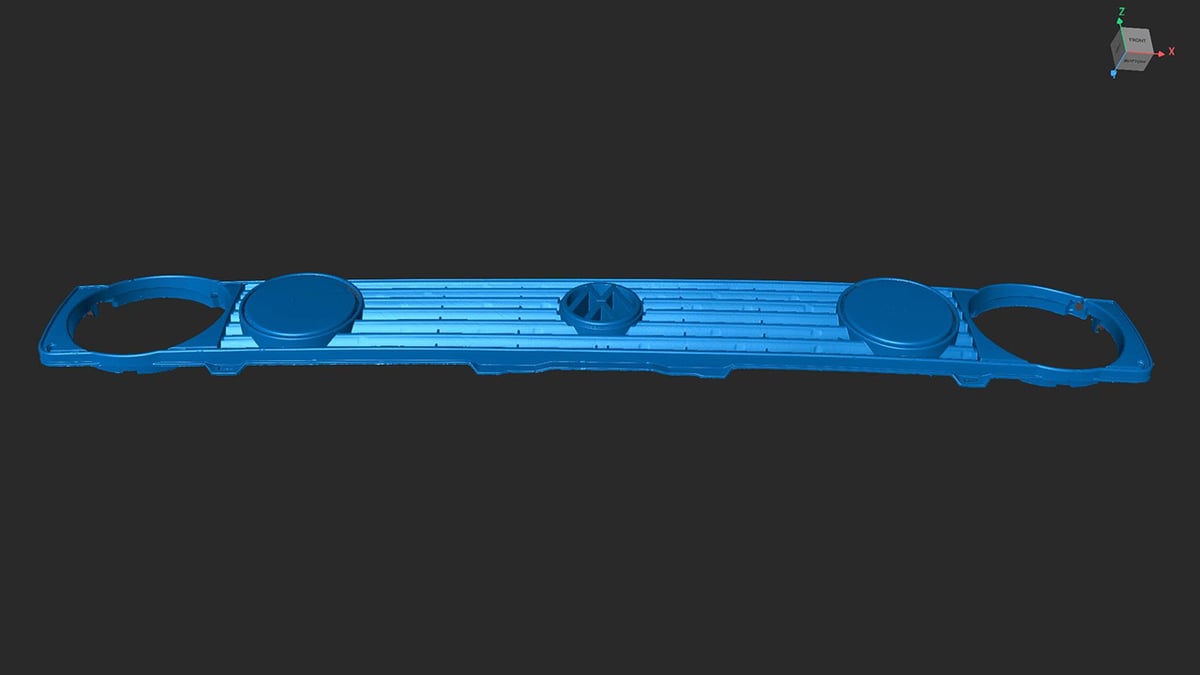
MetroY Ultra’s high-accuracy scanning captures these details more completely than manual measurement alone. Instead of relying on visual approximation or limited dimensions, restorers and designers can work from the actual geometry of the part. The resulting digital model provides a reliable reference for repair planning, reproduction, modification, or long-term digital archiving.
By accurately digitizing the grille, MetroY Ultra helps make restoration and redesign more controlled, especially for parts that are no longer easy to replace through normal supply channels.
Scanning a Black Part for Custom Fitment
Another representative application came from a modified S197 setup equipped with a 132 mm Whipple throttle body. The project by Sammie Lilly, from SkreetKar 3D, required a custom thermal spacer kit, where accurate understanding of component interfaces was critical.
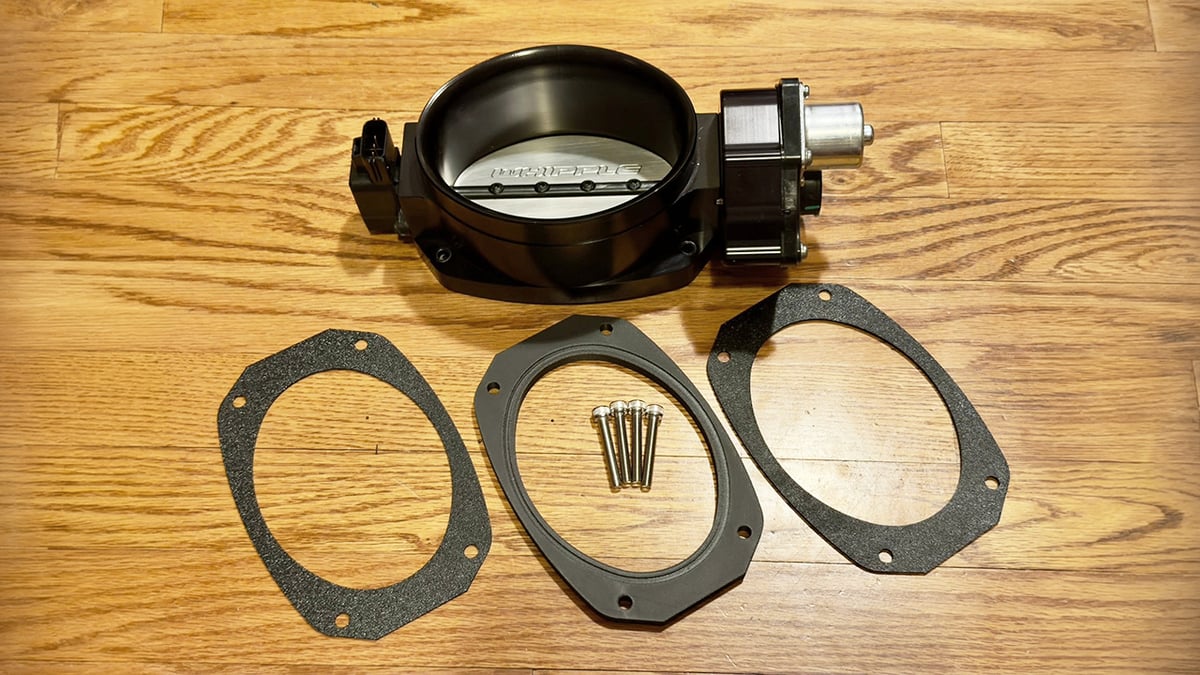
In performance modification projects, custom parts often need to fit a specific setup rather than a factory configuration. Important geometry includes mounting areas, bolt holes, edge profiles, clearances, and surrounding structures. Without accurate data, repeated adjustments may be needed to achieve proper fitment.
The component had a black surface, which can make 3D scanning more challenging, especially for curved areas, recessed sections, and fitment-critical edges. Yet MetroY Ultra was able to capture usable geometry across these challenging areas, providing a digital reference for spacer design and alignment.
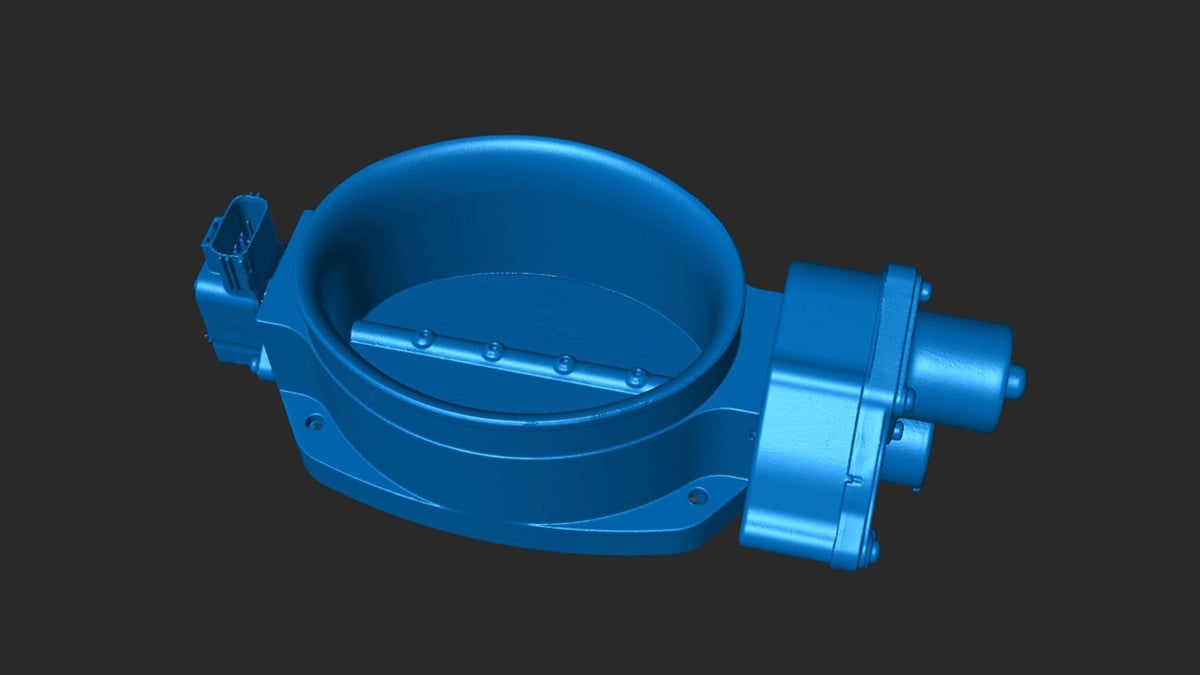
Using scan data from the actual component helps reduce guesswork before modeling or manufacturing. It allows designers to better understand fitment requirements, clearance needs, and key features required for proper installation.
A More Reliable Starting Point for Reverse Engineering
Together, these examples demonstrate three capabilities that matter in real-world reverse engineering: accurate geometry for highly customized fitment, high-accuracy digitization of existing parts, and reliable scanning of challenging black surfaces. Revo Metro helps connect the scanning stage with downstream work by supporting scan capture, review, and initial data preparation. The result is a workflow that starts from the actual geometry of the part, rather than rough measurements or assumptions.
For designers, makers, restorers, and engineers working with custom parts, legacy components, or small-batch projects, MetroY Ultra offers a practical way to bring real-world parts into a digital workflow. Whether the goal is to build around an existing structure, reproduce a hard-to-source component, or capture a challenging surface, the process begins with reliable geometry. MetroY Ultra helps turn that geometry into data that can support the next stage of design and manufacturing.
Certified Metrology
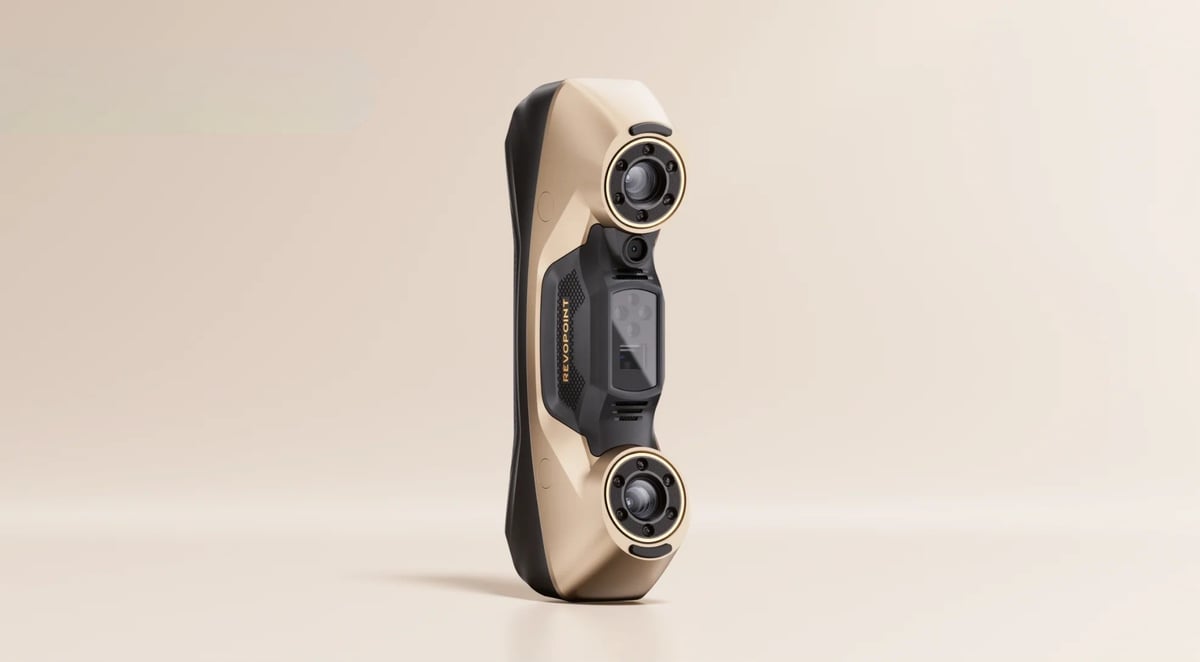
Built for demanding reverse engineering, inspection, and design validation workflows, MetroY Ultra captures complex parts with high accuracy using multiple blue-light scanning modes. It is ideal for digitizing mechanical components, automotive parts, and hard-to-scan surfaces for CAD reconstruction and product development.
Price: From ~$1,899
View at Revopoint