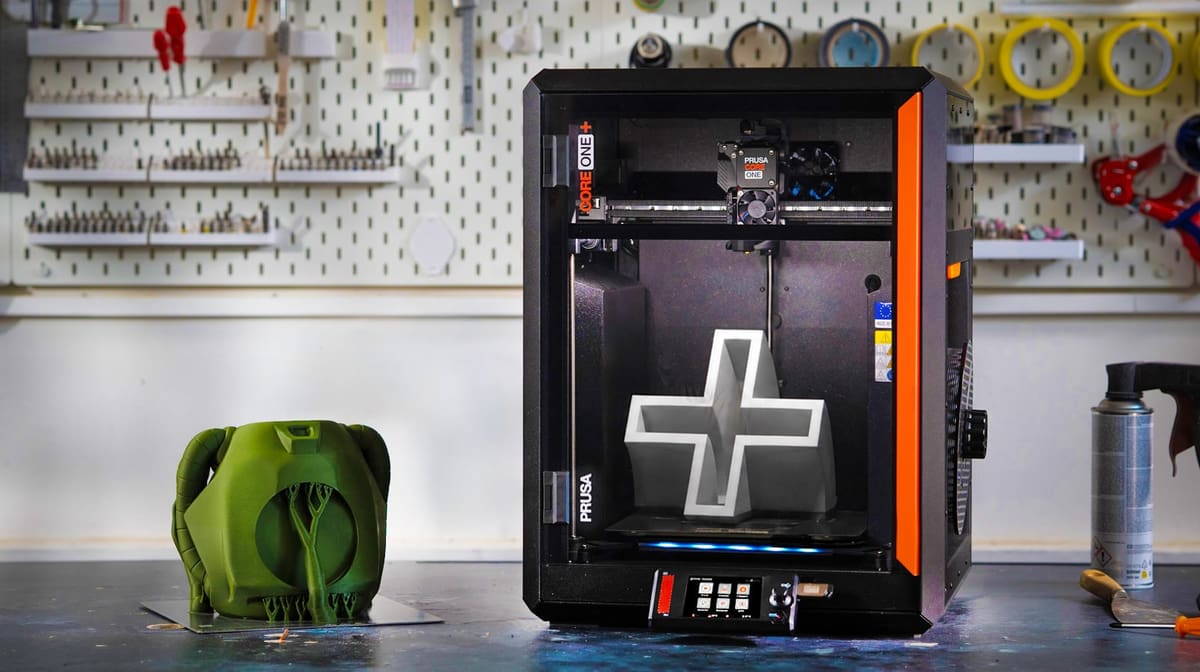
Prusa Upgrades Three of Its Most Popular Printers: the XL+, Core One+, and Core One L+

The Prusa XL+, Core One L+, and second-generation Core One+ bring nozzle wiping, revised belts, and other quality-of-life upgrades while existing owners are promised upgrade paths.
Prusa Research just refreshed three of its flagship 3D printers, introducing the Prusa XL+, Core One L+, and Core One+ (Gen 2). Rather than replacing the existing machines outright, the Czech manufacturer says these new models are evolutionary upgrades, with upgrade kits planned those of you who currently own an XL or Core One printer.
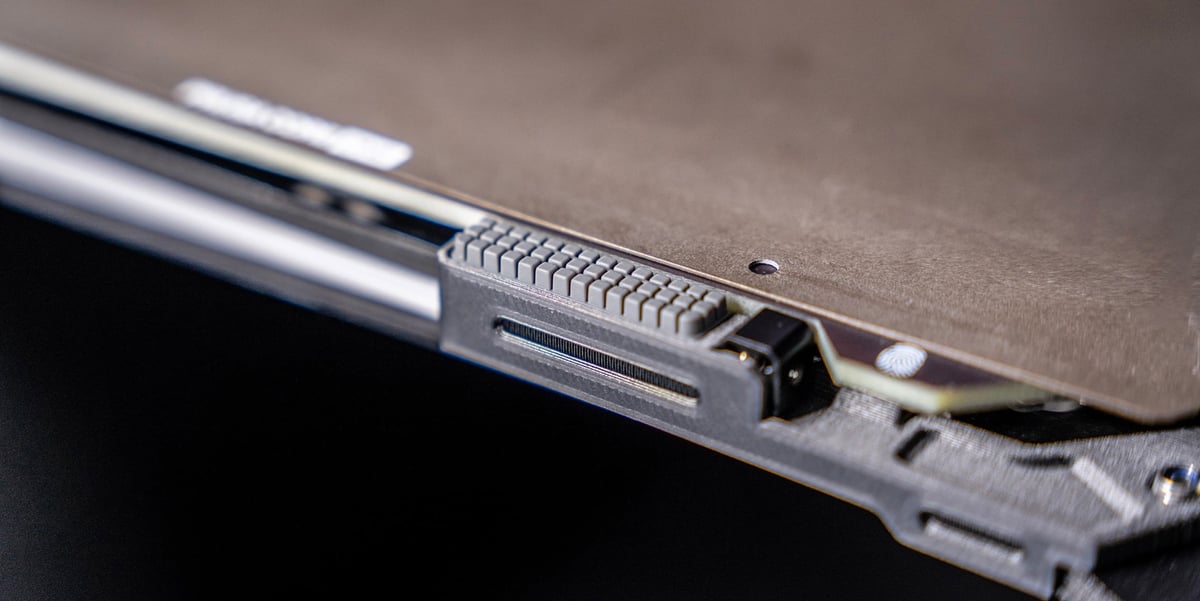
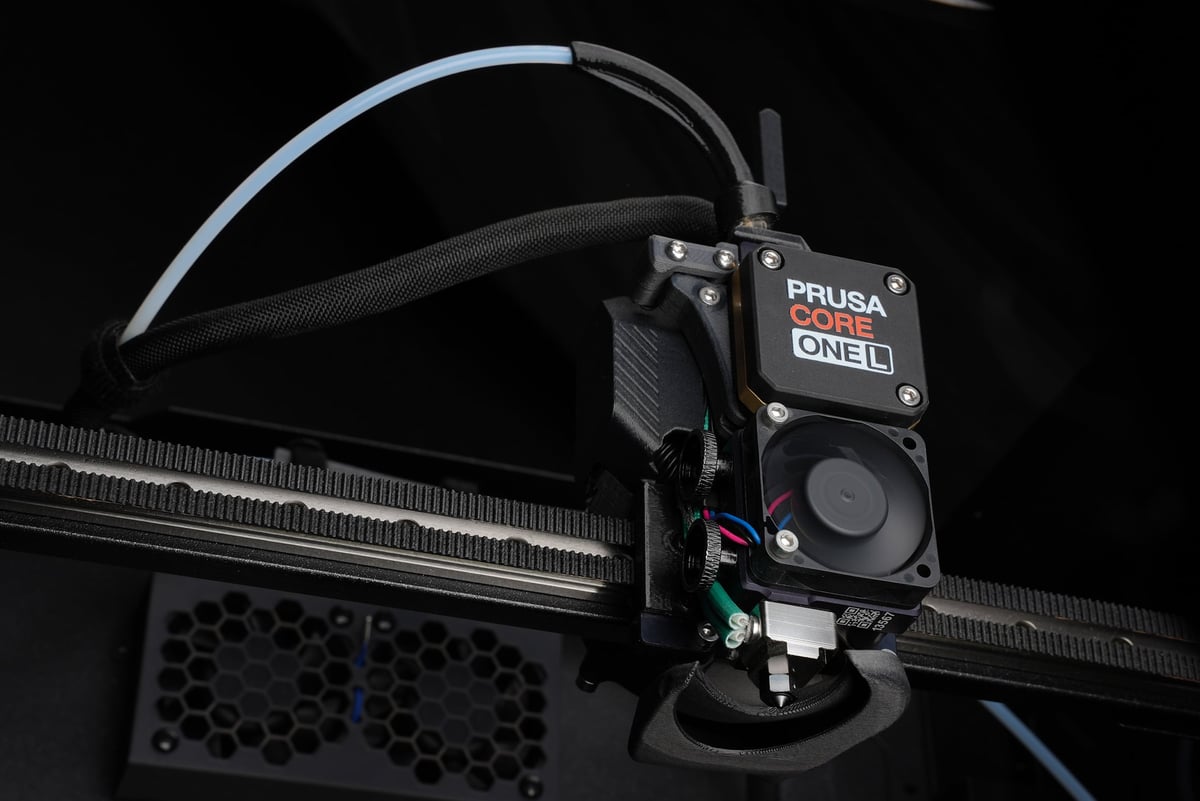
Across all three refreshed machines, Prusa is adding an integrated nozzle wiper that removes stray filament before a print begins and new GT1.5 belts that Prusa says reduce the visibility of fine, repeating surface artifacts, particularly on larger smooth walls.
Beyond those shared changes, the upgrades differ substantially from printer to printer.
XL Plus Gets New Cooling and Faster Tool Calibration
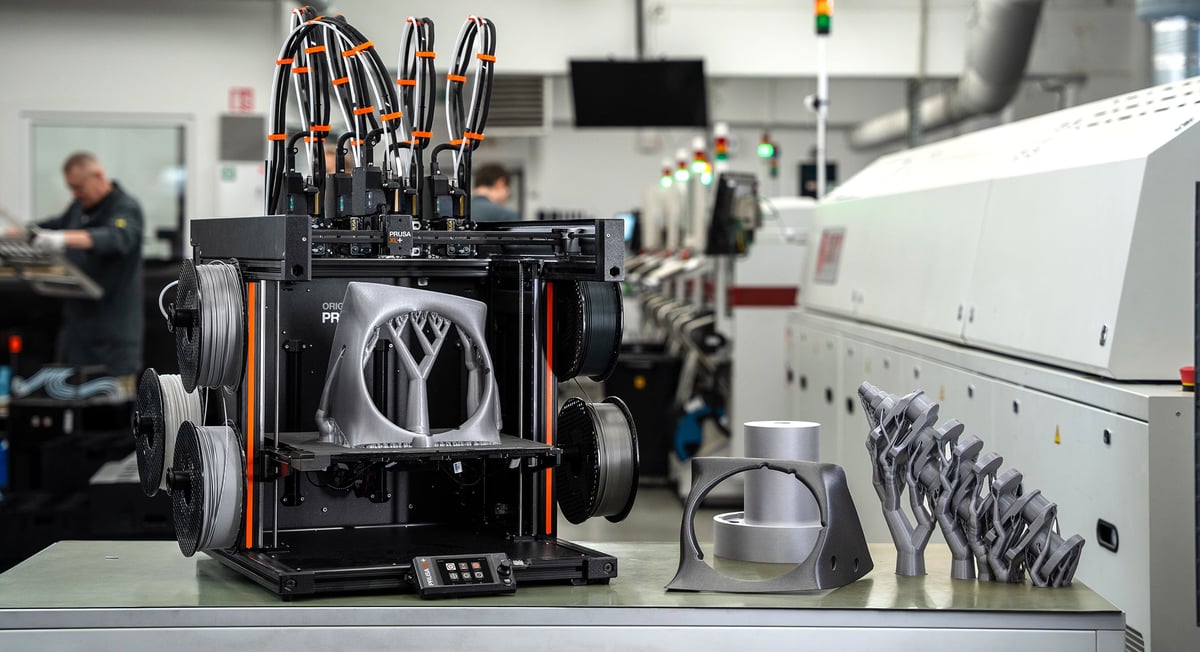
The largest overhaul in this refresh comes to the company’s 360 x 360 x 360-mm toolchanging printer, now called the Prusa XL+.
Its most prominent addition is a new 360-degree part-cooling system, similar to that used on the MK4S and Core One family. According to Prusa, the revised system provides greater and more evenly distributed airflow around the nozzle, with expected benefits for bridges, overhangs, and small details.
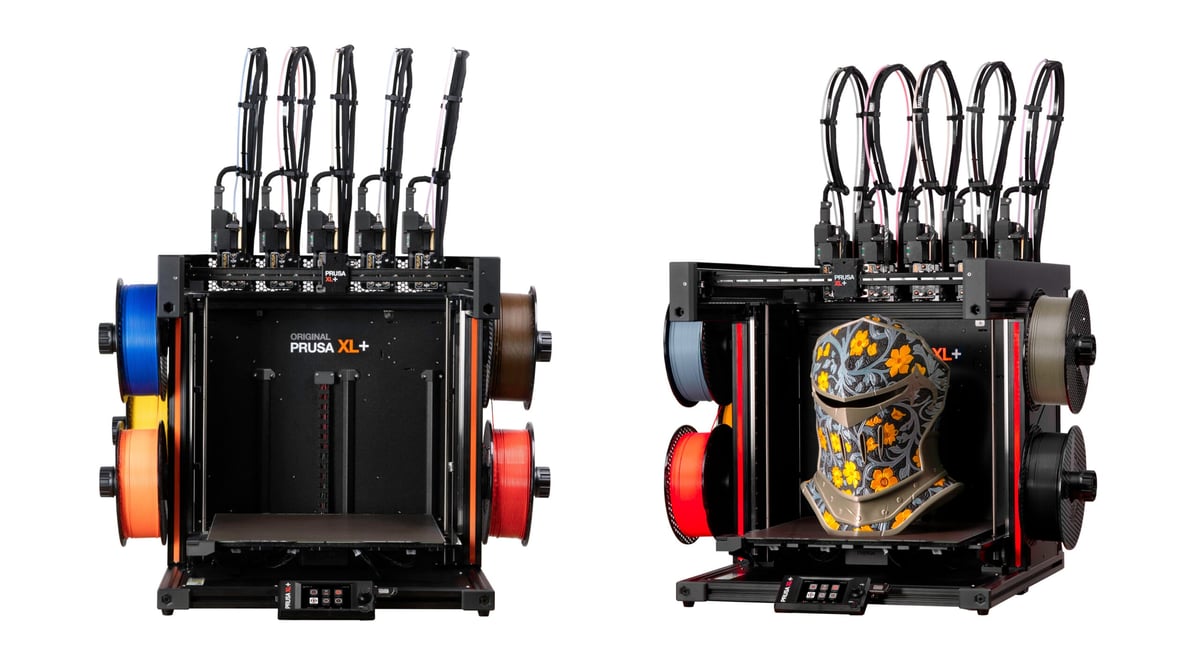
Multi-tool XL+ machines also receive a new Tool Offset Sensor. The permanently mounted eddy-current sensor automatically measures the alignment of each toolhead during setup, replacing the previous calibration procedure involving a removable pin. Prusa claims the new process is around 20 times faster. The sensor will also support Prusa’s forthcoming Silicone toolhead.
High-flow nozzles are now standard equipment on the XL+, while the new nozzle wiper should help keep blobs and strings off the build surface before printing starts.
Prusa is also preparing the XL+ for higher-temperature chamber printing, too. A redesigned enclosure can reportedly reach roughly 50 °C using heat generated by the printer itself, while a planned active chamber heater is intended to raise that figure to 60 °C. Prusa has not yet announced a shipping date for the heater.
Core One+ Gen 2 Targets Faster Print Starts
The Core One+ (Gen 2) receives the most significant changes among Prusa’s smaller enclosed printers.
In addition to the new belts and nozzle wiper, it will sport a “redesigned heatbed mounting system” so it can warm up and stay flat without the extra wait. For PLA, PETG, and any material printed with a bed temperature of 85 °C or lower, the “absorbing heat” step is gone.
That should shorten the period between sending a job to the printer and seeing the first layer go down. Higher-temperature prints should also begin sooner, according to Prusa.
Gen 2 additionally adopts the snap-on top panel previously introduced on the larger Core One L. The panel can be removed without tools for easier maintenance, while Prusa says it has also strengthened the automatic top-vent mechanism beneath it.
The larger Core One L+, meanwhile, receives a comparatively modest refresh. Its headline additions are the shared GT1.5 belts and nozzle wiper.
Same Prices, Upgrade Kits to Follow
Prusa says the refreshed printers are going on sale without price increases. Customers with existing unshipped orders for an XL, Core One L, or Core One+ will automatically receive the corresponding refreshed version, Prusa says.
Assembled Core One+ Gen 2 and Core One L+ machines are set to ship first, while assembled XL+ printers are scheduled to follow later this month.
The company also plans full upgrade paths for existing owners rather than restricting the new hardware to complete printer purchases. Core One+ upgrades are expected first, followed by Core One L+ and XL+ upgrade options around late August and early September.
INDX, PrusaSlicer 3.0, and More Are Coming
The hardware refresh also arrives alongside a string of upcoming announced additions to Prusa’s ecosystem.
The company says the first INDX automatic toolchanger systems for the Core One+ are close to shipping and will be fully compatible with Gen 2 machines. Customers who already ordered a Bondtech INDX Conversion Kit will receive the Gen 2 hardware upgrade at no additional cost. Prusa is also testing INDX on the larger Core One L.
Another development in testing is automatic Pressure Advance calibration before each print. Prusa says the printer will use its load cell to characterize the loaded filament and adjust extrusion behavior based on changing flow rates rather than relying on a single fixed Pressure Advance value.
Software is getting a sizeable update, too: the company says the first alpha of PrusaSlicer 3.0 is due within weeks. Because PrusaSlicer supports machines across the company’s portfolio, those improvements will not be limited to buyers of the refreshed printers.
Prusa also plans to release its HT Hotend for the Core One and Core One L families in September. The hotend is being developed for high-temperature engineering filaments.
Further out, Prusa Connect Local is being prepared as a replacement for PrusaLink. The new system is intended to provide Prusa Connect-style printer management entirely over a local network, without requiring a cloud connection. Early access will initially target technically inclined users comfortable compiling and testing the software themselves.
Taken together, the changes across the XL+, Core One L+, and Core One+ Gen 2 amount to a broad mid-cycle refinement — one that addresses workflow friction across calibration time, print cleanup, maintenance, cooling, and surface artifacts, while Prusa’s commitment to upgrade kits means owners of existing machines won’t need to buy another printer to get them.
License: The text of "Prusa Upgrades Three of Its Most Popular Printers: the XL+, Core One+, and Core One L+" by All3DP is licensed under a Creative Commons Attribution 4.0 International License.