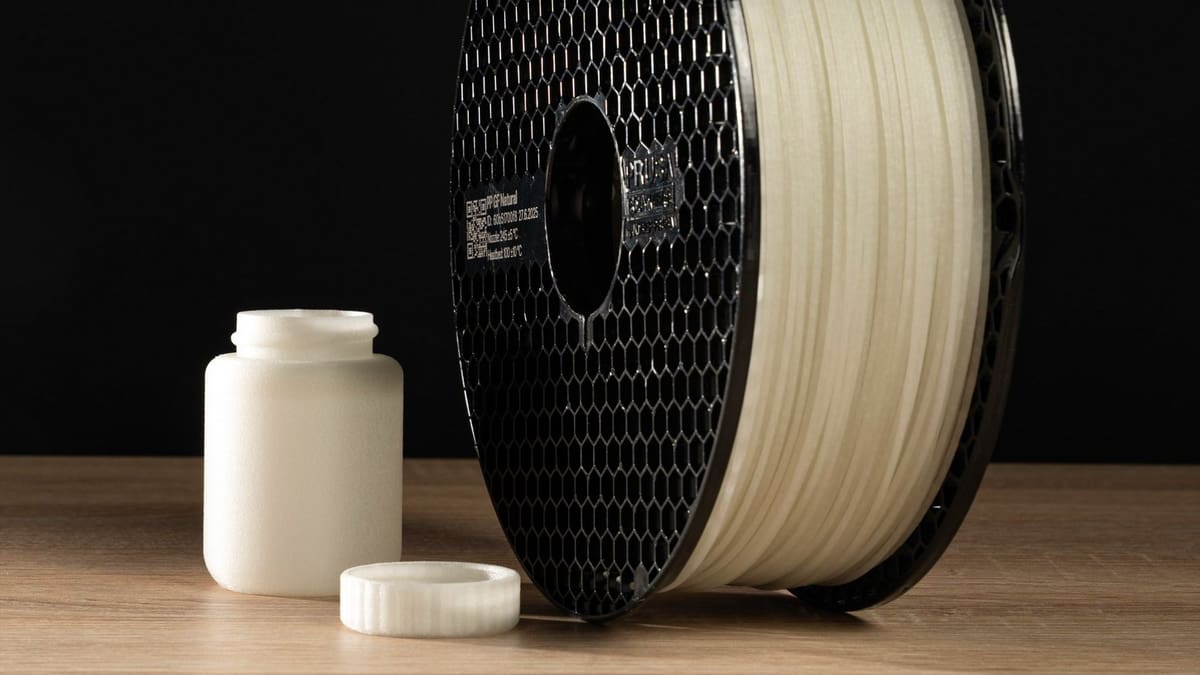
Prusa Drops Tough PP Glass Fiber Filament — So What Can You Do With It?

Its latest functional upgrade to standard polypropylene is stiff, heat-resistant, and easier to print than you’d expect, says Prusa.
Prusa Research says its new filament is all about strength and reliability. The Prusament PP Glass Fiber in natural is a reinforced polypropylene composite that promises improved mechanical properties and better printability than standard PPP, aimed squarely at functional parts for demanding applications — think automotive brackets, lab fixtures, drone parts, or anything that needs to withstand mechanical stress and elevated temperatures.
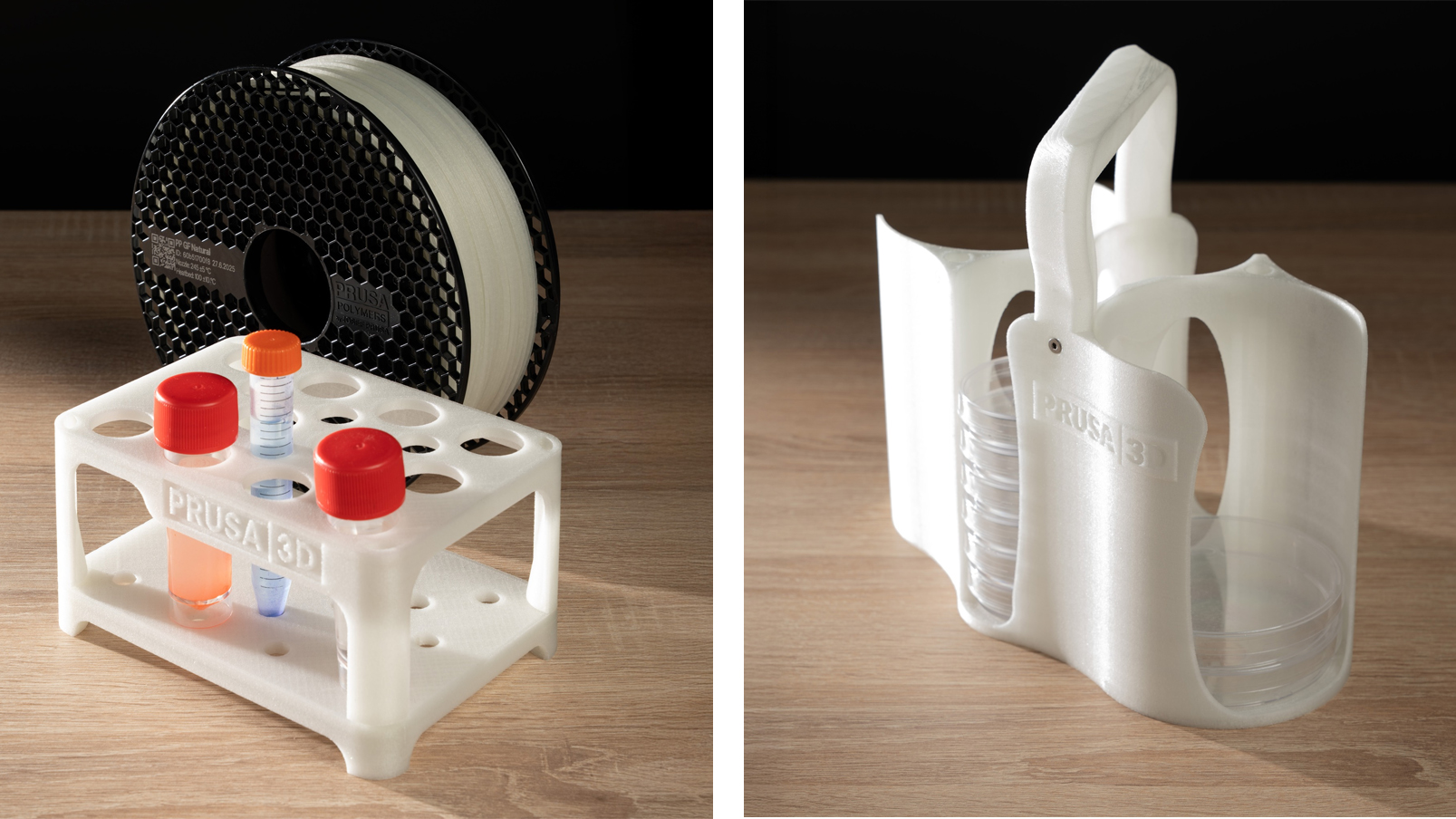
This new filament builds on the base properties of polypropylene, which is known for being lightweight and resistant to chemicals and heat. By blending in glass fibers, Prusa Research has significantly enhanced its dimensional stability and stiffness. The result is a material that should hold up under pressure but also prints more easily than standard PP, which is often tricky to tame because of its high tendency to warp and how varying the extrusion temperatures can result in different properties within a single 3D printed part.
Top Applications for PP GF:
- Drone Frames and Components
- RC Car Parts
- Custom Tool Handles
- Outdoor Gear Mounts and Clips
- Automotive Brackets
- Lab Equipment Fixtures
- Industrial Enclosures and Mounts
- Aerospace Prototyping
- Production Jigs and Fixtures
In terms of aesthetics, Prusament PP GF has a matte, slightly rough finish that not only looks professional (hides layer lines) but also accepts dye well, the company says. Since it’s based on a translucent white polymer, users can customize the color post-print if desired. (Typically, PP is resistant to paints and dyes.)
For printing, the setup is a bit specialized but still manageable. The recommended nozzle temperature is 245 °C, with a heatbed setting around 95 °C. Crucially, you’ll need to print on a polypropylene print sheet—Prusa’s own textured PEI sheet won’t work here. For those looking to get the most out of it, Prusa also sells the matching PP print sheets, making it easier to create a fully compatible setup.
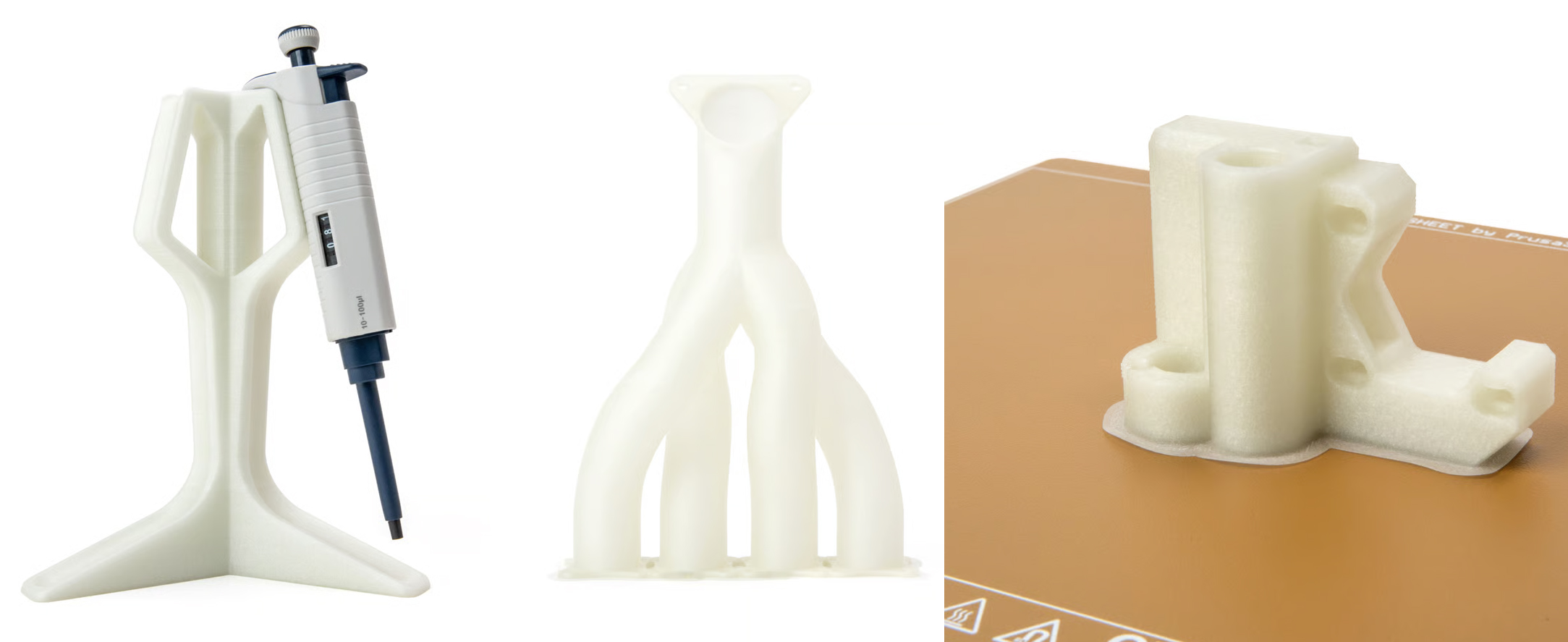
Prusament PP GF Material Properties
And don’t forget to use a hardened steel nozzle; the glass fibers are abrasive and will quickly wear down brass. On the plus side, the filament doesn’t require drying before use, which is a welcome convenience.
According to Prusa Research CEO Josef Průša, this filament is designed for tough jobs: “Our latest filament combines the lightweight, heat-resistant properties of polypropylene with the strength and dimensional stability of glass fibers,” he says. “Ideal for tough applications, from automotive and aerospace parts to durable drone components. It’s easy to print and delivers an attractive matte finish.”
Prusament PP Glass Fiber is produced in-house at Prusa’s manufacturing facility in Prague. It boosts a diameter precision of ±0.04 mm and users can scan the QR code on the spool to verify detailed production stats.
The filament is sold through Prusa’s online store for around $69.99.
This material isn’t intended for intricate miniatures or ultra-fine details, rather durable, warp-resistant parts that can handle real-world use. If you’re working on larger structural components or need something that can survive a bit of abuse, Prusament PP Glass Fiber is worth a closer look.
Mechanical Properties of 3D Printed Parts
You May Also Like:

License: The text of "Prusa Drops Tough PP Glass Fiber Filament — So What Can You Do With It?" by All3DP Pro is licensed under a Creative Commons Attribution 4.0 International License.
CERTAIN CONTENT THAT APPEARS ON THIS SITE COMES FROM AMAZON. THIS CONTENT IS PROVIDED ‘AS IS’ AND IS SUBJECT TO CHANGE OR REMOVAL AT ANY TIME.