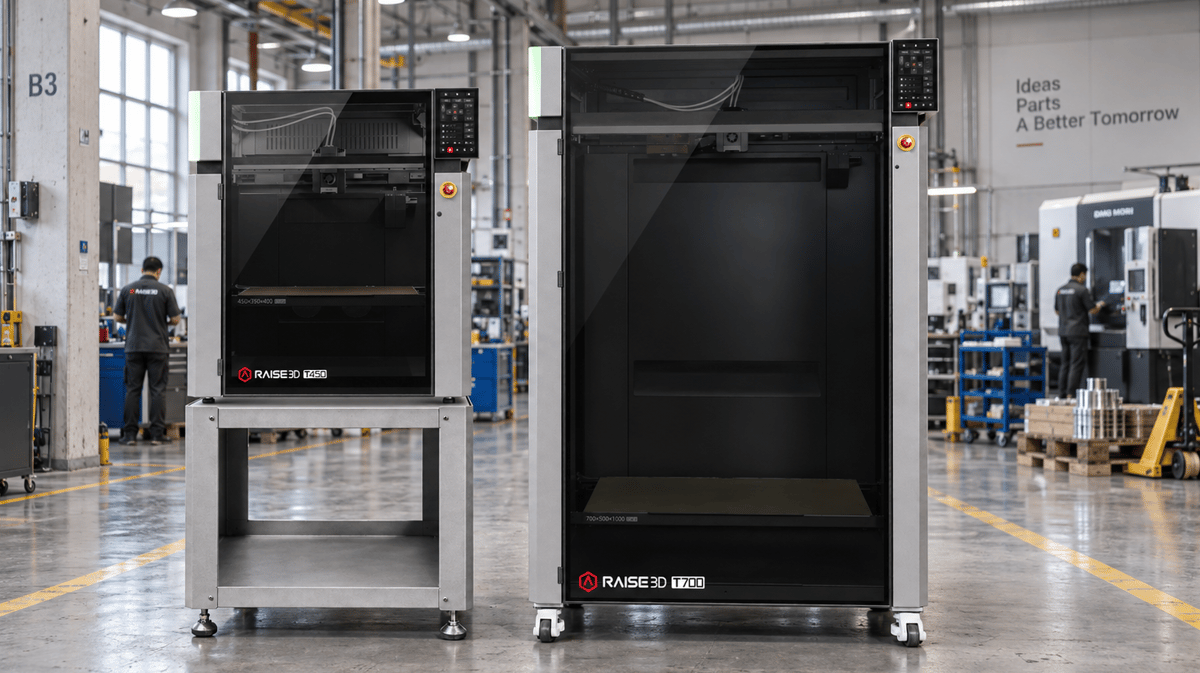
No More Splitting Parts: Raise3D’s T Series Brings Meter-Tall 3D Printing to the Factory Floor

The T450 and T700 printers combine actively heated chambers, multi-material extrusion, and over 20 sensors to print large industrial tooling in a single job.
Splitting oversized CAD models across multiple build plates doesn’t just eat machine hours, it demands manual alignment, solvent bonding, and tedious seam finishing that inevitably leaves weak points in finished prints. Raise3D’s new T Series looks to ease that production bottleneck, delivering single-piece build capacities up to 1 m tall starting at $4,999.
Comprising the T450 and the production-scale T700, the T Series combines an actively heated build chamber up to 70 °C with Raise3D’s high-flow TwinFlow extrusion system. By feeding dual filament lines into a single nozzle to hit melt rates of 80 mm³/s, the T Series is designed to cut long-run manufacturing times without sacrificing the mechanical strength of engineering-grade polymers.
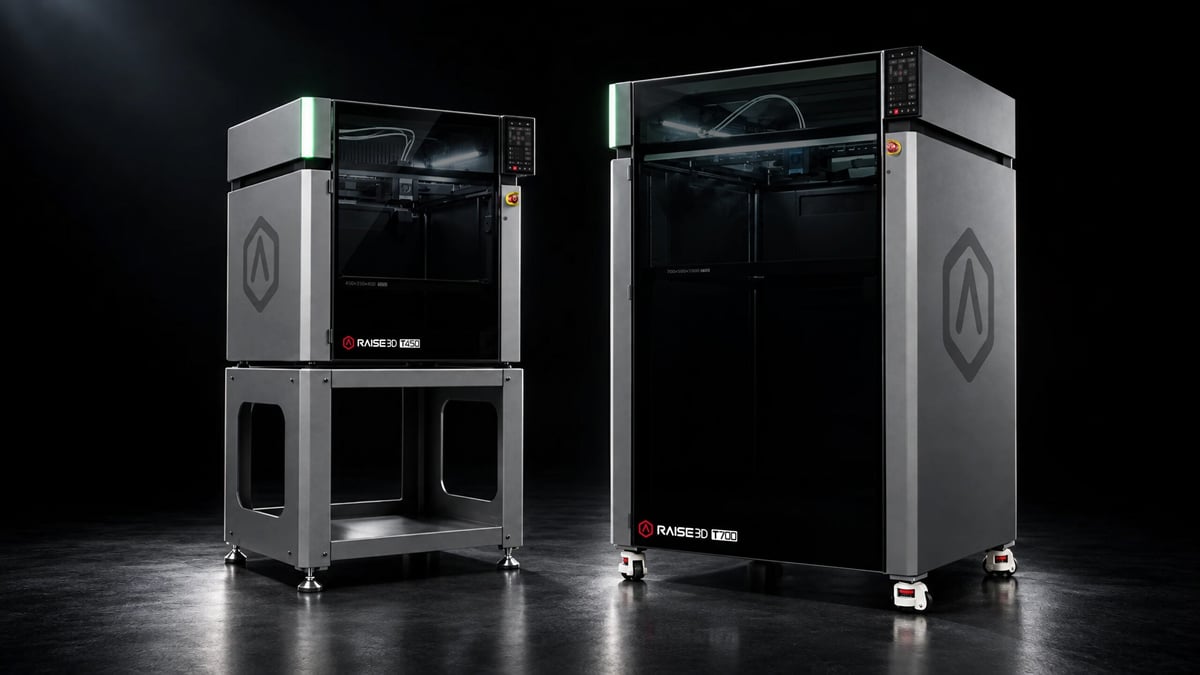
Single-Piece Printing: Eliminating Assembly Lines from CAD to Finish
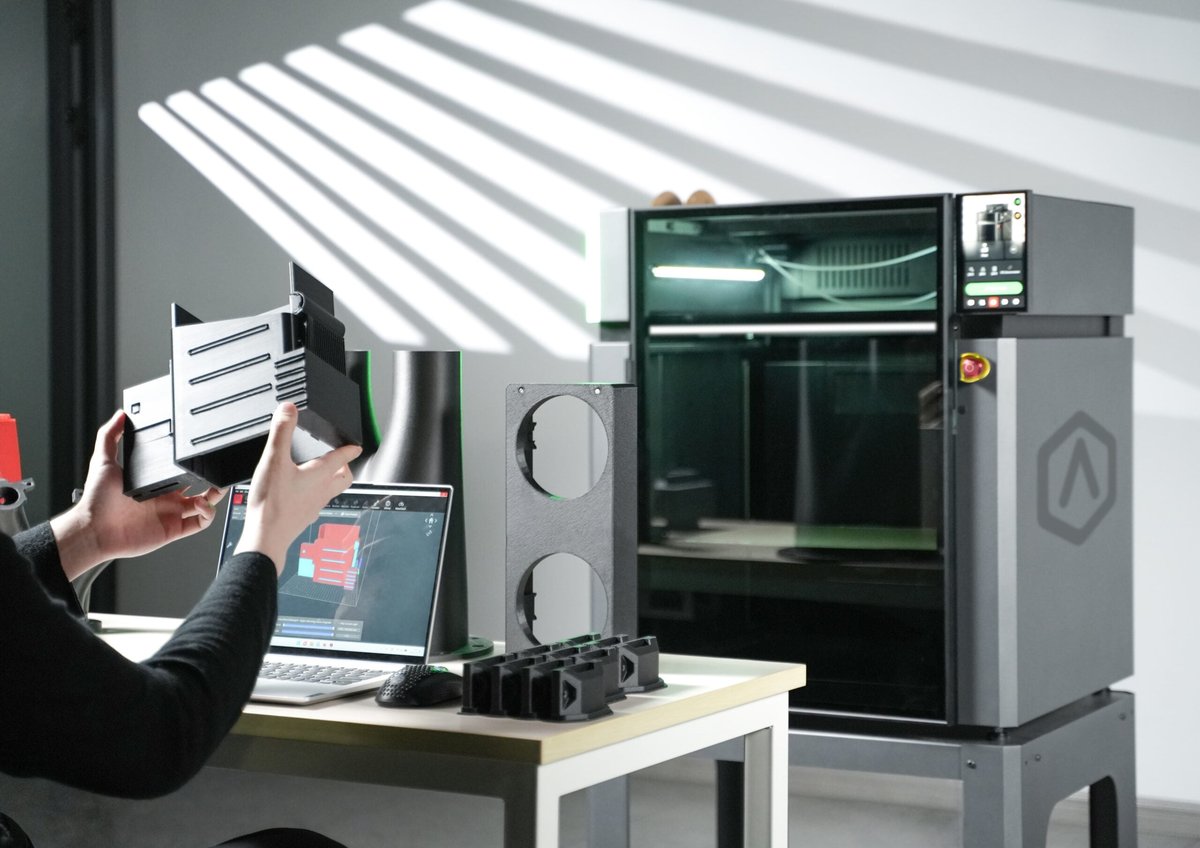
The T450 offers a 450 x 350 x 400 mm build volume, while the T700 scales up to 700 x 500 x 1,000 mm for taller, production-scale parts.
Build volume matters because any part too big for the printer has to be cut into sections, necessitating more work. Users will, for instance, have to spend time on extra model prep and additional print jobs, then lining the pieces up, bonding and assembling them, and filling and finishing the seams. Printing large parts whole streamlines that process, shortens post-processing, and sidesteps the weak joints and dimensional errors that assembly can introduce.
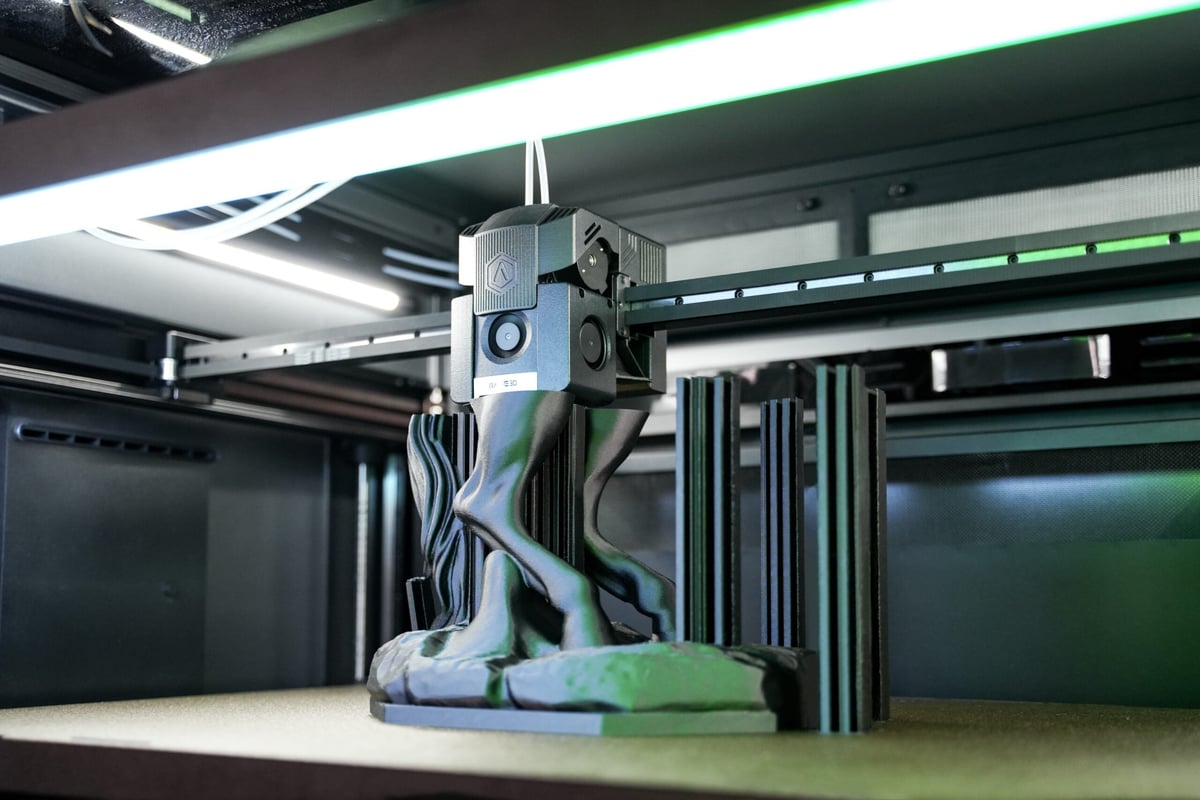
Inside TwinFlow: Hitting 80 mm³/s with Dual-Feed Extrusion
Large-part print times depend heavily on how much material the hot end can melt per second. Raise3D’s TwinFlow technology pushes two strands of filament into one nozzle to boost that amount. In Raise3D’s testing, the T Series hit a peak volumetric flow of 80 mm³/s, which the company puts at up to 45% higher than a 65 mm³/s high-flow machine. Paired with top print speeds of 600 mm/s, the system significantly cuts print cycles on bulky parts.
Because both filament paths share one nozzle, the printers can also run two materials or two colors with no need for managing XY offset.
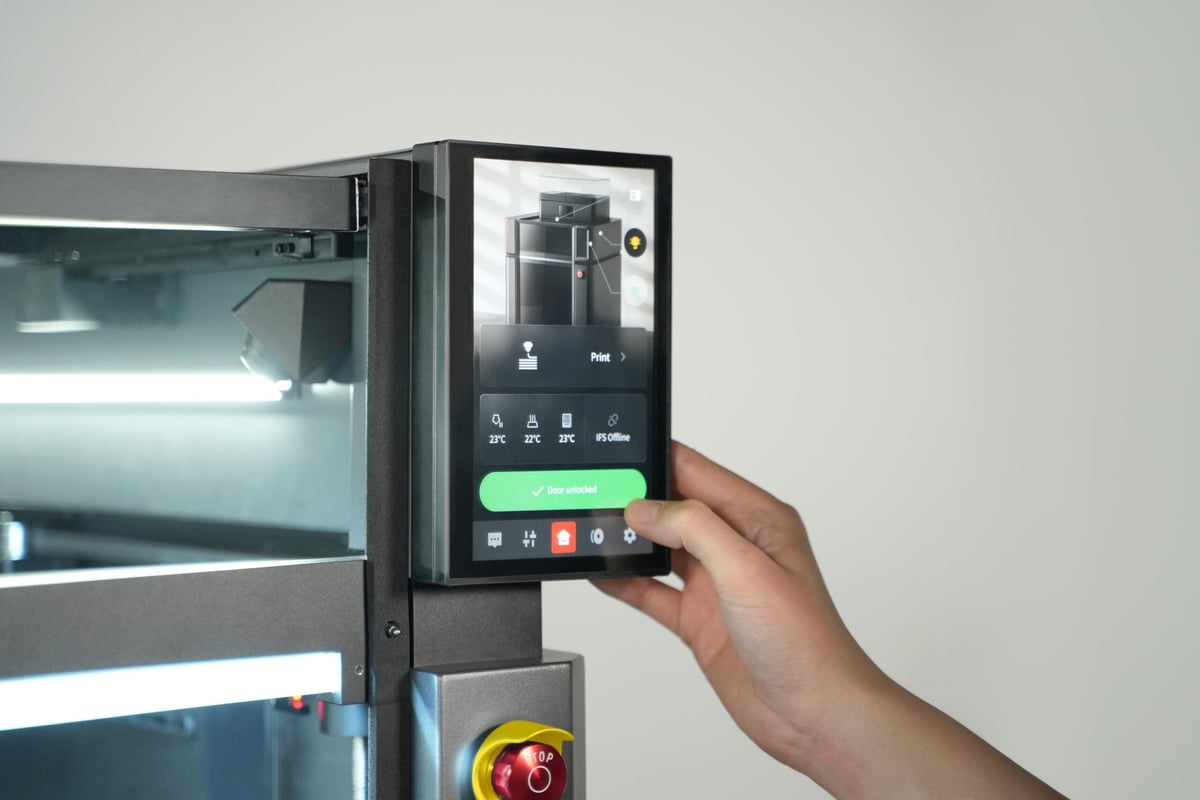
Process Control: 70 °C Active Heating Meets 20+ Monitoring Sensors
Long, large prints give small instabilities plenty of time to show up, so consistency from the first layer to the last is essential. The T Series pairs 4MD CoreXY motion control with Pressure Advance to keep surfaces clean and dimensions accurate. This motion system keeps vibration, ringing, and layer shifts in check, while Pressure Advance tunes extrusion as the head speeds up and slows down, so corners stay crisp and flow stays even.
Thermal stability is equally vital, since a part that warps or delaminates late in a run can mean hours of lost machine time. An actively heated chamber reaches up to 70 °C on the T450 and 60 °C on the T700.
Paired with a 420 °C nozzle and a 120 °C build plate, the printers handle ABS, ASA, TPU, and high-performance fiber-reinforced polymers, including PET CF, PPA CF, and PPS CF, enabling users to create functional tooling, production aids, and end-use hardware.
To maintain continuous reliability, the T Series integrates over 20 sensors. AI-assisted vision watches for spaghetti failures, while flow-rate, nozzle-clumping, and filament run-out detection catch problems as they develop, backed by live camera monitoring and power-loss recovery. RFID filament recognition, auxiliary feeding, automated mesh leveling, and Raise3D’s ideaMaker slicing software complete the industrial workflow.
Global Rollout, Pricing & Formnext Live Demos
The T450 is available now in the US and other global markets through Raise3D’s distribution network. It arrives in Europe this November. Pricing is set at $4,999 in the US and €4,999 in Europe. The T700 is open for preorder at $15,999 in the US and €15,999 in Europe, with fulfillment starting as regional inventory arrives.
Raise3D will showcase both printers at Formnext 2026 at Stand 12.1 D21. Demonstrations will cover industrial applications across orthotics, tooling, casting patterns, composite parts, UAV structures, and automotive assemblies. For more details, visit Raise3D’s website.