New Factory Can 3D Print Fishing Boats in 88 Hours

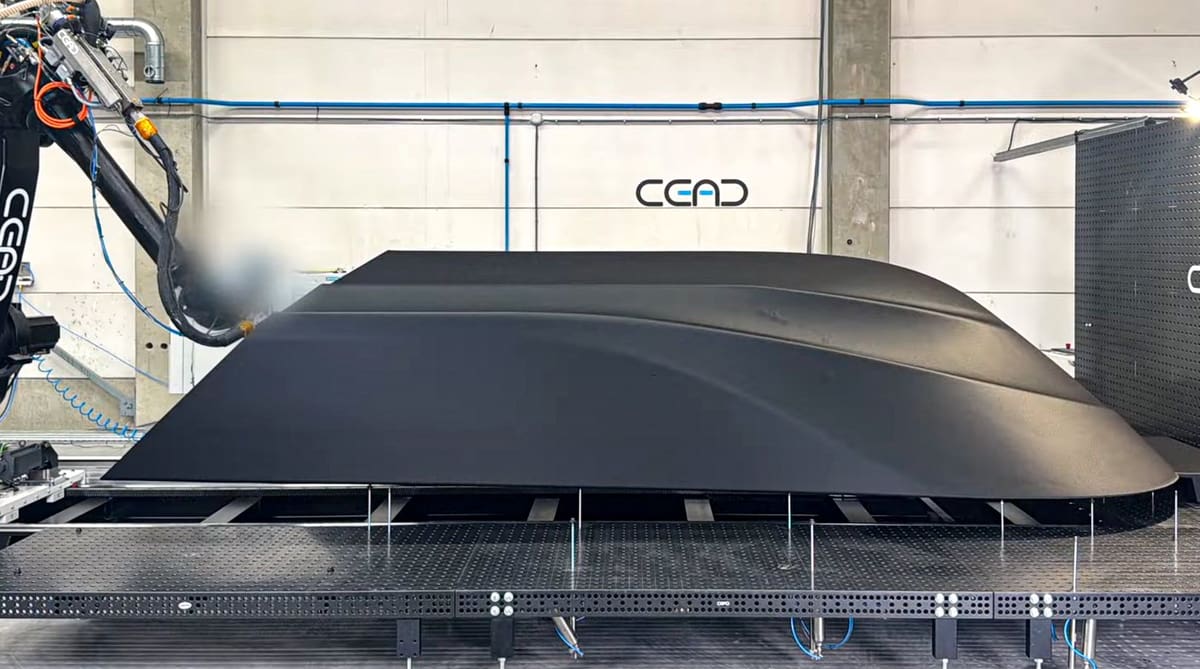
Large format polymer 3D printer and material manufacturer CEAD aims to disrupt the boat-building business with its new specialized factory.
CEAD, the Dutch company that specializes in large-scale, robotic-arm and gantry 3D printers for everything from construction molds to automotive prototypes, is investing heavily into 3D printing boats to advance automated production in the maritime industry.
The company recently established its Maritime Application Center (MAC), in Delft, Netherlands, which is a dedicated facility for both the development and manufacturing of 3D printed boats out of the polymer HDPE (High-Density Polyethylene).
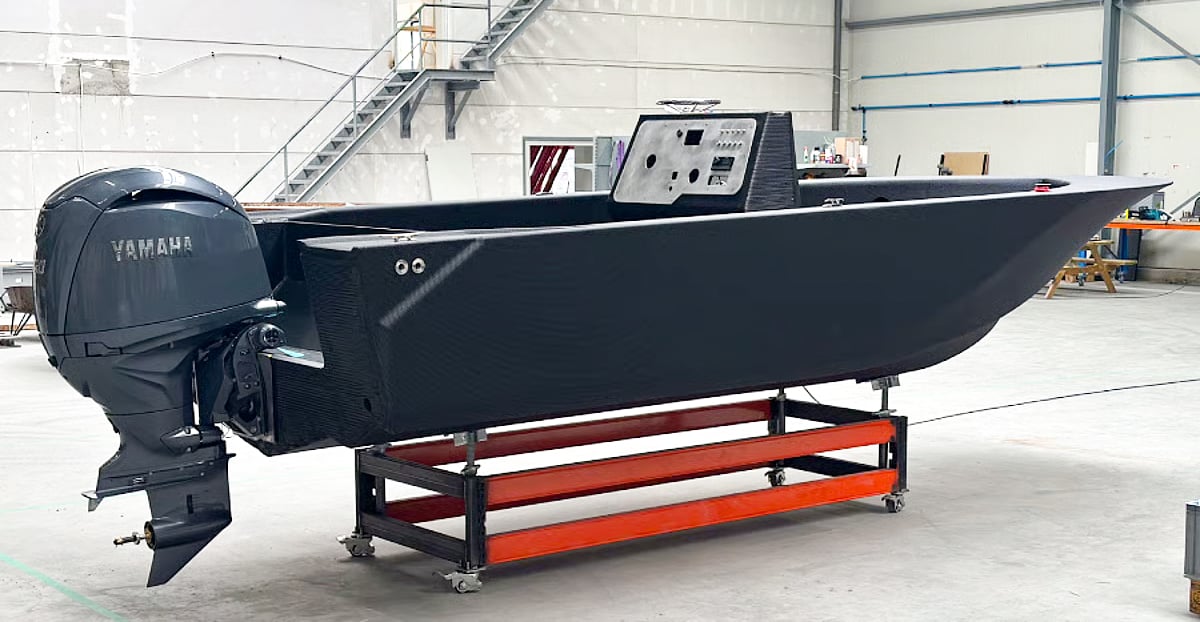
MAC is outfitted with a 12-meter robotic boat printer, capable of 3D printing boats up to 12 x 4 x 2 meters. CEAD’s specialized 3D printer for boat manufacturing is designed to print a 6-meter hull in just 50 hours autonomously without any labor costs.
This facility is not just for research into new materials, software, and production processes, according to CEAD, it’s a fully operational environment for manufacturing 3D printed boats.
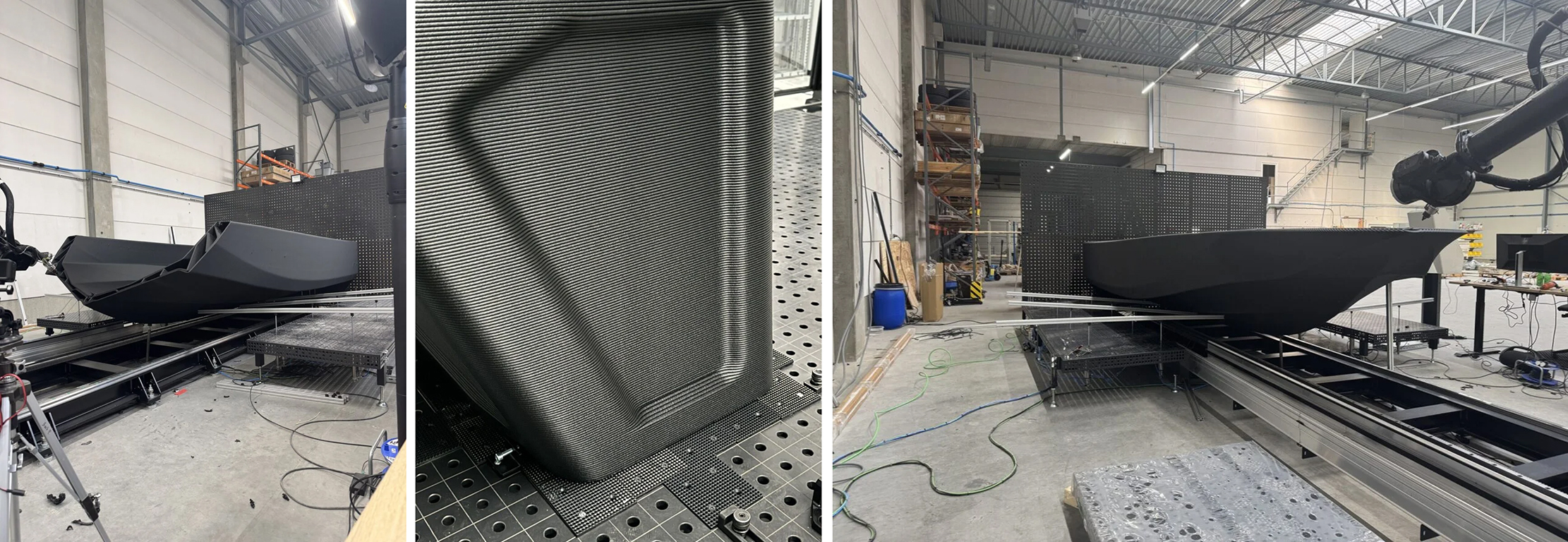
“Through MAC, we collaborate with customers and industry partners to develop and test 3D printed boats,” says Donato Puntillo, CEAD maritime additive manufacturing specialist. “Whether you need support in boat design, material selection, or want to see full-scale production, our facility is dedicated to large-format 3D boat printing.”
CEAD’s specialized 3D printers and the concept of local microfactories aim to disrupt the way boats are made.
“At CEAD, we have been focusing on developing the ideal material for 3D printing boats,” the company says. HDPE is already widely used in the maritime sector for its durability and low maintenance. CEAD says it has optimized this material for large-scale 3D printed hulls.
3D Printed Boat Hulls Already on the Water
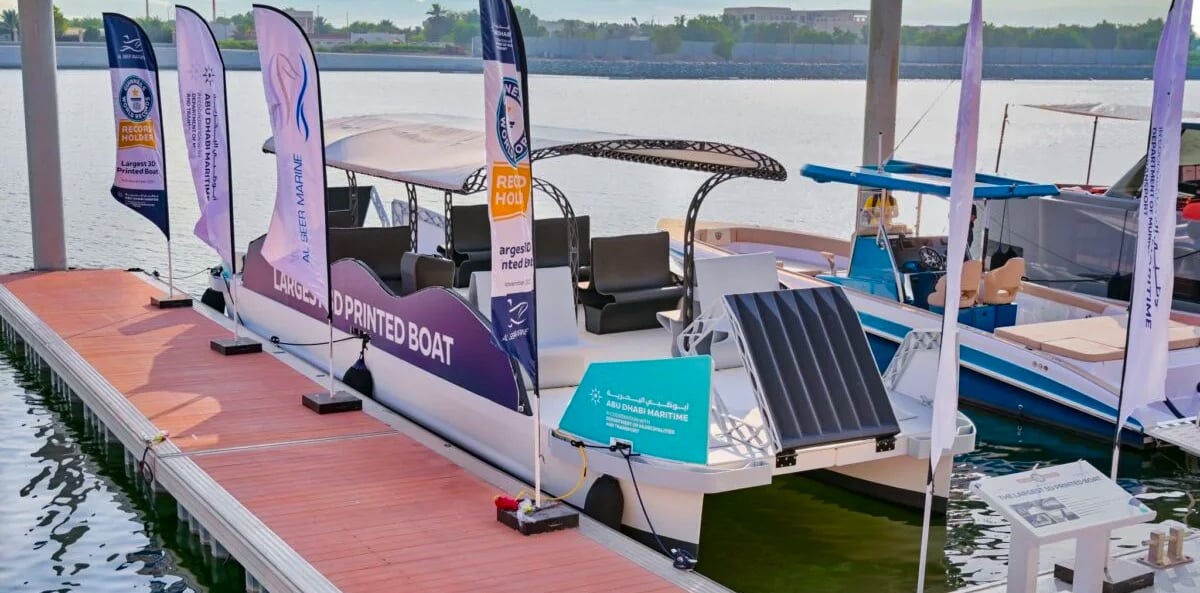
One example of a CEAD 3D printed product for the maritime industry is the Al Seer Marine’s 3D printed water taxi currently at work in Abu Dhabi. The boat measures 11.98 meters long, 3.59-meter wide and is crafted from 67% recycled materials.
Al Seer Marine used a custom CEAD Flexbot machine with two robots mounted on linear tracks. The modularity of CEAD’s machines eliminates any obstacles for large format additive manufacturing of boats, the company says.
Why 3D Print Boats?
According to CEAD, the approach of additive manufacturing, encompassing entire boat structures, translates to significant savings in labor and costs. This is due to the absence of part procurement, less expenses related to purchasing, transport, storage, and assembly.
“Traditional manufacturing processes often involve intricate assembly and labor-intensive procedures, requiring specialized expertise which is increasingly hard to find,” the company says. “Implementing LFAM poses a solution by automating and streamlining the manufacturing process a, simultaneously contributing to increased efficiency and cost-effectiveness. Generally speaking, the bigger the boat, the more manual labor can be replaced by using additive manufacturing.”
3D printing also enables customization and design flexibility, lower environmental impact when recycled materials are used, and lighter weight watercraft.
Of course CEAD is in the 3D printer business, not the boat building business, and this venture, while certainly producing boats, may be ultimately more about showcasing the application of large-format polymer 3D printing microfactories. These can be established practically anywhere — CEAD printers fit inside a shipping container — to produce a wide range of parts and products where they’re needed.
Damen and CEAD Join Forces to 3D Print Workboat
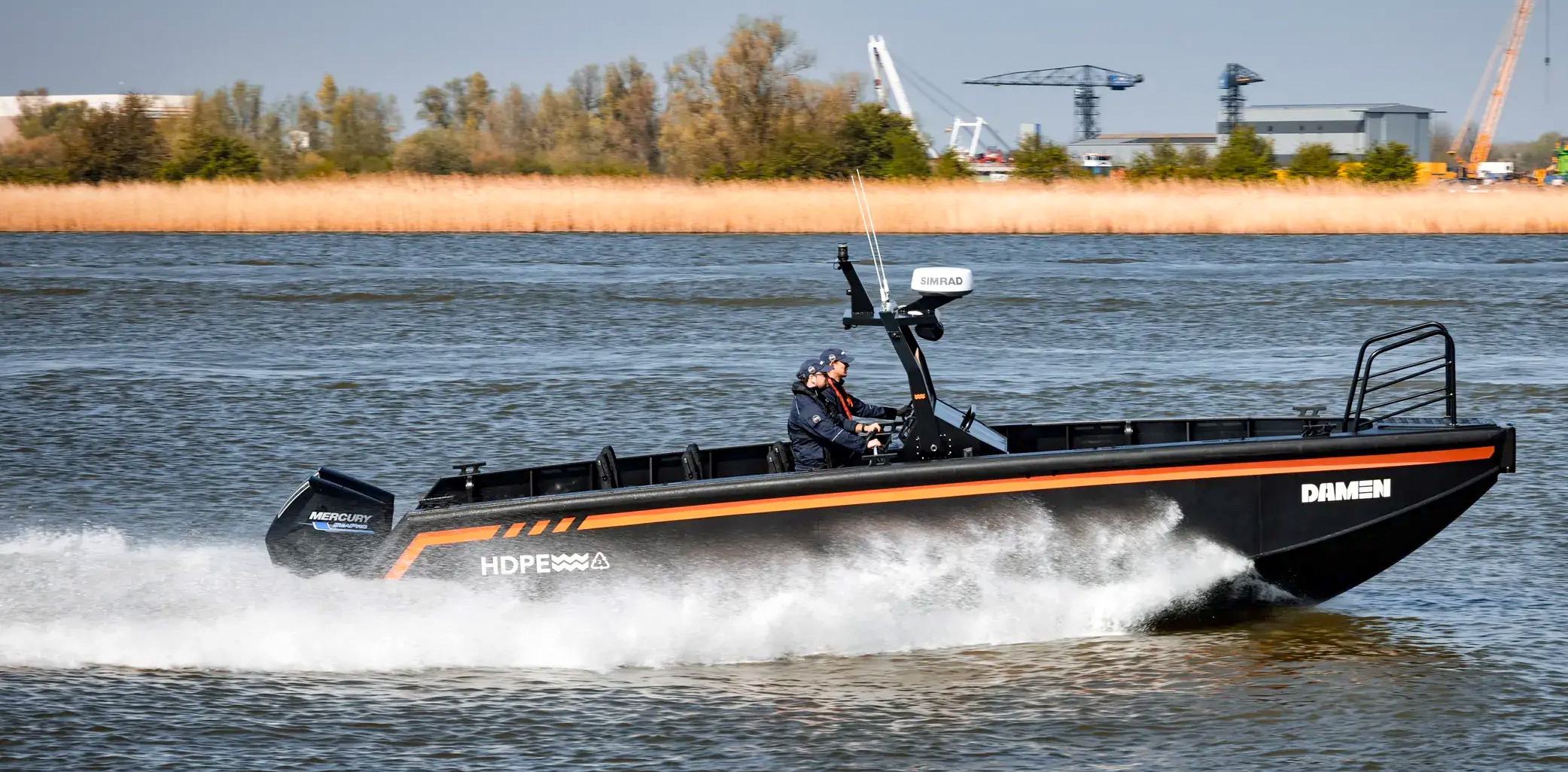
One of the first major boat builders to be attracted to the CEAD factory is Netherlands-based Damen Compact Crafts (DCCr), part of the Damen Shipyards Group. The company announced this week that it is investigating how 3D printing technology can contribute to the faster, more sustainable, and more flexible production of functional vessels. The 3D printed HDPE Workboat (HWB) is being designed as a versatile vessel, suitable for a wide range of operations, including inspection, support, patrol, and logistical tasks. By 3D printing the hull of the boat, not only is more design freedom achieved, but it also opens the possibility of integrating recycled and renewable materials.
“This collaboration demonstrates how technology can directly contribute to practical solutions in the maritime sector,” says Charléne van Wingerden, chief business development officer at CEAD. “The MAC was founded to accelerate exactly these kinds of innovations – and a 3D printed HWB is a perfect example of that.”
You May Also Like:



License: The text of "New Factory Can 3D Print Fishing Boats in 88 Hours" by All3DP Pro is licensed under a Creative Commons Attribution 4.0 International License.