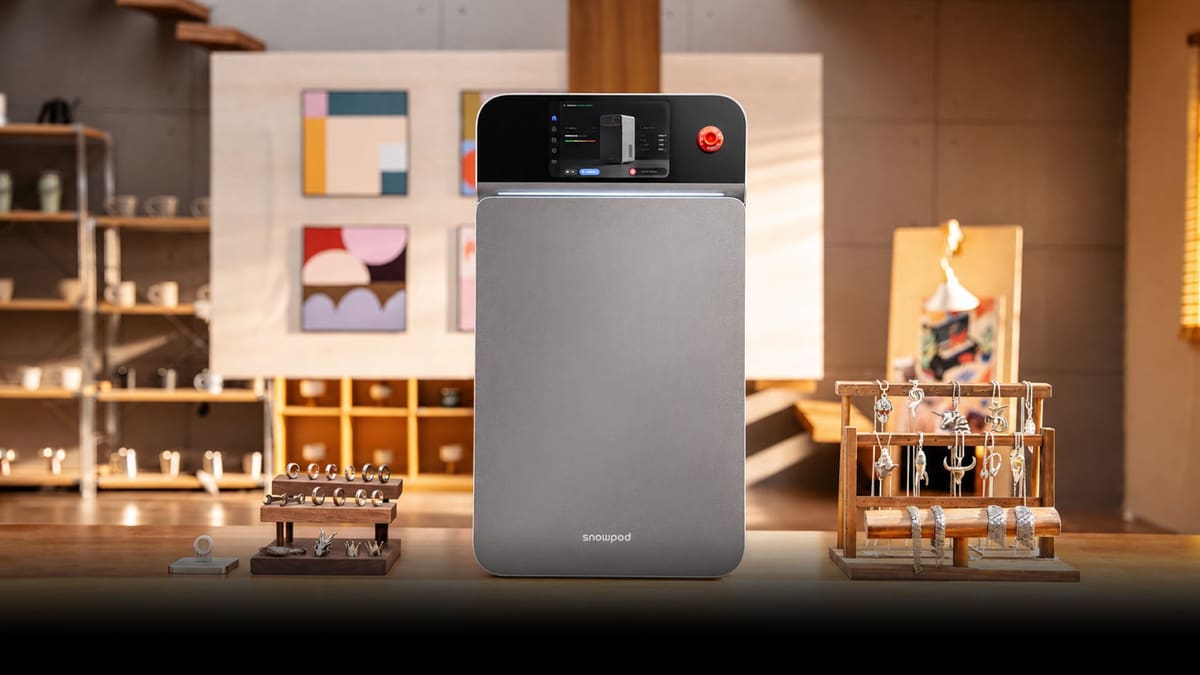
Metal 3D Printers for the Desktop Are Finally Starting to Feel Like Desktop Products

SnowX's upcoming SnowPod aims to bridge the gap between industrial SLM technology and true desktop usability. By redesigning the entire workflow, it brings high-precision 316L stainless steel 3D printing directly to the workbench.
FDM 3D printing is becoming increasingly accessible, yet metal 3D printers designed for everyday desktop use remain rare on an ordinary workbench.
The real challenge is not making a metal printer small enough to fit on a desk. It is redesigning powder handling, environmental control and post-processing that have traditionally required specialist knowledge around safety, ease of use, and reliability people expect from something they can use day to day.
In September 2026, SnowPod, an upcoming metal 3D printer from SnowX, began appearing on social media platforms. Using selective laser melting (SLM), SnowPod puts precision, safety, and usability at the center of its design. SnowX has redesigned the entire metal-printing workflow – from enclosed powder handling and support removal to software, air-quality monitoring and material recovery.
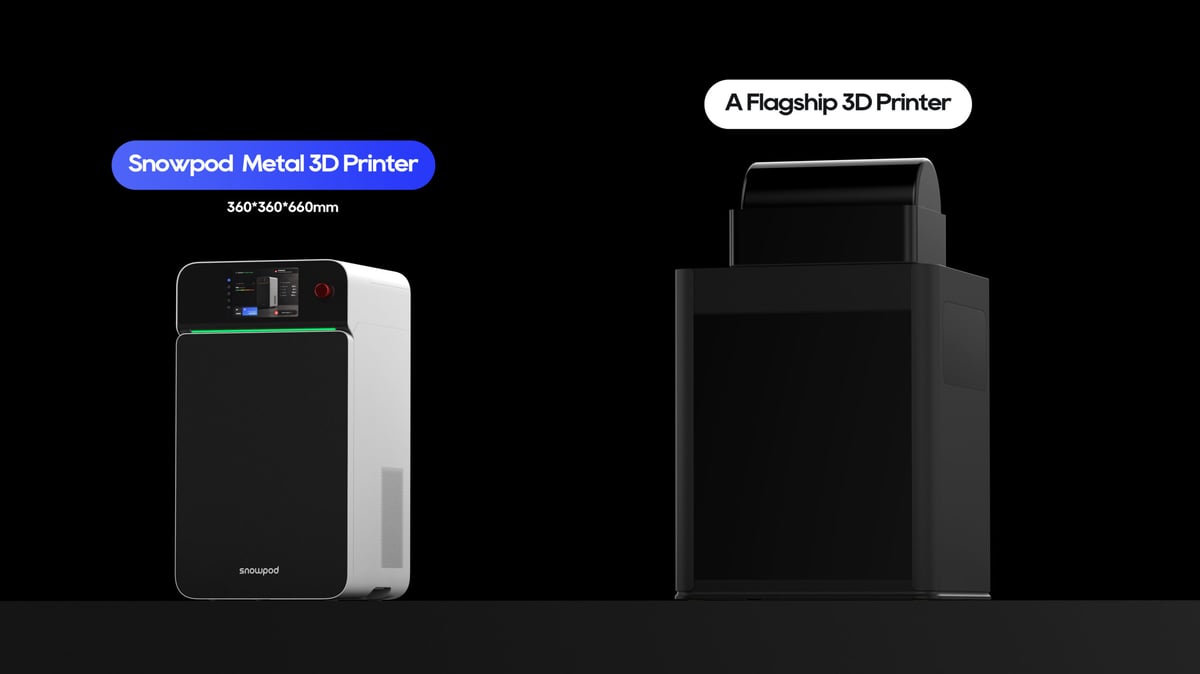
SnowPod features a compact, integrated design measuring just 360 × 360 × 660 mm – a form factor smaller than that of some flagship FDM printers. This allows it to fit more naturally into studios, laboratories, offices, and workspaces.
More importantly, that compact enclosure houses a fine-detail SLM printing system capable of working with 316L stainless steel. The point is not simply to make the machine smaller, but to bring professional metal-making capability closer to the people who want to use it.
A 40 μm Laser Spot for Fine Detail in Metal
Complex geometry is one of metal 3D printing’s strengths. The harder part is preserving fine detail on a small scale.
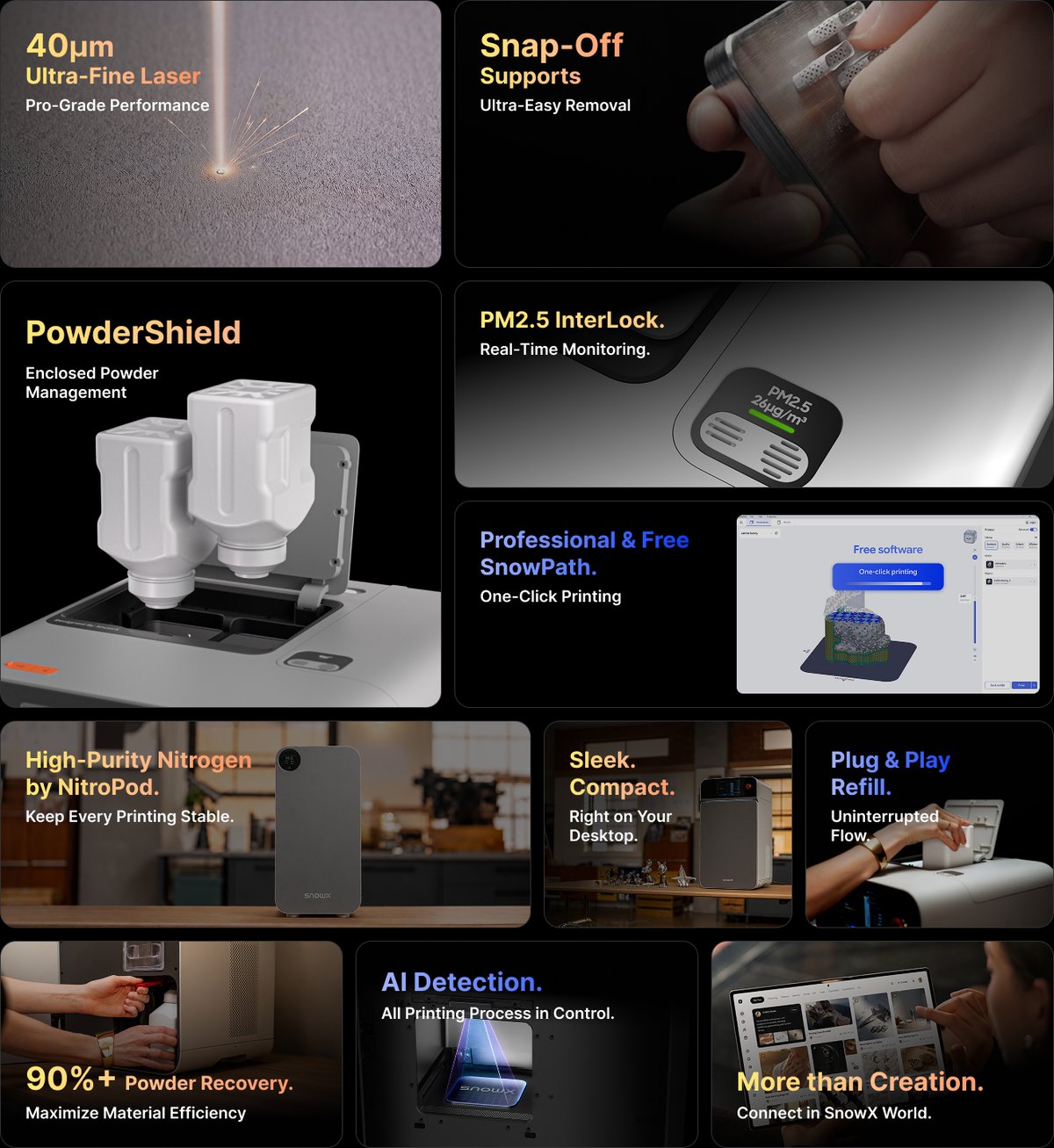
SnowPod combines a 40 μm laser spot – finer than a typical human hair – with adjustable layer thicknesses of 30–60 μm, and 3 μm Z-axis motion precision. Together, these are designed to reproduce fine contours, sharp edges, narrow gaps, and intricate features, helping even small metal parts retain clear definition.
The value of the 40 μm laser spot goes beyond detail. It also helps reduce the system’s thermal load, supporting a smaller, lighter machine design.
80 × 80 × 100 mm: Sized for Everyday Metal Projects
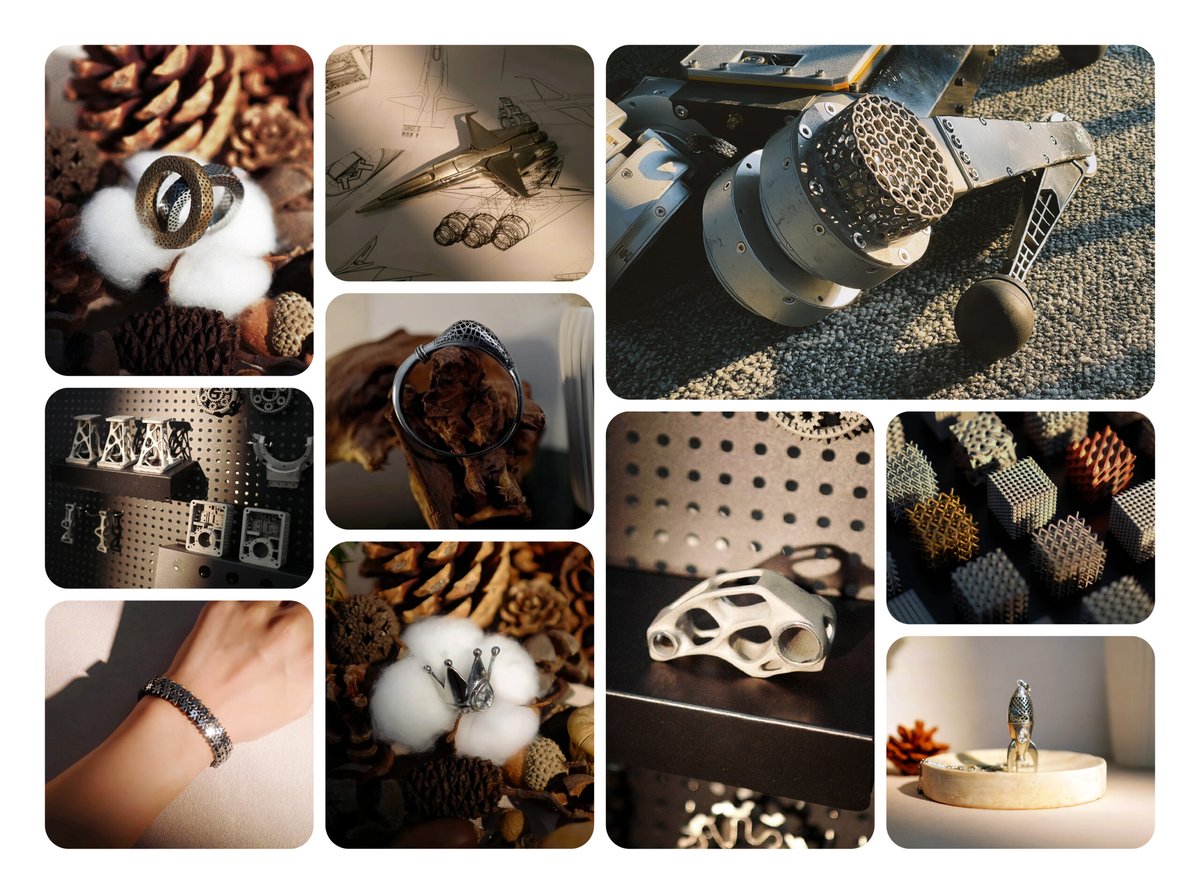
SnowPod provides an 80 × 80 × 100 mm build volume for metal components, jewelry and pendants, artwork, product prototypes, and specialist tools. It also accommodates multiple small parts in a single build.
Rather than maximizing build volume for its own sake, SnowX has balanced useful printing capacity with powder requirements, material weight, and handling. The result is enough room for the kinds of objects people are likely to make, without making the material workflow unnecessarily demanding.
Enclosed Powder Handling
For people familiar with metal printing, the bigger concern is often not whether the machine is small enough, but how safely powder can be managed in everyday use.
SnowPod is therefore designed around enclosed powder handling. Sealed powder cartridges, an enclosed printing environment, filtration, and powder recovery work together to keep powder handling within a controlled system throughout the process.
The idea is not to make people better at managing an industrial powder process. It is to make the machine manage more of that process for them.
Real-Time PM2.5 Monitoring and Multiple Safety Interlocks
SnowPod continuously monitors PM2.5, gas concentrations, temperature, and humidity throughout the printing process, keeping users informed about the conditions from start to finish.
That monitoring is tied directly to the printer’s safety controls. The chamber door, filtration system, and machine status are linked through multiple interlocks, removing much of the guesswork around when conditions are ready.
The idea is simple: SnowPod keeps watching the internal environment throughout the process, and only allows the chamber to open once preset safety conditions are met. For the user, that means one less thing to worry about while the machine is running.
NitroPod: Preparing the Right Atmosphere for Metal Printing
SLM printing requires an inert-gas environment to help protect the metal from oxidation and maintain stable printing conditions.
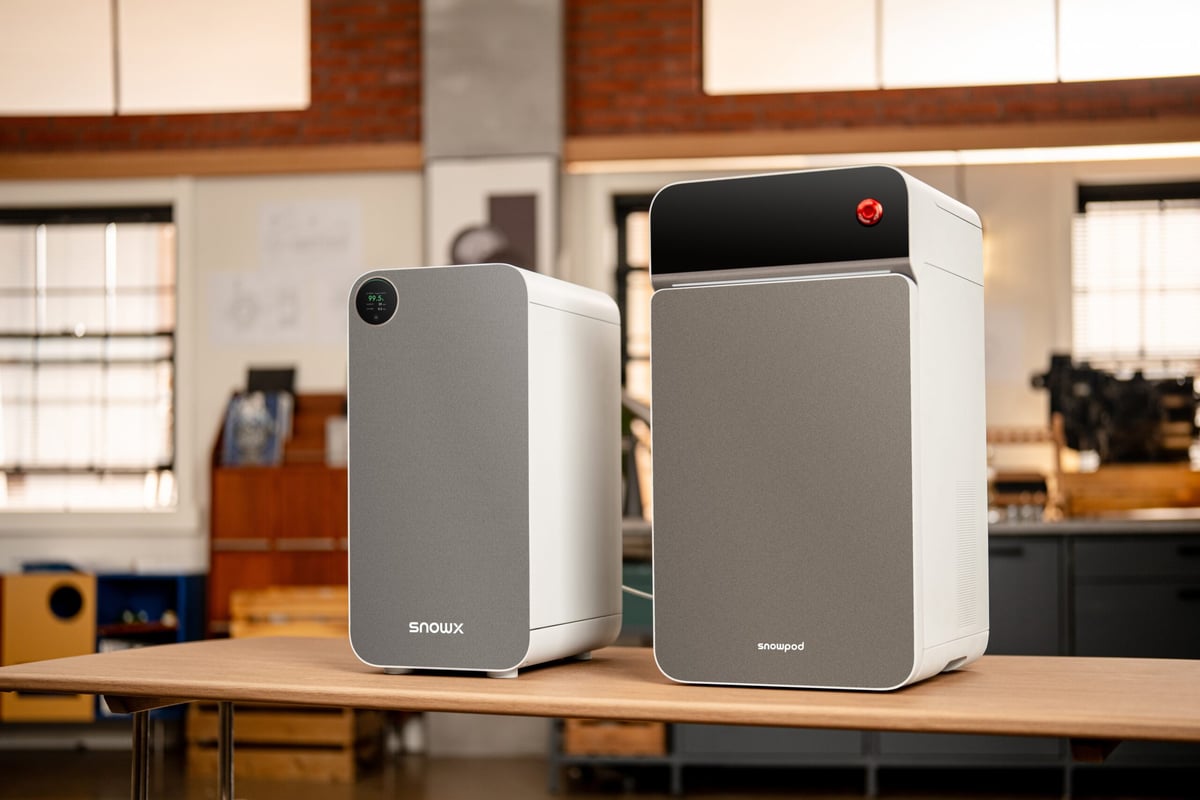
SnowX developed NitroPod, a companion nitrogen generator that separates high-purity nitrogen from ambient air and vents the oxygen. The generated nitrogen is then supplied directly to SnowPod to create the controlled atmosphere required for printing.
Users connect NitroPod to prepare the printing atmosphere. This makes the setup before a print more straightforward and better suited to regular use.
Easier Support Removal – Without Bringing in Another Machine
SLM printed parts need to be easily removed from the base plate. Traditionally, SLM parts are “welded” on the base plate, and normally cut by a huge wire-EDM cutter.
SnowX team designed a very special easy removal support structure, inspired by origami structure. Its geometry, connection points, and load-bearing directions are designed to remain stable during printing, while allowing the structure to break away progressively in the intended removal direction.
Users can begin at one point and work along the structure as it separates in sequence, much like opening a zipper.
The goal is not just to finish the print, but to make it easier for users to get from a completed build to a part they can actually use.
SnowPath: Free Software, One Click to Start Printing
SnowPath is SnowX’s in-house SLM slicing software and comes free with SnowPod.
Once a model is imported, SnowPath handles slicing and toolpath planning, then sends the job to the printer and starts the print with a single click. For users, that means a more direct path from a finished model to a running print, without having to piece together a complicated software workflow.
AI Detection: Let the Machine Keep an Eye on the Print
SnowPod uses an integrated high-definition camera and AI visual algorithms to monitor printing from the first layer onward.
The system is designed to recognize issues such as lifting edges and insufficient powder delivery, helping identify potential problems early. It continues to assess the build throughout the process and flag anomalies, supporting a more stable, controlled printing experience.
For the user, this means help spotting problems as they develop, rather than relying entirely on experience to recognize them.
90%* + Powder Recovery and Quick-Change Cartridges
For regular use, two things quickly matter: how much powder can be reused, and how much work it takes to reload the machine.
SnowPod automatically recovers unused, unfused metal powder for reuse, with around 90% recovery efficiency depending on part geometry.* This keeps more material available for future prints and reducing waste.
When it is time to refill or change material, users simply open the cover and twist the cartridge into place, with no additional tools required. Less pouring, less cleanup, and less handling between jobs – so once the cartridge is changed, the next print can get started more easily.
The SnowX Community: More Ways to Create in Metal
A 3D printer becomes more useful when there is more to make with it. Models, finished projects, and ideas from other creators can all become starting points for something new.
SnowX is also developing a community, with artists already joining and contributing their work. Combined with the possibilities of SLM printing, those designs could open up new ways for people to experiment, create and share in metal.
SnowPod helps answer one question: How do I make this in metal?
The community opens up another: Now that we can make things in metal, what else could we create?
SnowX plans to launch SnowPod on Kickstarter in Q4 2026. Users can follow SnowX’s official social media account for launch updates and early-bird offers.
SnowPod is designed for anyone interested in making things in metal – whether that is a one-off part, a piece of jewelry, a prototype, a model, a tool, or something entirely new. Potential applications range from mechanical and robotics components to jewelry, metal models, artwork, and product prototypes.
SnowPod points to a broader shift in metal 3D printing: from simply making industrial equipment smaller to designing the entire metal-making experience around everyday desktop use.
Learn more and follow SnowPod by SnowX website: snowx.com
*All data is based on internal testing and/or third-party laboratory testing. Actual results may vary depending on individual product variation, usage conditions, and environmental factors. Actual performance may vary.