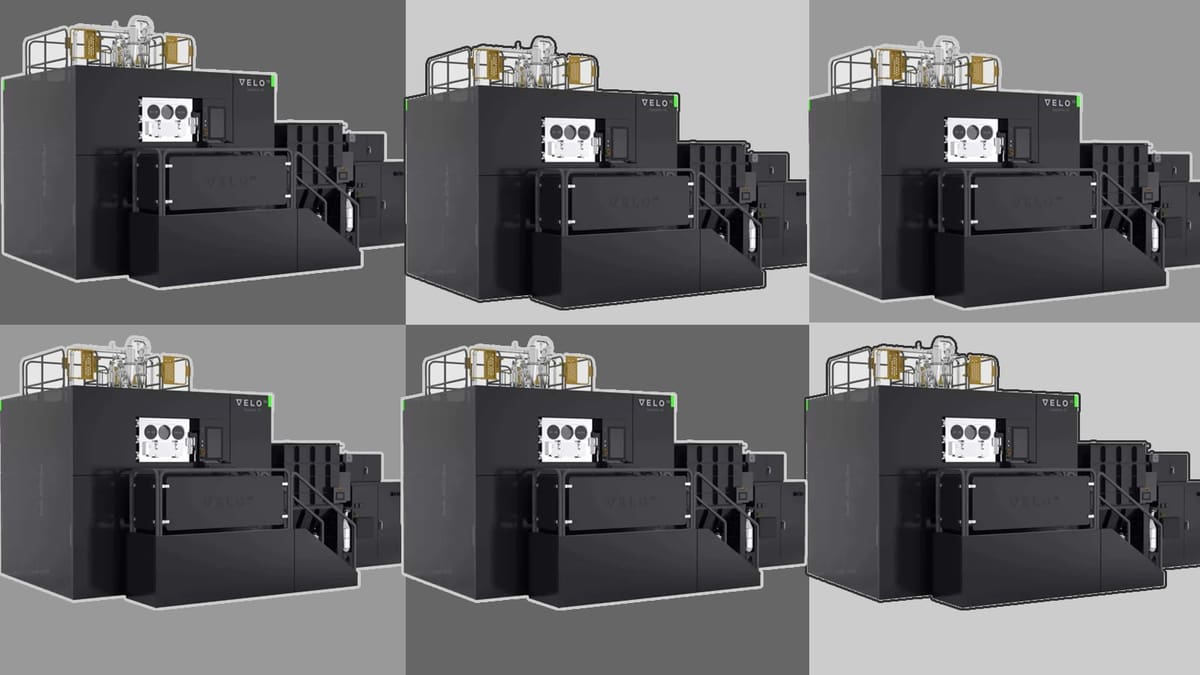
Mears’ Sixth Velo3D Printer Is a Bet on Replacing Cast Copper Marine Parts With AM

Mears' latest Velo3D investment signals a shift from qualification to production, adding dedicated copper-nickel capacity for marine parts traditionally made by casting.
Indiana manufacturer Mears Machine Corporation is adding a sixth Velo3D Sapphire XC metal 3D printer, but the more significant part of the investment may be what the machine is intended to replace.
The new system will be dedicated to CuNi30, a 70-30 copper-nickel alloy widely used in marine and naval systems because of its corrosion resistance in seawater. Mears says it is building a vertically integrated CuNi supply chain covering additive design, printing, machining, and final inspection at a single facility.
“Following a period of market, product and technical analysis, our move into copper-nickel additive manufacturing is a strategic decision,” says James Lloyd, CEO of Mears.
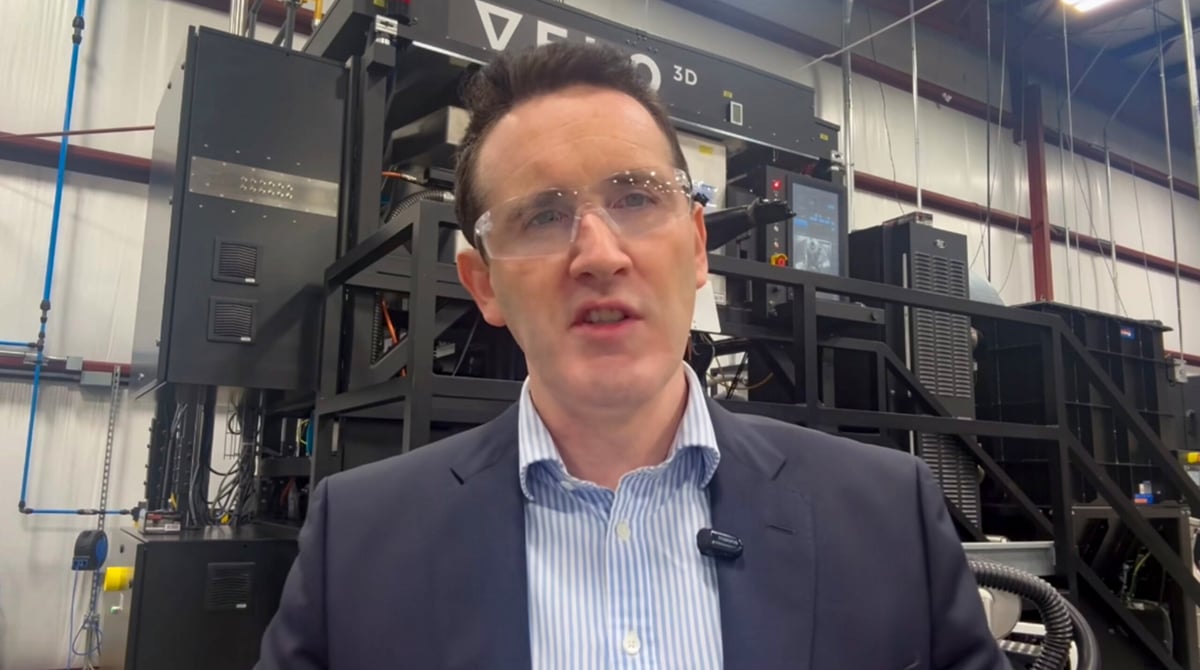
Copper-nickel components have historically been cast, and Mears says some customers are already treating laser powder bed fusion CuNi components as interchangeable with cast hardware in selected applications. “”We been seeing higher ultimate yield strength properties compared to casting, better elongation and really good density,” says Lloyd of the 3d printed parts from the Sapphire XC.
This “creates an important opportunity to provide tooling-free replacements for legacy components, particularly where castings are difficult to source, tooling is no longer available, or volumes do not justify traditional foundry investment,” says Lloyd.
The opportunity is less about competing with casting in high-volume production than solving cases where the conventional supply chain no longer works well. In those cases, a qualified digital build file and a sufficiently large metal printer can become an alternative supply chain. But Mears is looking beyond spare parts, noting how additive manufacturing “gives engineers far greater freedom to develop next-generation heat-transfer and fluid-management hardware, including more integrated geometries, optimized internal flow paths and designs that would be difficult or impossible to manufacture conventionally,” says Lloyd.
Family Machine Shop Roots Enable Digital Foundry Pivot
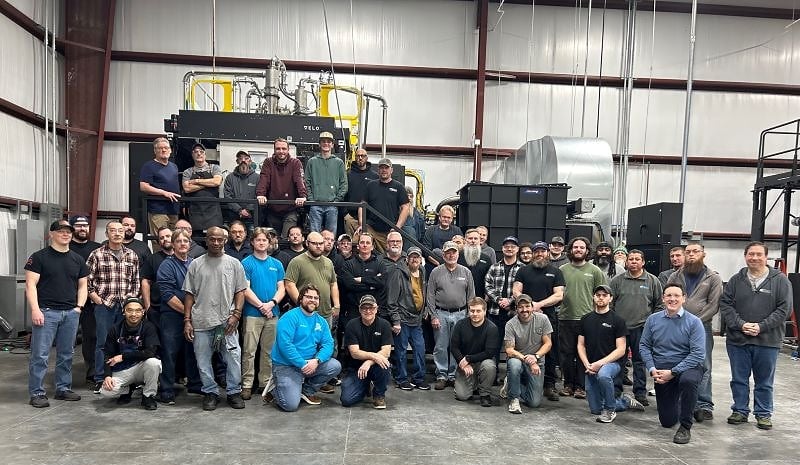
Mears started in 1966 as a small operation in the family garage and has grown into a 110,000-square-foot manufacturing business producing precision-machined components, complex fabrications, sheet-metal weldments, and brazed assemblies.
Its conventional manufacturing capabilities are key to its expansion into additive manufacturing since production metal AM parts typically require machining, inspection, and other downstream operations. Replacing a traditional supply chain involves much more than owning an LPBF machine.
Mears’ CuNi system will join five existing Sapphire XC machines supporting programs in Inconel 718, Haynes 282, and CP1 aluminum. In July, the company ordered its fifth system and took options on two more to support larger production programs in aviation, defense, energy, and space.
The latest investment appears less like an exploratory purchase and more like a move to establish dedicated production capacity around a specific material and market.
A Marine Supply Chain Looking for Alternatives
Today’s U.S. Navy is trying to solve many of the same supply-chain problems Mears is targeting.
There is no indication that the new Mears machine was purchased for a specific Navy contract, and neither company identified a naval customer. Yet Mears is no stranger to government supply chain. In February 2026, Mears announced a 10-year supply agreement with an unnamed major U.S. defense OEM to manufacture critical hardware for existing products and a new airframe platform.
CuNi30’s widespread use in marine systems places Mears’ new capability within a market where the U.S. government is investing heavily in alternative manufacturing capacity.
The Navy’s Submarine Industrial Base program explicitly identifies additive manufacturing as a way to produce parts when traditional supply chains are delayed, disrupted, or unavailable. More than 100 approved AM parts have already been installed on ships and submarines, while more than 60 suppliers are participating in additive manufacturing development.
The effort has increasingly focused on moving AM beyond pilots and into routine procurement. In August, the Navy issued new technical requirements intended to remove qualification and administrative barriers to using metal 3D printed materials in submarine construction, maintenance, and repair.
The Navy says decades of consolidation have left parts of its industrial base vulnerable to constrained capacity, single-source suppliers, and obsolescence, while US casting and forging capacity has fallen sharply since the Cold War.
Additive manufacturing has already shown how it can fill some of those gaps. NAVSEA has highlighted cases in which unavailable components were reverse-engineered and printed rather than forcing replacement of larger assemblies, while other metal AM parts have cut lead times substantially.
Mears’ CuNi investment brings that same replacement-parts logic into a commercial production environment.
Another Data Point in Velo3D’s Recovery
The order also matters for Velo3D beyond the sale of another machine.
Only two years ago, the printer manufacturer was in severe financial distress. At the end of June 2024 it had just $3.2 million in cash and short-term investments, and its SEC filings warned of substantial doubt about its ability to continue as a going concern. Velo3D later underwent a major restructuring in which a debt-for-equity exchange left Arrayed Notes Acquisition Corp. owning 95% of its outstanding common stock.
Its financial position is considerably stronger today. Velo3D reported second-quarter 2026 revenue of $20.7 million, up 52% year over year, while cash had risen to $91.1 million by the end of June. The recovery is not complete, however: its latest quarterly filing still says substantial doubt remains about its ability to continue as a going concern and that additional financing will be required.
Against that backdrop, repeat purchases from an established manufacturer such as Mears carry more weight than an isolated system sale. Mears is repeatedly expanding its fleet into new materials and production applications.
And this latest expansion puts Velo3D technology directly in the path of a long-term U.S. manufacturing priority: rebuilding domestic capacity for parts the traditional naval supply chain increasingly struggles to provide.
You May Also Like:



License: The text of "Mears’ Sixth Velo3D Printer Is a Bet on Replacing Cast Copper Marine Parts With AM" by All3DP Pro is licensed under a Creative Commons Attribution 4.0 International License.