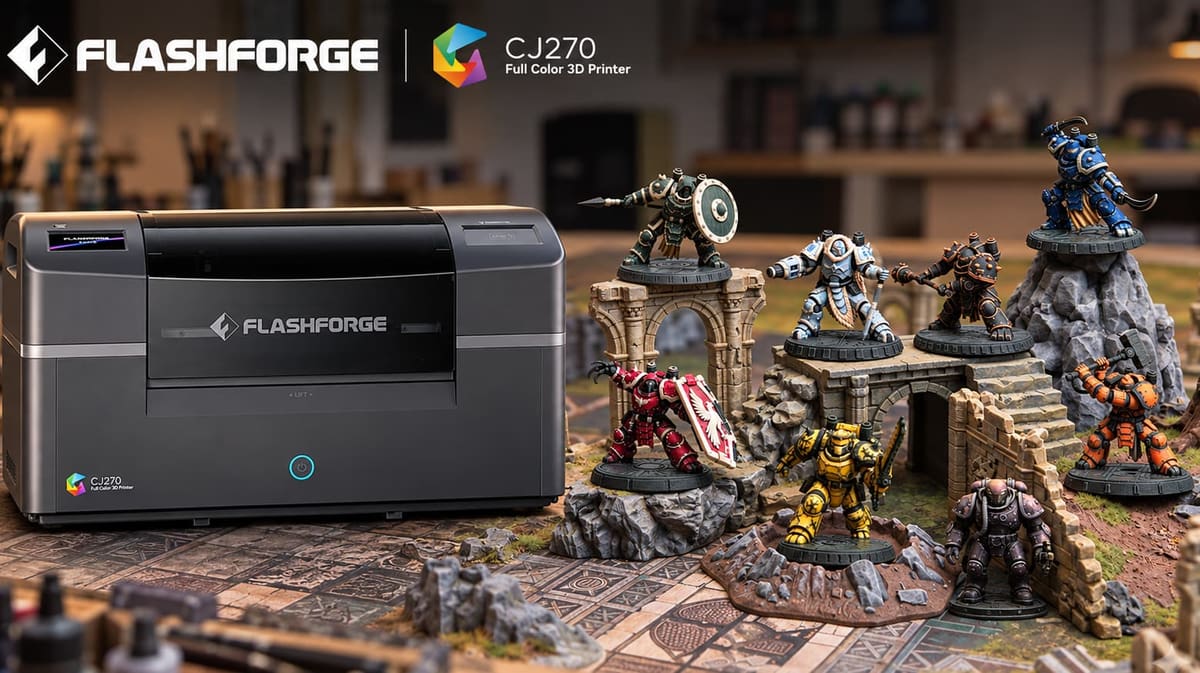
How the Flashforge CJ270 Blends 10 Million Colors & Clear Resin to Reduce Hand-Painting

Can a $3,999 printer reduce the need for hand-painting? Discover what the Flashforge CJ270 can produce in-house, from custom miniatures to packaging mockups.
Painting miniatures, prototypes, custom figurines, and other small prints by hand can be one of the most time-consuming steps in small-batch production. The Flashforge CJ270 brings color into the printing process by combining cyan, magenta, yellow, black, white, and clear materials, droplet by droplet, in a single print run. Using MultiJet Printing (MJP), it supports more than 10 million color combinations alongside transparent and translucent effects. From personalized pet portraits to visual prototypes and tabletop gaming figures, here is where full-color resin output fits into creative production workflows.
Droplet-Level Mixing: How 10 Million Colors & Translucent Resin Work Together
Many multicolor 3D printing workflows use distinct areas of solid color. The CJ270 reproduces mapped textures and gradual color transitions across a model’s surface. That matters for details such as a flush across a cheek, shading inside a fold of fabric, the iris of an eye, or a fade from deep blue to white on a scenic base.
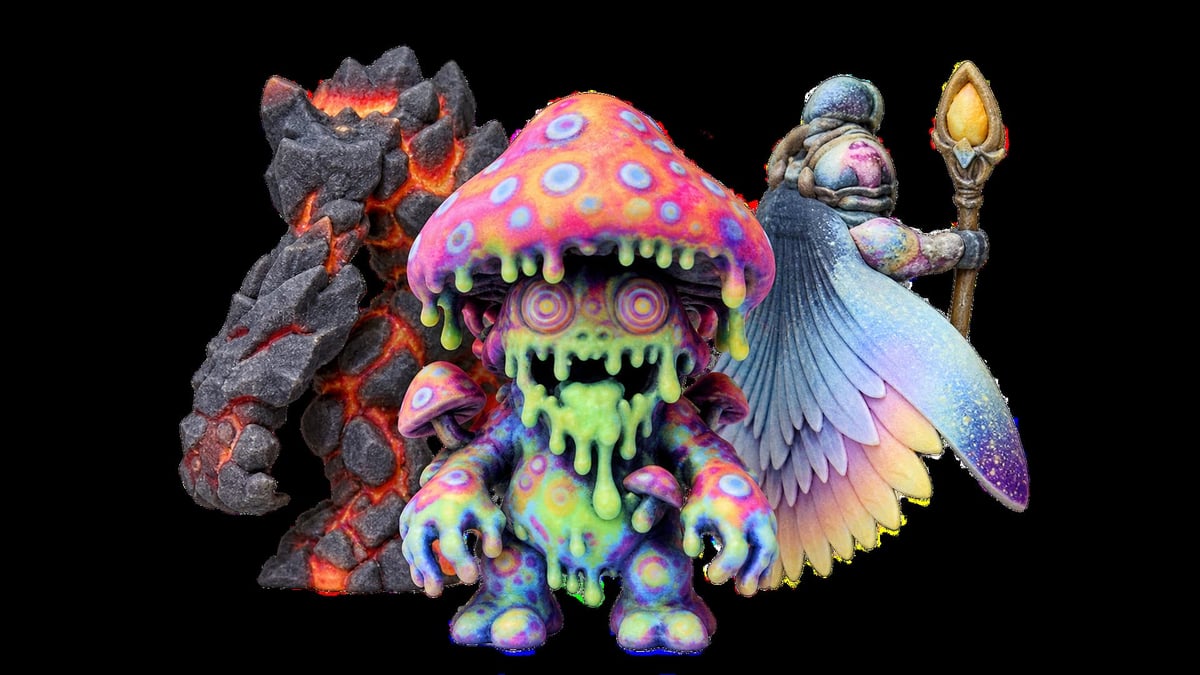
The three miniatures pictured below show how printed textures and color transitions bring distinctive designs to life, from fiery accents on a rocky creature to vivid patterns across a mushroom character and soft gradients on a robed figure. For this batch of three 45 mm miniatures, the creator reported a print time of 20 hours and 48 minutes, material usage of 193.93 g, and a total resin cost of $13.58 – approximately $4.53 per model, excluding other production expenses.
Clear material adds a second effect, allowing transparent or translucent regions to appear alongside opaque, colored features. The whale, frog, and mushroom designs below illustrate how clear material can frame colorful miniature scenes and add visual depth. Creators can explore how part thickness, geometry, and backlighting influence the visual effect.
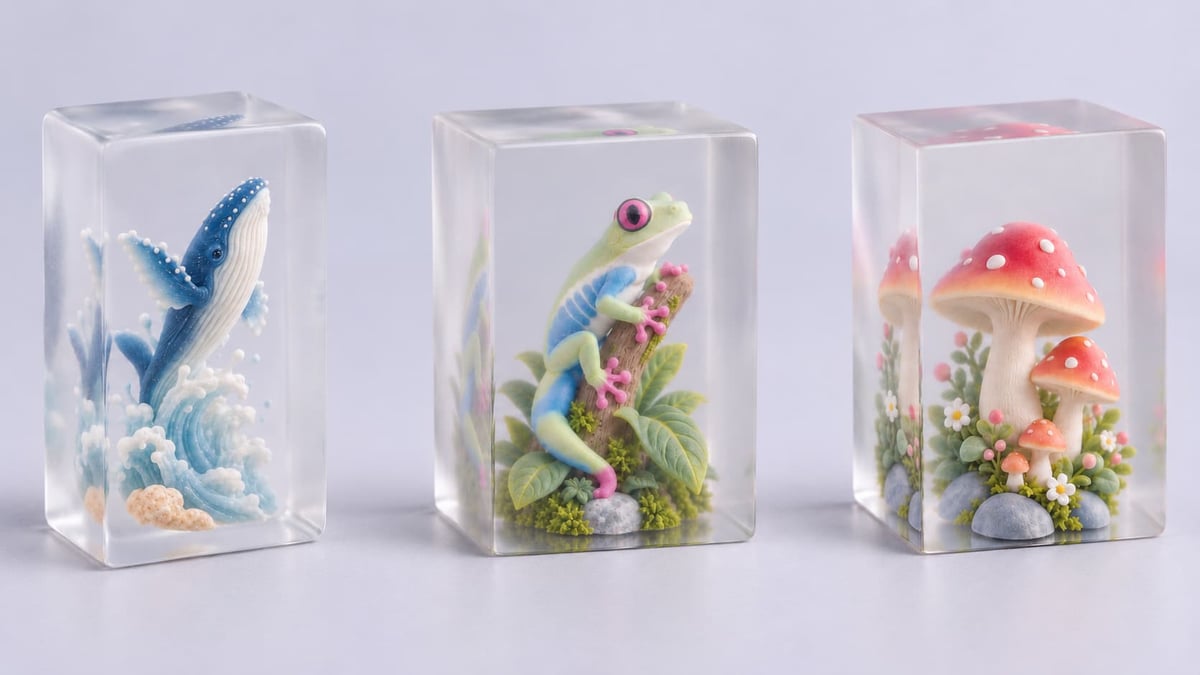
High-quality source textures and good color management help reproduce the intended appearance. Final color and transparency also depend on geometry, material thickness, lighting, and finishing, so a test print can help refine the result.
Compatible File Formats, Model Sources & Build Volume
The CJ270 prints full-color parts from textured 3D models, with color mapped onto the part’s geometry. It accepts formats such as OBJ, with its associated texture files, and GLB. Suitable sources include:
- Textured marketplace models: Prepared assets with suitable textures and a license that permits the intended use.
- 3D scans: Digital captures of people, pets, or objects, prepared for printing.
- Original digital sculptures: Sculpted or modeled files with textures created in tools such as Blender or ZBrush.
- AI-generated models: Outputs from image- or text-to-3D tools, subject to checks for geometry, texture quality, and printability.
The CJ270’s 180 × 120 × 100 mm build volume accommodates small tabletop miniatures and display pieces. Larger designs can be split and assembled, while smaller items can share a print job, depending on their footprints, orientation, and support requirements.
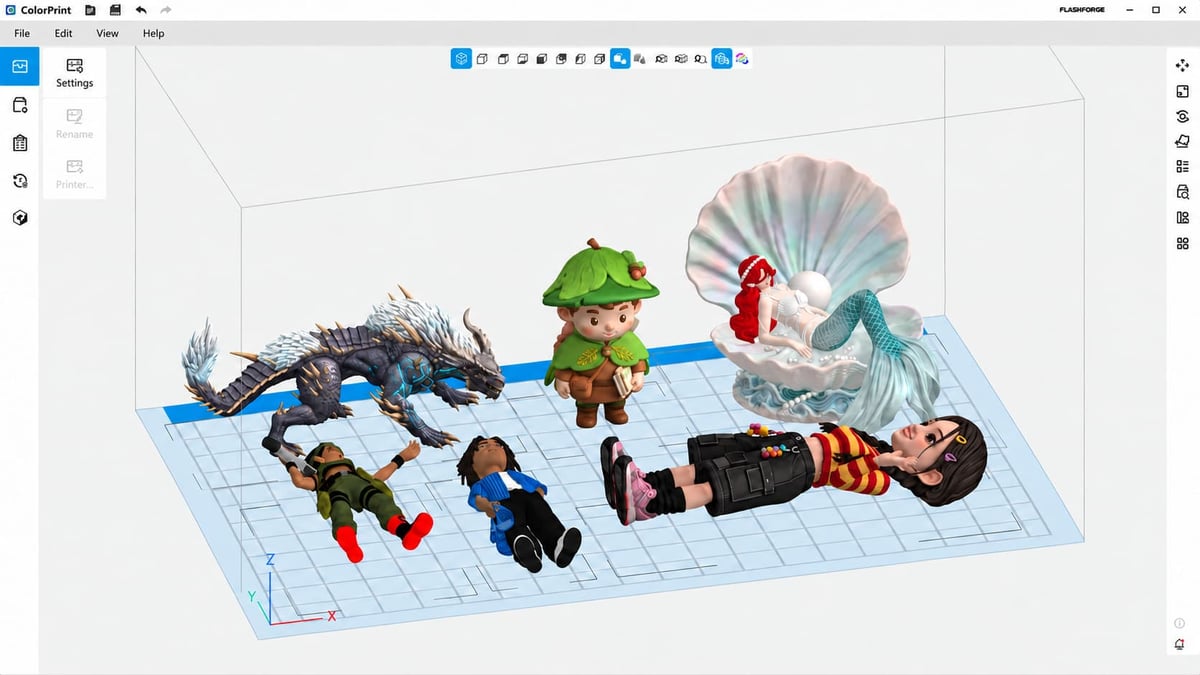
Core Production Workflows: Visual Prototypes, Personalized Gifts, Miniatures, & More
Small-batch custom products: Etsy sellers and gift shops can produce personalized figurines, keepsakes, and souvenirs with color already incorporated, reducing painting labor. ColorPrint’s material estimates help inform pricing.
- Portraits and pet figures: With a scanning or modeling step, studios can turn customer references into full-color figures featuring distinctive facial details, clothing colors, and fur patterns.
- Miniatures and designer toys: Creators can produce colorful tabletop figures and limited-edition collectibles, combining opaque and translucent features while reducing manual painting.
- Prototyping and design visualization: Designers can create full-color appearance models for reviews and presentations, while educators can use colored models to explain complex structures.
Bringing Full-Color Production In-House
The CJ270 is designed for work where color and visual detail are central to the finished piece, using Flashforge’s specially formulated materials. For businesses that currently outsource full-color prints or spend hours hand-painting individual models, its listed U.S. price of $3,999 offers a desktop route to bringing that work in-house. From customized miniatures to decorative collectibles and appearance prototypes, it gives creators more ways to translate digital designs into physical products. Learn more about the CJ270 and current regional pricing on Flashforge’s official website.