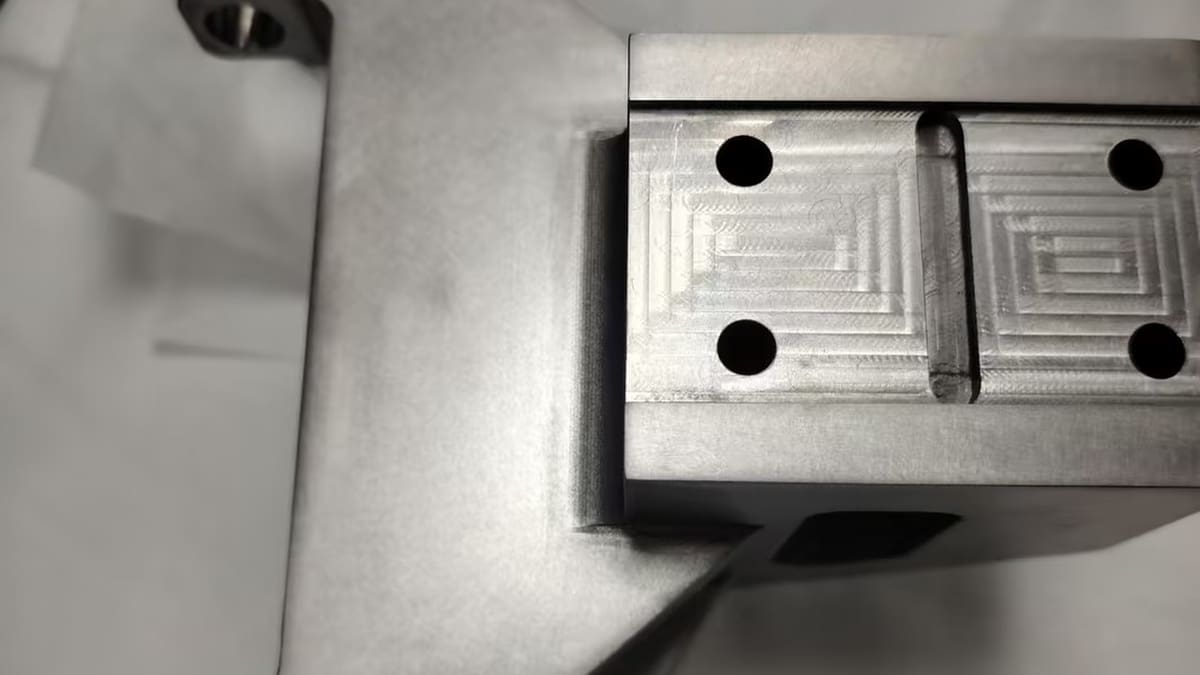
From Ra 12.5 to Ra 0.4: Making 3D Printed Metal Parts Assembly-Ready with LS Manufacturing

Discover how LS Manufacturing utilizes simultaneous 5-axis milling on printed metal blanks to cut functional prototyping times by 35% and deliver true, assembly-ready accuracy straight out of production.
Anyone who has tried to bolt an as-printed metal bracket straight off the build plate knows the problem. Powder bed fusion delivers the geometry, but the surface it leaves behind, typically Ra 6.3 to 15 μm with a little layer distortion on thin features, is not something a sealing face or a bearing seat will forgive.
That gap between printed and assembly-ready is usually closed by hand. Batches of parts shuffle between polishing stations, and every operator holds a different tolerance. It works, up to a point. On medical and aerospace components, where a mating face might be specified at ±0.005 mm, hand finishing is where prototypes go to die.
We started LS Manufacturing in 2009 as a CNC machining company, and we still think like machinists. When clients coming to us for industrial 3D printing kept asking what to do about the roughness problem, the answer came from the machining side. Stop treating a printed part as a finished blank. Treat it as a machinable one.
One Setup, Five Axes
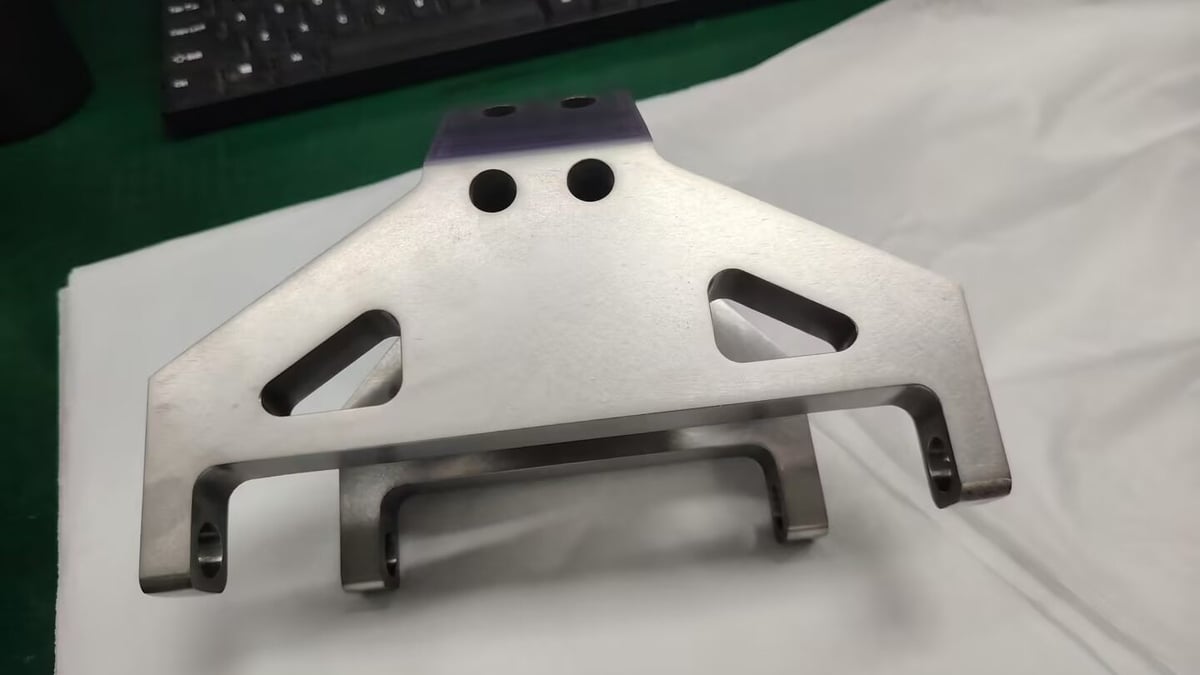
We have now formalized the process as our Additive-Subtractive Hybrid Finishing Workflow. A printed metal blank, whether titanium, Inconel 718, or aluminum, goes onto one of our 5-axis simultaneous milling centers and stays in a single setup while dynamic tool orientation follows the part’s organic surfaces. No re-fixturing. No datum stack-up. No operator variance.
The importance of the single setup cannot be underestimated, since remounting the organic and topology optimized geometry inevitably creates datum errors right where it is least expected. Furthermore, the controlled milling process does not create the heat and pressure which the hand-polishing technique could produce in the printed layers.
The key dimensions we ensure on sealing surfaces of critical nature are the following: linear tolerance of ±0.005 mm and Ra 0.4 μm for non-standard geometries. Process capability is validated internally via our CMMs with Cpk ≥ 1.33 based on ISO 13485 and IATF 16949 quality systems. PEEK components are processed by the same process flow.
What It Changed for One Orthopedic Client
One of our customers in Europe that is a medical device OEM in the field of orthopedic reconstruction was doing the manufacturing of custom titanium bone plates using selective laser melting (SLM). In the as-printed condition, the parts had thermal distortions to about Ra 12.5 µm, and they couldn’t be assembled.
Using the hybrid process, the mating surfaces were re-machined to ±0.005 mm and Ra 0.4 µm in one single operation. The time taken for functional prototyping reduced by 35%. Every part from the latest batches could be assembled in the first pass.
The Practical Takeaway
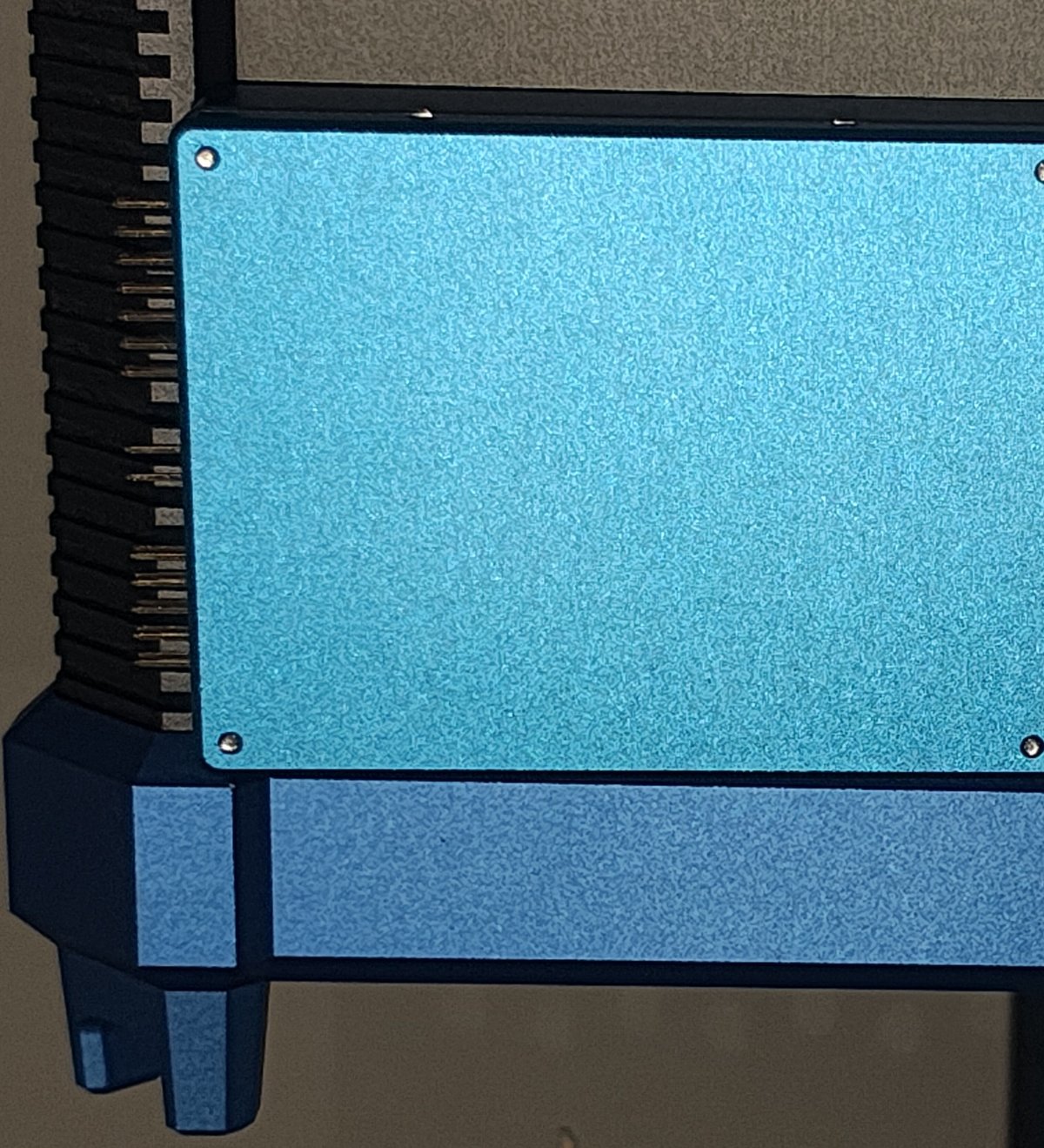
Additive manufacturing makes money on topology. But machining holds the key to accuracy. Both fit well together, and our custom CNC machining services team checks tolerance stacks from print to finish for customers weekly. When you are now outsourcing finishing operations for your printed metal parts, perhaps it might be interesting to know how much time it takes.
About LS Manufacturing
LS Manufacturing is a precision parts manufacturer based in Dongguan, China, serving 2,000+ customers with CNC machining, injection molding, sheet metal, die casting, and industrial 3D printing. Certifications include ISO 13485 and IATF 16949.