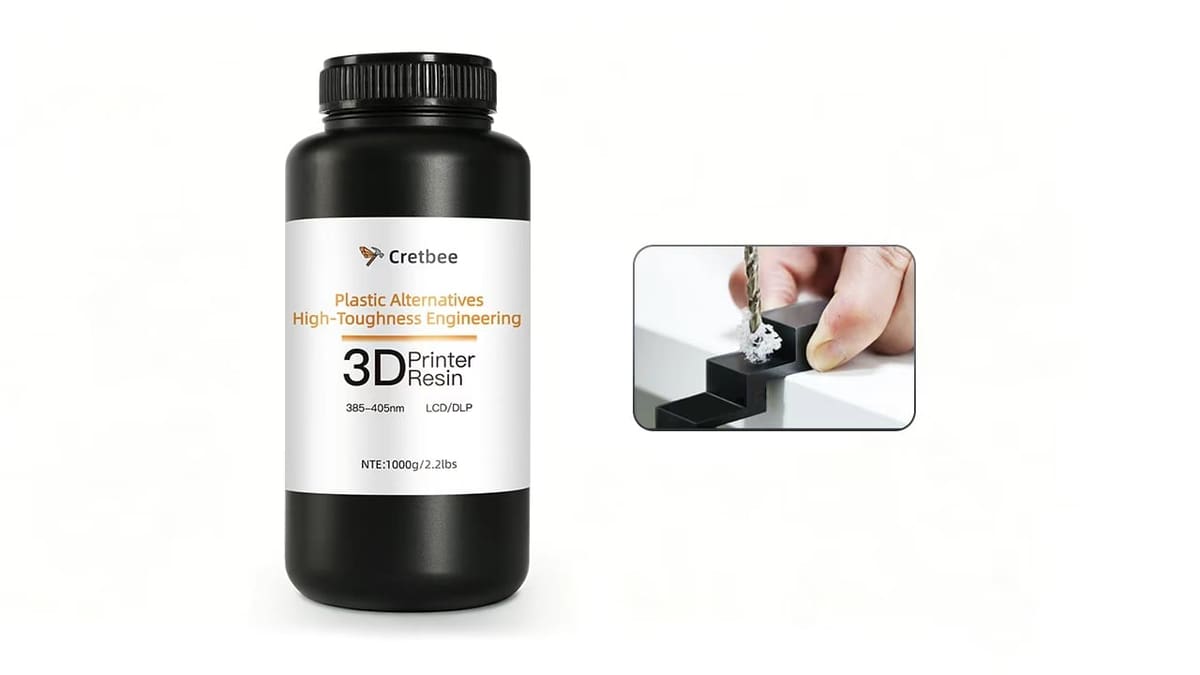
Cret Bee’s Atlas Resin: Bridging the Gap from Prototypes to End-Use Parts by Eliminating Brittleness

Cret Bee's 2.0 photosensitive 3D printing resin, Atlas, maintains ≥90% of its toughness over two years, serving as a direct replacement for injection-molded plastics, at $39.99 per kg.
In the world of additive manufacturing, a persistent challenge remains: Most standard 3D printed resins suffer from embrittlement, cracking, or a loss of toughness over time. This is neither a conspiracy nor a lie. It is simply the objective law of polymer chemistry.
The fundamental pain point of existing 3D printing technologies lies here: Once a part is printed, the object often retains only a physical connection between layers. While each individual layer is cured, they do not fuse into a true chemical whole.
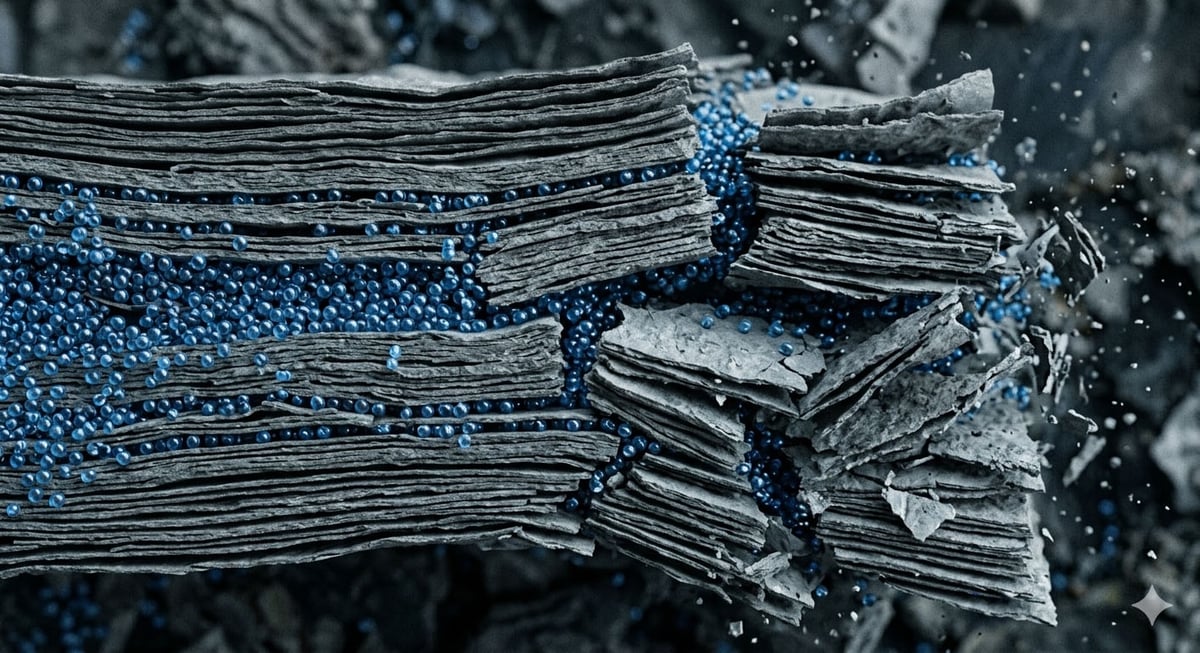
During long-term storage, moisture and other small molecules from the air continuously infiltrate the structure. This weakens the inter-layer bonding and triggers side reactions with residual functional groups. The ultimate result is the dreaded loss of toughness, cracking, and a drastic drop in impact strength.
Most manufacturers aren’t deliberately hiding this – they simply haven’t tested for it extensively. They stop at publishing mechanical data for the “as-printed” state and go no further.
At Cret Bee, we took a completely different path with our new 3D printer resin, the Atlas. Our question was simple: What would happen if we developed a resin specifically engineered to resist this degradation?
First, we developed a brand new pre-polymer formulation. This isn’t just a tweak of additives; it is a reaction system engineered specifically to enable “secondary cross-linking.”
Second, and this is the key, we introduced a thermal curing mode. Once the UV printing is done, the part goes through a controlled heating process. This breaks the weak physical bonds created by the UV light. Instead, the molecular chains get enough energy to fuse together completely, creating strong secondary cross-links between every layer and chain. The result? The small molecular chains, which were previously just stacked and isolated, are fused via the thermal reaction into a massive, integral macro-molecular network. The interfaces between layers vanish. The entire part transforms from a “multi-layer stack” into a “single monolithic entity.”
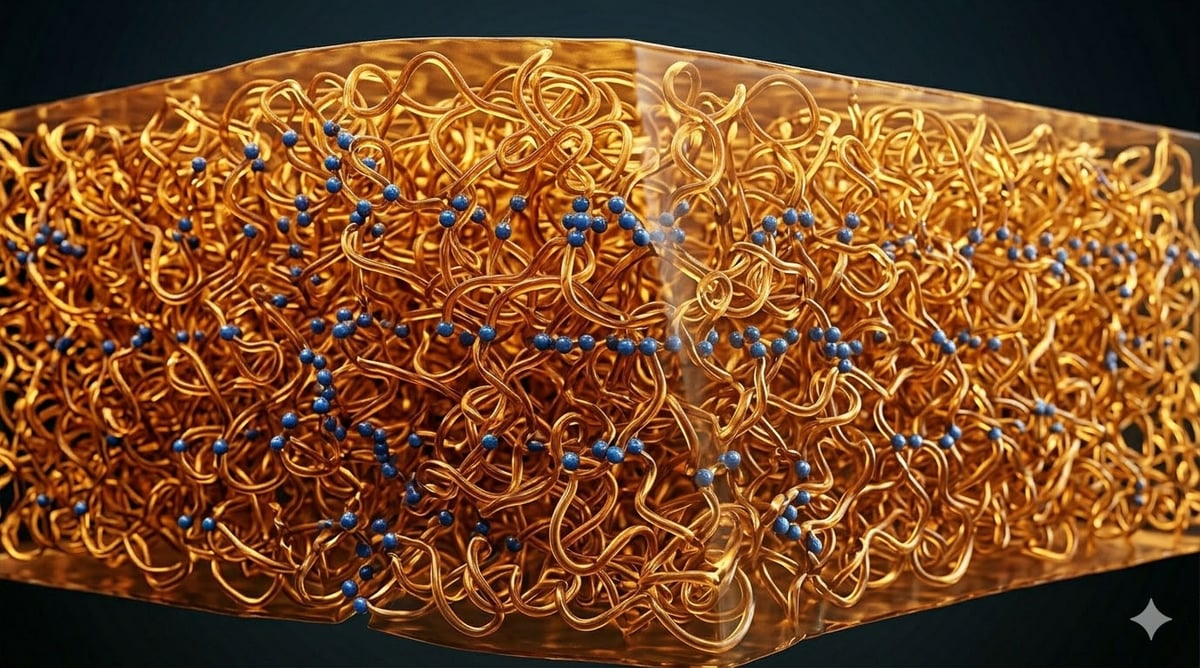
Cret Bee’s new materials with fused layers due to the chemical composition and heating process (Source: AI image from Cret Bee)Third, the Inert Molecule Generation Mechanism. Once the thermal cross-linking is complete, all active functional groups in the system are fully consumed, yielding stable inert molecules. These molecules no longer undergo side reactions with water, oxygen, or other small molecules. Moisture and oxygen in the air cease to be a threat.
Toughness is locked within this 3D printing resin from the very beginning.
Real-World Applications
We have already witnessed our customers successfully deploying the Atlas across a wide range of demanding sectors:
- Production jigs and fixtures: Eliminating the need for quarterly reprints and replacements.
- Functional parts: A viable alternative to injection-molded ABS and PP materials.
- Final parts: Small-batch production of medical and industrial components.
- Spare parts: Print-on-demand capability with reliable, long-lasting performance.
Process Compatibility
- Compatible with standard DLP / MSLA (LCD) 3D printers (wavelength range: 385-405 nm).
- Utilizes standard post-curing workflows, supplemented by controlled thermal curing (e.g. 80-120 °C for 60-120 minutes, using a standard oven).
- No specialized printing workflows required.
You can now purchase Atlas resin at $39.99/kg.