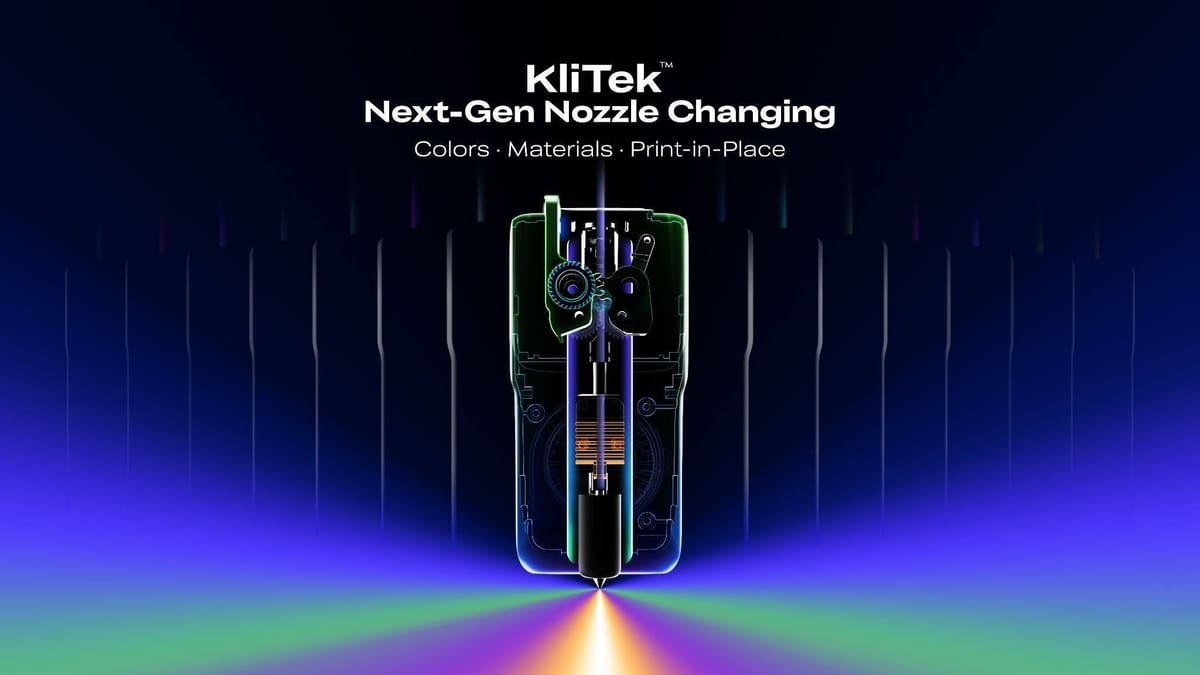
Creality KliTek: How a New Nozzle-Changing 3D Printer Achieves Five-Second Material Changes

Creality’s next-generation system combines ultra-fast material changeovers with five-second nozzle swaps to eliminate waste and enable multi-hardness prints.
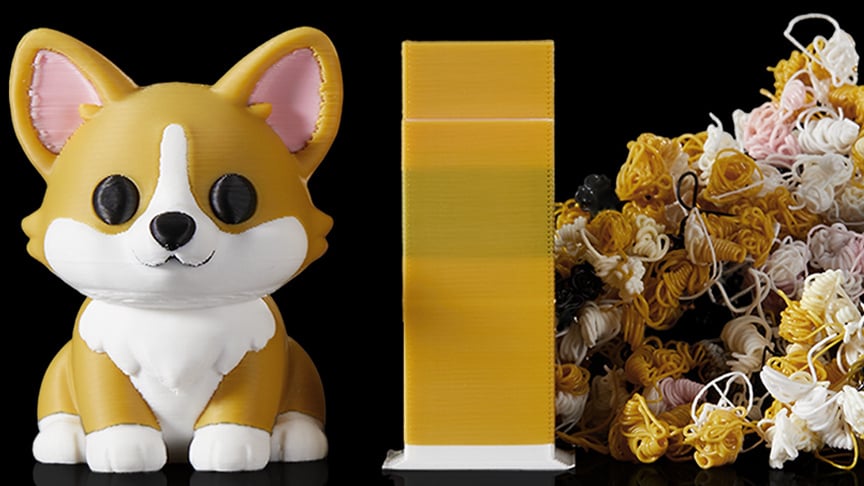
For anyone running a 3D printer, the bottleneck of watching your toolhead grind to a halt, retract, and bleed precious filament into a purge pile just to switch a single color is agonizingly familiar. Traditional multi-material printing is all but defined by such a slow, wasteful cycle.
Creality’s new KliTek system aims to bypass this entirely, cutting nozzle changes to less than five seconds and physical material changeovers to under 15 seconds, drastically reducing both time and filament waste.
Switch Nozzles, Not Workflows
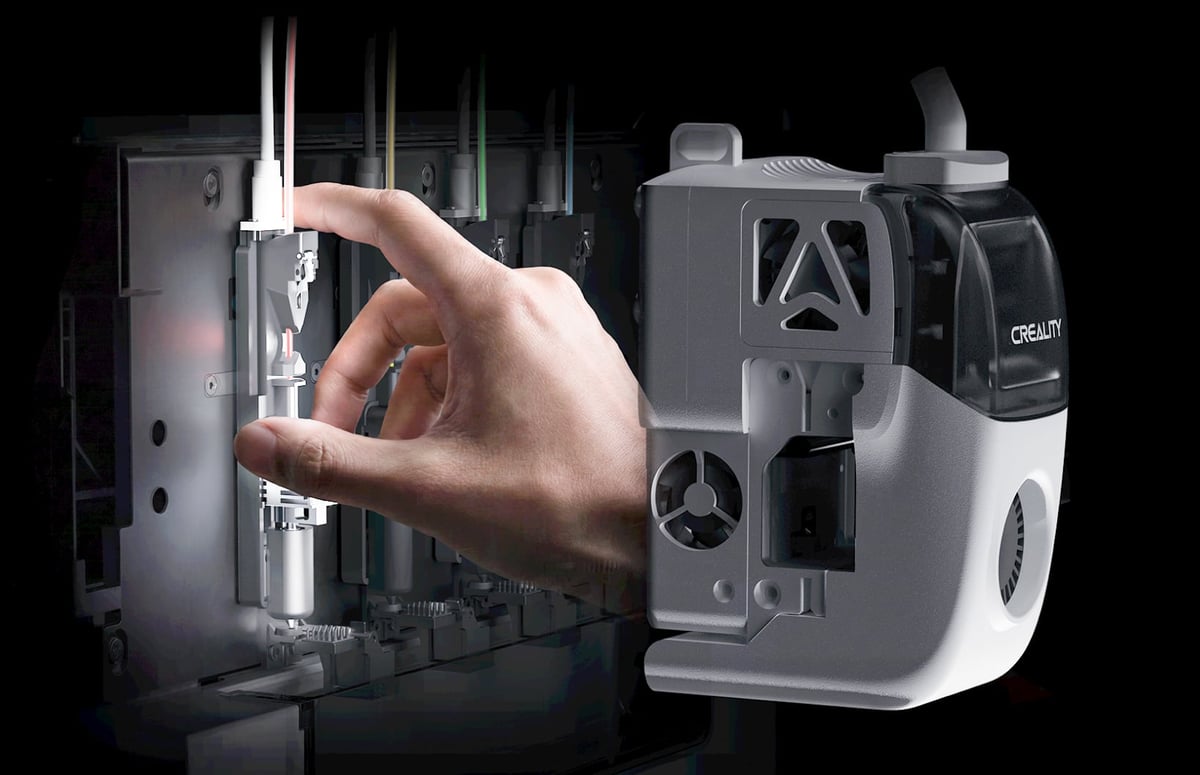
KliTek runs multiple independent workflows in parallel, each with its own dedicated nozzle assembly, however they all share a single extruder. This means that when you swap materials, you don’t have to retract filament across a long tube and purge a nozzle full of the old color.
Compare that to tool changers that require swapping the entire toolhead – a bulky, relatively high-maintenance process that risks precision – or first-gen nozzle changers, which often rely on long-distance retraction and eat up time. KliTek cuts through both problems by making the nozzle the only thing that moves.
Waste drops to almost nothing, as well. The only material you lose goes into a small wipe tower. Also, because the multiple nozzle assemblies share a single extruder with no unnecessary parts, swapping a nozzle takes just two screws. You won’t need to move the printhead, use tools, or recalibrate your printer.
TPU Printing Without the Headaches
TPU has always been a material that sounds great in theory but has the potential to punish you in practice.
It can clog extruders, fail mid-print, and typically limits you to 95A hardness, meaning every print would have to be a single color and single density.
KliTek changes that completely, with no need for enclosures or hardware modifications, so you can just load filament and start printing across multiple colors, materials, and hardness levels in one job.
The key here is S-Drive Dual-Drive Technology, a push-and-pull mechanism that supports the filament at multiple contact points rather than dragging it along the entire tube wall. Each point carries less force, breaking continuous friction into shorter segments and reducing overall resistance. This enables KliTek to print TPU with 80A, 85A, 90A, and 95A hardness.
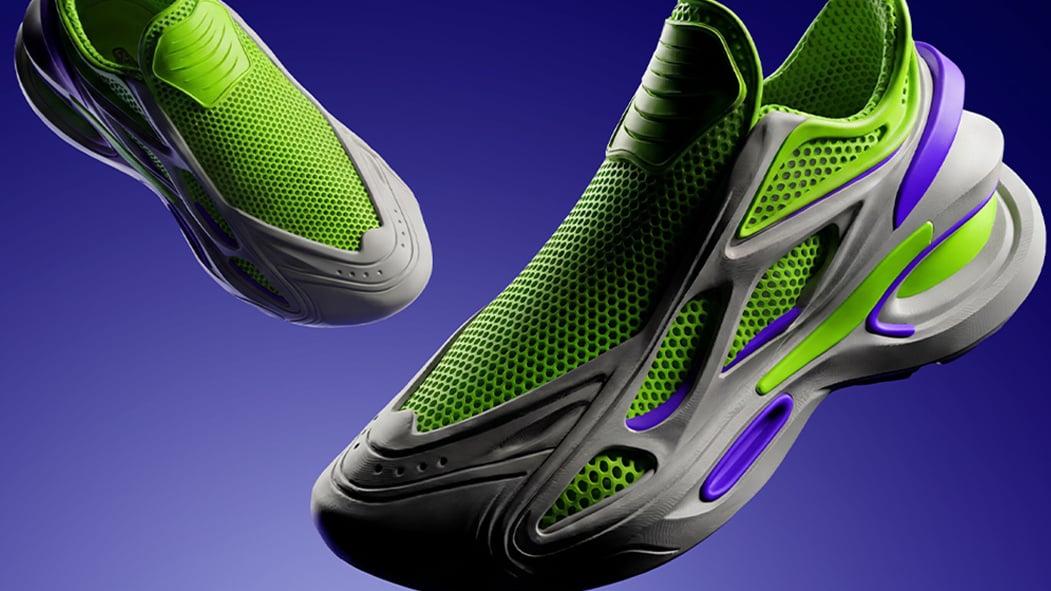
At 95A, it prints at 15 mm³/s, a sevenfold jump over the industry standard. For 85A TPU, where many printers fail, it achieves stable output at 3 mm³/s. You’ll be able to print things like cushions, squeezable figures, and complete multi-hardness shoes, meaning the sole, upper, and insole together, in a single print job, with each component its own color, hardness, and material.
One Print Job, Thousands of Creative Possibilities
In addition to being faster and more capable, KliTek changes what you can actually design and sell. The “Full Spectrum Four-mula” system blends four base colors in precise ratios within each ultra-thin printed layer, shifting and transitioning as layers stack to produce thousands of color variations from the same four inputs.
Multi-diameter nozzle coordination adds another dimension. For example, you can pair a 0.8 mm high-flow nozzle with a 0.4 mm precision nozzle and have the system divide the work intelligently, with the wide nozzle blasting through infill, the fine nozzle handling outer walls. You can also add water-soluble supports (one nozzle prints the support, others build the model, dissolve it afterward) for complex hollow structures, or combine rigid and flexible materials in a single piece for integrated hard-soft applications like medical models or tire toys.
Whether you’re running a print farm, building a side business around custom parts, or just pushing what’s possible with the hardware on your desk, KliTek changes what a single 3D printer can do. Faster switching makes multi-material printing genuinely practical, a TPU solution finally matches the material’s potential, and a creative platform opens up color mixing, material combinations, and print strategies that simply weren’t viable before. That’s a lot of ground to cover.