Bypassing the Supply Chain: US Navy 3D Prints Patches to Fix Jets 50% Faster

The US Navy is testing a 3D printed composite repair method that could cut certain F/A-18 Super Hornet repair times by around 50%, potentially giving maintenance crews a faster way to return grounded aircraft to service.
A new approach to literally patch up Super Hornet U.S. Navy Aircraft is in testing now with the hope of dramatically reducing repair time. Developed by engineers from the Naval Air Warfare Center Aircraft Division and Fleet Readiness Center Southwest, the approach uses high-performance 3D printed composite patches that can be applied directly to damaged aircraft structures. The Navy says the method is designed for complex repairs on composite components, such as engine bay doors, which traditionally require specialized maintenance personnel and long turnaround times.
The goal is not simply to print replacement parts, but to move repair capability closer to where aircraft operate. When a Super Hornet is grounded by composite damage, crews may need to send parts or aircraft through depot-level repair channels in the United States, creating delays that reduce squadron availability.
With printed patches, the Navy hopes sailors could carry out approved repairs at forward operating bases instead. The technique is aimed specifically at the Super Hornet’s composite components, which are more challenging to repair than traditional aluminum structures.
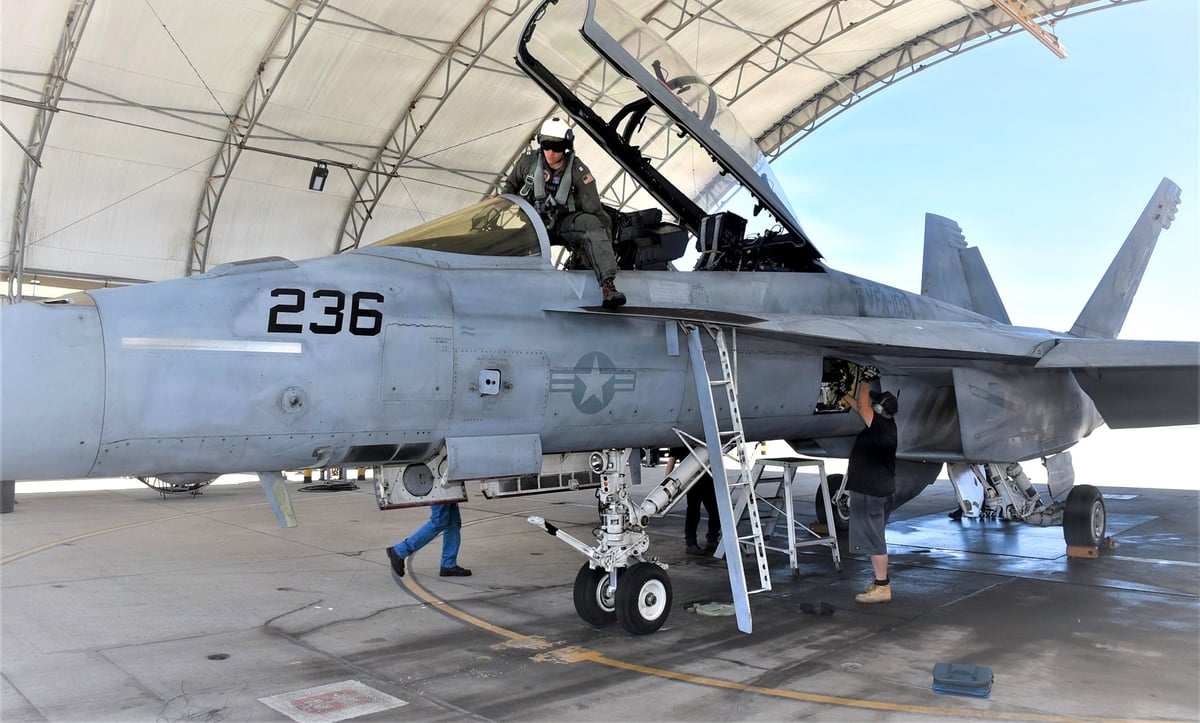
“Our goal is to put capability directly into the hands of the Fleet,” says Rear Adm. Todd Evans, commander of NAWCAD. “By simplifying a complex repair so it can be done forward, our engineers would get aircraft back in the fight faster — it’s a smart solution that makes our squadrons more self-sufficient and directly improves operational readiness.”
While the Navy did not disclose the printer model, manufacturer, or exact additive manufacturing process, the repair method centers on 3D printed composite patches designed for forward-deployed aircraft maintenance. The continuous-fiber composite printing category, includes systems from companies such as Markforged, Continuous Composites, CEAD, and Impossible Objects.
The project has already passed laboratory and ground testing, with flight testing on operational aircraft planned for this summer. Those trials will be a key step in proving whether the printed repairs can meet the safety and durability requirements of real-world flight operations.
A major enabler is the Navy’s existing additive manufacturing footprint. According to the Navy, 3D printers are already installed at 22 maintenance sites around the world, creating the possibility of carrying out repairs closer to deployed units rather than relying on a long supply chain.
Composite aircraft structures offer strength and weight advantages, but they can be harder to repair than traditional aluminum components. That makes the Navy’s patch-based approach especially notable: rather than waiting for full replacement panels or specialized depot work, maintainers could assess damage, print a tailored repair patch, and apply it directly to the aircraft using validated procedures and quality checks.
For additive manufacturing, the test is another example of 3D printing shifting from prototyping and tooling into operational maintenance. The US Navy has also been expanding additive manufacturing for shipbuilding and sustainment, including 3D printed metal components installed on major naval platforms and parts produced to avoid long procurement delays.
The broader appeal is clear: in military aviation, every day an aircraft sits awaiting parts is a readiness problem. Distributed 3D printing cannot replace the full aerospace supply chain, especially for flight-critical structures that require strict qualification. But for approved repairs, particularly those involving hard-to-source or time-sensitive components, additive manufacturing could give crews a faster and more flexible option.
If the F/A-18 flight tests are successful, the Navy’s composite patch process could become a practical model for forward-deployed aircraft repair, one where the most important spare part is not sitting in a warehouse, but printed where it is needed.
You May Also Like:

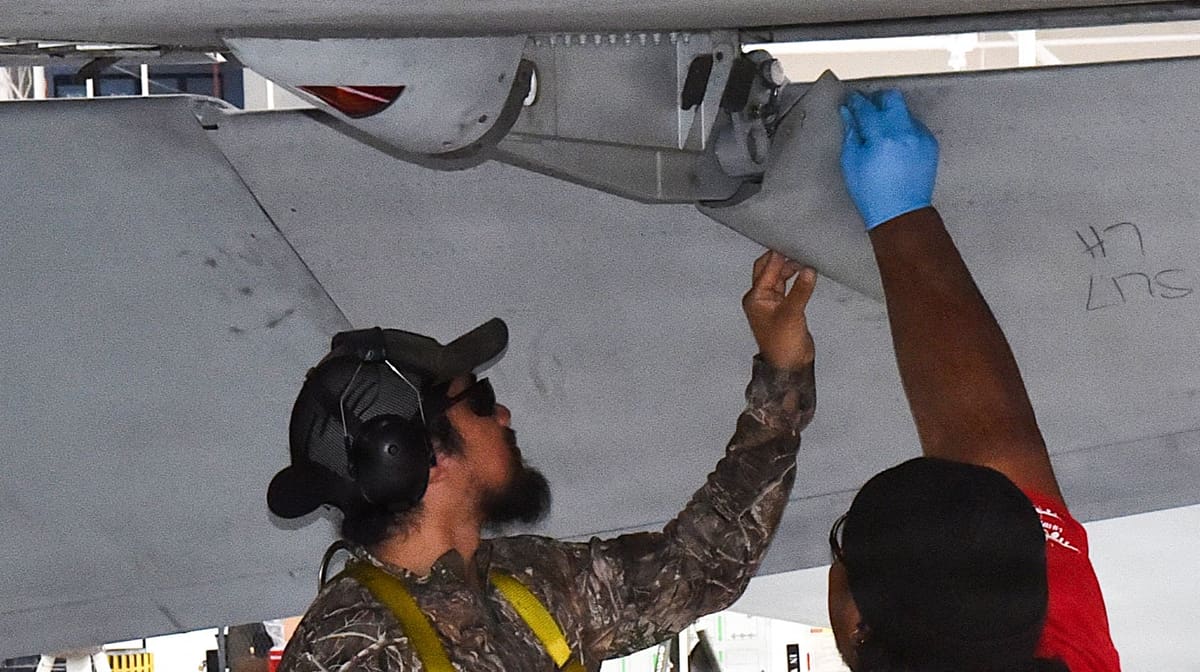
Lead image caption: Artisans at Fleet Readiness Center Southwest in San Diego work on the wing slat of an F/A-18 Super Hornet. The facility is partnered with the Naval Air Warfare Center Aircraft Division to pioneer a new repair process using 3D-printed composite patches, a technology intended to cut maintenance times in half and get aircraft back to the fleet faster (Source: U.S. Navy)
License: The text of "Bypassing the Supply Chain: US Navy 3D Prints Patches to Fix Jets 50% Faster" by All3DP Pro is licensed under a Creative Commons Attribution 4.0 International License.