Beyond the Figure: How Flashforge’s CJ270 & Creator 5 Pro Can Bring a Whole Scene to Life

From full-color characters to multicolor scenery and functional accessories, desktop material jetting and FDM printing can tackle different parts of the same creative project.
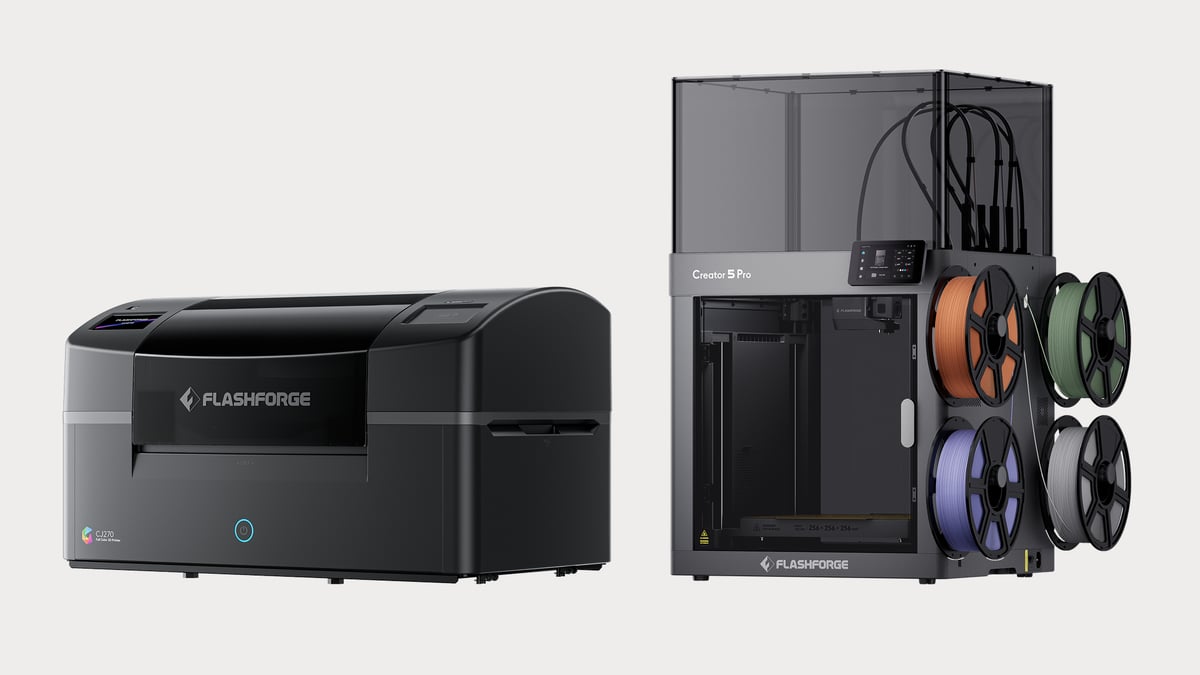
Flashforge brings two complementary technologies to desktop color 3D printing with the $849 Creator 5 Pro and the $3,999 CJ270. The Creator 5 Pro features four independent FDM toolheads for high-speed multicolor and multi-material production, while the CJ270 uses full-color material jetting to reproduce textured digital models in over 10 million color combinations, with a rated minimum layer thickness of 7 µm.
For makers, custom-product sellers, and small design studios, the two printers can tackle different parts of the same project, combining detailed full-color models with scenery, display structures, and functional accessories.
Start with Color: Creating Detailed Characters with the CJ270
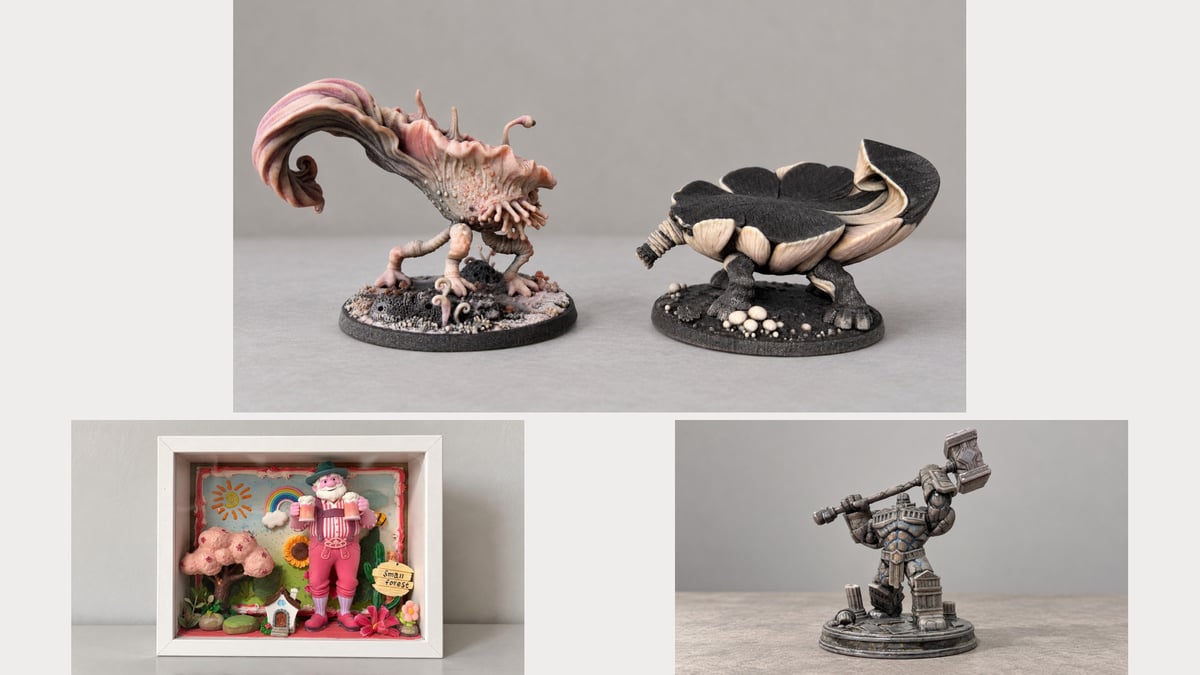
For a collectible figure, a personalized pet model, or a tabletop character, much of the appeal lies in the surface: skin tones, markings, clothing textures, and subtle color transitions.
The CJ270 takes that information from a model’s color and texture data. Seven printheads deposit cyan, magenta, yellow, black, white, and clear photopolymers, plus water-soluble support material. A built-in planarizer levels the deposited, uncured material before UV light cures each layer, helping maintain consistent layer thickness.
Flashforge specifies more than 10 million color combinations and a rated minimum layer thickness of 7 µm. White material provides a base for opaque color, while clear material allows transparent or translucent effects, depending on the model’s geometry and thickness.
For creators who would otherwise paint every detail by hand, this brings much of the color work into the printing process. Support removal and any additional finishing still need to be considered, but the printed piece already carries its intended color.
Build the Scene: Multi-Material Printing with the Creator 5 Pro
The figure is one element. The rest of the project may call for a different approach.
The Creator 5 Pro offers a 256 x 256 x 256 mm build volume, compared with the CJ270’s 180 x 120 x 100 mm. This gives makers more room for display bases, terrain sections, larger props, or batches of smaller accessories.
Its four independent FlashSwap toolheads keep separate filaments loaded, which allows a print to combine up to four colors or materials. Switching toolheads avoids the shared-nozzle flushing associated with some multicolor FDM systems.
For a display project, that could mean a base with contrasting lettering, a rigid holder with flexible contact pads, or scenery made from several filament colors. Beyond display work, the same machine can produce workshop fixtures, enclosures, and functional prototypes.
The Creator 5 Pro also features active chamber heating up to 65 °C for suitable materials. Material selection and combinations still depend on the part’s requirements and printing conditions. This gives creators options for producing both decorative elements and the functional components needed to develop and assemble a project.
Bring It Together: One Project, Two Printing Workflows
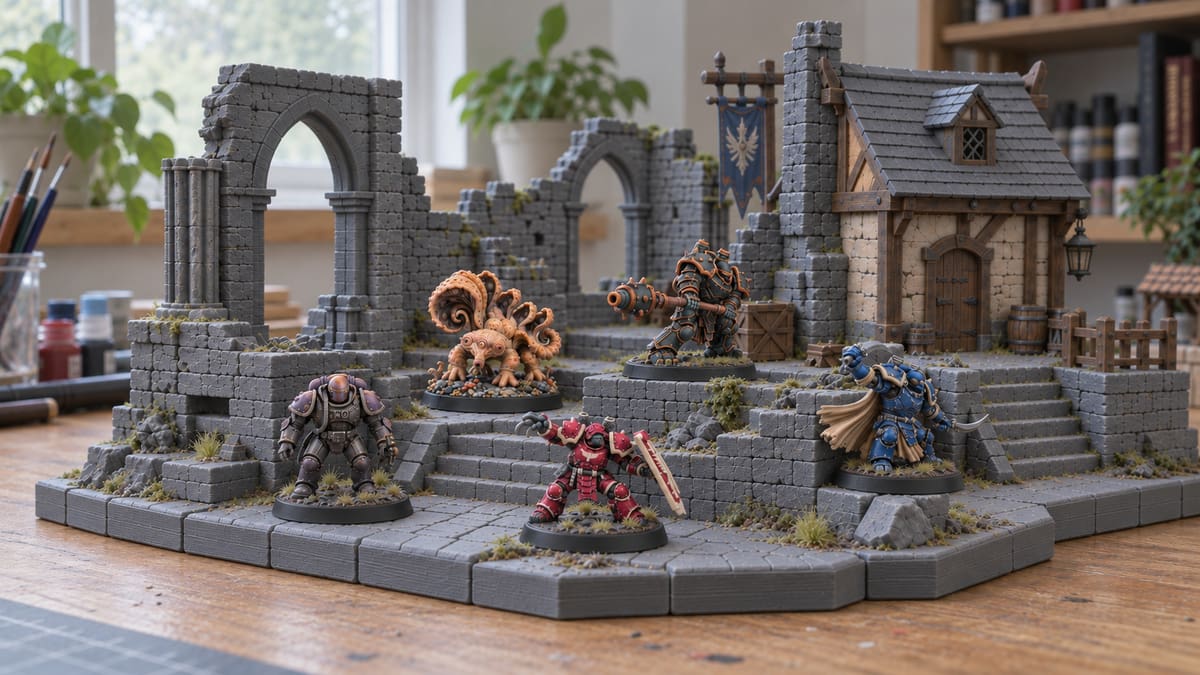
A tabletop scene offers a straightforward example. The CJ270 could produce a character with detailed skin tones, clothing textures, and color transitions, while the Creator 5 Pro handles terrain, architectural elements, and a larger display platform. Contrasting filaments could add signs or decorative details to the surrounding scene.
For a personalized pet display, the CJ270 could reproduce the animal’s markings and eye color. The Creator 5 Pro could build a custom frame, a nameplate, or a mounting structure sized for the finished piece.
Product designers could divide work in a similar way. A full-color appearance model printed on the CJ270 could communicate graphics and surface details during a review, while the Creator 5 Pro would produce a separate enclosure prototype, assembly fixture, or presentation stand.
These workflows begin with the same question: What does each component need to do? Color reproduction may drive the choice for one part, while dimensions, flexibility, or structural requirements can determine how another is made.
Where separately printed parts connect, dimensions and clearances need to be planned together. Fit checks can help establish those connections before the final pieces are assembled.
Specs at a Glance: Creator 5 Pro & CJ270
The Hybrid Studio: Integrating High-Speed FDM with Material Jetting
For makers, custom-product sellers, and small design studios, the Creator 5 Pro and CJ270 offer complementary capabilities for projects that combine appearance and function. Each can serve a distinct workflow on its own, while together they give creators more options for developing a complete finished piece.
The Creator 5 Pro gives makers and workshops speed, scale, and a broad material list at an accessible price. The CJ270 brings full-color material jetting to the desktop for creators whose work depends on realistic color and fine surface detail. Learn more on Flashforge’s official website.