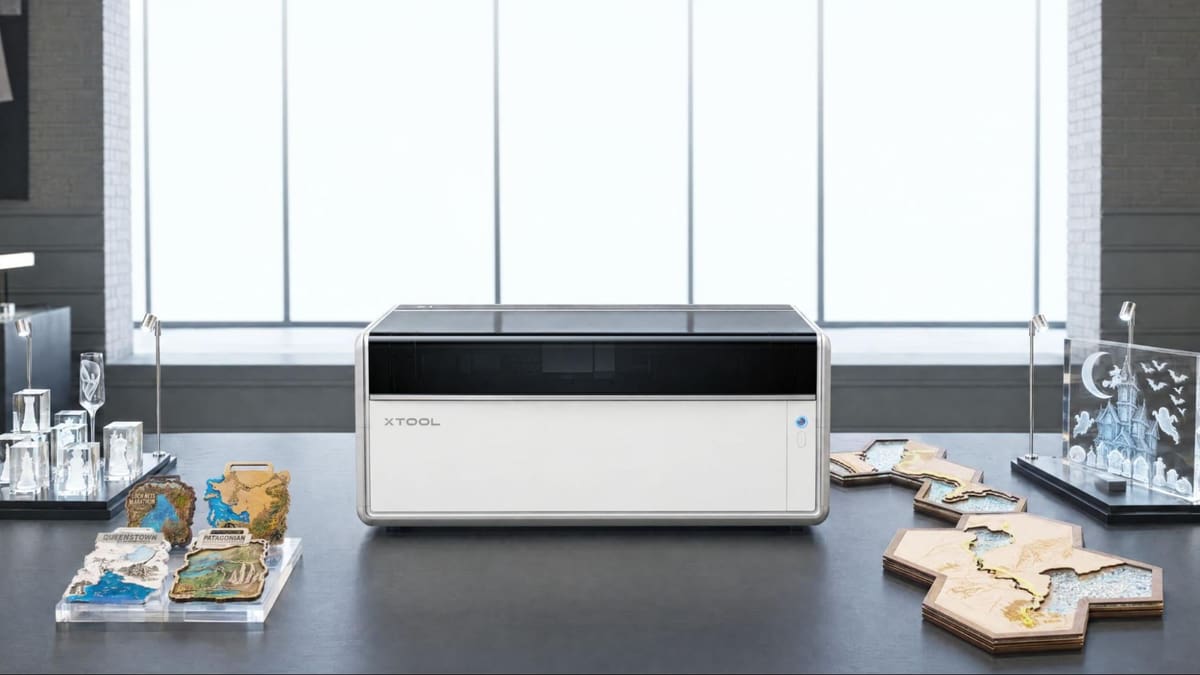
Beyond 3D Printing: xTool X1 Expands the Maker’s Toolkit with Five Laser Technologies

Supporting five modular laser technologies alongside Hybrid Motion speed and triple-camera automation, the xTool X1 expands maker workshops beyond 3D printing into multi-material fabrication.
A 3D printing project often begins with a digital model. A laser project can begin with something already on your desk: a wooden box, an acrylic sheet, or a metal keepsake waiting for a personal touch. Both turn ideas into physical objects, but their different starting points open different creative possibilities.
The xTool X1 brings that second route into an expandable production platform. With five laser technology options, Hybrid Motion processing, and automated setup, it is designed for makers and small businesses whose next project may require a different material, finish, or production method.
Different Processes, Complementary Strengths
Common filament and resin printers build objects layer by layer, making them useful for complex geometry and custom fittings. Laser cutters shape existing stock, while engraving adds graphics or identification to an object’s surface. For many users, the appeal is making an everyday item their own, whether that means a personalized gift or a branded product.
The processes also work well together. An electronics enclosure could combine printed mounting brackets with laser-cut acrylic panels and engraved control labels. An architectural model could pair printed details with cut sheet components. The choice depends on geometry, material, finish, and quantity; neither process is universally faster or more economical.
For a business, that flexibility extends beyond making a shape. Customers may want the same artwork on wood, metal, and glass, each requiring a different interaction between light and material. Expanding into laser processing therefore involves choosing the right source as well as the right design. This makes material versatility a practical business consideration. A studio taking varied personalization orders needs to match each job to an appropriate process, while keeping setup, operator training, and the movement of workpieces manageable.
Five Laser Options, One Expansion Path
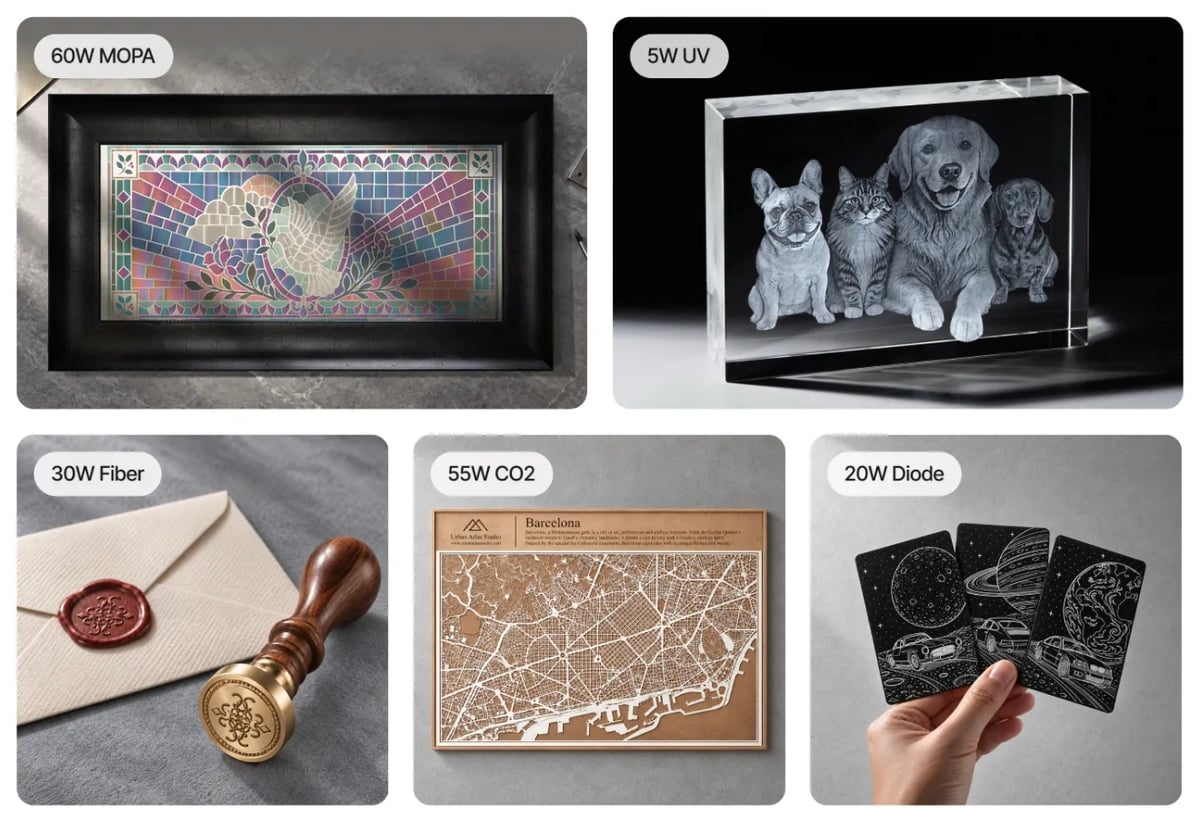
X1’s modular architecture addresses another challenge: different materials often call for different laser sources. Every X1 includes a 55W CO₂ laser for cutting and engraving materials such as wood, acrylic, and leather. Adding the 20W Diode Galvo Module enables high-speed engraving and provides the foundation for expansion through xTool’s Laser Swap technology.
Optional sources include 30W fiber for metal marking and deep engraving, 60W MOPA for more advanced metal applications including color engraving, and 5W UV for fine-detail work and glass customization. These are configuration choices, with one external UV, MOPA, or fiber source connected at a time. The platform supports five laser technologies across its configurations, rather than operating all five simultaneously. See xTool’s configuration guide.
For a workshop, that creates a staged investment path. A business could begin with wooden gifts and acrylic signage, add faster engraving as order volumes increase, and introduce specialized metal or glass work later. Sharing a platform can reduce the need for separate machines and keep more of the workflow within a familiar system.
Bringing Speed to a Larger Workspace
Laser systems have traditionally presented a trade-off: gantry machines offer larger work areas, while galvo systems steer the beam rapidly with mirrors across a more limited field. X1’s Hybrid Motion system synchronizes gantry movement with galvo scanning to bring those strengths together.
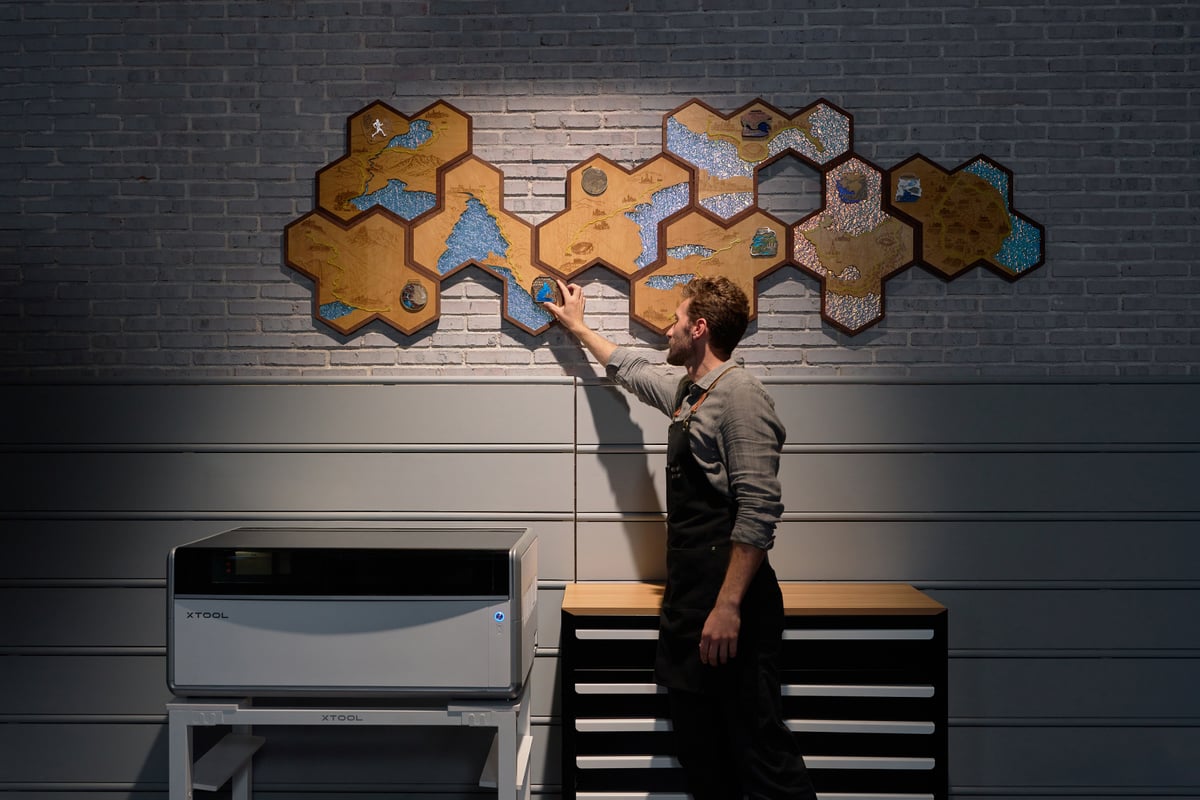
Making that combination work requires coordinated motion, optical alignment, and structural stability. X1 is designed for galvo processing speeds of up to 6,000 mm/s across a larger workspace. Actual job times depend on the design, material, settings, and required result.
The practical benefit is flexibility across detailed graphics, larger pieces, and batches of smaller items. With the CO₂ and diode galvo configuration, users can also combine cutting and fine engraving without moving the workpiece between separate machines, reducing repositioning steps.
X1’s UniCast construction uses integrated die-cast aluminum structures to provide rigidity and reduce the number of assembled joints. That engineering supports the motion system: vibration and small alignment errors can affect engraving quality, particularly when fast local scanning is combined with movement across a larger workpiece.
From Setup to Repeat Production
Anyone familiar with bed leveling and first-layer tuning knows that useful automation removes friction between a design and a finished part. Laser workflows have their own preparation tasks, including positioning artwork and accounting for material height.
X1’s Automated Creation System uses a triple-camera arrangement to simplify positioning, previews, and height-related setup. The purpose is to reduce manual preparation so users can spend more time developing products and managing orders. For repeat production, those workflow improvements can matter alongside headline processing speed.
For a workshop already using 3D printing, X1 offers an expansion path into different materials and finishes. Printed geometry, laser-cut components, and personalized surfaces can each contribute to a finished product. As projects evolve, the ability to add specialized laser capabilities gives the workshop more ways to respond without starting again with a separate machine for every application.