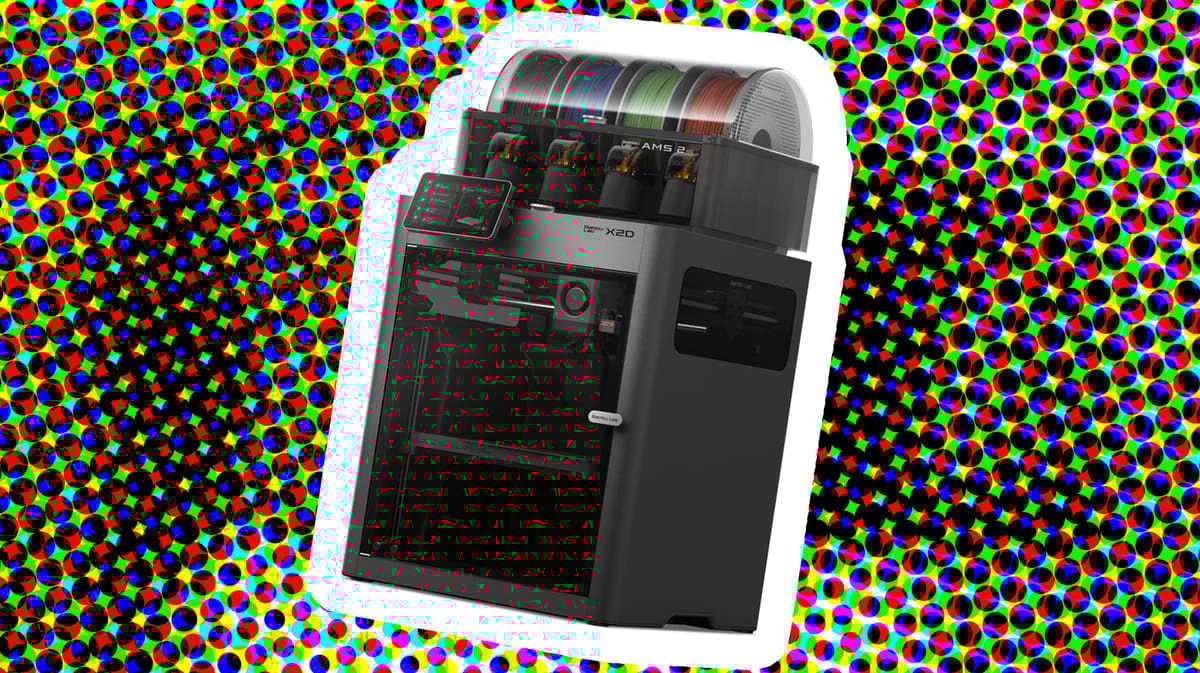
Bambu Lab X2D Brings Dual Extrusion & Heated Chamber for Half the H2D’s Price

Bambu Lab disrupts its own lineup with the new $649 X2D, packing pro-tier thermal control and nozzle switching into a compact frame that effectively makes high-end engineering far more accessible.
Bambu Lab just launched the X2D, the successor to the recently sunset X1 series. At $649, the X2D introduces many of the feature advantages of the ~$1,750 H2D, including dual-nozzle printing, for less than half the price.
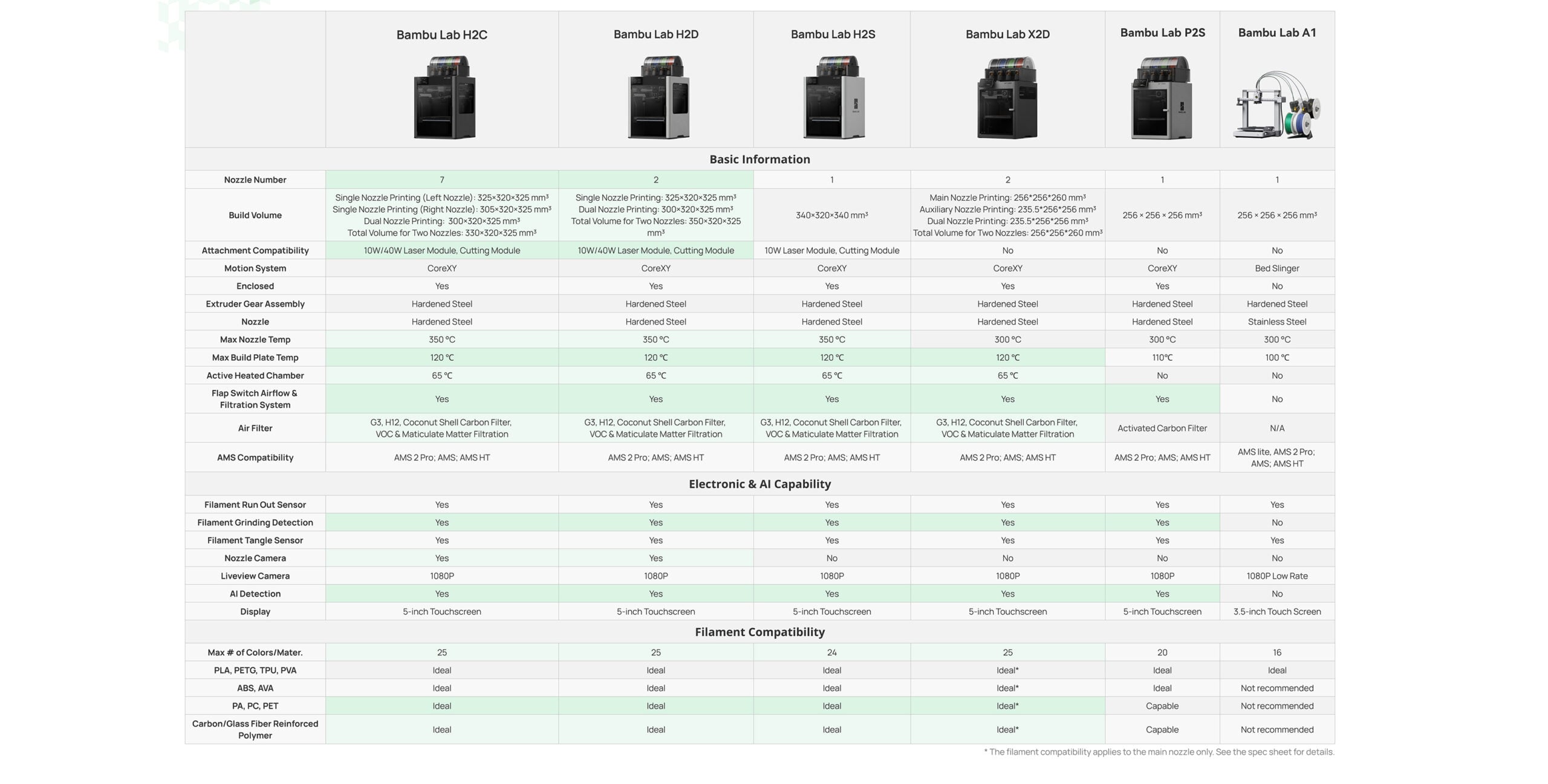
Within the Bambu Lab printer lineup, the X2D is positioned between the P2S and the H2 series, meaning it’s smaller than the H2S, but unlike the P2S, it has a heated chamber and more robust air filtering designed to better manage printing with materials like carbon-fiber infused nylon and PC.
While having almost the same build volume as the P2S – 256 x 256 x 256 mm – the X2D features a dual nozzle-switching arrangement like the H2D, achieving the same functionality of its more expensive peer with a different mechanical system. Like with H2D (and H2C), the end result is clean, purge-free printing of secondary or support materials.
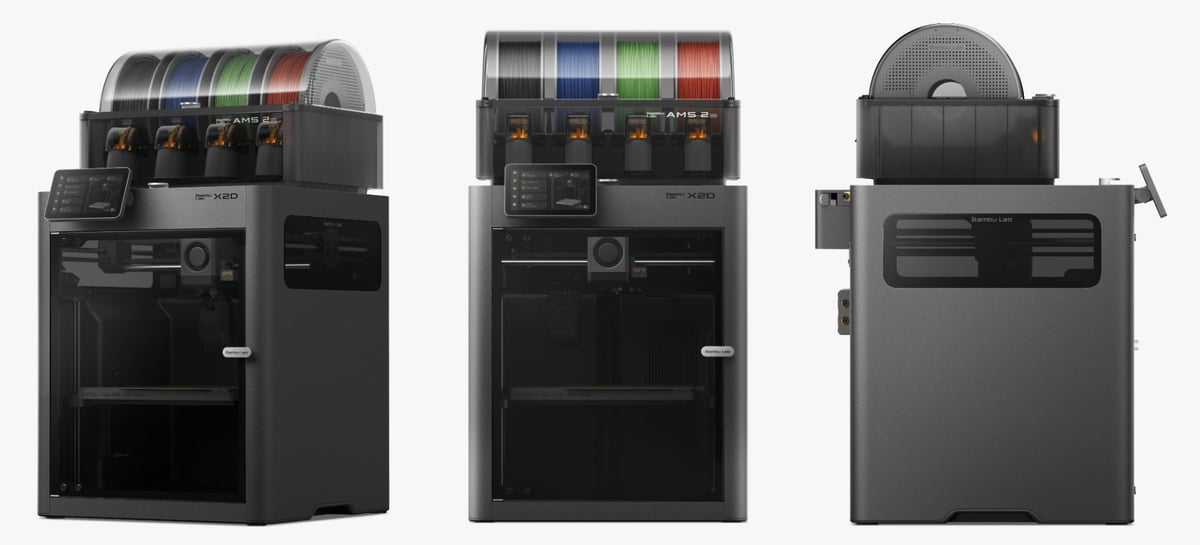
The left nozzle employs a direct drive configuration with the motor mounted on the toolhead. The right nozzle uses a Bowden configuration with the motor located at the rear of the printer.
Bambu Lab says this system enables the primary nozzle to print a model while the secondary nozzle prints supports using different materials. But really, the setup seems more focused to enable a smaller, lighter toolhead that fits into the X’s dimensions and structure without compromising the build volume.
Using both nozzles in a print shrinks the available build volume to 235.5 x 256 x 256 mm in total.
New Thermal & Motion Control
To enable more predictable and reliable printing with materials that typically require better heating and cooling control, Bambu Lab bumped up the build plate temperature on the X2D to 120ºC (the X1 series was 110ºC) and added what it calls an “intelligent thermal system”.
This new thermal systems has two specific settings:
- Cool Mode: Provides fresh air circulation for PLA bridges and overhangs.
- Heat Mode: Actively heats the chamber up to 65°C to support engineering materials such as ABS, ASA, and nylon.
At 300ºC, the maximum nozzle temp of the X2D is lower than the H2 series.
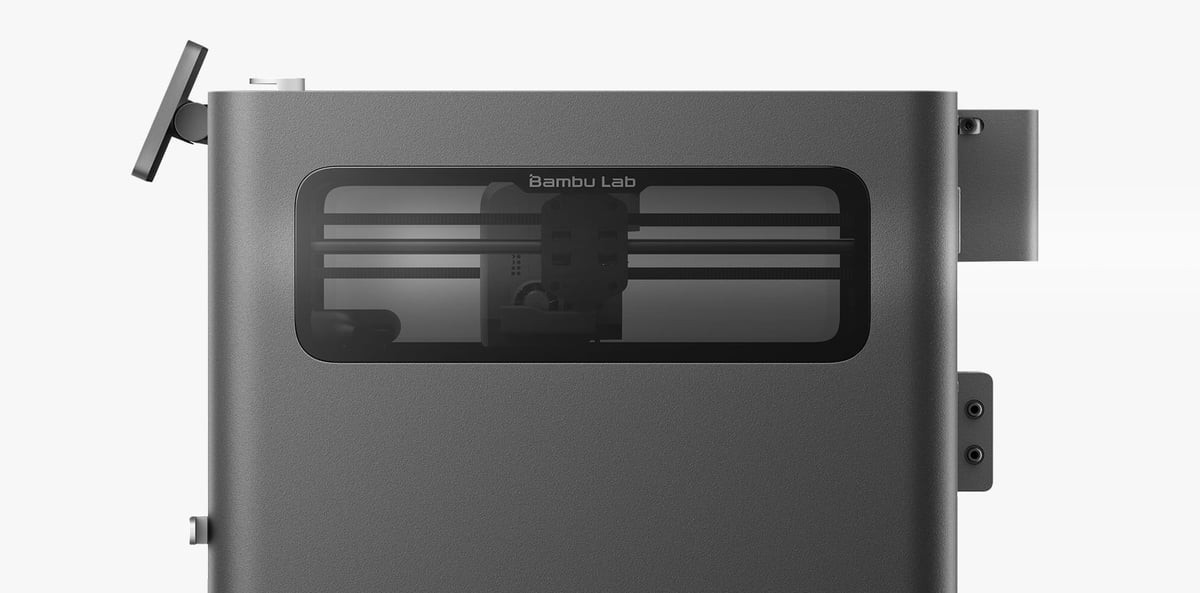
A release for the X2D indicates that the company’s vision encoder plate will be available for the printer. An optional purchase, the plate lets the printer perform and advanced motion calibration routine for tighter tolerances printing across the entire print bed, increasing the possible precision up to 50 microns. Overall, this release pitches the X2D squarely at professional and more demanding usage, with more optimal performance across technical material types and the possibility for higher accuracy prints.
Better Clog & Failure Sensing
One new feature we’re excited to get our hands on is the “Permanent Magnet Synchronous Motor ” in the X2D that serves as a high-precision sensor to monitor the physical state of the extrusion process in real time.
By sampling torque and position at a rate of 20,000 times per second, the system can identify minute fluctuations in the electrical current required to push the filament. Bambu Lab says this high-frequency feedback loop allows the printer to distinguish between the normal resistance of melting plastic and the specific mechanical signature of a jam or a clogged nozzle.
Traditional stepper motors often continue to “fire” even when the filament is stuck, leading to “air printing” where the head moves without depositing material. In theory, the PMSM’s ability to sense torque allows the X2D to pause the print immediately upon detecting an anomaly, preserving the integrity of the project and protecting the hardware from damage. This level of sensitivity goes beyond what Bambu Lab’s spaghetti sensor could detect.
On top of the print head monitoring, the new “Dynamic Flow Calibration” system monitors the extrusion motor, hotend, nozzles, and filament to compensate for deviations automatically before each print, Bambu Lab says.
Full Ecosystem Integration
As you’d expect, the X2D is integrated with all existing software and community platforms, including Bambu Studio, Bambu Handy, MakerWorld. It’s compatible with the AMS, AMS Pro, and AMS HT. The maximum number of filaments per print is 25.
The Bambu Lab X2D is available now from the Bambu Lab webstore. The standard 3D printer is $649, or available with the AMS 2 Pro as the X2D Combo for $899.
You May Also Like:
License: The text of "Bambu Lab X2D Brings Dual Extrusion & Heated Chamber for Half the H2D’s Price" by All3DP is licensed under a Creative Commons Attribution 4.0 International License.