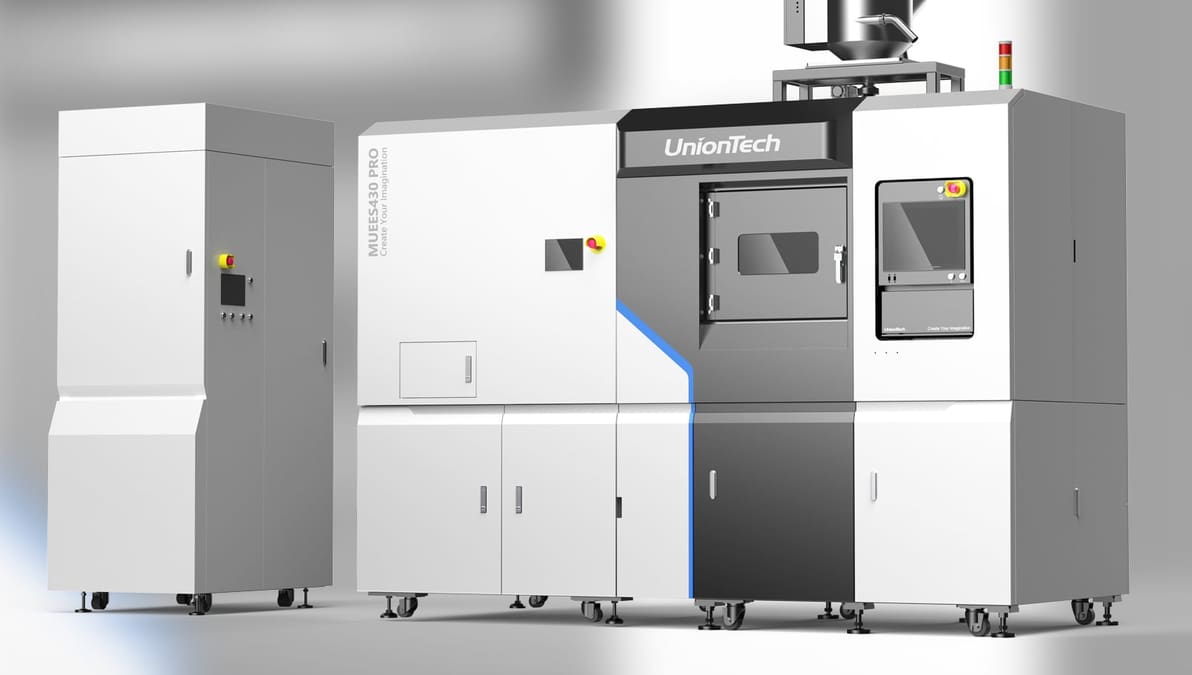
A 40,000-Hour Life & 4 Lasers: A Look at UnionTech’s New Metal LPBF the Muees430 Pro

UnionTech’s new quad-laser system promises a 20% efficiency leap for industrial batch production, but how does it stack up to the flood of four-laser systems on the market?
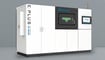
UnionTech just unveiled the Muees430 Pro, a quad-laser metal laser powder bed fusion printer aimed squarely at the high-stakes world of industrial batch production. While the manufacturer claims boosted recoating efficiency and a notable 40,000-hour service life, the real test will be how this four-laser architecture manages the complexities of long-term thermal stability and part consistency.
Positioned as a solution for everything from automotive nozzles to titanium medical implants, the Muees430 Pro, enters a crowded market where high-throughput promises are easy to make when manufacturers world wide seek to sustain in a 24/7 factory environment.
UnionTech at 2026 Rapid + TCT Booth 1865
Quad-Laser Architecture: Balancing Speed and Precision
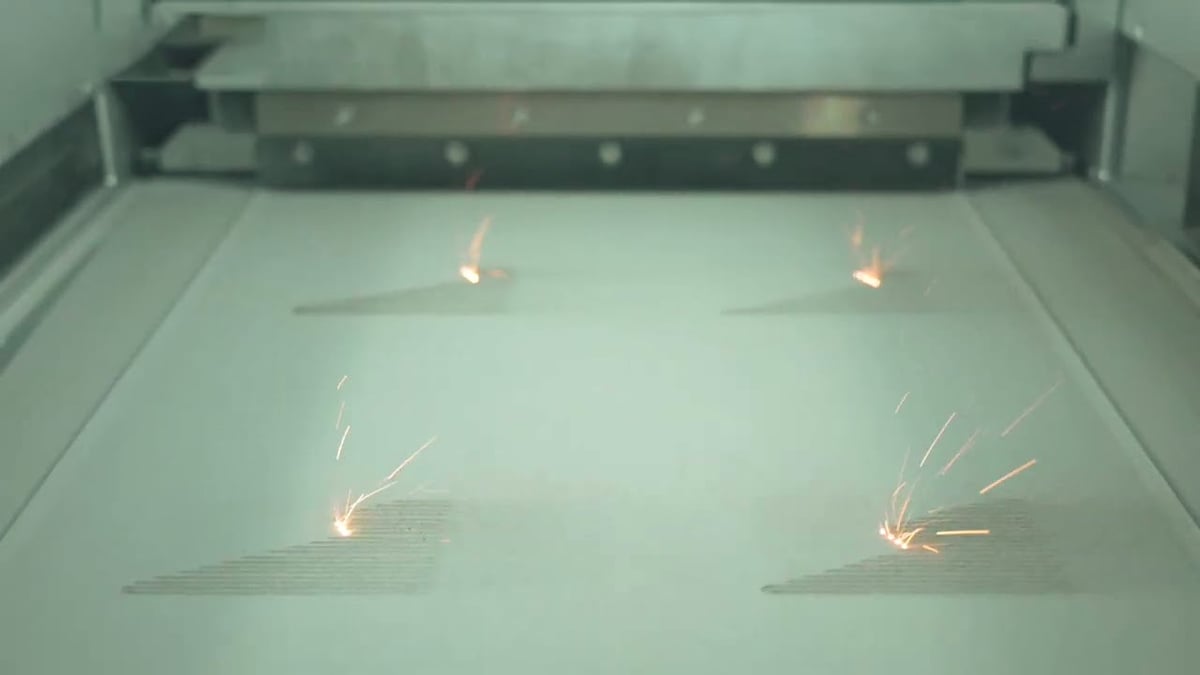
The Muees430 Pro features four 500W ytterbium fiber lasers (wavelength of 1060-1080 nm). The optical system employs F-theta lenses and high-speed galvo scanners, achieving scan speeds up to 6 m/s and jump speeds of 18 m/s.
The bidirectional recoating system is reported by UnionTech to increase efficiency by 20% compared to unidirectional setups. The system’s atmosphere management reaches its oxygen threshold in approximately ten minutes from a cold start using a sintering-plate filter design.
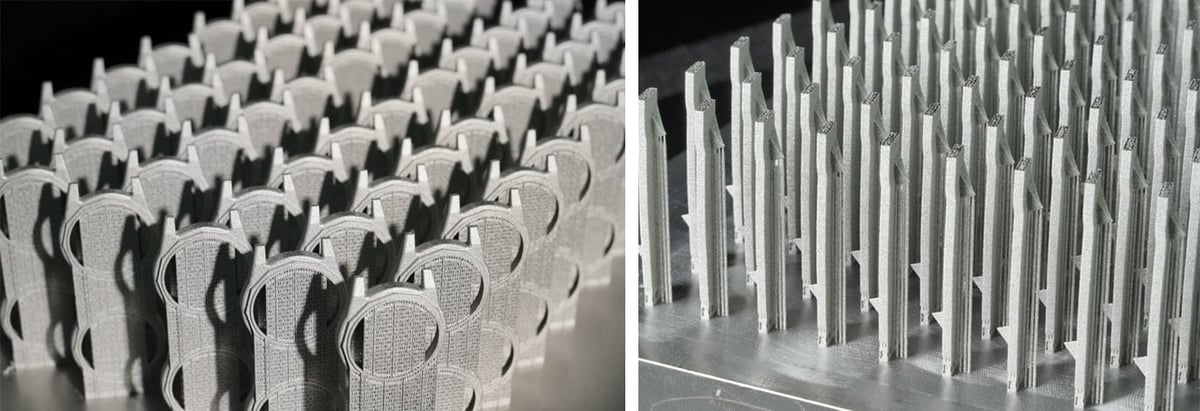
UnionTech reports the machine completed a batch of 116 stainless steel 316L watch cases (each 42 x 7 x 53 mm) in 35.4 hours.
UnionTech rates the Muees430 Pro service life at over 40,000 hours, a number it says comes from sealed recirculation architecture and a dual fixed sealing system on the recoating rail, which the company states extends maintenance intervals by a factor of three over previous designs.
Airflow inside the build chamber follows a optimized path, the company says, which is designed to maintain consistent spatter management and uniform atmospheric conditions across the full print area. Consistency at that level matters most when the machine is running batch production jobs, which is precisely the application profile UnionTech is targeting.
The Digital Workflow: Managing the Quad-Laser Power
To handle the complexity of four lasers, the Muees430 Pro relies on a proprietary software ecosystem integrated into the UT ONE platform:
- Preparation (Polydevs Pro & BPC): Tools for part orientation, support generation, and slicing.
- Management (MSCON): The primary machine controller that coordinates the four lasers and the bidirectional recoating system.
- Quality Assurance (Intelligent Monitoring): A real-time system designed for data traceability—critical for industrial certification in aerospace and medical fields.
The New Norm of Laser Power
It wasn’t long ago that quad-lasers were a novelty. Now, they’re relatively standard. It the market of quad-laser metal LPBF machines, the closest direct competitors to the Muees430 Pro are the Farsoon FS422M and EOS M 400-4. The Renishaw RenAM 500Q is similar in laser count but smaller, while the MetalFab 420K and AMCM M 4K move into a more automated or higher-power tier. Many more perimeters , notably price, come into play when comparing systems, but competition in this niche is ramping up in the multi-laser niche with 10-, 12-, and even 16-laser systems available.
This is not an exhaustive list of quad-laser metal LPBF 3D printers.
Muees430 Pro Specifications
Safety & Certifications
ISO 13849-compliant safety design.
UPS power backup to protect builds during power interruptions.
CFD-optimized airflow for spatter management and atmospheric uniformity.
You May Also Like:

License: The text of "A 40,000-Hour Life & 4 Lasers: A Look at UnionTech’s New Metal LPBF the Muees430 Pro" by All3DP Pro is licensed under a Creative Commons Attribution 4.0 International License.