3D Printer Lubricants: What Actually Goes Where & What Never Should

The right 3D printer lubricant improves the performance and lifespan of your printer, the wrong one can muck up the works. Here's the difference.
A well-maintained 3D printer is a happy 3D printer, capable of sending out flawless prints with precision and ease. One of the most important aspects of 3D printer maintenance is proper lubrication of moving parts. But that could mean grease, oil, or printer-specific products, plus which goes where?
Grabbing whatever grease or oil is on the shelf can sometimes do more harm than good, with different parts requiring different treatment. The grease that’s right for a lead screw will gum up a smooth rod, and on some printers the “correct” answer is no lubricant at all.
Maybe you’ve misplaced the tiny tube of lubricant that came with your 3D printer, run it dry, or simply want a cleaner, longer-lasting, or easier-to-find alternative. Whatever the reason, there are plenty of suitable lubricants out there, but not every product is right for every rail, rod, or lead screw.
Picking well comes down to matching viscosity to the part (thin oil for continuous motion, thick grease for heavy, slow contact), checking it holds up near your hotend and bed temperatures, and making sure it’s easy to apply and wipe off cleanly without attracting the dust that shortens a printer’s life.
In this guide, we’ll look at the most useful options for 3D printer maintenance, what each type is best suited to, and what to check before swapping out the lubricant recommended by your printer’s manufacturer. We cover what goes where, how your printer’s own manufacturer’s rules override the generic advice, and finally the products worth having on hand once you know what to look for.
3D Printer Grease vs Oil vs Dry Lube: Which Parts Need What
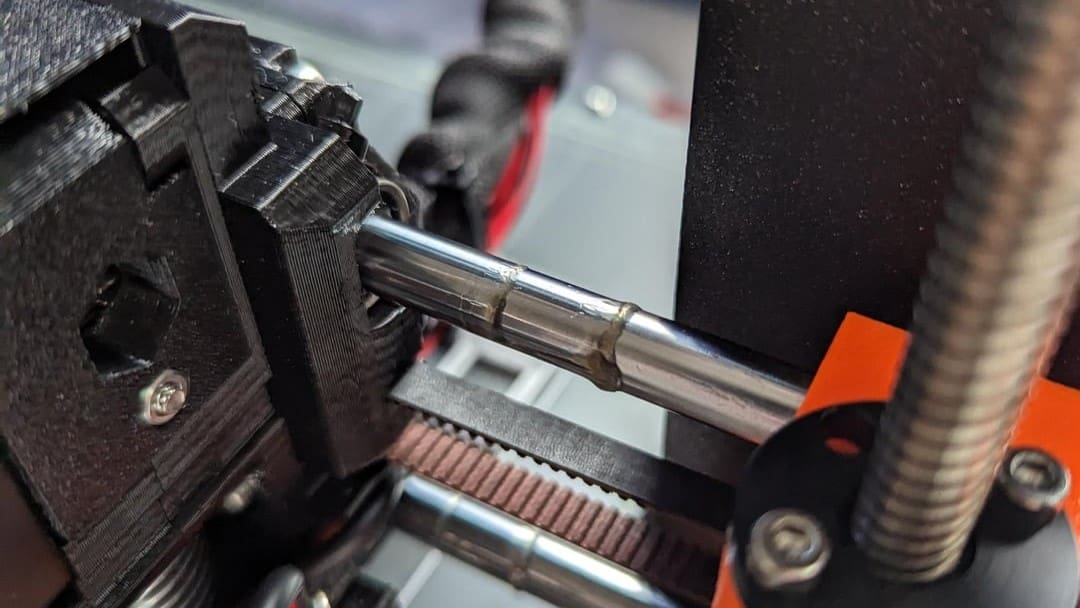
Not every moving part on a 3D printer wants the same treatment, and some don’t want any lubricant at all.
- Grease is the thick, clingy option for heavy, slow-moving contact like lead screws and ball bearings.
- Oils are thinner and faster, suited to lightly loaded, continuously moving parts like smooth rods.
- Dry (PTFE-based) lubricants leave no wet residue, which matters wherever filament dust or grit would otherwise stick, making them ideal for drive gears.
Some manufacturers reference an NLGI grade when specifying a lubricant; it’s a scale for grease consistency, not a brand or product, and different parts call for different grades. That’s worth knowing beyond just the number: if the manufacturer’s exact product is hard to find, some maintenance guides also list a generic grease at the right NLGI grade as an acceptable substitute for that part
Although some users may swear by the all-in-one general-purpose lubricant WD-40, others advise to avoid it outright. The best rule is to follow the guidance from your 3D printer manufacturer. Bambu Lab’s own maintenance documentation names the genuine WD-40 Multi-Use Product as tested and approved for some specific parts on the A1, A1 mini, and H2D. Qidi Tech recommends the WD-40 Specialists Dry Lube for Z-axis lead screws.
On the other hand, Snapmaker specifically tells users not to put standard WD-40 Multi-Use Product on printer rails. It says that the solvent-rich product can wash or dissolve factory grease out of precision bearing blocks; after the volatile portion evaporates, the remaining film may not provide the durable lubrication the bearing was designed for and can ultimately accelerate wear.
Lubricant maintenance sounds simple, and in most cases, it is. However, there are some components, that should never get any lubricant. The table below sorts that out part by part. Do not take this table as a definitive guide, as some parts are brand specific, which we will cover later.
How to Apply it
- Clean the part first. Wipe off old, hardened lubricant and any accumulated dust or filament grit — new lubricant on top of old grime just traps the grime.
- Apply a small amount. More isn’t better: excess grease is what attracts dust and can make bearings stick.
- Move the part through its full range. Jog the axis or rotate the screw by hand (with the printer powered off) so the lubricant spreads evenly along the whole contact surface, not just where you applied it.
- Wipe off the excess. Anything left sitting on the outside of a rod or rail just collects dust — it isn’t doing any lubricating from out there.
Printer-Specific Lubrication Needs
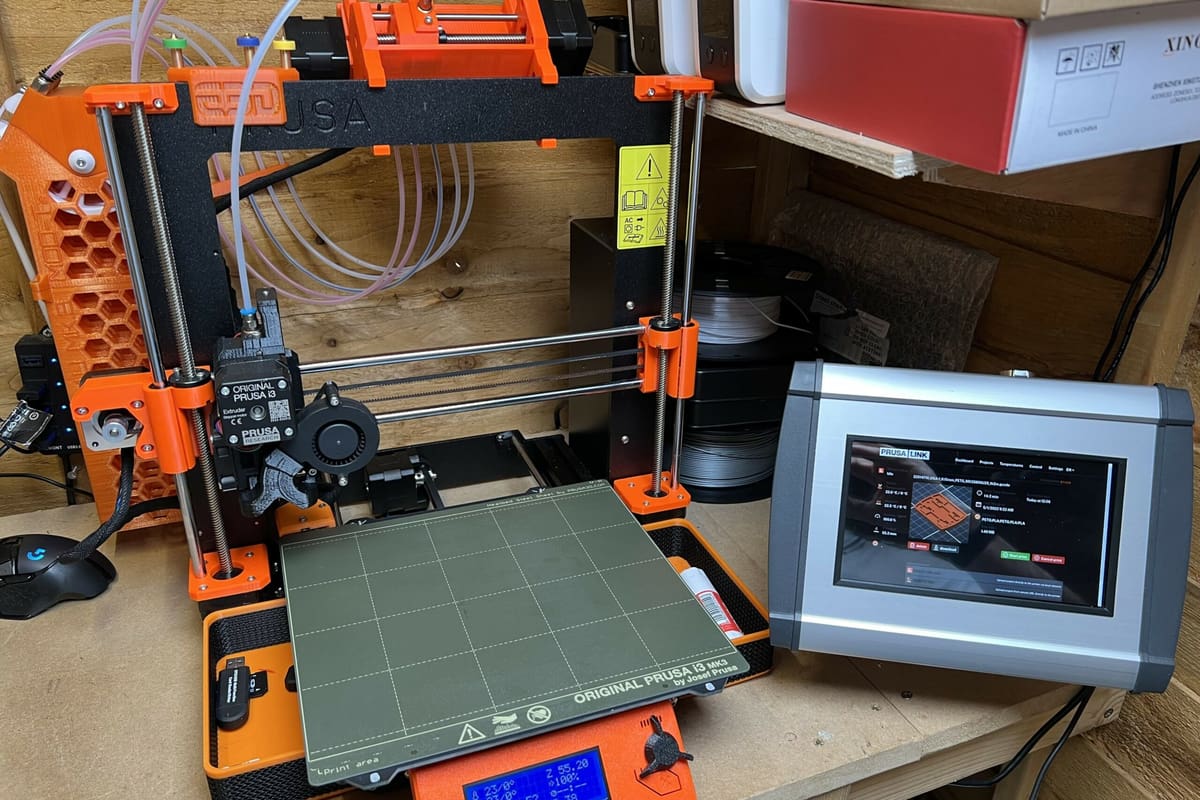
Generic advice assumes every printer is built the same way, but on some models, greasing the lead screw is exactly the wrong move, and the right on others. This can come down to a printer’s design, but sometimes certain brands have their own criteria. It then makes sense to first check your printers guidance online. We grouped printer-specific advice below to help you figure out your own printer’s needs.
Prusa Research
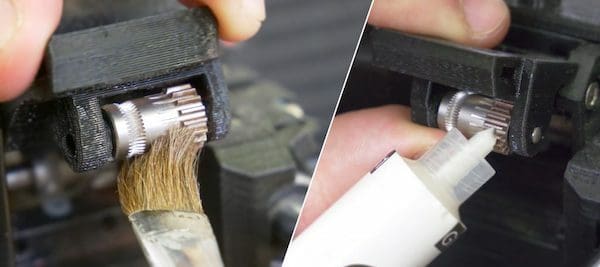
Prusa provides very detailed guidance for lubrication for each of its machines online. The guidance changes by model, sometimes sharply. On the MK4/MK3.9, the Z lead screw and its trapezoidal nut get nothing, ever. Prusa’s knowledge base is explicit: “Do not apply lubricant on the trapezoid nuts or the threaded lead screws of the Z-axis!”
Smooth rods still get a light coat of Prusa’s own lubricant roughly every 200 print-hours. The Core One flips part of that: its Y-axis smooth rods and Z lead screw do get lubricated with “Prusa Lubricant,” but the X-axis linear rail is explicitly off-limits to that ] product. Prusa states: “DO NOT use Prusa Lubricant on the linear rail!”, and needs the dedicated Microlube GL 261 lubrication set instead, applied in 0.1 mL doses every 3–6 months. The Nextruder’s primary gear and idler-shaft bearings need no lubricant on either machine.
Bambu Lab
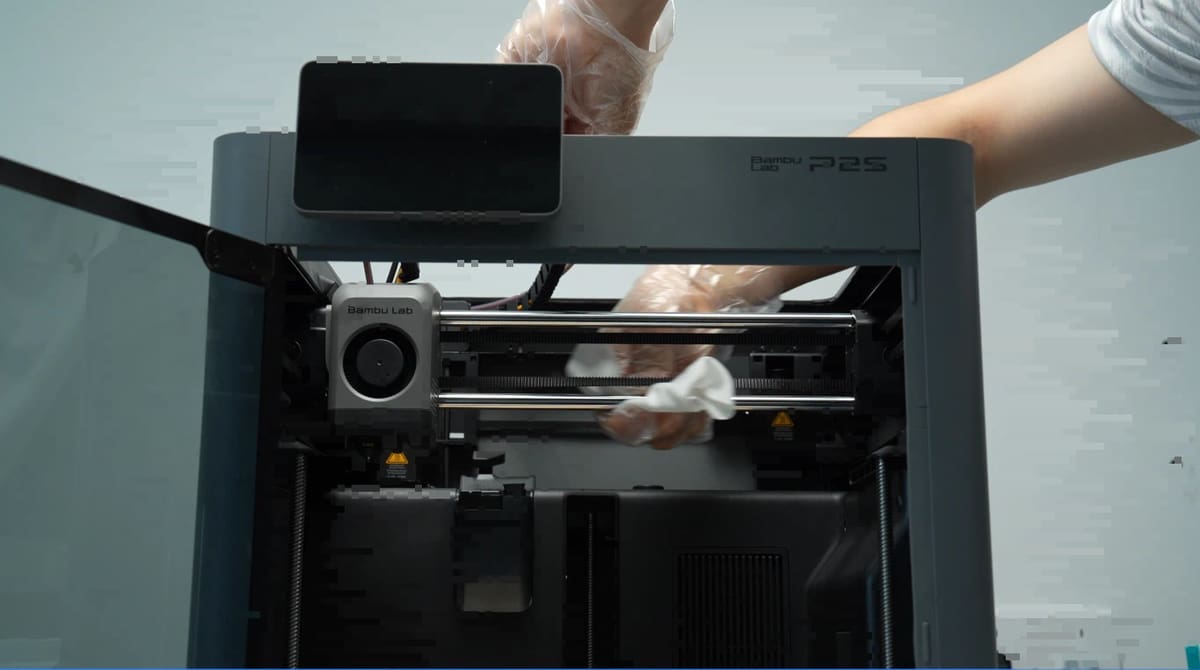
This is a brand where “which model” matters more than usual, because Bambu changed its mind about carbon-fiber rods between generations. On the X1 and P1: oil goes on the steel linear guide rails and grease is reserved for the Z-axis lead screw and for quieting belt/idler-pulley noise; and the X-axis carbon-fiber rod gets neither. Bambu’s documentation states plainly that “lubricating oil and grease absolutely cannot be used” on it.
That rule does not carry over to the current-generation P2S and X2D: Bambu dropped the carbon rod for a hollow steel one, explaining in its own FAQ that the steel rod “performs similarly to a carbon rod but offers advantages in maintenance,” since a smooth steel surface is easier to clean than carbon fiber. The lubrication rule flips accordingly: the X2D/P2S maintenance guide calls for oil (not grease) on the X and Y linear guide shafts, explicitly warning “do not apply lubricant grease” there, while the Z-axis gets grease on its three lead screws and oil on its rods and bearings.
In other words: if your Bambu printer is an X1 or P1, don’t lubricate that rod at all; if it’s a P2S or X2D, oil it like any other steel rod.
Bambu lab has its own pair of house-brand lubricants, its Bambu Lab Lubricant Grease and Oil, recommending its grease for lead screws and for quieting belt/idler-pulley noise; oil goes on linear guides, slide rails, and steel shafts as mentioned above.
The A1 and A1 mini are unrelated to this change and keep their own rule: grease is prohibited on the linear rail entirely (oil only), and Bambu has a dedicated guide recommending the genuine WD-40 Multi-Use Product, tested and approved by name for the A1 and A1 mini’s rail and lead screw, and named again for the H2D while warning that other WD-40 products (the Specialist sprays, the greases) are a different formula and aren’t covered by that endorsement.
Creality
Creality’s wiki calls for grease, not oil, on both axes it documents: the X-axis guide rails every 9–12 months and the Y-axis optical shafts every 12–18 months, with no mention of oil anywhere in the guide, and no Z lead screw guidance in this particular document. It recommends its own Creality Lubricant Grease for most of its FDM lineup, stating it is resistant to drying out.
Voron
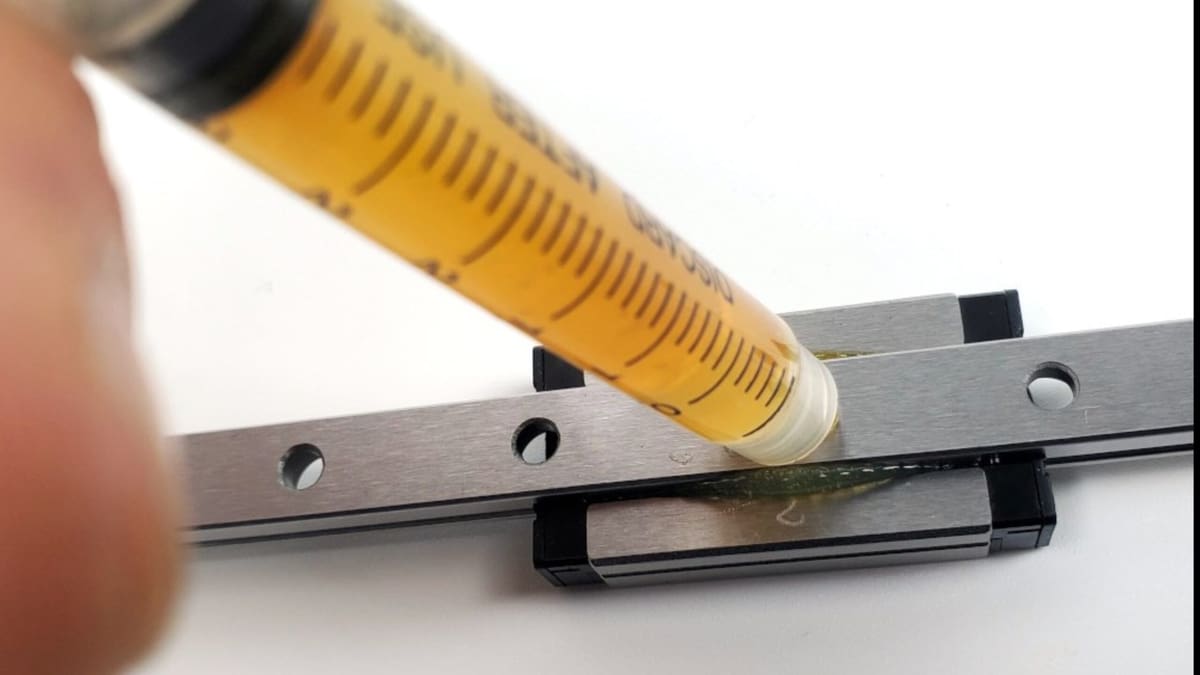
Voron is an open-source design with no manufacturer behind it, so there’s no company selling a “Voron printer,” you source the parts and build it yourself . Guidance comes from Voron Design’s docs and LDO Motors, the rail supplier most builders use. Both call for NLGI 0 or 1 grease on the MGN-style rail carriages, which is soft enough to flow into a small carriage, with a synthetic base oil and viscosity above 100 mm²/s.
Mobilux EP1 is the exact match (NLGI 1 per Mobil’s datasheet). Mobilux EP2 and Super Lube 21030 are options mentioned in Voron’s FAQ, both of which are a notch stiffer. Grease is injected into the carriage until it oozes out, then wiped clean. Extruder gears use the same grease.
Snapmaker
The J1 uses linear rails, and Snapmaker’s factory spec splits its needs by axis. For the X/Y linear guides, it recommends Tengke Grease PS2, a white lithium grease. On the Z screw, Niki FG 107M plastic-gear grease is the suggestion. If neither is available, Permatex 80345 White Lithium Grease is an easier to source substitute for both.
The U1 is a different machine with a carbon-fiber X rod, and Snapmaker’s rule for that rod matches Bambu’s exactly: “Do not apply oil or grease to carbon rods.” Its other shafts and its lead screw take a light lithium grease, NLGI 2–3. Applicable to both of the machines, Snapmaker’s own guidance explicitly warns against WD-40: “It is a rust remover and penetrating agent, not a lubricant. It dissolves existing grease, attracts dust, and can cause motion components to seize”.
Elegoo
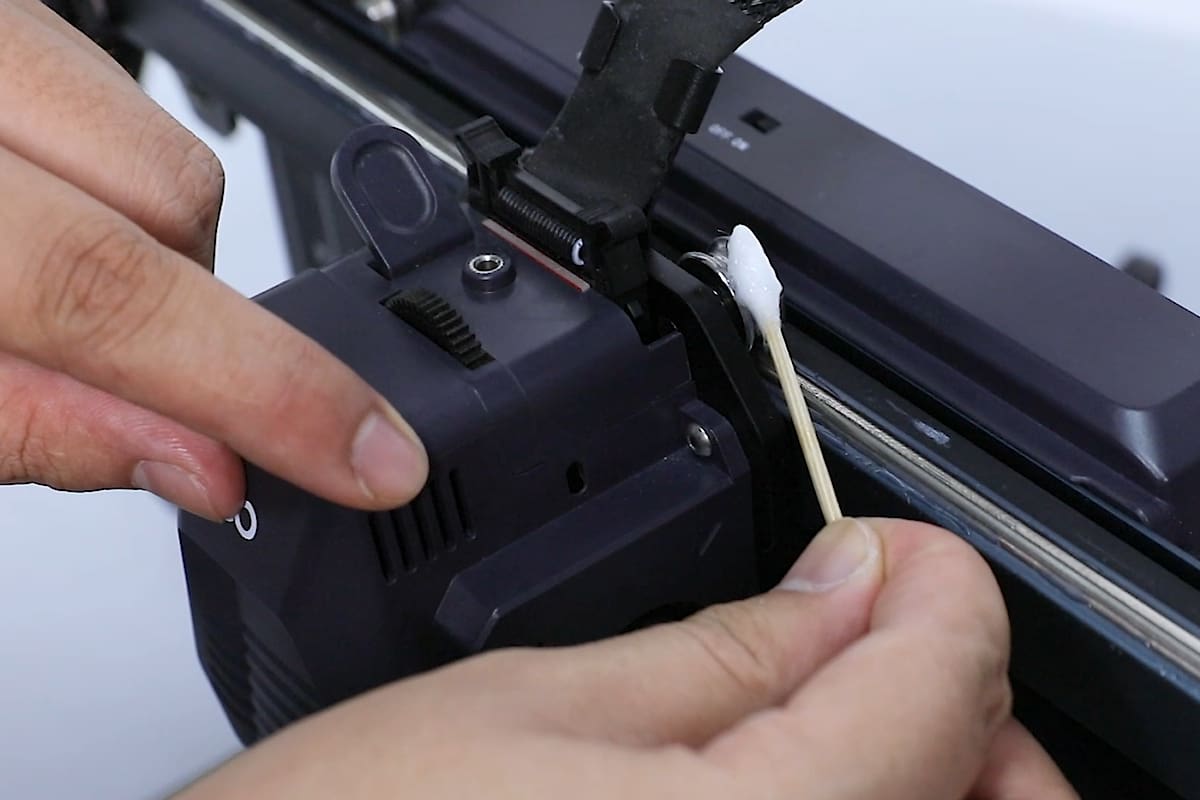
Elegoo’s Neptune series uses a different motion system than either Bambu or the other brands here: metal U-wheels riding in V-slot rails on X and Y, not smooth rods on bearings. Elegoo’s wiki calls for “lubricant grease” on those wheels and rails every two weeks (far more often than anything else in this piece), and white lithium grease on the Z lead screw every two months.
The Centauri Carbon line is a separate, CoreXY design, and despite the carbon-fiber branding, it’s not lube-free. Elegoo’s wiki instructs owners to grease the X, Y, and Z shafts and the Z lead screw every 3 months, the opposite approach from Bambu and Snapmaker’s U1. The original Centauri Carbon calls these the “plain shafts”; the newer Centauri Carbon 2 and Combo call them “optical shafts” and name lithium-based white grease specifically, but the instruction is the same; grease everywhere, no carbon-rod exception.
Still not sure which brand’s rules apply to your printer? If it’s not one of the six above, check the manufacturer’s own manual or wiki before defaulting to the generic parts table earlier in this piece — and if your printer uses self-lubricating polymer bushings (igus/drylin, or Delrin/POM) instead of ball bearings, don’t lubricate them at all regardless of brand: the factory treatment is sufficient for the bushing’s service life, and added grease just gives dust something to stick to.
3D Printing Lubricants
Arguably the best lubricant comes from your printer manufacturer, but other products may actually be better, easier to order, or cheaper. Here are some specific lubricants that can help you maintain your 3D printer and keep it in tip-top shape. While there’s certainly some debate in the 3D printing community about which lubricants are best, the following options are often popular picks due to their performance and reliability, and some are included as manufacturer recommendations.
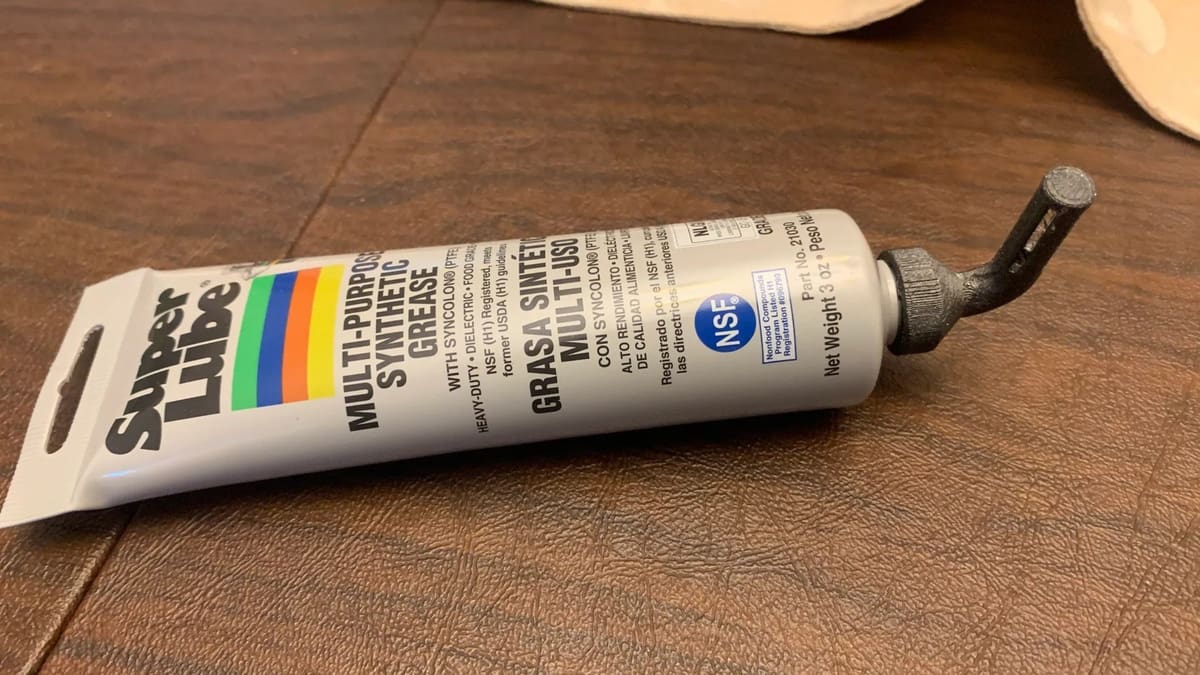
Super Lube synthetic Grease with Syncolon (PTFE) & Synthetic Oil with PTFE
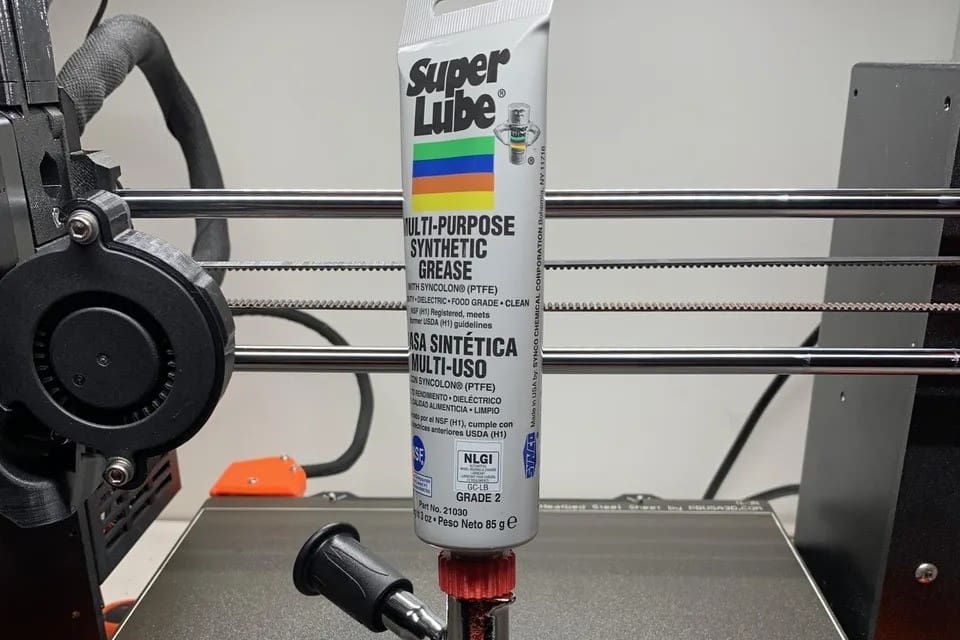
First up, this grease enhanced with PTFE is a versatile choice for lubricating your 3D printer. It offers excellent lubrication and protection for metal-to-metal and metal-to-plastic applications, and it’s suitable for printer parts like lead screws, bearings, and other components requiring a thicker lubricant.
This product has genuine multi-brand manufacturer backing. Prusa recommends it as an alternative to its own lubricant on compatible i3-series printers. Prusa also recommends it for the smooth rods and bearings (not the Z lead screw) on the MK3S+, MK3S, MK3, MK2.5S, MK2.5, and MK2S. Voron also endorses it as an option for MGN rail carriages and extruder gear.
Super Lube’s Synthetic Oil with PTFE fills a real gap in this list: a synthetic, PTFE-fortified oil for smooth rods and other lightly loaded, continuously moving parts, where this piece’s table calls for oil rather than grease. The other nice thing is that it has a good heat tolerance, so you don’t have to worry about it coming into contact with the printer’s heating element or any other electronic components.
Tri-Flow Superior Dry Lubricant
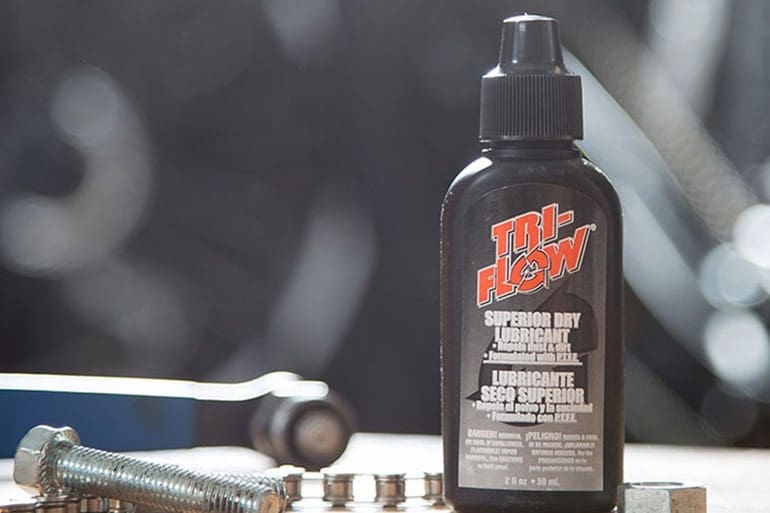
This PTFE-based dry lubricant excels at providing a clean, non-sticky film that reduces friction and wear. Plus, it doesn’t attract much dirt or dust. Its high-temperature resistance makes it perfect for filament drive gears and plastic-on-plastic contact points.
It has a 4.6-star rating at Amazon, with many users praising the durability of the lubricant. However, a couple of reviews note that it’s rather temperature sensitive. Keep in mind that a little goes a long way with this lubricant.
DryFluids GlidePower XT Dry Lubricant
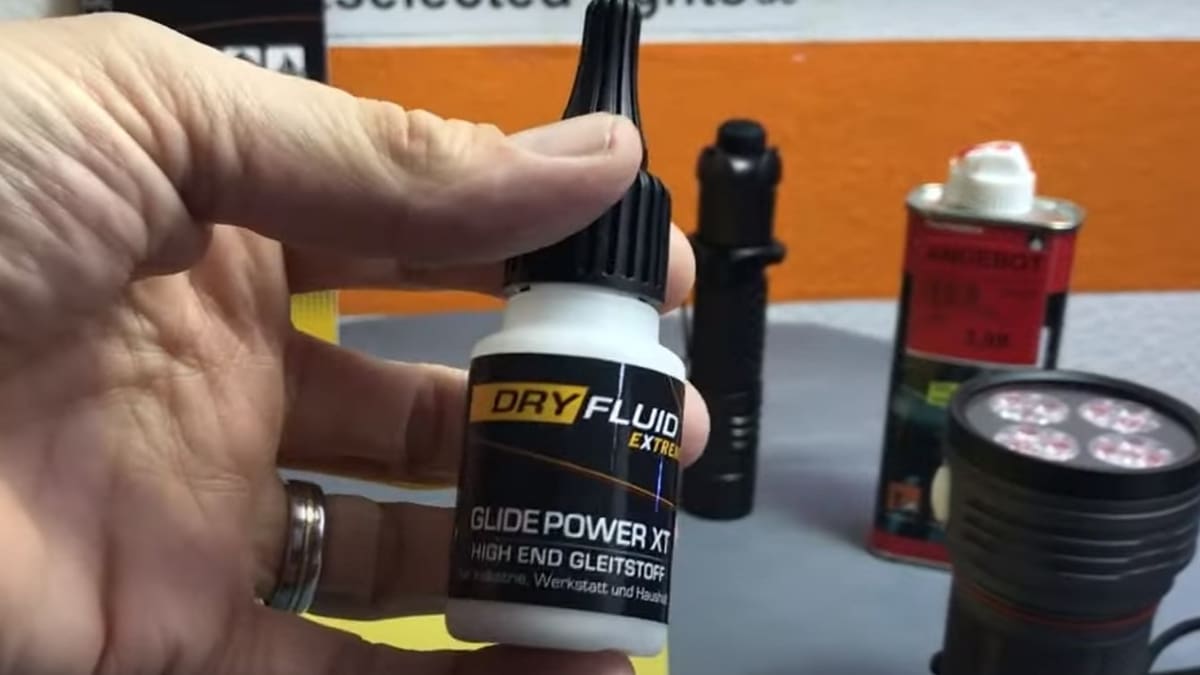
GlidePower is a long-lasting dry lubricant known for its exceptional adhesion and corrosion protection properties. Its unique formula offers low friction, high water and wear resistance, and high creep ability. It’s suitable for a wide range of 3D printer parts, including shafts, spindles, guides, rollers, sliding bearings, and ball bearings.
To use this lubricant, simply spray it on the part’s surface and wait about a half hour until it’s dry. The bottle comes with a fine tip to help you ensure precise application. Users mention that you should be able to notice a difference in the friction almost immediately, with little to no resistance.
Krytox GPL205 Grease
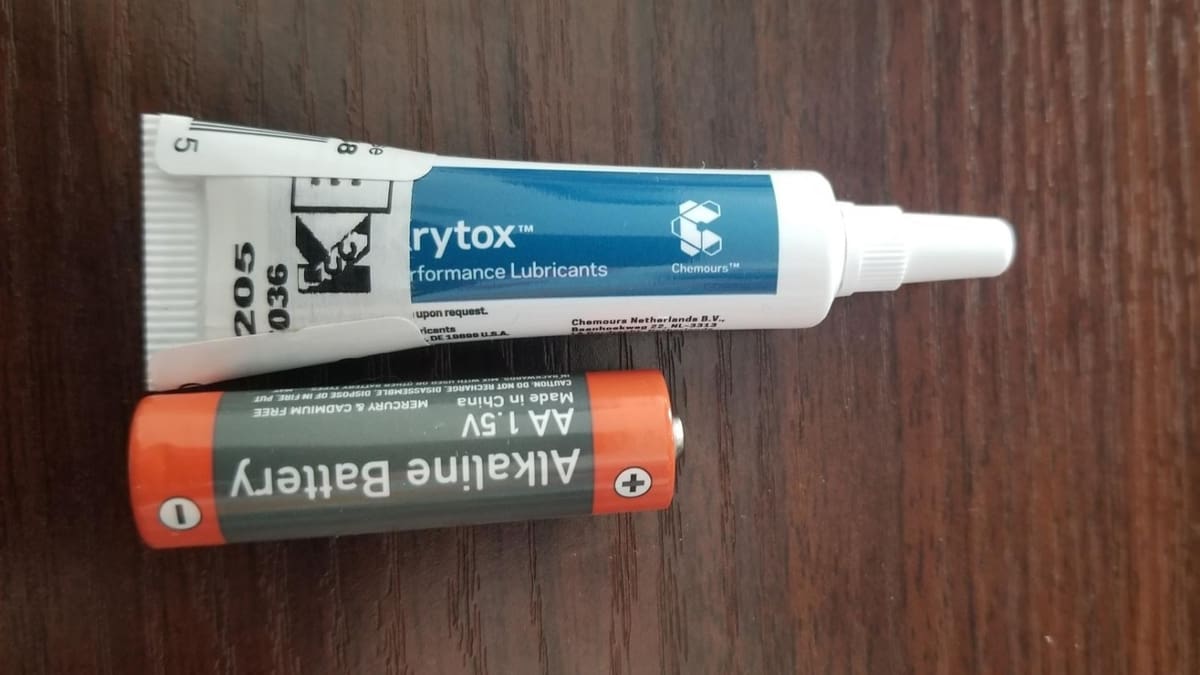
This high-performance grease is a great option to use on linear rails, bearings, and lead screws and offers longevity, so you don’t have to spend time reapplying often. The lubricant has a 4.5-star rating at Amazon, with many happy users commenting on its performance and noise-reduction abilities. While it’s rather expensive, a little does go a long way with this grease.
Mobilux EP 1
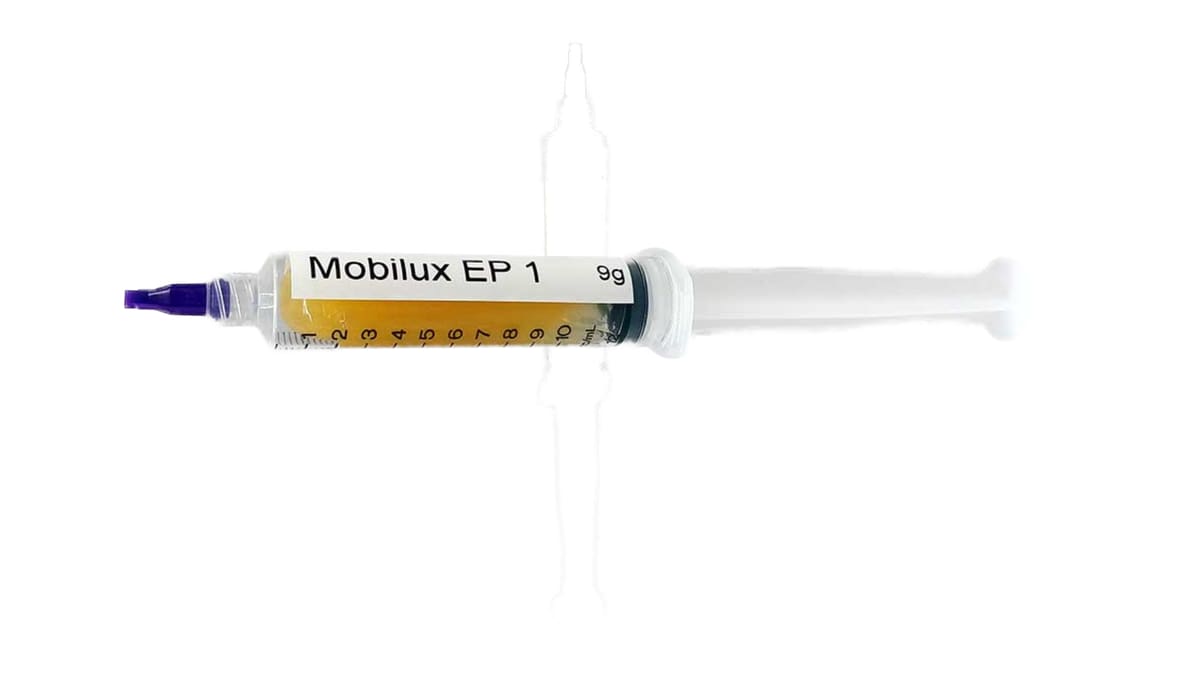
This product is named directly in Voron’s own sourcing FAQ for MGN-style rail carriages and extruder gears, and also meets the techincal NLGI 0/1 spec Voron calls for. It tends to come in an industrial-size cartridge rather than a hobbyist-friendly tube, but there are some secondary suppliers selling single syringes.
Permatex 80345 White Lithium Grease
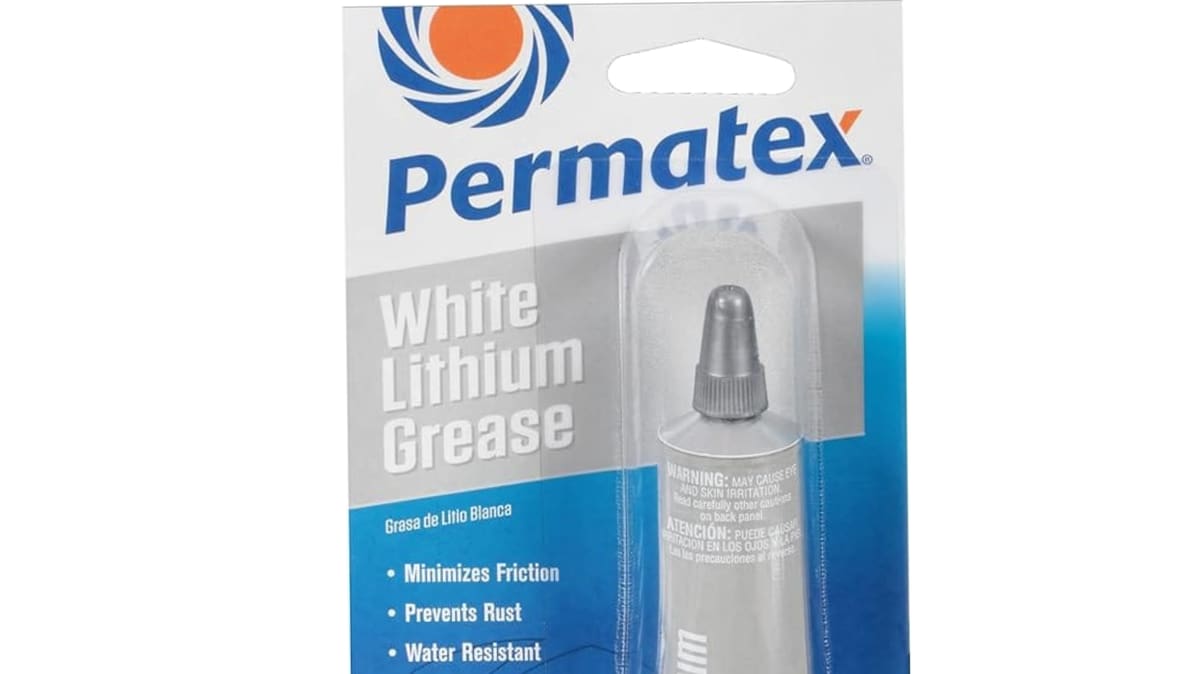
This is Snapmaker’s own named substitute for the factory-spec greases, Tengke Grease PS2 for the J1’s X/Y rails and NIKI FG 107M for its Z lead screw, when those aren’t available locally. Unlike either of those two, this one is an ordinary hardware-store product with its own retail listing, size, and price. Snapmaker’s wiki says it’s applicable to both the rails and the lead screw, so one tube covers the whole J1. It’s also generically useful beyond Snapmaker: a light, widely available lithium grease is a reasonable substitute anywhere this piece calls for grease and you don’t want to hunt down a specific product.
Lucas Oil 10533 White Lithium Grease
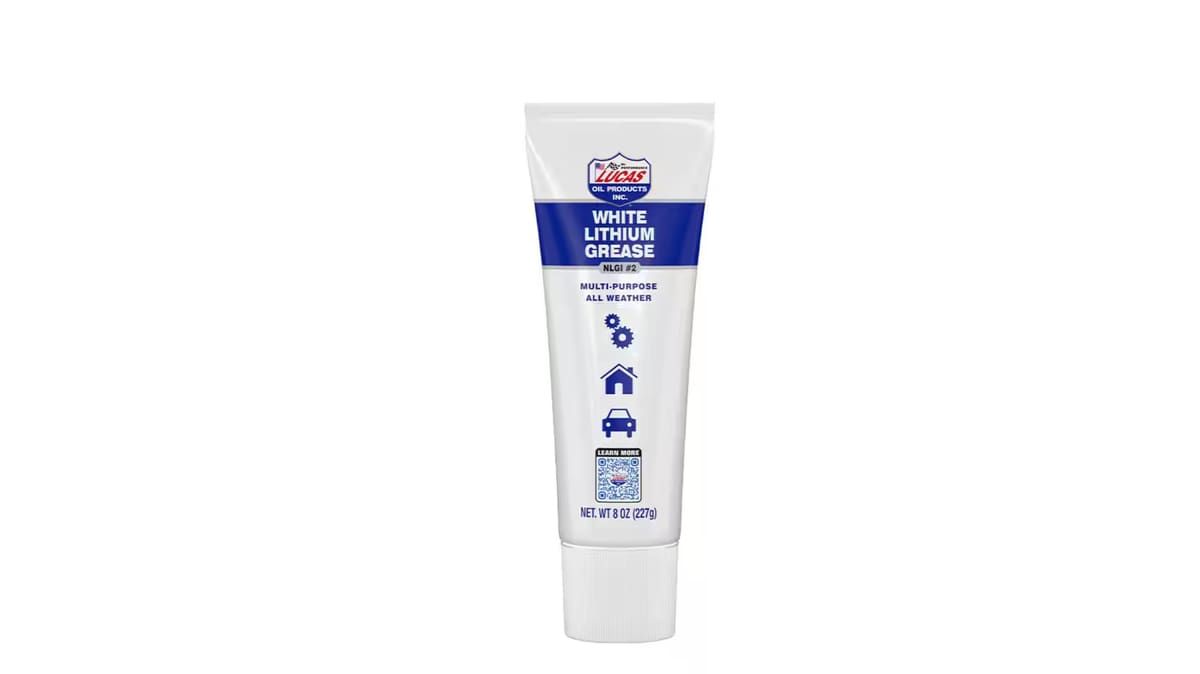
It is a familiar automotive/hardware-store staple rather than a 3D-printing-specific pick, in the same community-favorite category as Permatex 80345. It’s water-repellent and non-conductive and proven to be a practical option anywhere lithium grease is called for and you want a familiar, easy-to-find brand.
Klüber Microlube GL 261
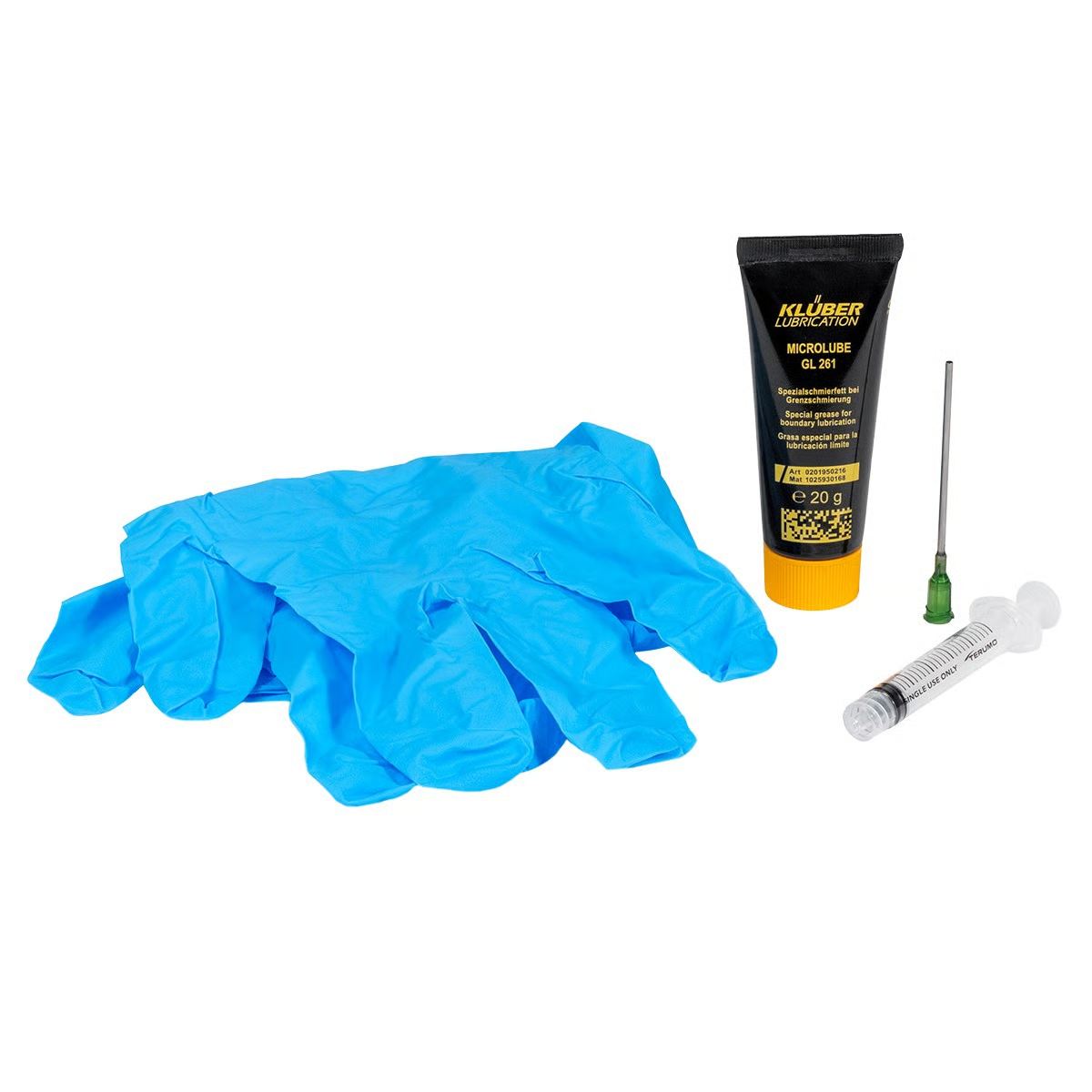
Not a house-brand product, this is a third-party Klüber grease that Prusa specs by name and repackages in a small applicator kit for one specific job: the Core One/+, CORE One L, and XL’s X-axis linear rail, the one part on those printers where Prusa’s own Prusa Lubricant is explicitly off-limits (“DO NOT use Prusa Lubricant on the linear rail!”).
It’s not reserved for Prusa; Klüber markets GL 261 generally for linear guides, splined shafts, and low-to-medium-speed bearings prone to micro-movement wear, which lines up with why it’s the right grease for a rail rather than a rod or lead screw. Prusa’s kit is the practical buy for this piece since it’s sized and priced for exactly this job.
WD-40 Multi-Use Product
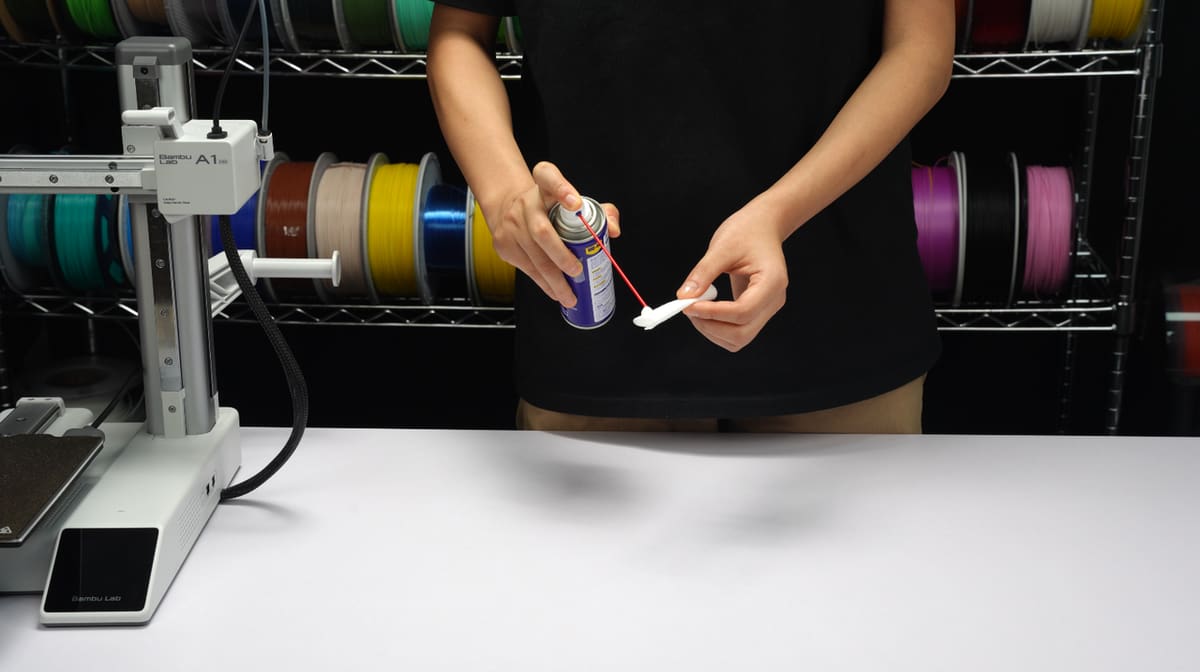
It is not a specialty 3D printing lubricant and, for most of the parts covered in this piece, is still the wrong call. It earns a spot here because Bambu Lab’s own maintenance documentation names the genuine WD-40 Multi-Use Product, by name, as tested and approved for the A1 and A1 mini’s rails and lead screw, and mentions it again for the H2D. That endorsement is narrower than it sounds: Bambu is explicit that other WD-40 products are a different formula and aren’t covered by it. If you own one of the models named above, it’s a genuinely cheap, easy-to-find option most people already have in a garage. If you don’t, treat this as the exception rather than a green light to use it elsewhere. Check your printer’s own manual first.
Lubricants to Avoid
Now that you know which lubricants you can use, there are some options you should avoid at all costs. Not every oily, slippery substance in the house belongs on a printer. Thinking it could be a shortcut or a more economical decision could end up damaging your printer in the long run, and they’re worth naming directly, along with why each one fails.
Cooking and vegetable oils: Olive oil, canola oil, and similar kitchen oils have poor oxidative stability: exposed to air, they oxidize and polymerize within weeks into a hard, sticky varnish rather than staying slick. This is the opposite of what a moving part needs long-term. Fine in a pan, not on a rod.
Vaseline and other petroleum jellies: They have a low melting point, and printer components sitting near a heated bed or hotend run warm enough that it can soften and run off the part entirely, leaving nothing behind where the lubricant was supposed to be.
Generic WD-40: Worth repeating here since it’s the single most common wrong reach: outside the specific Bambu models named earlier in this piece, WD-40 is a solvent and rust penetrant, not a lubricant. It actively dissolves and flushes out whatever grease is already packed into a bearing or rail, leaving a residue that attracts dust once the solvent evaporates. Although Bambu Lab recommends “WD-40 Multi-Use Product” other formulations of WD-40, and there are many, should be avoided.
Silicone-based sprays and greases: Less obviously wrong than the others, but arguably the most damaging if it goes wrong: silicone lubricants migrate and are notoriously difficult to fully remove once airborne or transferred by touch. On an FDM printer specifically, that’s a bed-adhesion problem, not just a lubrication one. A stray trace of silicone on a print bed can prevent PLA or PETG from sticking for good, the same reason auto body shops ban silicone-based products near paint booths. If a mechanism genuinely needs a dry lubricant, PTFE-based products (see the dry-lube column in the table above) don’t carry that risk.
License: The text of "3D Printer Lubricants: What Actually Goes Where & What Never Should" by All3DP is licensed under a Creative Commons Attribution 4.0 International License.
CERTAIN CONTENT THAT APPEARS ON THIS SITE COMES FROM AMAZON. THIS CONTENT IS PROVIDED ‘AS IS’ AND IS SUBJECT TO CHANGE OR REMOVAL AT ANY TIME.