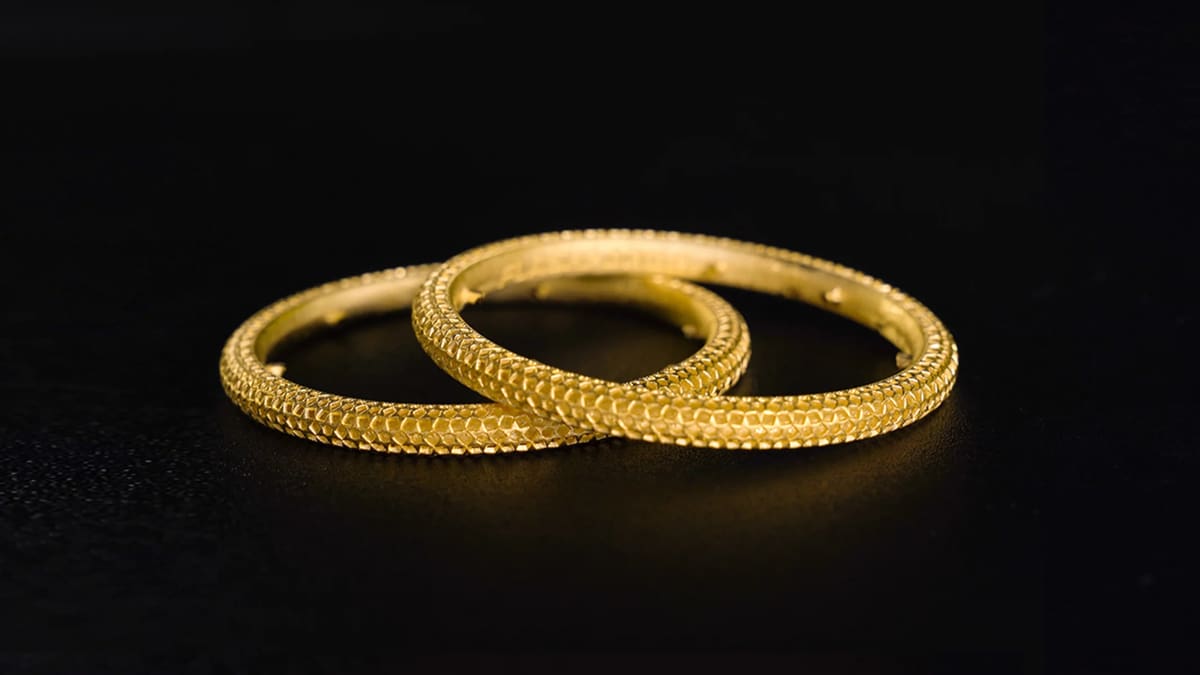
Digital Goldsmiths: Top 3D Printers to Revolutionize Your Jewelry Workflow

3D printing has transformed the jewelry-making process. So which is the best 3D printer for jewelry professionals and hobbyists? Find out!
Traditional jewelry-making is a detailed and time-consuming process often starting with a piece of wax. Artisans carve the wax into the shape of the final piece, dip the wax into a casting material that hardens to form a mold into which molten gold or silver is poured. Nobody can deny the skill and craftsmanship that goes into a handmade ring or pendant, and there will always be something unique about manually sculpted personal adornments. Still, the fact stands that it takes a lot of time and patience to make jewelry completely by hand.
Jewelers, goldsmiths, and jewelry hobbyists have woken up to this reality and adopted technology. Jewelry that’s designed in software and 3D printed in wax, makes production easier, faster, and far less costly.
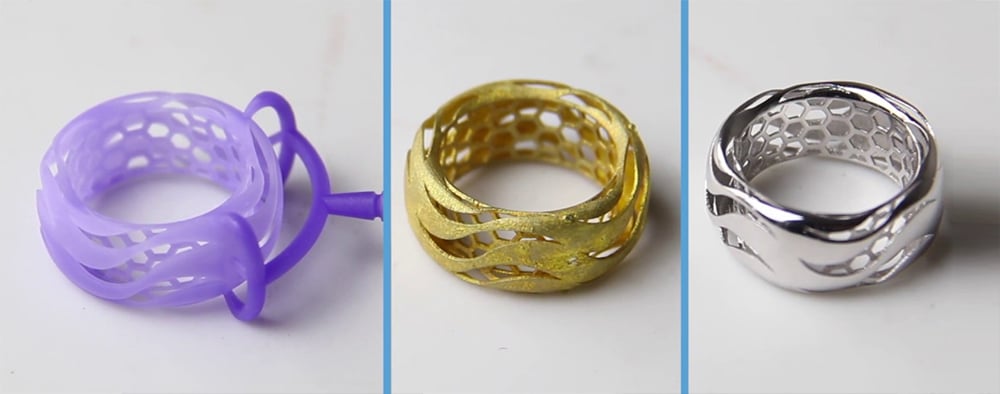
Like so many other things, jewelry has gone digital enabling more companies, especially small ones, to design and fabricate custom pieces quickly and economically. Online platform, such as Etsy and eBay, facilitate the marketplace for custom designs.

3D printers have democratized access to finely detailed master wax models, and have dramatically accelerated design development through fast iterations.
Below, we look at some of your best options for 3D printers that specialized in jewelry models in wax or another casting material. Scroll to the end for more details on what to look for in these printers, and the benefits of using a 3D printer for jewelry models, in case you’re not already convinced.
Who Made the List and Why?
For this list, we’ve considered the capabilities and cost of each printer and split them into three categories: budget (less than $500), mid-range (between $500 – $5,000), and professional (over $5,000). Although our process has been by no means scientifically rigorous, it will give you an idea of the printers’ features. Also, keep in mind that some of these top manufacturers offer both affordable and production printers.
| Product | Technology | Build Volume | Price |
|---|---|---|---|
| Elegoo Saturn 4 Ultra | LCD | 219 x 123 x 220 mm | $399 |
| Anycubic Photon Mono M7 Pro | LCD | 223 x 126 x 230 mm | $479 |
| Creality Halot-Mage S 14K | LCD MSLA | 223 x 126 x 230 mm | $489 |
| Phrozen Sonic Mighty Revo 14K | LCD | 223 x 126 x 235 mm | $850 |
| Formlabs Form 4 | LCD | 200 x 125 x 210 mm | $3,500 |
| Zortrax Inkspire 2 | LCD | 192 x 120 x 280 mm | $4,390 |
| RapidShape Pro 20 | DLP | 133 x 75 x 115 mm | ~$10,000 |
| Asiga Ulta 50 | DLP | 189 x 106 x 130 mm | $15,000 |
| Flashforge WaxJet 400 | MJP | 289 x 218 x 150 mm | $52,000 |
Our Top Picks & Listing Criteria
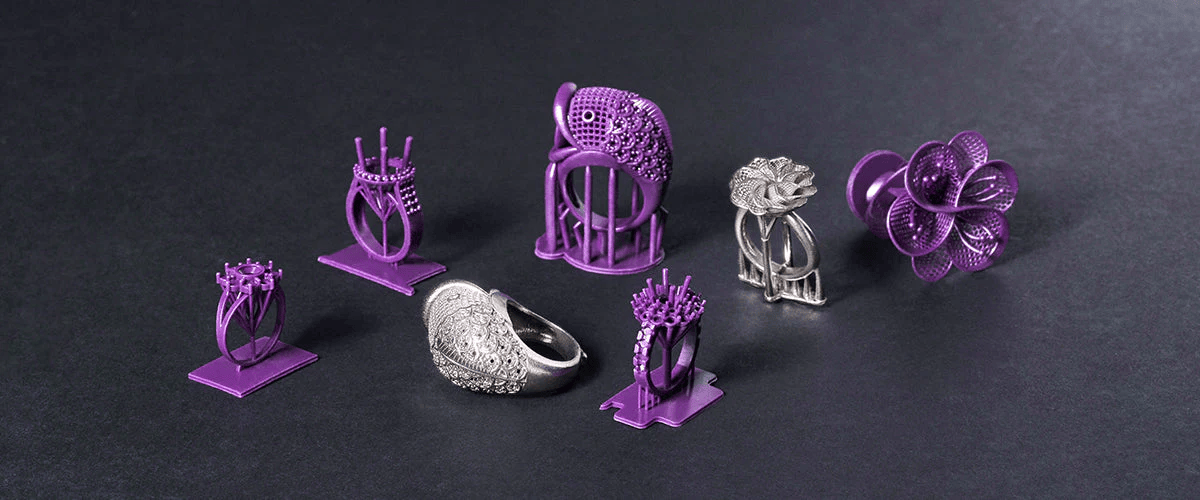
For this list, we’ve considered the capabilities and cost of each printer and split them into three categories: budget (less than $500), mid-range (between $500-$5,000), and professional (over $5,000). Although our process has been by no means scientifically rigorous, it will give you an idea of the printers’ features. Also, keep in mind that some of these top manufacturers offer both affordable and production printers.
Budget 3D Printers for Jewelers
We’ll start with the budget category, which lists great machines if you’re new to 3D printing and want to learn the ropes. You can get a really good older model resin printer, like the Elegoo Mars 4, for about $200 to get your feet wet in the technology. It has high resolution for fine detailing, but for just $80 more, you may find the Phrozen Sonic 8k Mini may be better suited for your needs due to its slightly larger build volume, higher resolution, and higher print speed.
There are hundreds of budget resin printers on the market, below are our top picks for the newest quality machines for jewelry that won’t disappoint.
Elegoo Saturn 4 Ultra
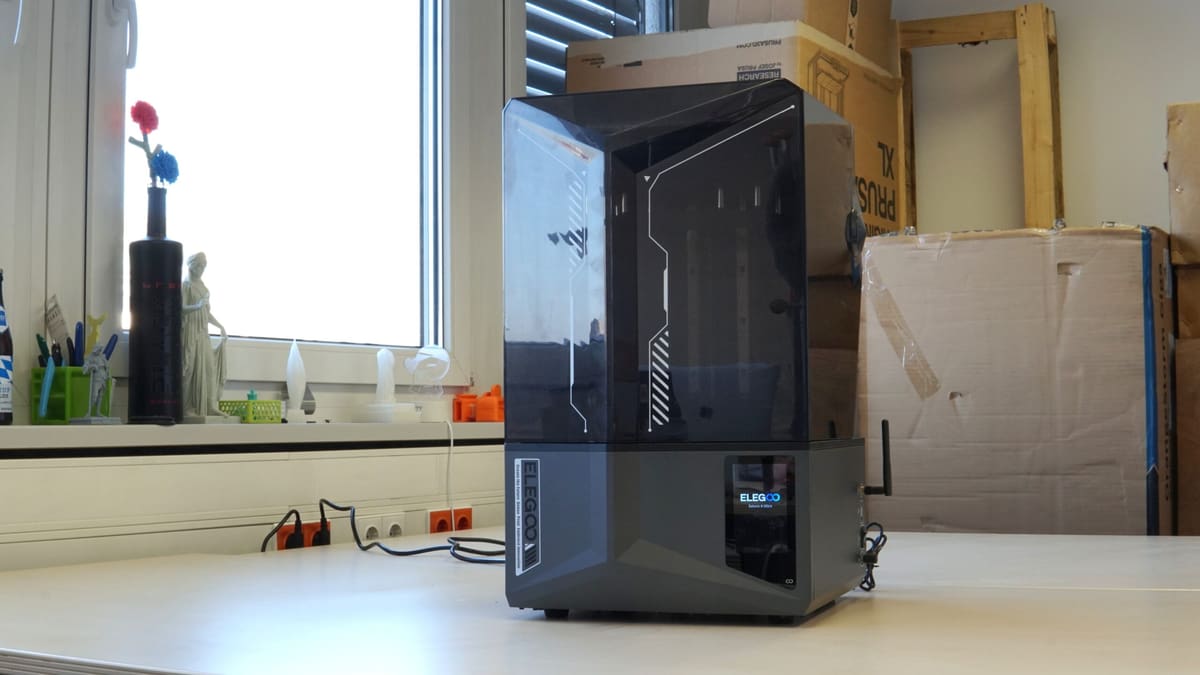
The Elegoo Saturn 4 Ultra is a mid-size resin 3D printer, which is just about where its being “mid” ends. A high-resolution LCD sits atop Elegoo’s new-for-this-generation vat tilt mechanism, which the company says reduces peel force at layer change, thereby reducing overall layer time.
The printer drips quality, from the reassuring tilting lid, to the self-checking and print monitoring systems. It’s internet-connected and is, natively, fully operable with all popular third-party slicers, plus Elegoo’s new Satelite slicer, which promises a complete, beginner-friendly experience that features all the tools you need. We’ve not tested Satelite yet, so can’t speak to that aspect, but the workflow using most popular slicers is functionally effortless.
In testing we found the Saturn 4 Ultra met every task we threw at it with no memorable hiccups. You get a ~218 x 122 x 220 mm build volume, and Elegoo benchmarks the printer as capable of printing up to 150 mm/h. This number will depend on the resin you use and its idiosyncrasies for curing and timing.
At $399, the Saturn 4 Ultra is tremendous value for money. Earlier this year, Elegoo has launched a slightly higher resolution version, the Saturn 4 Ultra 16K ($499), which ekes out an impossible-to-discern bump in print quality and adds features like a heated resin vat and improved camera setup.
Anycubic Photon Mono M7 Pro
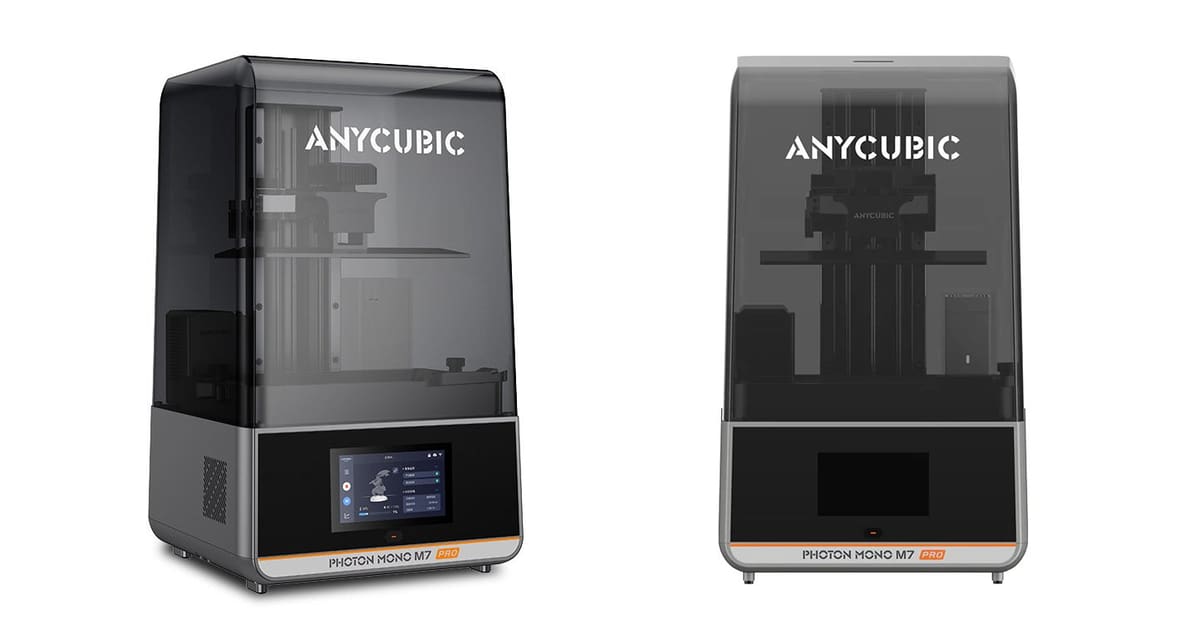
Anycubic’s latest resin printer, the Photon Mono M7 Pro, is designed for high-speed, high-resolution printing. The company claims the printer offers a high-precision of 14K, with a resolution of 13,312 × 5,120 pixels and XY pixel dimensions of 16.8 × 24.8 microns. According to Anycubic, the M7 can reportedly reach print speeds of up to 170 mm/h with a layer height of 0.1 mm, when paired with high-speed resin. With standard resins, the speed is apparently capped around 130 mm/h.
The M7 Pro is equipped with a range of systems aimed at improving print consistency and reliability. A light uniformity algorithm is said to deliver over 90% uniform exposure across the build area, contributing to more consistent curing. The printer’s minimum shaping detail is 0.15 mm, with hole diameters as small as 0.3 mm.
One of the notable features is the inclusion of a dynamic light output compensation system, which automatically adjusts exposure parameters based on the printing surface and resin flow, with the goal of improving model accuracy and print success rates.
Temperature regulation is another focus. The printer includes a built-in heating system called the Dynamic Temperature Controlling Resin Vat. It uses a circulating heating tube to maintain resin temperature, warming from 5°C to 25°C in under 20 minutes. This aims to keep resin viscosity within an optimal range for layer formation.
Material management is automated via a Resin Auto-fill Unit, which can replenish up to 750 ml of resin when low levels are detected. A one-button resin collection feature is also included to assist with cleanup and resin recovery after printing.
Creality Halot-Mage S 14K
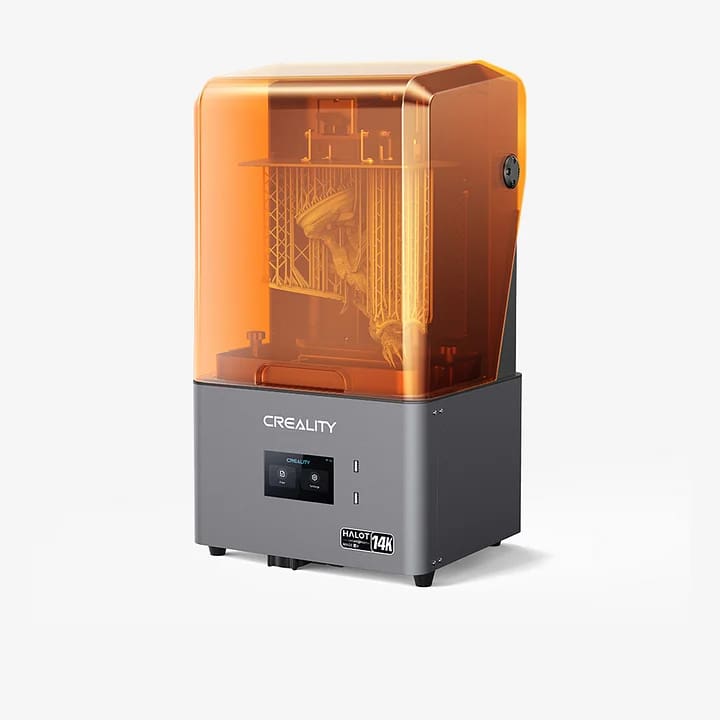
Creality has introduced the Halot-Mage S, a resin 3D printer equipped with a 14K high definition LCD screen. The display offers a resolution of 13,320 × 5,120 pixels and a pixel size of 16.8 × 24.8 microns, designed to capture the fine surface detail required for printing jewelry and figurines. The printer’s build volume measures 223 × 126 × 230 mm, ample space for your creative projects.
One of the key upgrades in the Halot-Mage S is a third-generation integral light source. According to Creality, the system aims to deliver more uniform light distribution across the build plate, improving consistency in resin curing and surface smoothness.
A new high-speed printing feature, branded “Dynax+”, is also part of the release. In this mode, the printer is reported to reach speeds that enable printing objects up to 15 cm tall in approximately one hour. This is supported by the “Dynax” motion system, which is designed to optimize layer transitions with a 1.2-second interval.
The printer runs on Halot OS, Creality’s proprietary operating system, and supports connectivity with smartphones, tablets, and desktop computers. It also integrates with the Creality Cloud platform, providing users with access to pre-sliced model files. For slicing, the Halot-Mage S is compatible with Halot Box, the company’s in-house software, which includes various customization options and an interface aimed at ease of use.
Mid-range 3D Printers for Jewelers
This second category features mid-range printers that offer more advanced features, software, and automation while still coming through with a reasonable price tag (under $5K) for professional jewelers. As you move into this category, you’ll want to look for a printer company that offers an integrated workflow – something where the software, printer, and accessories like the washing and curing station all work together efficiently.
Phrozen Sonic Mighty Revo 14K
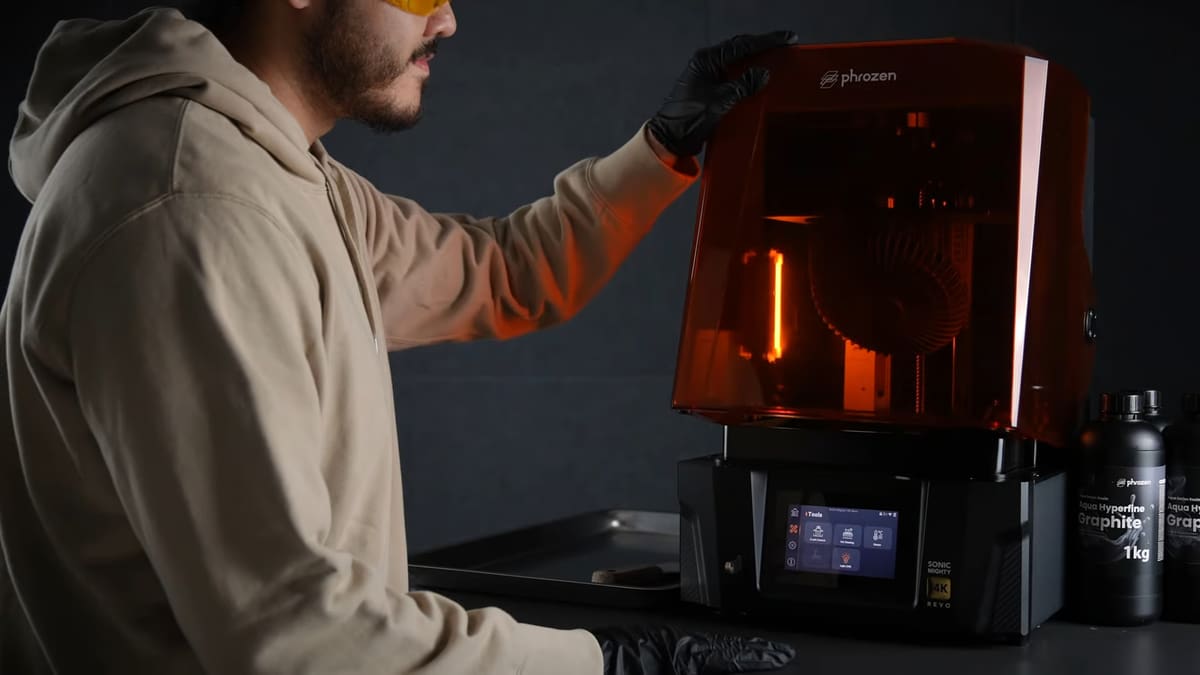
The Sonic Mighty Revo boasts a 10.1-inch Mono LCD screen, a print volume of 223 x 126 x 235 mm, an XY resolution of 16.8 x 24.8 microns, and an “average printing speed” of 70 layers per hour with the claimed top speed being 450 layers per hour.
The printer arrives with auto-leveling, residue detection, failure detection, a built-in heater that will work to maintain 30 °C printing temperatures, and an exhaust vent that can be connected to an external air ventilation system.
For air purification, the Sonic Mighty 14K leverages a USB-powered air purifier. An internal camera is compatible with the PhrozenGO app, which is in line with the promised “24/7 mobile connection” of the printer’s initial reveal.
Besides its resolution, the above features are where the Sonic Mighty Revo predominantly differs from its siblings, the Sonic Mighty 8K and Sonic Mighty 12K. In terms of size, volume, and speed, however, the machines are essentially the same.
There’s also a built-in interior light, a cooling fan, dual linear rails, and a full metal exterior. Users control the printer with a five-inch touchscreen, and connect via USB or Wi-Fi.
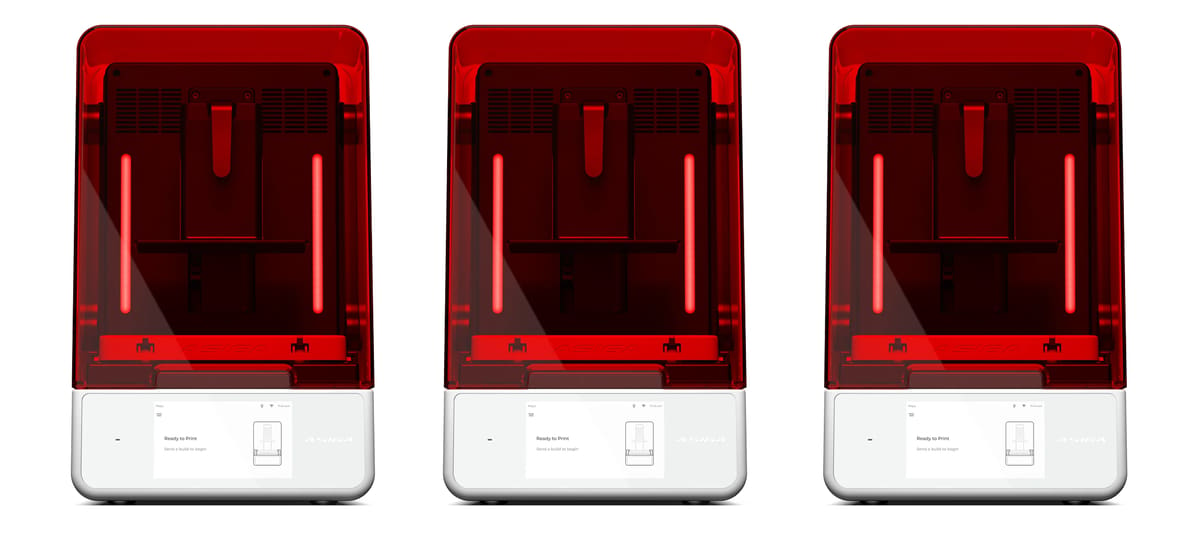
Formlabs Form 4
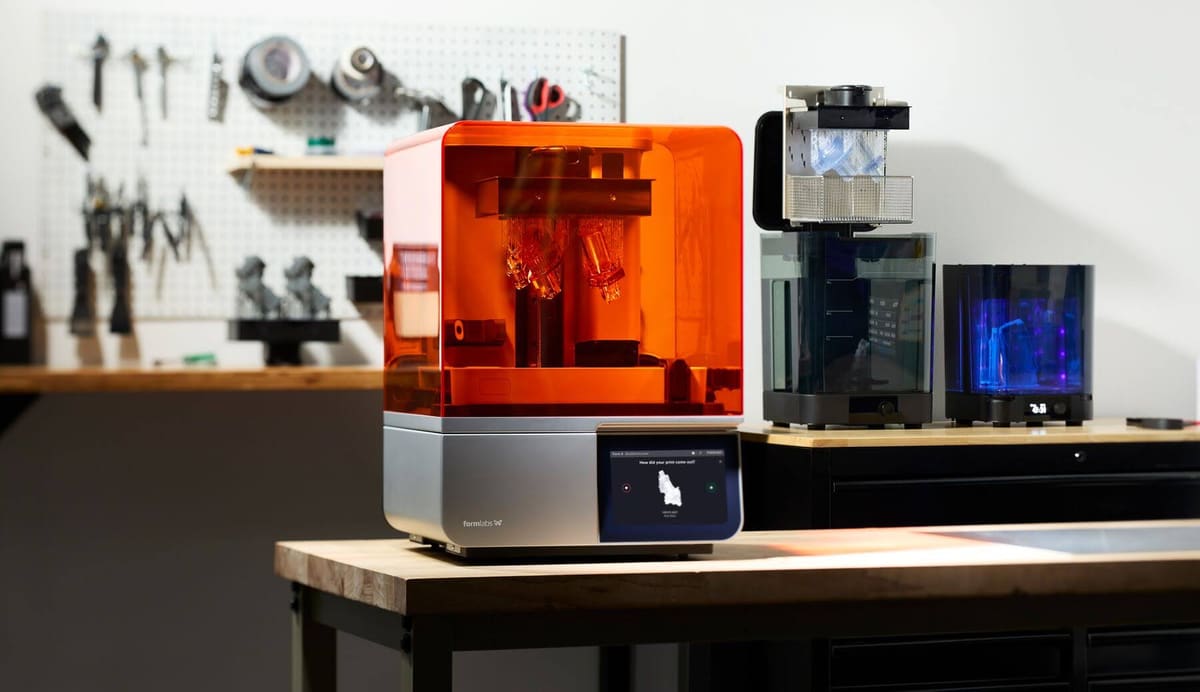
Undeniably one of the most reliable and affordable makers of professional-level resin 3D printers for jewelry, Formlabs new machine is a significant shift in technology, boosting speed and overall productivity.
U.S.-based Formlabs’ fourth-generation desktop resin 3D printer, Form 4, offers vastly improved print time over previous Form versions, which the company says is up to five times faster than Form 3+, depending on the material.
Considered by many to be the champion of desktop resin 3D printing, Formlabs has positioned itself as one of the most popular professional 3D printers on the market. The resin-based process allows for higher resolution and more precise prints than FDM, offering a layer thickness of between 25 and 100 microns.
Unlike consumer printers, Formlabs has features that enable you to better fine tune your results. The Adaptive Layer Thickness is a tool that analyzes the geometry of digital parts and assigns layer heights throughout the sliced model for the best detail at the fastest speed.
Another benefit of Formlabs is that it’s very materials focused. Form 4, like all Formlabs’ printers, features a mess-free, easy to use, material cartridge system, not bottles. In addition to validated materials and detailed print profiles, you can purchase a license to “open” the material settings and use any resin you wish. But the big news in materials is that they are cheaper, Formlabs says, starting at around $99 per liter instead of $150 for Form 3+ materials. Not only cheaper, but several have been enhanced to deliver better mechanical properties, the company says.
The Form 4 is compatible with 23 resins in all, with more in the pipeline. Recently launched is a new Castable Wax Resin, specifically for printing jewelry. Formlabs claims it offers “high strength and stiffness, making it capable of printing ultrafine structures.” This wax resin is said to be ideal for shape retention for thin patterns as well as for ultrafine designs. For heavier jewelry, the company recommends their Castable Wax 40 Resin.
If you want all for these features and more in a larger printer, the Formlabs Form 4L (335 × 200 × 300 mm) is $10,000.
Zortrax Inkspire 2
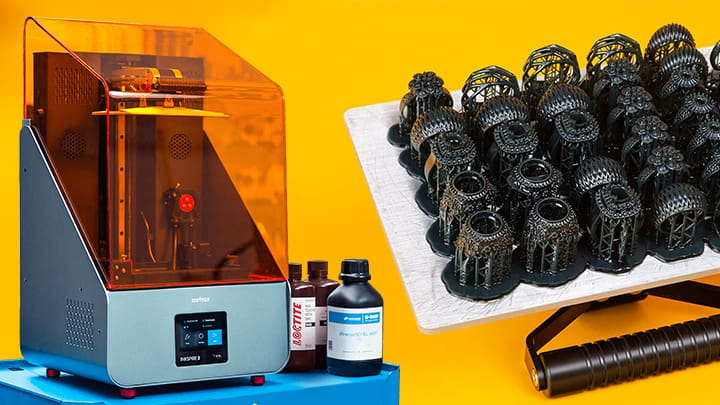
Zortrax provides one of this list’s more affordable mid-range printers with the Inkspire 2. The printer’s UV LCD technology offers consistent print speeds no matter how much of the printing surface is used, making it a good option for printing multiple master or wax models at once.
The Inkspire 2 has a minimum layer height of 25 microns, which is on par with many other listed machines. The printer is easy to use thanks to its automatic calibration and Android-based operating system which can be fully controlled via Zortzrax inCloud for seamless printing farm management.
The Inkspire 2 offers four times more build volume compared to its predecessor at 192 x 120 x 280 mm. The UV LCD screen also received a powerful UV light engine upgrade that is 7 times more powerful at a 40% improved UV light distribution.
Nonetheless, the Inkspire is a capable machine that can produce repeatable, consistent prints with high surface quality. It can also expose supports to UV light for a longer time, hardening them and making them easier to remove. Other professional features include a built-in carbon filter to cut down on toxic fumes.
Zortrax offers its own BlueCast range of castable resins, but the Inkspire 2 also supports any light-curable resins, so you’re spoiled for materials options. The company also manufactures an ultrasonic cleaner unit as well as a curing station.
Commercial 3D Printers for Jewelers
If you’re looking to scale-up jewelry production, automation, and capacity in addition to excellent quality, check out these top picks below. Just like in the world of budget resin printers, there are great resin printers in the professional and industrial categories that don’t necessarily focus on jewelry but may still fit your needs. In this category, you’re looking for ease of use, reliability, and consistency.
RapidShape Pro 20
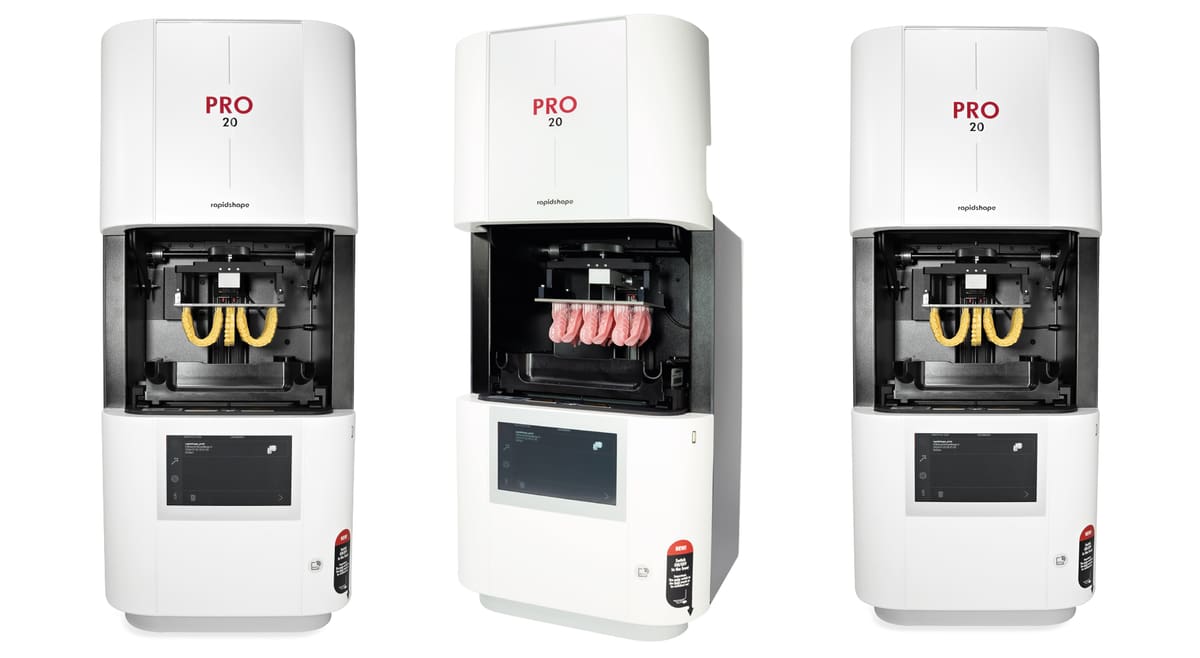
Rapid Shape is another 3D printer maker that is primarily focused on dental applications, although it also serves jewelry and industrial sectors. In 2024, the company launched the Pro 20 is a DLP resin 3D printer with more than 20 presets for particular resins and dental parts.
Rapid Shape introduced a new RS Turbo feature in the Pro 20 that will print a batch of aligner models in just 7 minutes and crowns or bridges models in 15 minutes. Other than these examples, Rapid Shape does not offer a maximum print speed.
Paired with the Pro wash and Pro cure, this is an integrated system for an efficient workflow.
In addition to its proprietary materials, Rapid Shape partners with known material manufacturers, such as Dreve, Kulzer, BEGO, and Keystone Industries to offer a range of biocompatible resins.
Asiga Ulta 50
For more than a decade, Asiga has been a prominent brand in the dental 3D printing industry, which is its primary focus, but it also makes resin 3D printers for jewelry. The company’s new Ultra aims to bridge the gap a bit. It’s small (192 x 108 x 147 mm build volume) compared to the rest of the professional printers here, but has enough advanced features to warrant a place.
The Ultra features touchless entry, a magnetic platform holder, and an infrared material hater. The machine is an open material platform.
It is available in two models: the Ultra 32 and the Ultra 50. The Ultra 32 offers a pixel size of 32 microns with a build volume of 119 x 67 x 130 mm (4.68 x 2.63 x 5.11 inches), while the Ultra 50 provides a 50-micron pixel size and a larger build volume of 189 x 106 x 130 mm (7.44 x 4.17 x 5.11 inches).
Both models feature an auto-calibrating UV LED light source operating at a wavelength of 385 nm, with options for 365 nm and 405 nm upon request.
The accompanying Asiga Composer software supports multiple file formats, including STL, SLC, PLY, and the proprietary STM (Asiga Stomp file format), and includes lifetime updates to keep the software current.
The Asiga Ultra 50 is an open material platform, meaning it supports third-party resins in addition to Asiga’s own materials. It is compatible with over 500 qualified resins.
Asiga makes five resin 3D printers: two smaller than the Ultra and two larger.
Flashforge WaxJet 400
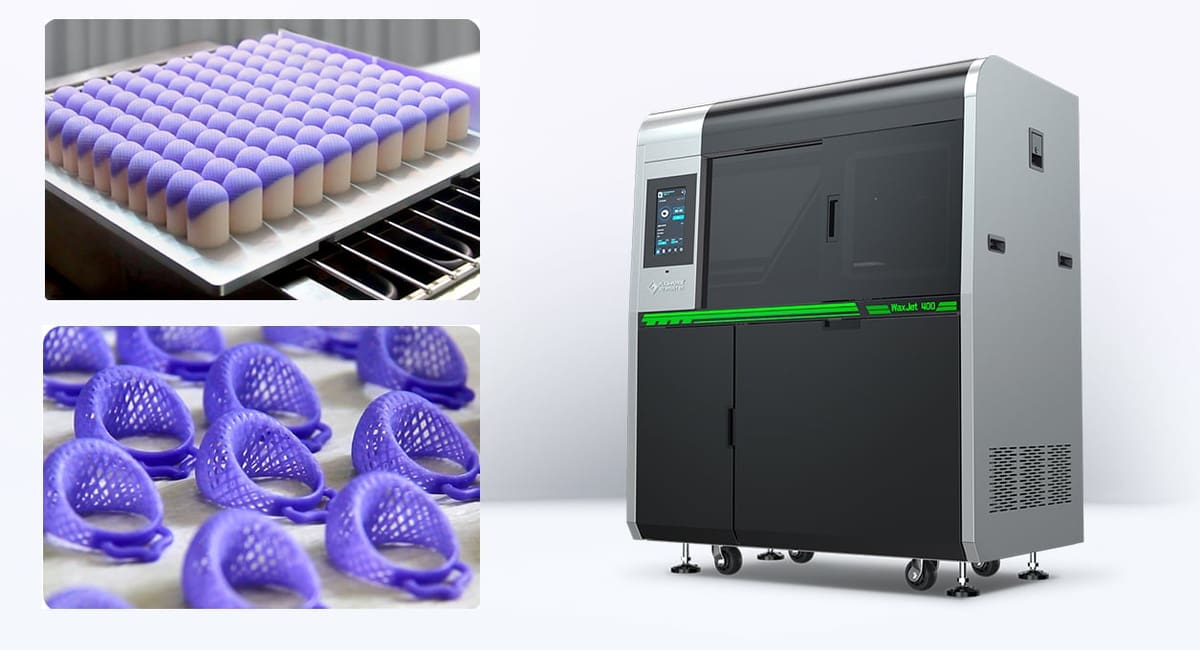
The Flashforge WaxJet 400 uses a material jetting technology called Multijet Printing, which is faster than most SLA printers. This technology allows the WaxJet 400 to print with Flashforge’s 100% pure wax material at a minimum layer height of 16 microns, resulting in highly detailed ready-to-cast wax models.
This industrial-level printer is optimized for fast mass production. With its large print chamber, the manufacturer claims WaxJet 400 can produce up to 350 ring-sized models per day.
The printer also uses a dissolvable wax support material that makes post-processing faster and easier. If the WaxJet 400 seems like overkill for your purposes, Flashforge also offers the resin-based Hunter printer, along with its proprietary castable resin materials.
But the most important aspect of production printers is efficiency, and that’s where the WaxJet 400 shines. Flashforge delivers a jewelry-optimized, high-precision printer that every professional jeweler should consider.
What to Look For in a Jewelry 3D Printer
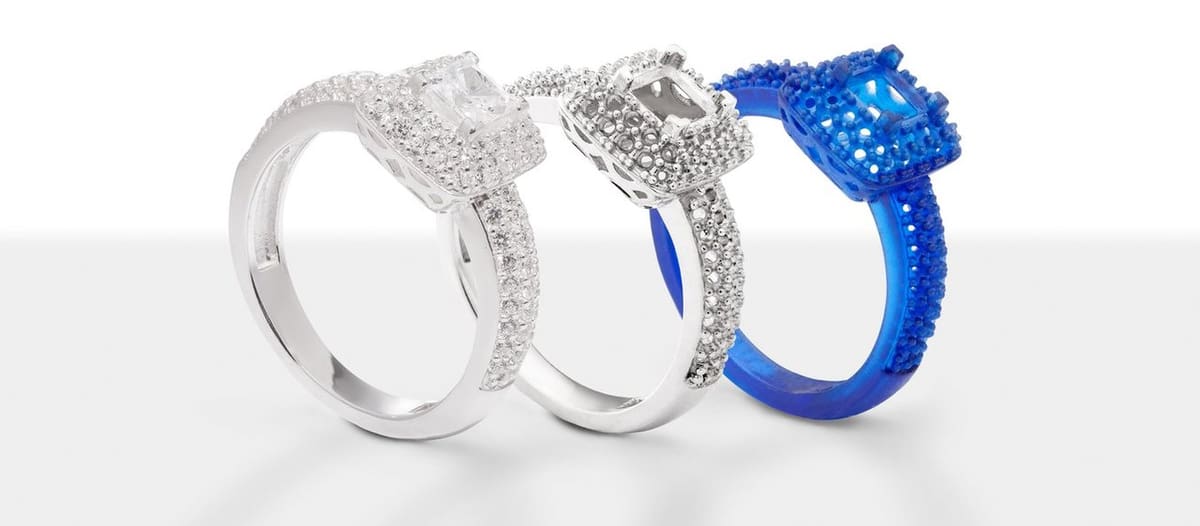
The first consideration when choosing a jewelry 3D printer is the technology. This, however, is an easy choice. Most jewelers opt for resin-based methods, including stereolithography (SLA), liquid crystal display (LCD) aka masked stereolithography (MSLA), or digital light processing (DLP) due to their high printing resolution and the availability of wax resins that will burn out cleanly during casting. If you’re not familiar with resin-based SLA or DLP 3D printing technology, check out our guide here:
Material jetting is another resin technology that’s generally faster than SLA and LCD especially for large-volume production. With material jetting, like 3D System’s MJP 300W 3D printer, layer thicknesses as thin as 9.5 microns make an extremely fine detail resolution possible.
There are some filament-based FDM printers that can print using wax filaments. However, as most FDM printers can’t create sufficiently fine details for intricate jewelry, it’s best to look for a resin printer.

Other considerations when picking your printer.
- Resolution: Pieces of jewelry are small, so the finer the detail your printer can produce, the better. You should aim for a machine that is able to create the finest possible details, ideally even as small as 8 microns. For reference, the average width of a human hair is 75 microns. If you want to get your level of detail down to layer thicknesses in the 2 to 5 microns level you’ll need to look into micro 3D printing.
- Print Speed: It’s hard to imagine a case where hand-carving wax would be faster than 3D printing it, so when it comes to speed, we’re talking about 3D printers. Ideally, look for a machine that lets you adjust the speed to get super-fast but less detailed prototypes, as well as extremely fine details which typically take a bit longer.
- Material Compatibility: Opt for a printer that is not limited to one manufacturer’s materials. It might just be that the best wax resin for your purposes is made by a third party. Proprietary materials are often more expensive than third-party ones, but then again some printers are tuned to print perfectly with their own resin, which cuts down on trial and error.
- Cost: When purchasing a printer, you need to not only consider the printer’s price, but also the cost of maintenance and materials. Although a jewelry 3D printer can return your investment in a few months, it’s good to pay attention to the budget.
- Exposure: If your designs have fine features and smooth surfaces, you’ll want to be careful with LCD technology. Some LCD machines produce models with a pixelated surface, and this could translate to the final piece when cast, unless you take time to do some post-processing.
- Volume: If you only plan to make one to six models at a time, the smaller volume machines will work, but if you think you’ll be mass-customizing hundreds of rings or pendants, look for larger volume machines.
- Accessories: Your model will not be good to go right from the printer. You’ll need some other equipment, such as washing and curing machines (although it’s possible to get by without them). So look for one company that offers the whole package.
No matter how good a printer sounds on paper, to evaluate a printer’s suitability for your workbench, you can ask the manufacturer for a sample print. Most will be happy to demonstrate the capabilities of their printers in practice.
Of course, you don’t need to own your own printer at all. You can order your lost wax casting models from a wide range of service providers, such as Craftcloud, just by uploading your digital file.
Advantages of 3D Printing Wax Models
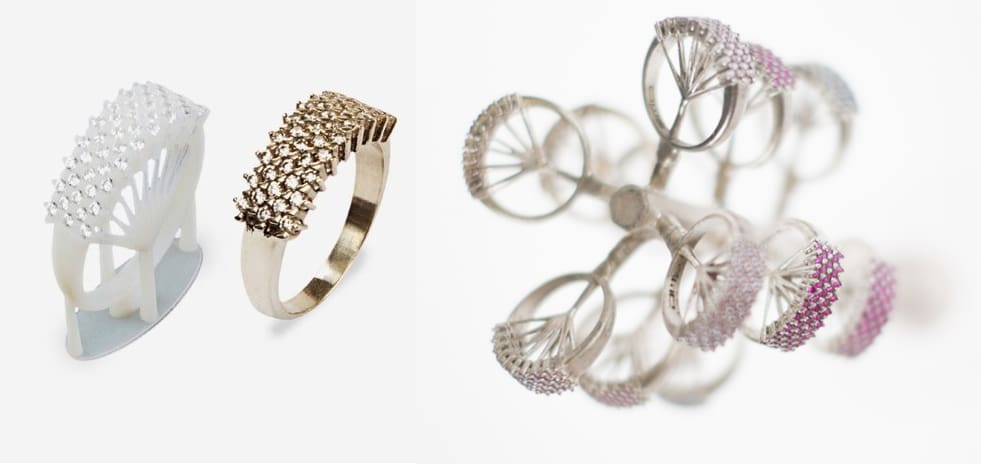
- Speed: Simply put, 3D printing is infinitely faster than carving wax by hand. Whereas the traditional method requires you to spend hours or even days painstakingly carving the wax model, the 3D printer will produce a detailed model in a matter of hours. Plus, changes are far easier since you can simply alter the digital file and print another version.
- Complexity: 3D printers can create far more complex and intricate geometries than hand-carved designs. You can print anything your CAD software can design so it makes great design more accessible to artists who may lack carving skills. Additionally, depending on the piece, you may even be able to produce geometries that are practically impossible through hand-carving.
- Customization: Since the original master model is stored as a digital CAD file, you’ll be able to quickly modify it based on customer requirements.
- Mass Production: Depending on the capacity of your 3D printer, you may be able to print dozens of different wax models with one print run.
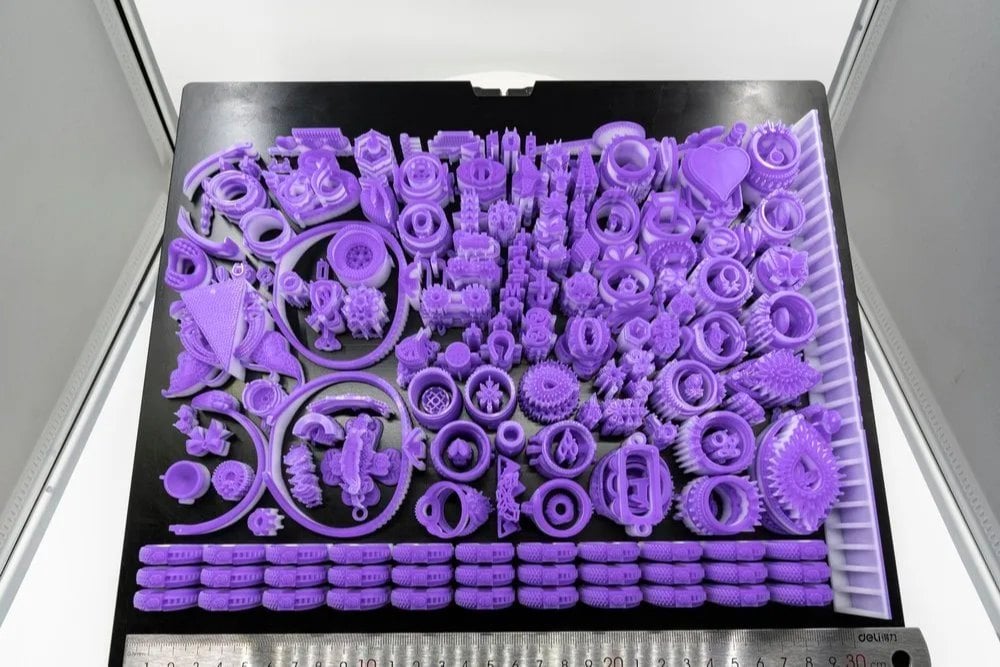
- Reproduction: 3D printing adds another level of convenience in that you can reproduce old or lost pieces of jewelry. With a 3D scanner, you can recreate an existing piece as a digital model that can then be cleaned up in CAD software and printed.
- Cost-Efficiency: Jewelry-scale 3D printing uses very little material. Although castable wax materials might be more pricey than regular resins, you’ll get a lot of mileage out of one batch of material, which helps you cut costs.
- Quick Prototypes: Fitting stones in a 3D printed model ensures a perfect fit and customer approval before casting the final piece. Clients can try on 3D printed models and get a truer sense of the final piece than a 2D image.
Models for lost-wax casting are not the only opportunity to make jewelry with 3D printers. As we mentioned, you can directly 3D print in precious metals, but there is also the possibility to print jewelry in polymers, ceramics, and non-precious metals.
Get Your Jewelry 3D Printed
feature_list_placeholder_no_post
If you’re not ready to dive into purchasing your own printer for jewelry molds, there are plenty of third-party printing services where you can upload your digital file, choose your materials, and receive your model in the mail. Some will also do the metal casting step for you – along with polishing and finishing – so you receive your final jewelry piece in the mail in precious metals, including gold, silver, and platinum. As we mentioned above, if you want a piece of jewelry directly 3D printed in precious metal – which isn’t common – be sure to ask the providers below if they offer that service.
Craftcloud. The ideal place to start is on this 3D printing service marketplace where you simply upload your 3D file and receive instant quotes from other major 3D printing services worldwide, so you’re sure to get the right price.
- Castable Wax
- Gold
- Sterling Silver
- Platinum
- Bronze
- Copper

Lead image source: Flashforge
License: The text of "Digital Goldsmiths: Top 3D Printers to Revolutionize Your Jewelry Workflow" by All3DP Pro is licensed under a Creative Commons Attribution 4.0 International License.
CERTAIN CONTENT THAT APPEARS ON THIS SITE COMES FROM AMAZON. THIS CONTENT IS PROVIDED ‘AS IS’ AND IS SUBJECT TO CHANGE OR REMOVAL AT ANY TIME.