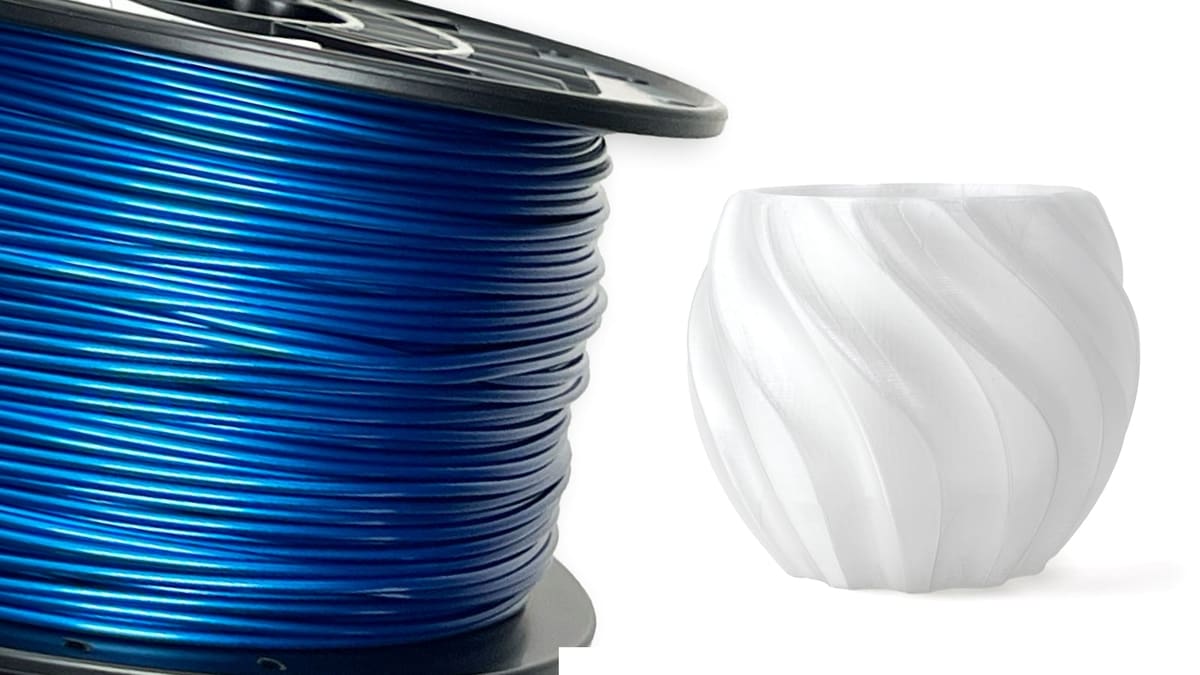
High-Speed vs. High-Strength: Finding the Best PETG Filament in 2026

Explore our guide to the best PETG filament on the market, and find the right brand for your needs and budget.
PETG has earned its spot as one of the most popular materials in 3D printing, and for good reason. Easy to print, durable, food-safe, and affordable, it’s often the go-to choice for makers who want something tougher than PLA without the printing headaches of more demanding filaments.
Compared to PLA, PETG brings extra hardness, better impact absorption, improved temperature resistance, and stronger chemical resistance. That makes it a favorite for practical prints, functional parts like brackets, clips, storage bins, tool holders, and protective covers, and anything expected to handle regular use with a little flex.
But choosing PETG is only half the battle. With countless brands, blends, colors, finishes, and spool sizes on the market, finding the right filament can quickly feel overwhelming. To make things easier, we’ve sifted through today’s most popular PETG options and picked out our favorites, along with a few promising spools worth your attention. Read on to see which PETG filaments made the cut.

How Certain Brands Made Our List
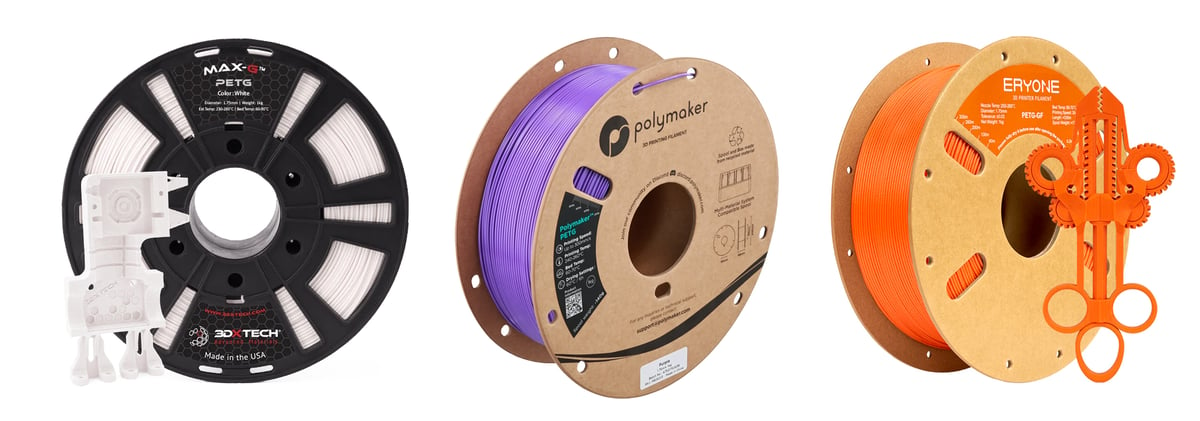
We’ve put this list together to help narrow the field to PETG filaments from prominent, trusted brands with strong reputations in the 3D printing community.
Some of the materials here we’ve printed with ourselves. Others we haven’t put through our own machines, but they come from manufacturers whose filaments, resins, or other polymers we’ve had good experiences with, or whose track record gives us confidence. In short, these are brands we’d be comfortable recommending rather than the cheapest spools we could find.
That’s not to say there aren’t lower-cost PETG options out there. There are plenty, and some may print perfectly well. But as with most things, you often get what you pay for. Better-known brands tend to offer more consistent diameter, cleaner winding, better quality control, clearer print guidance, and fewer surprises from one spool to the next.
We haven’t lab-tested every filament in identical conditions, because that kind of comparison can be misleading. PETG performance depends heavily on your printer, slicer settings, nozzle temperature, bed surface, humidity, part geometry, and even how the filament has been stored. A spool that prints beautifully in one setup can behave differently in another.
Instead, our selection focuses on brand reputation, product availability, user feedback, value, and our own experience where applicable. The list is ranked by price rather than by a definitive “best to worst” score, so you can more easily compare options based on your budget.
With that in mind, let’s take a closer look at the PETG spools worth considering.
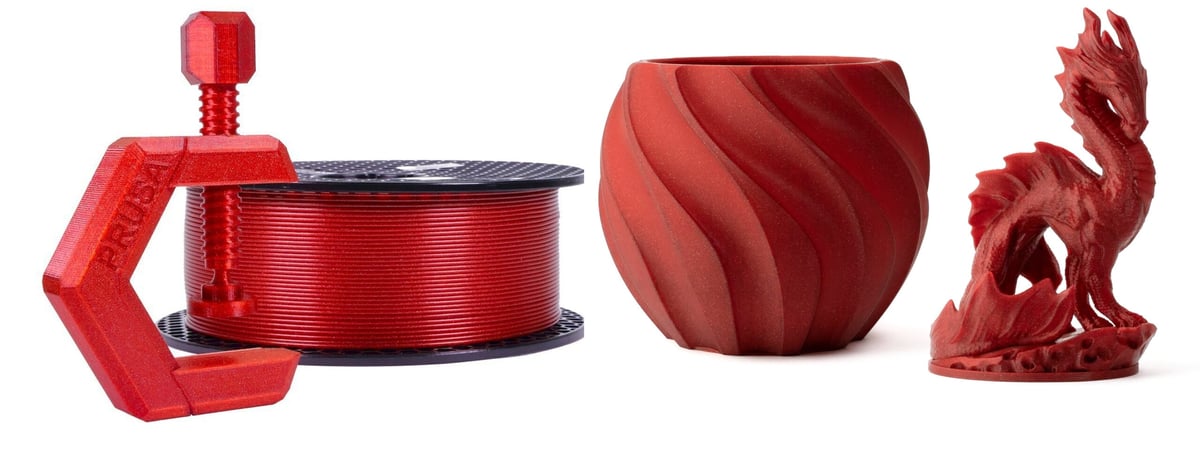
What’s Your Favorite Brand? Tell us in the comments.
Overture PETG
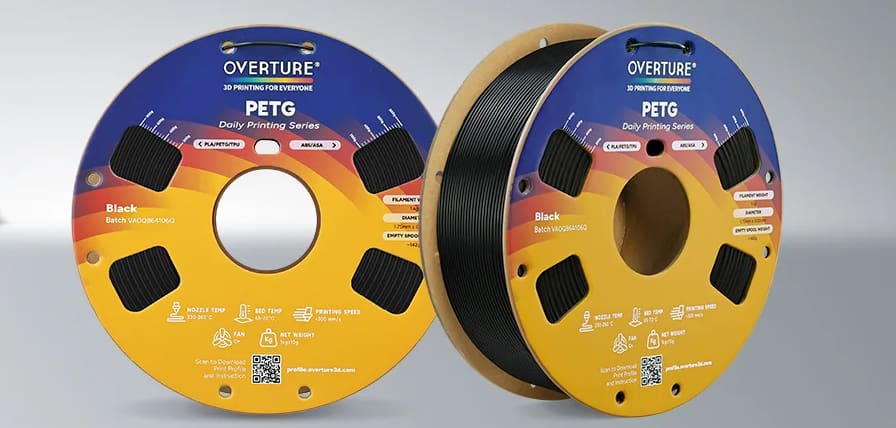
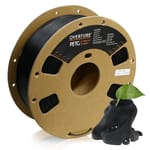
Overture is a filament manufacturer you’ll often see pop up on Amazon. It’s a mass producer of various filaments, and these types of brands can be a coin toss when it comes to quality. Overture must be playing with a weighted coin though, because time and again, Overture PETG has come up with the goods – at least according to many user reports across the online 3D printing sphere.
The company has introduced a new version of PETG that sounds like a dream come true. According to Overture, this new improved PETG promises smoother surfaces, higher stiffness, 4x increase in impact strength, and is formulated to print at 6x faster print speed.
The price is certainly appealing. You can pick up a black or white 1-kg spool of this stuff for about $15, and there are more than a few colors to select from as well. There are 13 available colors in its new improved PETG blend, and 24 colors offered in total, including transparent and a “rock white” PETG, which gives a stony, matte finish to prints.
Another plus point in Overture’s favor is the fact that all its PETG spools are measured to a dimensional tolerance of ±0.03 mm – a slight advantage over many more expensive brands.
3DXTech PETG
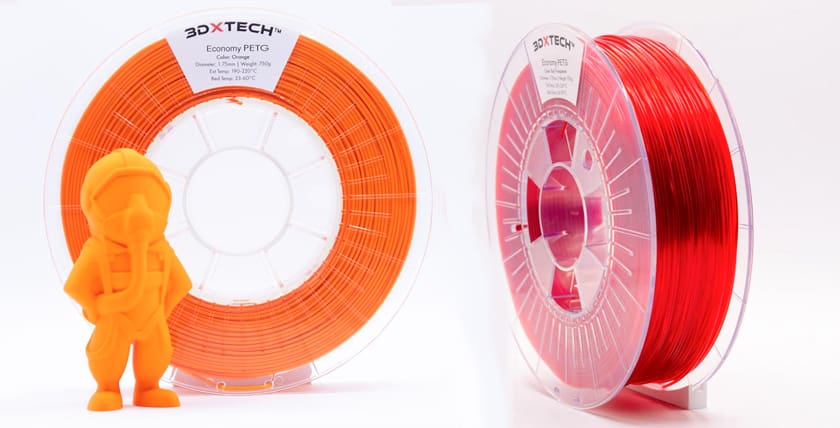
What 3DXTech PETG lacks in high speed filament, it more than makes up for in low prices and specialty filament. Starting with their Economy PETG, priced at $13.49 per 750 g and available in 15 colors, the company also offers ECOMAX rPETG made from recycled PETG for $26/kilo, and MAX-G, meant for high strength and flexibility, which runs for $36/kilo but only available in 8 colors.
Carbon Fiber-reinforced PETG is an exceptionally strong material suitable for use in all kinds of heavy-duty scenarios. There are more than a few blends of these two materials in one filament out there, but 3DXTech’s CarbonX filament has one of the best reputations among the pack.
Carbon Fiber filament blends are rarely cheap, but at $50 per 750 g, 3DXTech is more than competitive with its pricing. This material will be more than suitable for users wanting an exceptionally strong blend of PETG that is suitable for practical use in high-demand applications. It can be printed on most standard consumer machines, but 3DXTech recommends using a hardened steel nozzle and a glue stick to help the print adhere to the bed.
Also available is 3DXStat ESD-PETG, a high performance PETG made with an advanced compound for uses that require protection from electrostatic discharge (ESD). For applications that require electromagnetic interference (EMI), the company has recently introduced 3DXStat EMI filament, which they claim shields signals in the 5-8 GHz range particularly well.
And as part of their R&D program 3DXLabs, the company offers a HT-PETG for applications requiring augmented heat resistance. Be forewarned though, this filament is only offered in limited batches and meant for experienced users who are willing to experiment as the material is still under development.
FormFutura PETG
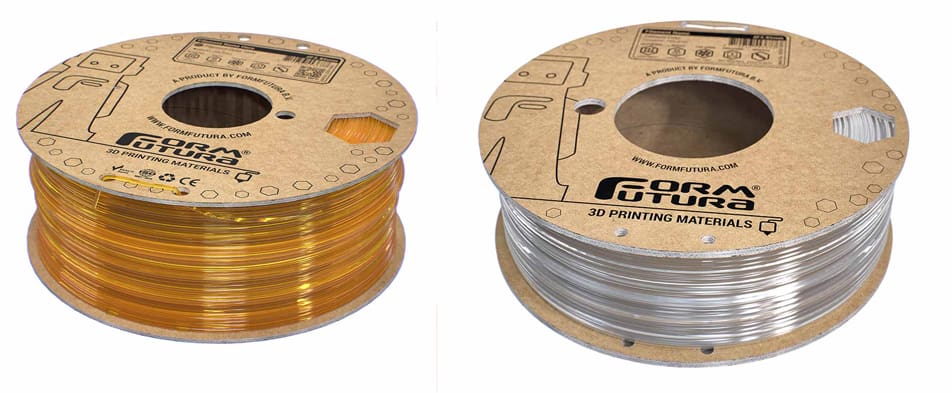
FormFutura offers a wide PETG range covering everyday printing, bulk use, refill spools, recycled materials, composites, and more specialized blends. Its PETG filaments are designed to combine PLA-like printability with ABS-like toughness, making them suitable for functional parts, mechanical components, enclosures, outdoor prints, liquid containers, and other practical applications.
FormFutura says its blends are engineered for smooth printing, reduced stringing, and strong layer bonding, with a broad choice of colors and spool sizes for most standard 3D printers.
The lineup includes accessible options like EasyFil ePETG, Bulk PETG, and ReFill PETG, alongside more advanced materials such as HDglass, CarbonFil, CarbonFil CF03, and Premium PETG Flame Retardant. FormFutura also offers ReForm rPET, a recycled PET-based option for users looking for a more sustainable material choice. Prices range from budget-friendly bulk and refill options to higher-cost specialty filaments, giving users a solid selection depending on whether they need everyday reliability, added stiffness, flame retardancy, or a more professional finish.
Polymaker PETG
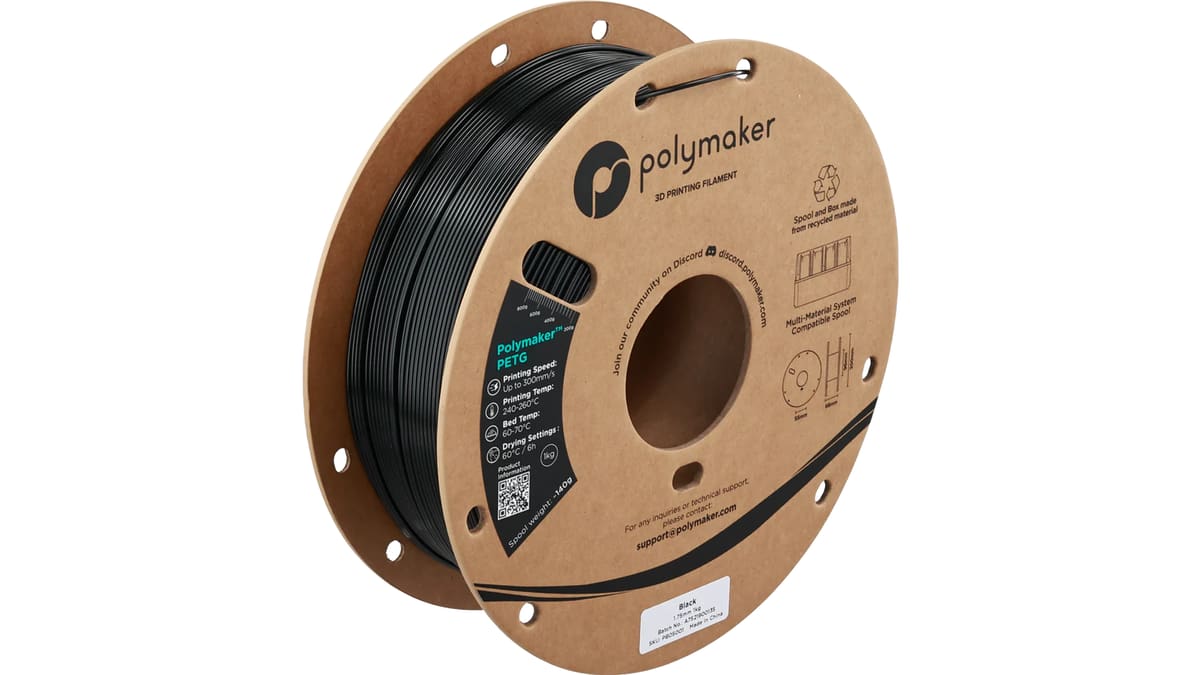
Polymaker is another 3D printing material manufacturer held in high regard by makers and we’ve had success with it in our own lab. The company claims that its new PETG has been re-created for its high speed, high strength, and high quality characteristics. (The PolyLite PETG line has been discontinued except for the translucent.)
This new PETG is engineered to print at up to 300 mm/s without losing strength, have increased layer bonding, and is said to print smoother, leaving a more aesthetic final appearance. But be warned, this version is very hygroscopic so be prepared to dry your filament before printing.
Polymaker’s new PETG comes in 21 colors and is priced at ~$19 (depending on color) for a 1-kg spool. The packaging is also smart, with lines on the label that tell you approximately how much material you have left on a spool – good for knowing when you need to order more.
Polymaker PolyMax PETG outperforms standard PETG filaments with exceptional mechanical strength and resilience, the company says. Available in just black and grey, this formulation has better impact resistance for parts that need to withstand real-world stress.
Bambu Lab PETG
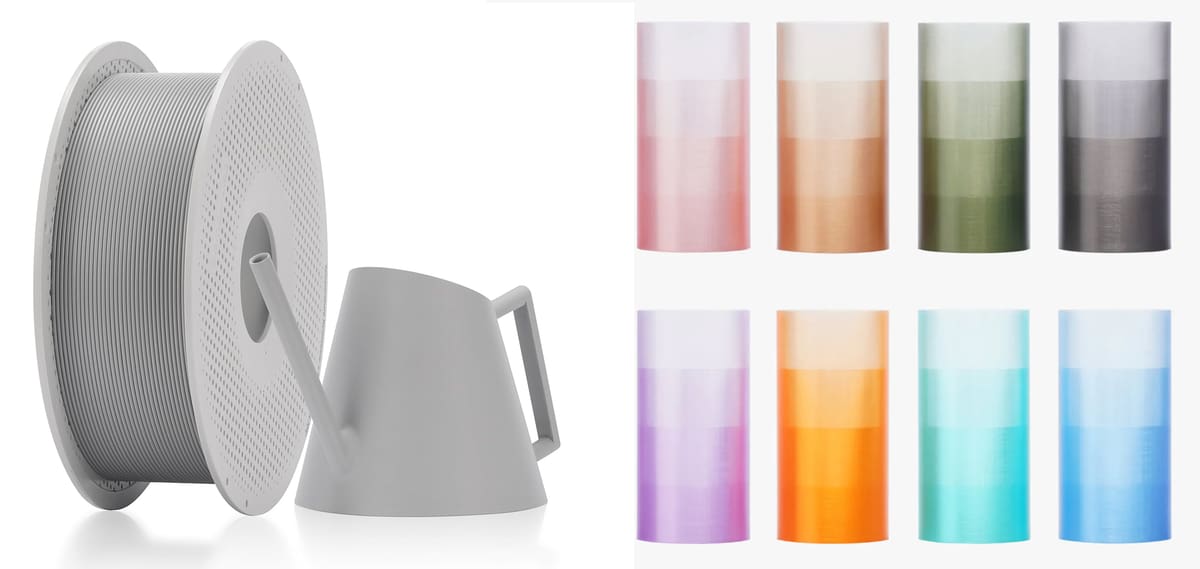
Bambu Lab’s PETG range is an easy recommendation for anyone already using a Bambu printer, thanks to the company’s ready-made profiles, RFID spool recognition, and AMS-friendly packaging. It’s not limited to Bambu machines, but the ecosystem integration is a big part of the appeal.
The headline option is Bambu PETG HF, a high-flow PETG designed for faster printing. Bambu says it’s optimized for high-speed printing, with default print speeds up to twice as fast as standard PETG, while also reducing common PETG annoyances like oozing and clumping. That makes it a practical choice for users who want PETG’s toughness without slowing their printer to a crawl.
For clearer, shinier parts, Bambu PETG Translucent is the more visual option. It’s aimed at prints where light transmission and a glossy finish matter, while still offering PETG’s impact resistance and suitability for indoor and outdoor applications. Bambu lists its Vicat softening temperature at 79 °C, with a heat deflection temperature of 74 °C under 0.45 MPa.
Bambu also offers PETG-CF, a carbon fiber-reinforced PETG for stiffer, more technical-looking parts. It’s designed to reduce clumping and stringing compared with regular PETG while improving mechanical properties, making it a good fit for functional parts, fixtures, drone components, racing models, and other applications where strength, toughness, and appearance all matter.
MatterHackers PETG
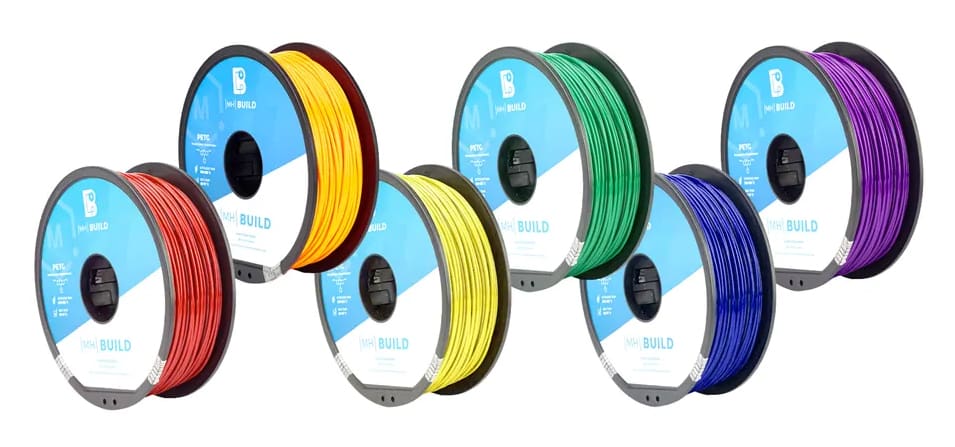
MatterHackers has been selling filament for a long time, and is a trusted name for makers, particularly in North America. Its Build Series is the company’s entry-level consumer filament line, made to balance cost and quality. In short, we find it to be exactly what you’d expect; an affordable, good-quality material from a reputable company.

MatterHackers Build Series PETG is certainly a good material for the low price, with a dimensional accuracy of ±0.05 mm for a retail price of ~$25 for 1-kg spools (or $21 if you buy in bulk). It’s a reasonably strong material suitable for all kinds of uses that also comes in 18 colors. Meaning that, unlike some spools in this list, there’s a far larger array of finishes for consumers to choose from.
MatterHackers Pro Series PETG ($57 / kg) is a tougher and sturdier material that features minimal shrinkage, making it a good solution for parts that need to be impact resistant and pliable. MatterHackers says its Pro Series is specifically formulated to enhance PETG’s natural properties, like durability, heat and chemical resistance, and ease-of-use.
The affordable Build Series PETG filament from MatterHackers combines the usability of PLA while focusing on the strength and durability of ABS.
Hatchbox PETG
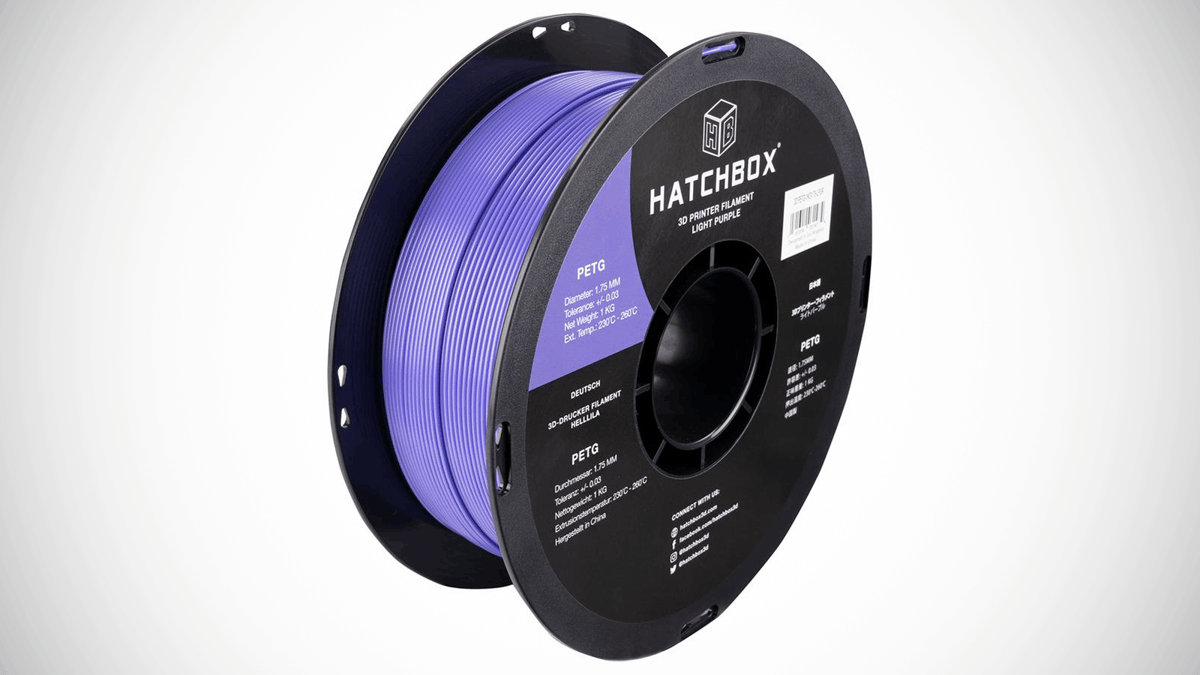
A popular materials company, Hatchbox gets a lot right with its PETG filament.
It keeps tolerances tight with a dimensional accuracy of ±0.03 mm, and the price is good too, at $25 for a 1-kg spool of their high speed filament and $26 for their normal speed PETG. Their basic PETG comes in 8 colors and prints at up to 50 mm/s, while their Rapid PETG Filament uses the same PETG formula as the basic but comes in a variety of 12 colors and prints at up to 400 mm/s using about the same print temperatures.
Eryone PETG
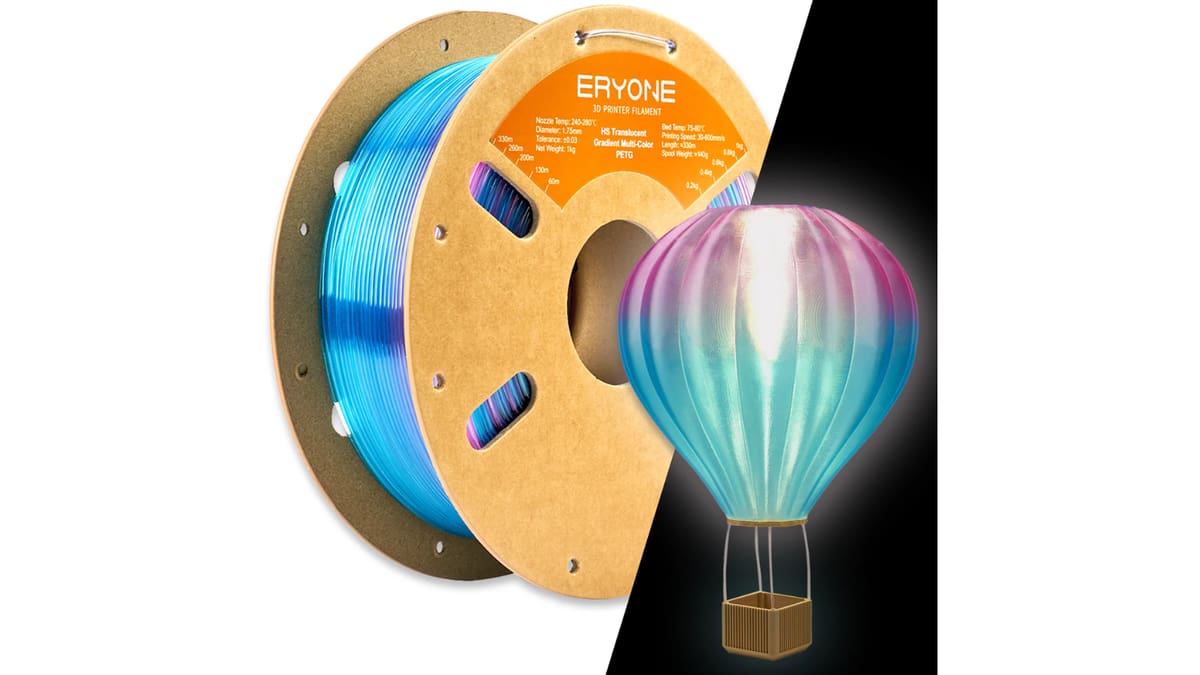
Pay a visit to All3DP’s print lab and you’ll discover that Eryone’s PETG is one of the materials we almost always keep a stock of.
Eryone PETG is a solid filament with a mid-range dimensional tolerance of ±0.03 mm and a competitive price of ~$26, for a 1-kg spool. Eryone’s standard PETG comes in ten colors was found to have consistent behavior in line with what we’d expect from PETG. It remains a great option, and we always have some on hand due to its higher-than-average dimensional accuracy and reasonable price.
Spend a few bucks more, and you can also purchase their Hyper Speed PETG with print speeds of up to 600 mm/s and comes in a range of colors including metallic and translucent, a Carbon Fiber PETG blend that’ll offer much greater strength, or their fiberglass reinforced PETG for high-performance prints.
Fillamentum PETG
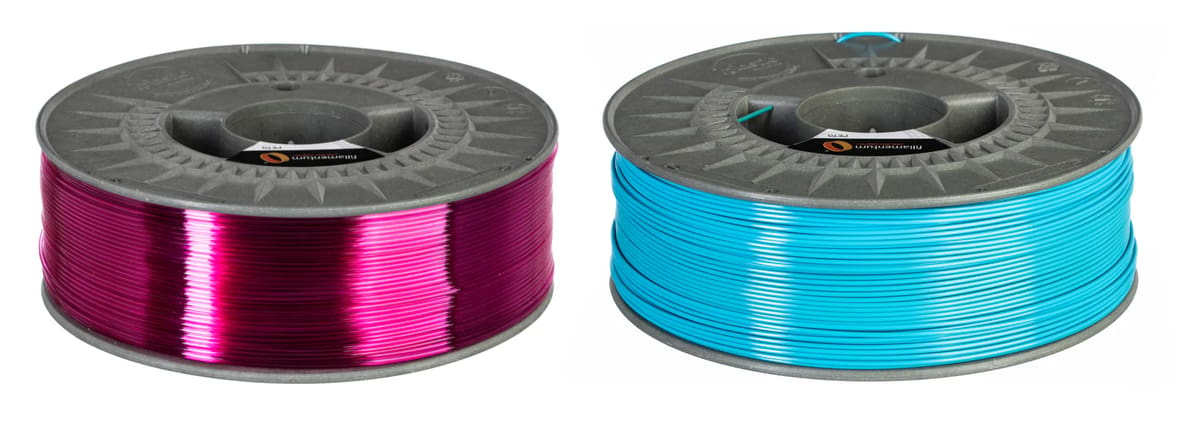
Fillamentum PETG has a healthy reputation as a solid and dependable PETG filament available in an array of interesting and unusual colors.
Priced starting at $29 per 1-kg spool, Fillamentum offers its PETG with an average diameter tolerance of ±0.05 mm in single-kilo-weight spools only. It’s the colors that steal the show here, though. There are over 20 to choose from, almost all of them interesting or different in some way, and with names to match.
Lemon Yellow Transparent, Gold Cloud, Forget-me-not Blue, and Sea Wave, in particular, look cool, but our favorite is the Wizard’s Voodoo – a magical halfway house between dark blue and black.
And for those who want a more sustainable filament, the company offers rePETG Loopfill, which made from recycled medical-grade PETG using leftover material from the medical industry.

Prusament PETG
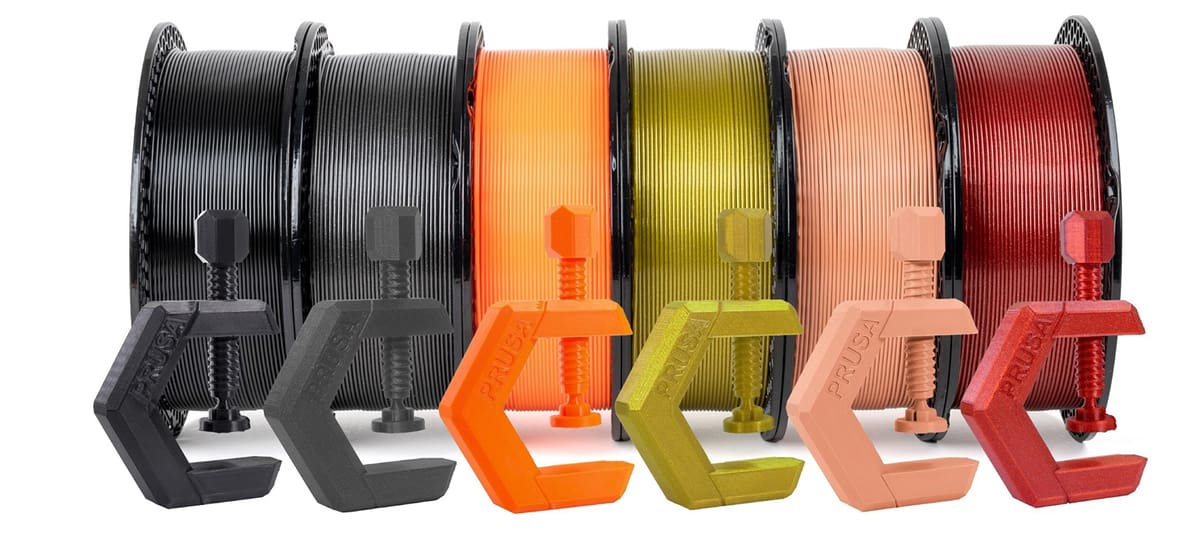
As you might expect from the famously thorough Czech 3D printing powerhouse, Prusa Research has its own line of 3D printing materials dubbed “Prusament”. Like all of the company’s products, its PETG filament is produced to exact specifications.
Prusament PETG has an exceptional dimensional accuracy of just ±0.02 mm and is still a reasonable price of ~$32 per 1-kg spool too. That’s pretty hard to beat, value wise, especially when you also consider the 25 colors available.

Prusament PETG is also available as refill only (saves $2-3) jumbo 2-kg spools (an additional $20), as well as its own “self-extinguishing” variant called V0. For those seeking extra strength, a carbon fiber-enhanced blend is also offered, as well as a matte black-finished spool, recycled PETG made of 100% recycled PETG materials so the color will vary with every batch, PETG Tungsten for medical applications, and PETG Magnetite 40% which has paramagnetic properties. Options are certainly not endangered with this brand of PETG, but it does not yet offer a high speed or high flow version and has a print speed of up to 200 mm/s.A safety net is rarely needed with filaments, but Prusa Research is well known for its excellent support, so we’re confident any potential issues would be solved too.
Protopasta PETG
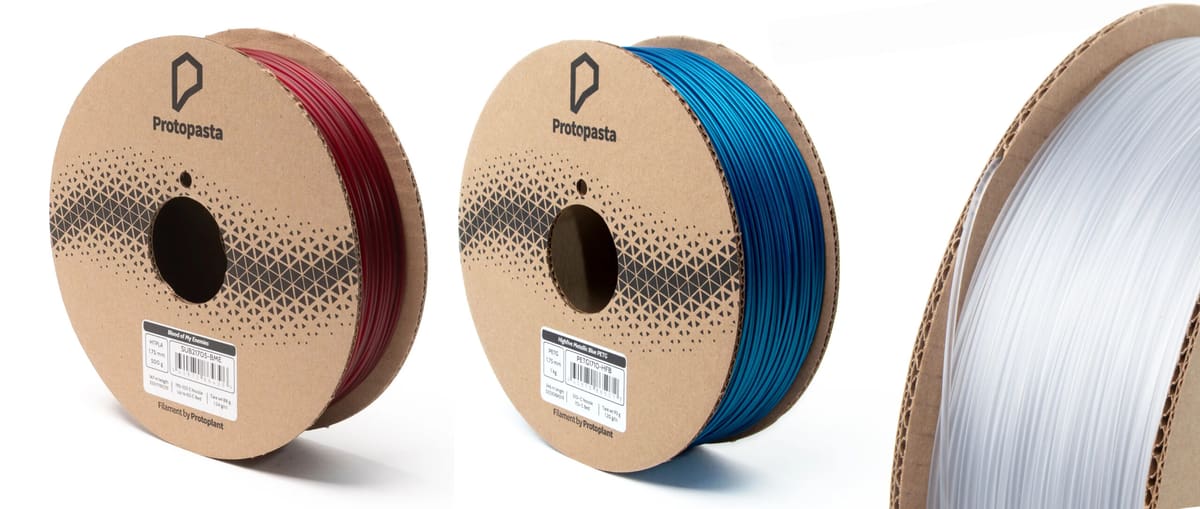
Protopasta’s PETG lineup is a strong pick if you want a reliable, U.S.-made filament from a brand best known for carefully developed specialty materials. Its current PETG range includes straightforward colors such as clear, black, white, red, and blue, with formats including small coils, 500-g spools, 1-kg spools, 3-kg spools, and multi-spool cases.
The company’s Simply Clear PETG and Simply Black PETG are positioned as high-quality, lower-cost options made from 100% new PETG. Protopasta says it keeps processing and ingredients minimal, but still relies on quality materials and in-house processing for better control over the final filament.
Printing guidance is refreshingly simple: start with a generic PETG profile, use a bed temperature of 70 °C or higher, and a nozzle temperature of 235 °C or higher. Protopasta notes that higher nozzle temperatures can improve layer adhesion, with 255 °C suggested as a good compromise, though the material can be printed hotter depending on speed and setup.
For U.S. buyers especially, Protopasta PETG is worth a look. The brand highlights free US shipping from $49, loyalty discounts from $99, and bulk discounts starting at $249, making its made-in-U.S.A. PETG more attractive for repeat users, print farms, or anyone who prefers buying from a domestic manufacturer.
Rosa3D PETG
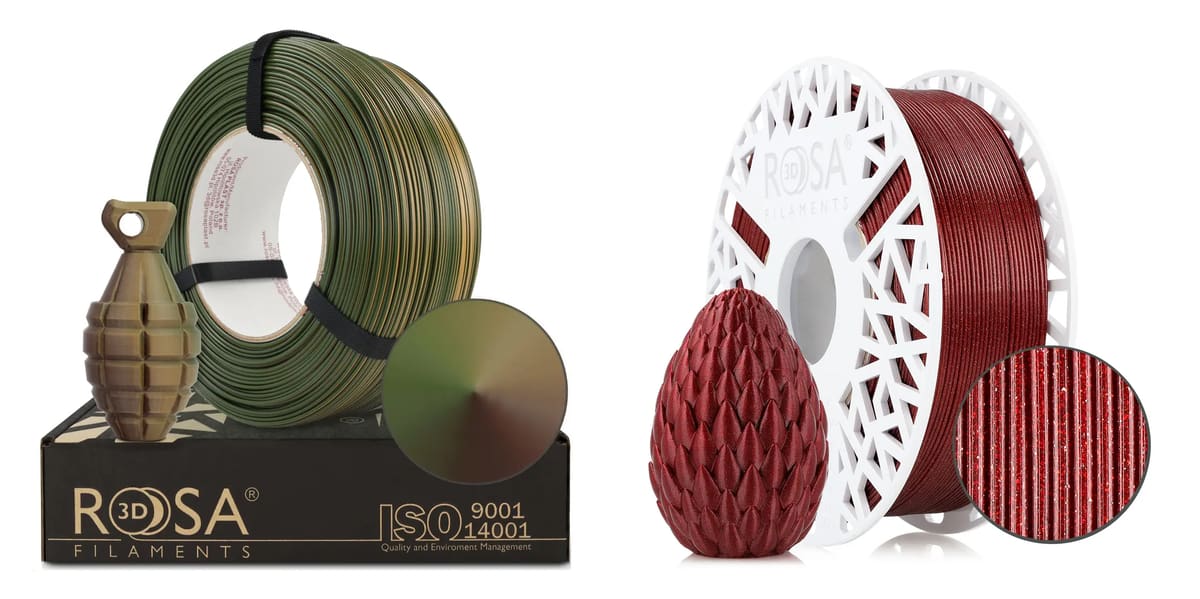
Rosa3D is a solid European option for PETG, especially if you want a broad color range and refill-friendly packaging. Its main PET-G Standard HS line is designed for easy, stable printing at higher speeds, while still offering the usual PETG benefits: toughness, impact resistance, slight flexibility, and good layer adhesion. Rosa3D positions it as suitable for both beginners and more experienced users, with common applications including containers, enclosures, holders, and decorative parts.
The color selection is a highlight. Rosa3D’s PETG range includes classic opaque colors, transparent shades, pearlescent options, metallic looks, glitter finishes, glow-in-the-dark colors, and more.
Beyond its standard PETG, Rosa3D also offers more specialized variants, including PET-G CarbonLook, PET-G Galaxy HS, and PETG + 10 CF, giving users options for visual effects, higher heat resistance, flame-retardant properties, medical/detectable use cases, or extra stiffness.
PETG Variants: High-Temp, Carbon Fiber, and Glass Fiber
Standard PETG is already a great all-rounder, but some prints need a little extra help. That’s where specialty PETG blends come in. You’ll often see labels like PETG-HT, PETG-CF, or PETG-GF. These are still PETG-based materials, but they’re tweaked for better heat resistance, stiffness, strength, or surface finish.
PETG-HT, or high-temperature PETG, is designed to hold up better in warmer environments than regular PETG. Standard PETG can soften if things get too hot, which may be a problem for parts used near motors, inside cars, or around electronics. PETG-HT raises that heat tolerance, helping printed parts stay more stable and less likely to deform under heat.
It’s a good option for functional prototypes, brackets, automotive parts, mechanical components, and light-duty tooling. For example, Spectrum PETG-HT100 is made for increased heat resistance up to 100 °C, while 3DXTech offers a PETG-HT option in more limited availability.
Then there are fiber-filled PETG filaments. These blends add short strands of reinforcing material, most commonly carbon fiber or glass fiber, to make the filament stiffer and stronger without adding much weight.
PETG-CF, or carbon fiber-filled PETG, is popular for parts that need extra rigidity, such as drone components, mounts, fixtures, automotive parts, and lightweight mechanical pieces. It usually has stronger mechanical performance than glass fiber PETG and often gives prints a clean, matte, technical-looking finish.
PETG-GF, or glass fiber-filled PETG, is another reinforced option. It still improves stiffness and strength, but because glass fibers are lighter in color and more transparent than carbon fiber, PETG-GF is often available in more colors. It also tends to be more affordable than carbon fiber blends.
Plenty of brands offer reinforced PETG. Eryone, for example, sells both carbon fiber and glass fiber PETG. For a more sustainability-minded option, Polymaker offers a recycled carbon fiber PETG containing 8% recycled carbon fiber.
One thing to keep in mind: fiber-filled filaments are more abrasive than standard PETG, especially carbon fiber blends. A hardened steel, ruby, or other wear-resistant nozzle is strongly recommended, as these materials can wear down a standard brass nozzle surprisingly quickly.
License: The text of "High-Speed vs. High-Strength: Finding the Best PETG Filament in 2026" by All3DP Pro is licensed under a Creative Commons Attribution 4.0 International License.
CERTAIN CONTENT THAT APPEARS ON THIS SITE COMES FROM AMAZON. THIS CONTENT IS PROVIDED ‘AS IS’ AND IS SUBJECT TO CHANGE OR REMOVAL AT ANY TIME.