How to Pick the Right CNC Materials First Time, Every Time

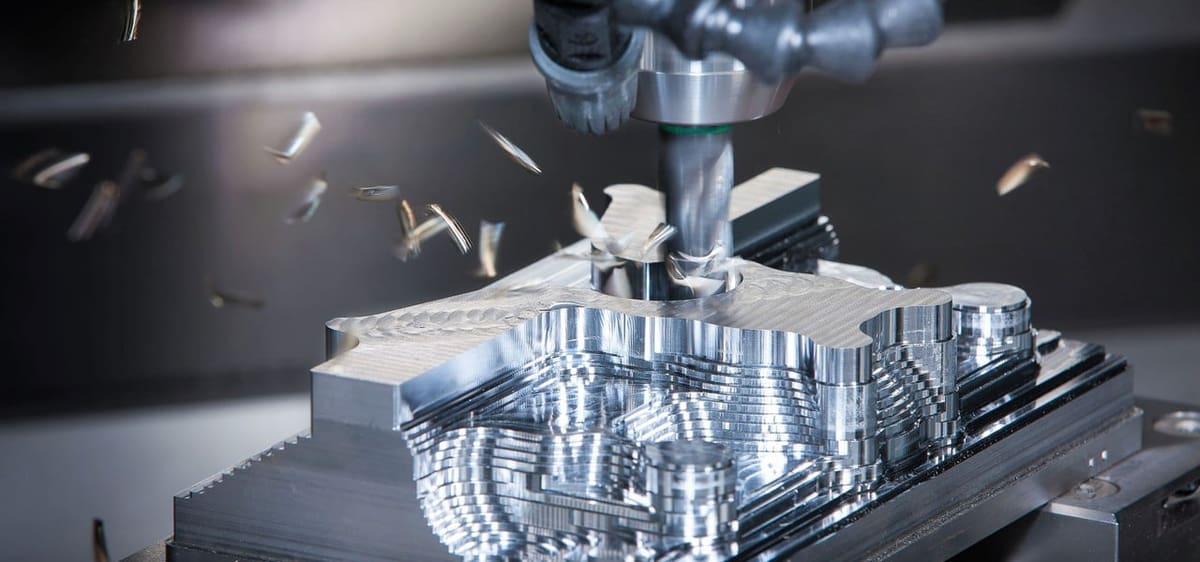
CNC is a computer controlled fabrication technique and about 30 years older than 3D printing. Fast, accurate, and versatile, it belongs in the advanced maker's toolkit.
Choosing CNC Materials
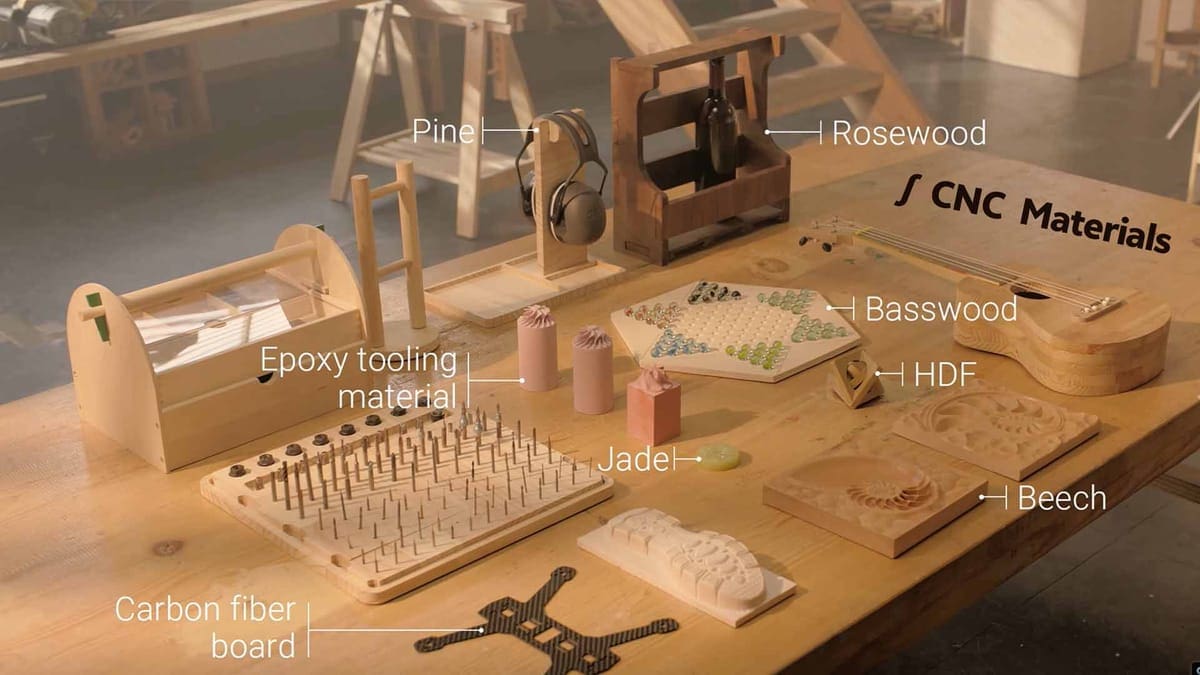
Selecting the right material for your CNC project is a crucial task, but it can feel a bit daunting, especially with so many options on the table. Whether you’re an experienced professional or just starting out, the wrong material impacts the quality, cost, and timeline of your project.
In this article, we’ll walk you through some key factors to consider when selecting CNC materials, providing you with information to help you make informed decisions.
From understanding material properties to evaluating the specific requirements of your design, we’ll give you some tips on picking up the right material for your needs, ensuring your project is a success from lights out to the finish line.

A Hobbyist CNC Maker's Go-To Materials
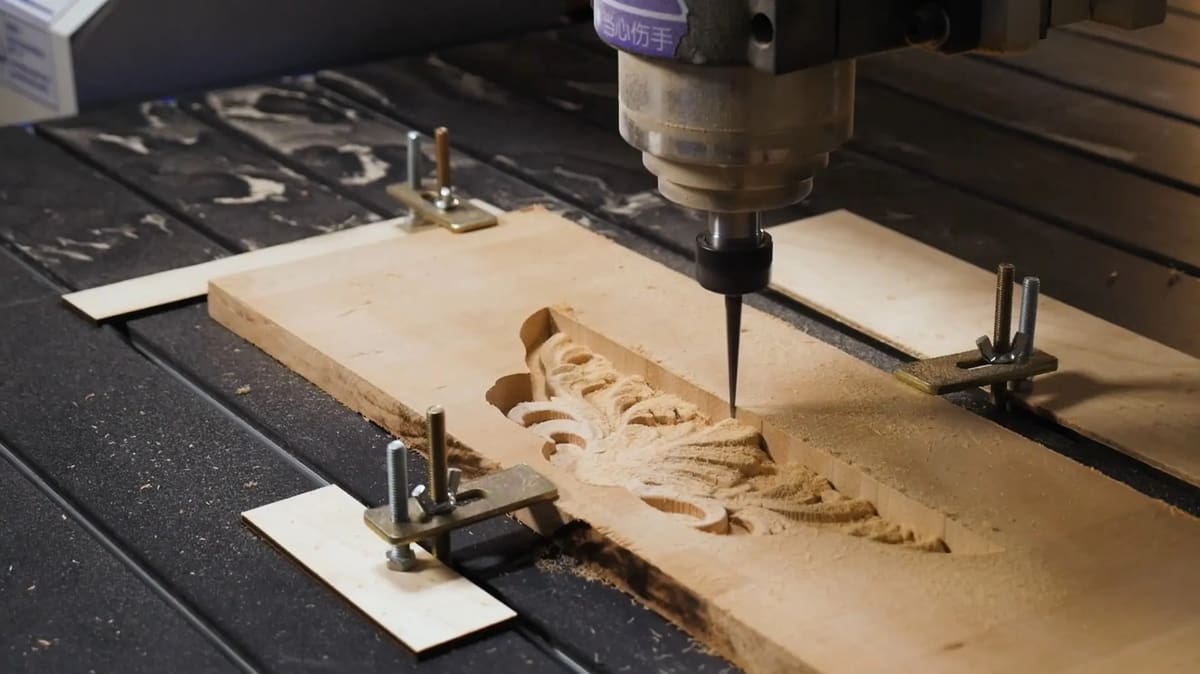
First stop: baltic birch plywood. This is a great prototyping material for many CNC projects. It’s low-cost, high-quality, and paintable. Just be sure you don’t need any of the following characteristics:
- Waterproof
- Clear
- Impact resistant
- Slippery, bearing-like surface
- Abrasion resistant
Next up is polycarbonate. If your part can be clear and doesn’t need to serve as a bearing or slippery surface, PC is often the way to go. If you need more strength or rigidity, consider an assembly, and remember that polycarbonate can be cold-bent on a bending brake, which is an excellent way to add structure and rigidity after machining.
Now we reach a fork in the road:
- For more strength, hardness, or temperature resistance, move to aluminum.
- For thicker parts, with a slippery surface, impact strength and abrasion resistance, try UHMW.
Last stop on our short tour is acetal, for when you need a precise, slippery material available in black or white.
Getting confused between the different plastic options? Check out this chart comparing plastic properties.
For more detail, let’s take a more in-depth look at five recommended materials for CNC.
Baltic Birch Plywood
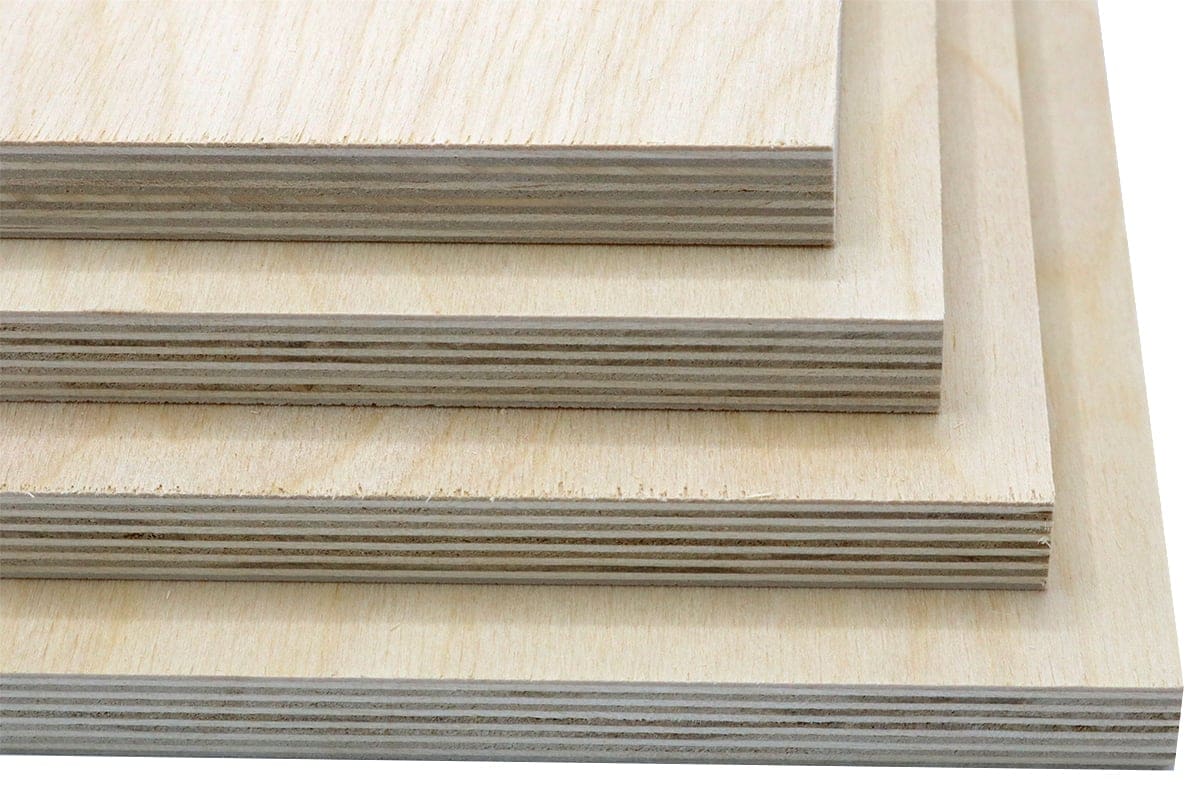
Baltic birch plywood is great for CNC. It’s consistent, void-free, stable cabinet-grade plywood and has an attractive exposed edge. To get deep into its properties, you can read all about Baltic birch plywood here. Here’s a brief summary of what to expect:
- Available thicknesses between 1/10″ to 1″
- Cost of roughly $3 for a 1/4″-thick, 12″ x 12″ piece
- Or roughly $6 for a 3/4″-thick, 12″ x 12″ piece
- Easy to cut
- Easy to join
- Ready to finish with paint or stain
As you can see from that brief list, the affordability and ease of which it is to work with this material makes it a mainstay among CNC hobbyists.
Polycarbonate
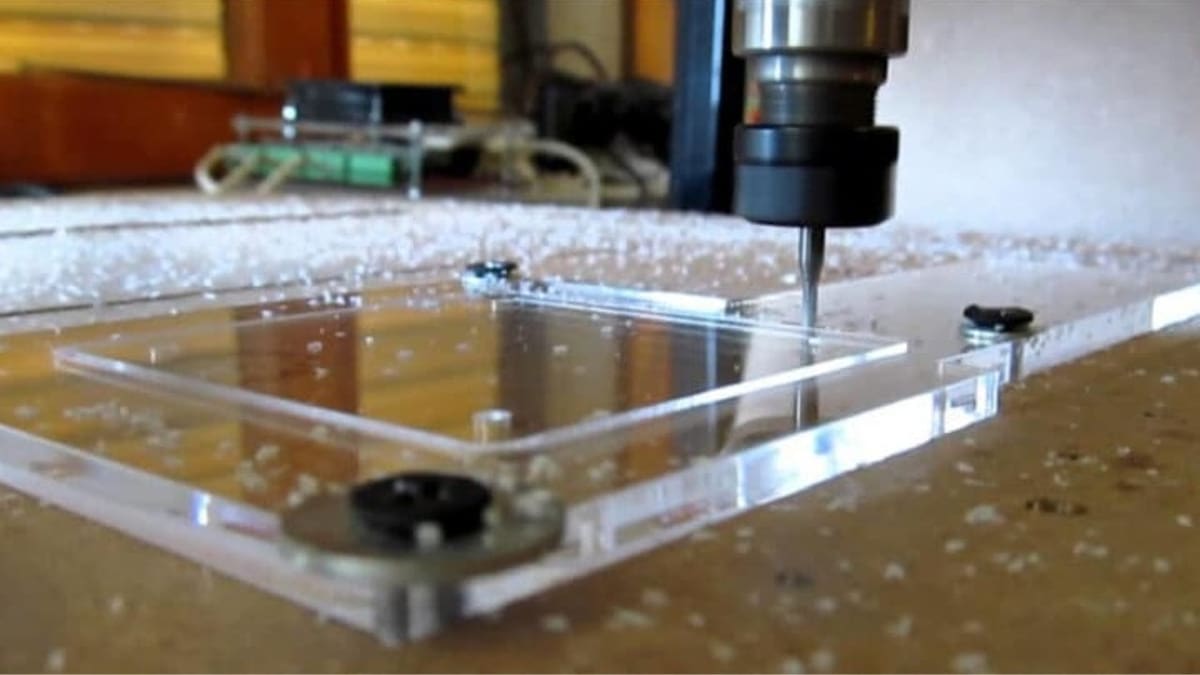
Polycarbonate, also known as Lexan or Makrolon, is a strong, impact-resistant engineering-grade plastic that mates very well with CNC. Thicker material does get very pricey. If you can work with 1/4″ clear sheet, this is a versatile material that is a pleasure to cut.
- Available in thicknesses between 1/10″ to 3/4″
- About $15 for a 1/4″-thick, 12″ x 12″ piece
- Or about $200 for a 3/4″-thick, 12″ x 12″ piece
- Easy to cut
- High impact resistance
- Cold bendable
- Generally available only clear or tinted
Aluminum
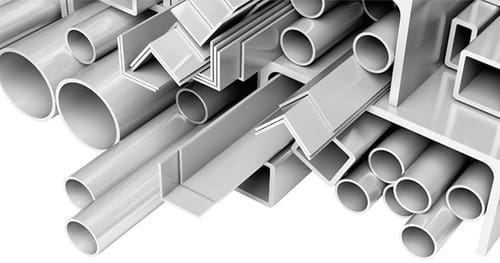
Aluminum is deployed extensively in the manufacturing of mechanical components. This lightweight, abundant metal has an excellent strength-to-weight ratio, and is much stiffer than plastic. Working with aluminum has its challenges, but it opens the door to strong, high-tech parts fresh off your CNC machine.
- Available in thickness of 1/32″ to multiple inches
- About $35 for a 1/4″-thick, 12″ x 12″ piece
- Or roughly $122 for a 3/4″-thick, 12″ x 12″ piece
- Can be challenging to cut — requires lubrication and/or cooling
- About 4x stronger and 30x stiffer than polycarbonate
- An excellent engineering material — strong, light, and non-corroding
- Post-CNC: Choose 5052-H32 for bending and 6061-T6 for welding
- Can be hard coated for abrasion resistance
UHMW

You could describe ultra-high-molecular-weight polyethylene (UHMW) as a poor man’s Teflon. Apart from having the same ultra-low coefficient of friction, UHMW is tough, real tough.
UHMW has a good bit of flex, so it isn’t a precision material. But if you need a bulky, slick, indestructible part with no moisture absorption, this is a good material to try.
- Available in thicknesses of 1/8″ to 5″
- Cost of around $12 for a 1/4″-thick, 12″ x 12″ piece
- Or $26 for a 3/4″-thick, 12″ x 12″ piece
- Easy to cut
- Slippery
- Excellent abrasion, wear, and impact resistances
- Generally available only in black or white
- Better as virgin material (avoid reprocessed)
Acetal
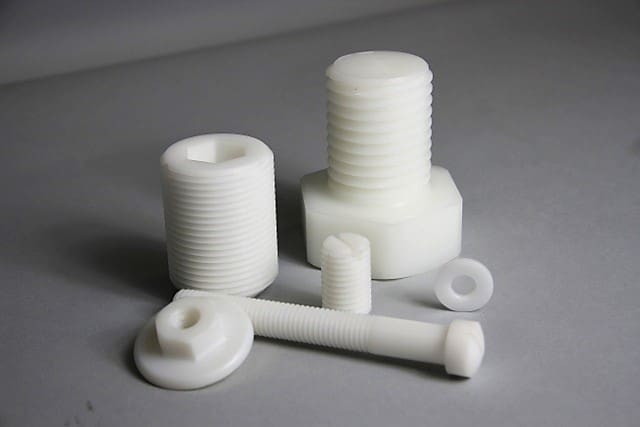
Alternatively known as POM or Delrin, acetal is a terrific engineering-grade material with very similar properties to nylon. It absorbs no water and cuts like butter.
- Available in thicknesses of 1/32″ to 4″
- Cost of around $22 for a 1/4″-thick, 12″ x 12″ piece
- Or around $58 for a 3/4″-thick, 12″ x 12″ piece
- Very easy and accurate to cut
- Precise
- Low friction
- Low water absorption
- Generally available only in black or white
Other Options
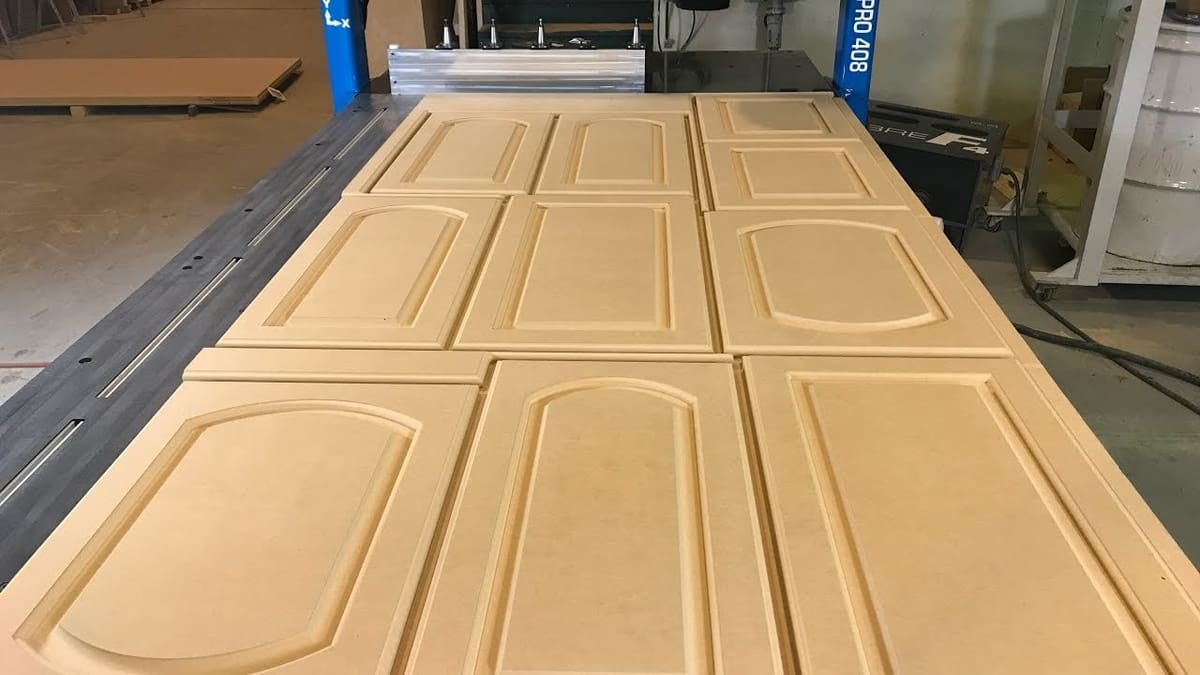
The following are some other popular options for CNC milling:
- MDF is a cost-effective wood-like composite, but can create very nasty dust — handle with extreme caution
- Nylon is a bit more expensive than acetal, absorbs water, and can swell. It is, however, an excellent bearing material.
- Acrylic (plexiglas), when compared to polycarbonate, is clearer and more scratch resistant. But with a much lower impact strength, it can be difficult to cut. Note also that it cannot be cold bent.
- G-10/FR4 is the stuff that circuit boards are made of. It’s an epoxy-grade industrial laminate and phenolic with high strength and low moisture absorption. A glass-filled material, it’s both stiffer and stronger than polycarbonate.
License: The text of "How to Pick the Right CNC Materials First Time, Every Time" by All3DP is licensed under a Creative Commons Attribution 4.0 International License.