The Complete Guide to Copper 3D Printing

3D printing with pure copper and space-age copper alloys is possible with a range of metal 3D printers and services. Check out our updated guide.
Copper is one of the fastest-growing areas of metal 3D printing, sought after for everything from electric motors to heatsinks. Yet, until recently, it’s been a challenge to 3D print copper because of the metal’s reflectivity and high heat conductivity.
But in 2025, the landscape of copper 3D printing looks markedly different. Recent developments in laser technology, material science, and machine architecture have significantly expanded copper’s industrial potential, pushing it beyond research labs and into scalable production environments.
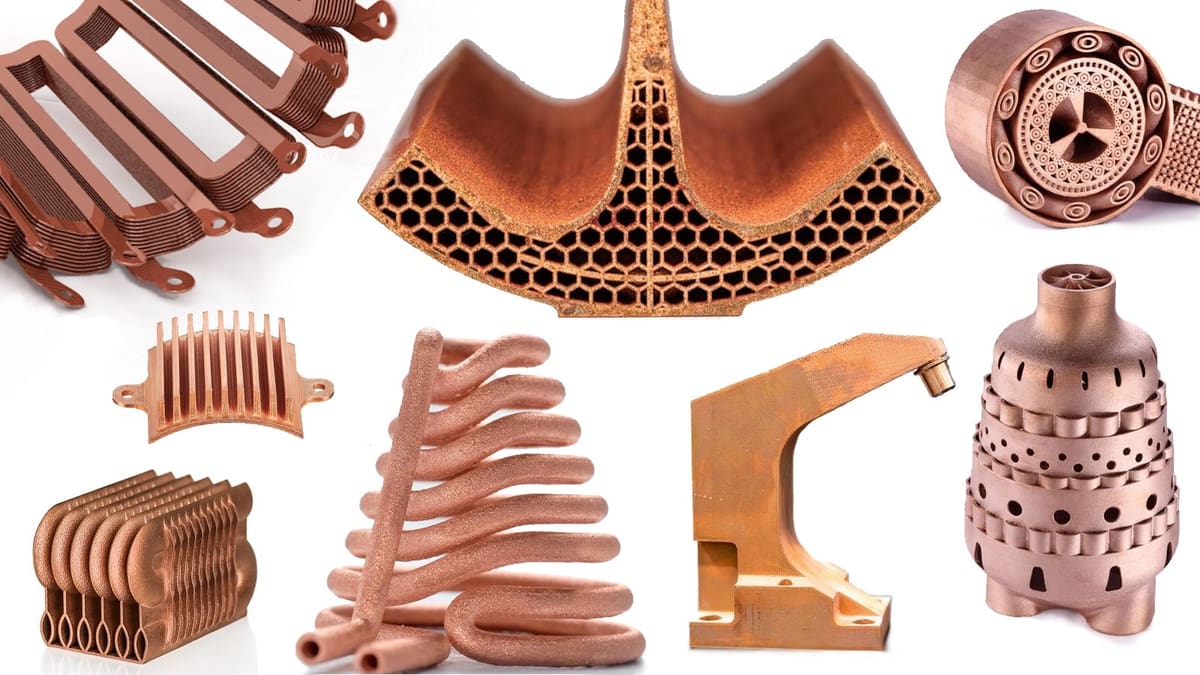
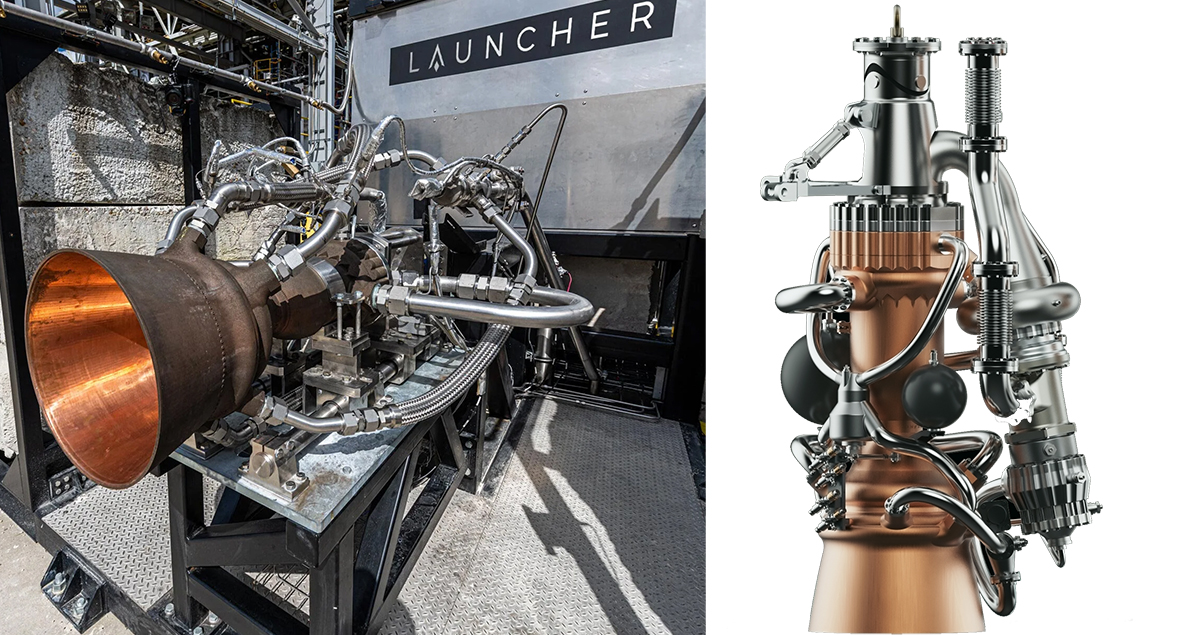
Today, 3D printed copper propulsion systems send rockets into space, 3D printed copper heatsinks keep CPUs cool, and 3D printed copper coils boost electric motor performance.

Why 3D Print Copper?
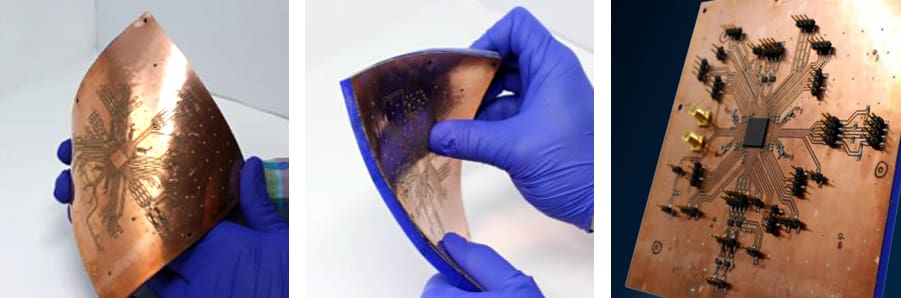
Copper has always been a highly useful metal due to its ability to conduct heat and electricity, resist corrosion, and even kill bacteria and viruses. Demand for complex copper parts is growing as 3D printing opens up even more applications and possibilities for this metal.
3D printing (also known as additive manufacturing) enables the production of exceptionally complex shapes, fine detail, internal structures, and lattice infills not possible with any other type of metal manufacturing. These features reduce weight, increase efficiency, and reduce manufacturing and assembly time. 3D printing requires less raw material — and wastes less — than other manufacturing methods, plus multi-part assemblies can be 3D printed as a single unit, which also reduces the amount of raw material while boosting efficiency. For companies interested in 3D copper printing, reducing raw material costs is critical.
If you already manufacture custom copper parts, you may be able to dramatically lower production costs while optimizing part performance with 3D printing. There’s also the major benefit of producing prototype copper parts for testing without the time and expense of mold making and tooling required for other metal manufacturing methods.
Key Applications for 3D Printed Copper
-
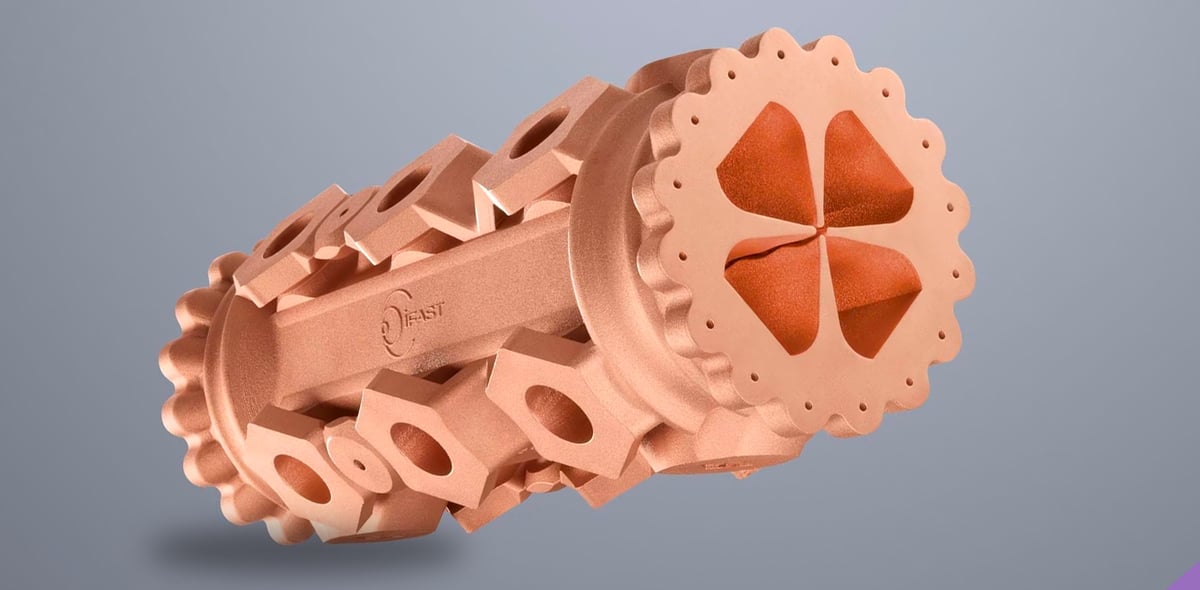
- Heat sinks/Heat exchangers
- Aerospace propulsion components (combustion chamber liners, rocket nozzle liners, cooling jackets)
- Induction coils
- Electric power components (busbars, hair-pin stators, single coils)
- Antennas
- RF shielding
- Radio frequency quadrupoles / wave guides
What's New in 3D Printed Copper
Five years ago, copper 3D printing was primarily used in niche aerospace and defense programs. Today, it has expanded into industries that depend on efficient thermal and electrical management, including power generation, automotive electrification, and semiconductor manufacturing.
Trumpf, Bright Laser Technologies (BLT), and Meltio have continued to broaden their copper-compatible systems. Meltio’s wire-laser DED technology, for instance, is now being adopted in energy and power transmission applications, while Trumpf’s green laser integration has made pure copper LPBF more accessible.
A major factor behind copper’s additive manufacturing breakthrough has been the introduction of green laser systems. In particular, BLT introduced a 532 nm green laser platform that raises copper’s absorption rate from approximately 5% to 40%. This leap in efficiency has translated directly to higher process stability, improved part density, and fewer defects, the company says.
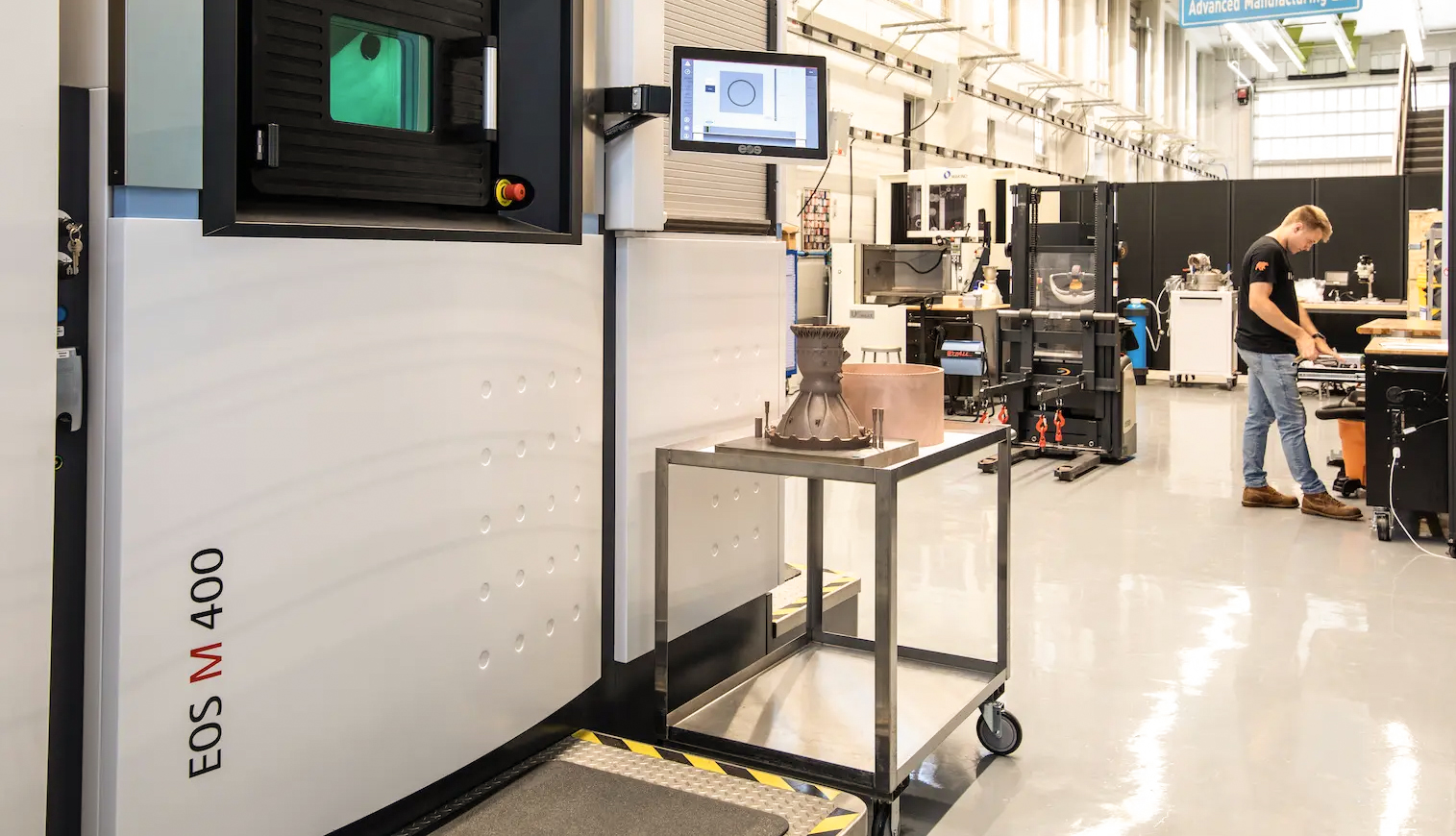
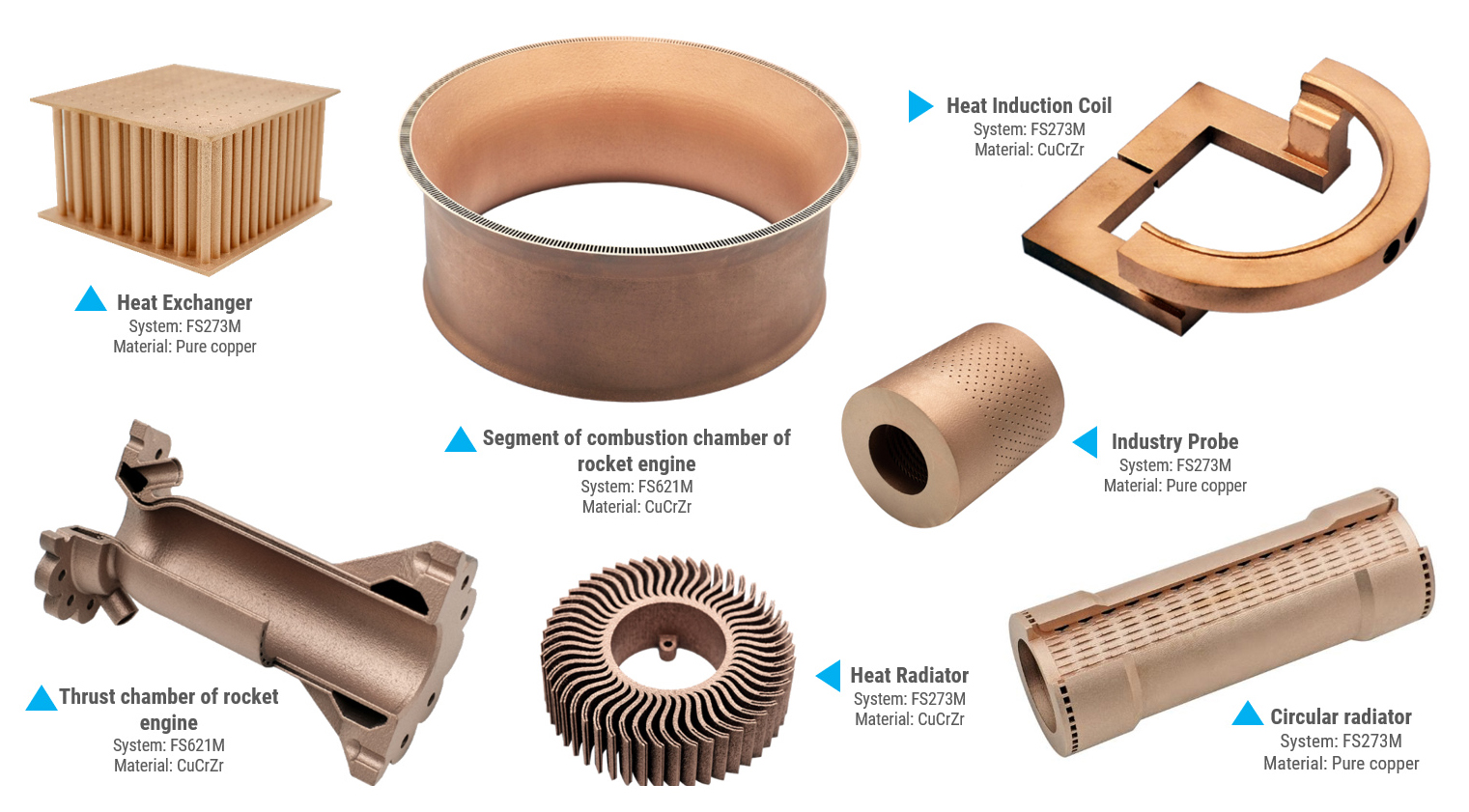
Meanwhile, large-format systems are addressing the other major barrier to copper printing: scale. Farsoon Technologies’s new Farsoon FS621M-Cu, equipped with four 1000 W ytterbium fiber lasers, has demonstrated reliable production of large aerospace-grade copper components. These innovations have widened the range of viable applications and lowered the technical threshold for industrial users.
Advances in powder production are also making a significant impact. High-absorptivity nanotextured copper powders have increased laser energy coupling and reduced spatter, one of the persistent challenges in printing reflective metals. These powders, now commercially available for laser powder bed fusion systems, are improving both build rates and final part quality.
Combined with green laser systems, these materials are helping unlock a new level of design flexibility for applications in aerospace, energy, and e-mobility.
Read on to learn more about the technology and 3D printers that enable engineers, manufacturers, and designers to reimagine what’s possible with copper.
3D Printers That Print With Copper
Not every metal 3D printer can print with copper, but there is still quite a variety in printing technology and price.
Today, affordable desktop FDM printers using copper-filled plastic filament can produce copper jewelry, decorative items, and other parts that are nearly 100% copper. For more advanced manufacturing, 3D printers that use copper powder, rods, or copper and polymer slurry produce industrial parts with excellent mechanical and conductive properties that can meet international standards, such as IACS (International Annealed Copper Standard).
Let’s look at the types of printers today that can handle copper.
Copper Powder Bed Fusion 3D Printers
Powder bed fusion remains the most widely used metal 3D printing method, and copper is now firmly established as a supported material. Early obstacles related to copper’s high reflectivity are being overcome through new laser and powder innovations.
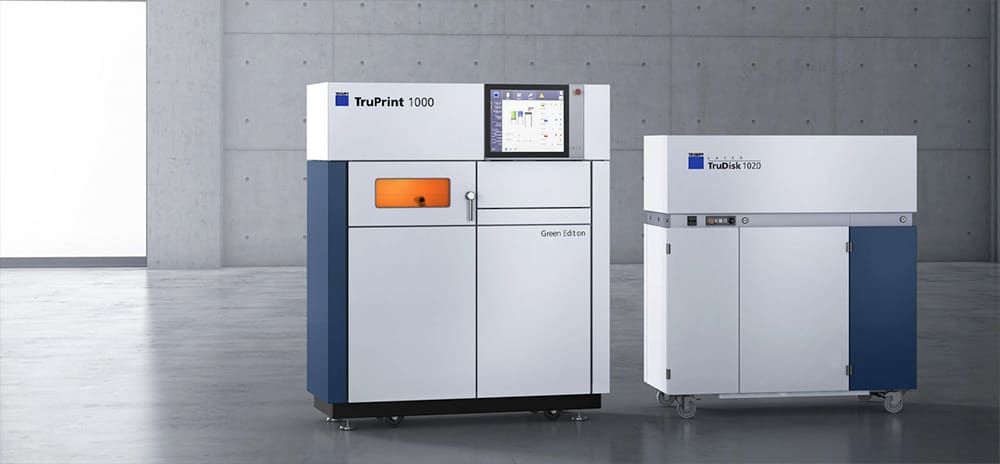
3D printer makers Trumpf and BLT, for example, developed an industrial green laser that makes it possible to 3D print materials, such as copper, copper alloys, and precious metals, that are difficult to process with infrared wavelengths. Blue laser technologies are also showing promise for copper processing.
Two metal 3D printing powder bed technologies, laser powder bed fusion (LPBF) and EBM (electron beam melting), work by spreading a thin layer of copper powder on top of a platform inside the printer. The powder is heated while lasers or electron beams trace the first layer of the part. As the particles in the layer are fused, the platform lowers slightly into the build chamber with fresh powder deposited on top, and the process repeats. Some of the copper powder left over from the process can be recycled for use in the next print.
Researchers are also developing high-absorptivity nanotextured copper powders to improve energy coupling during printing, enabling more reliable builds. Green and blue laser technologies have moved from niche to mainstream, with Trumpf and others driving adoption.
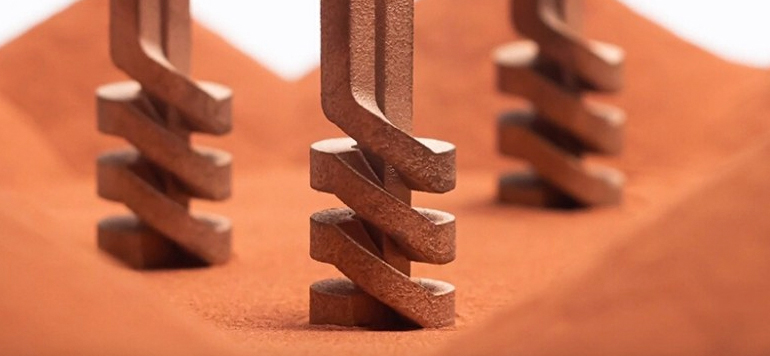
Copper-Enabled Powder Bed Fusion 3D Printers
Copper Binder Jet 3D Printers
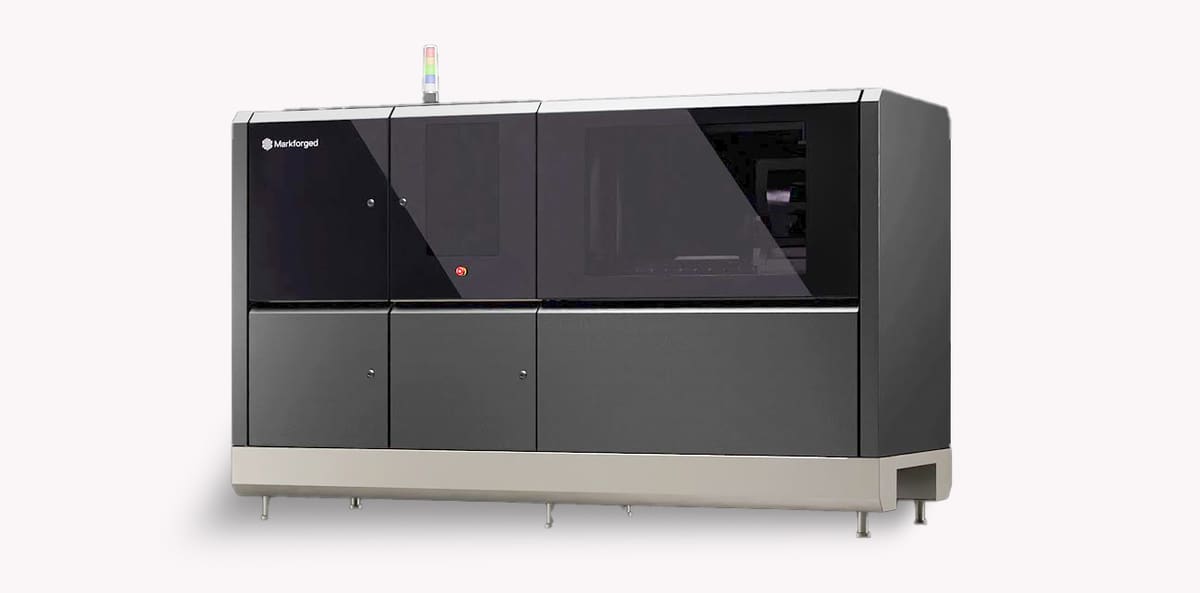
Copper powder bound with a liquid binding agent, then sintered in a furnace, is a 3D printing method known as binder jetting, and it can produce parts without the need for support material, which saves material and labor. Binder jetting is a heat-free process in which a binding layer is sprayed between each layer of metal; the binder is later removed in the sintering process.
Binder jetting is a popular method for the additive manufacture of large volumes of metal parts since it’s generally faster than laser-based methods but it requires the sintering step.
Copper-Enabled Binder Jet 3D Printers
*US-based investment group Arc Impact Acquisition Corporation acquired the bander jet technology assets of Desktop Metal in Sept. 2025. The currently availability of the X-series machines is unknown.
Copper FDM 3D Printers
The most economical approach to 3D print copper parts is with machines that extrude filament. Metal filament for printing metal parts consists of a plastic base with metal particles evenly infused within it. Copper-infused filament for copper parts is a unique type of composite filament that can yield strong, chemical-resistant, and nearly solid metal parts when used properly.
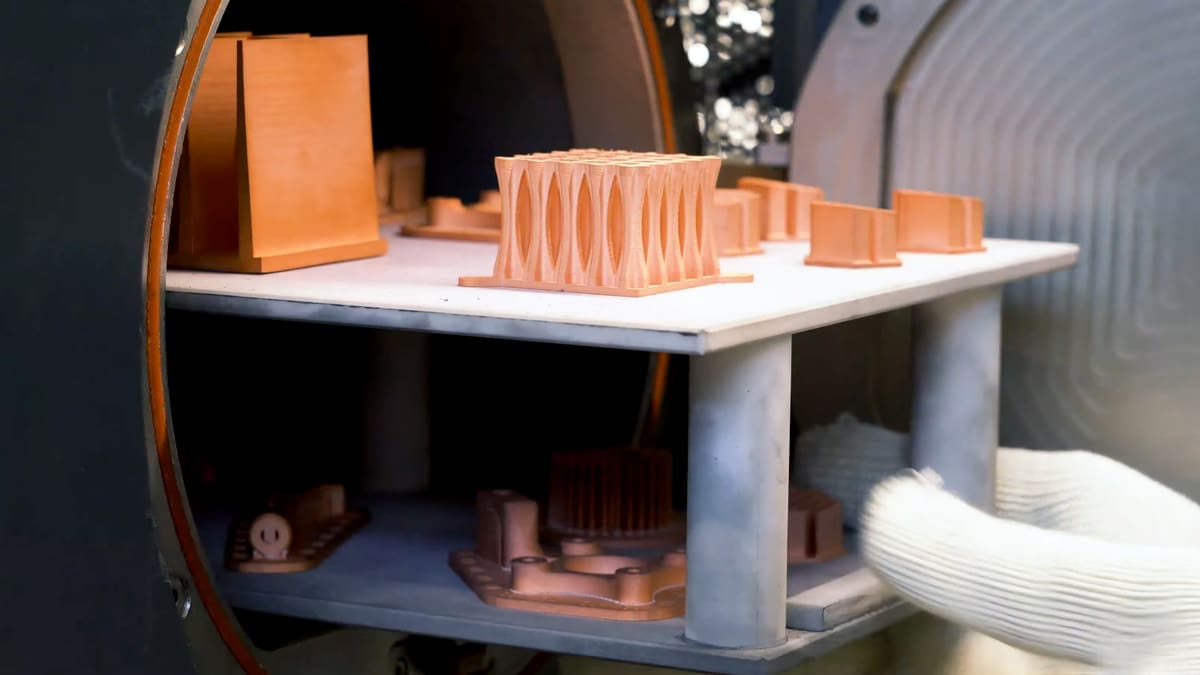
Nearly any fused deposition modeling (FDM) printer with a heated bed and a hardened steel nozzle that can reach the 225 ºC can print nearly solid metal parts with a copper powder-filled polymer filament. The parts, however, aren’t metal right off the print bed and require extra steps after printing to melt away the polymer binder and leave just the metal behind.
Currently, the only filament option on the market is from filament maker The Virtual Foundry. Other types of copper filament have just enough real copper particles inside to be polished and have a metal-like weight, but these are intended for decorative purposes.
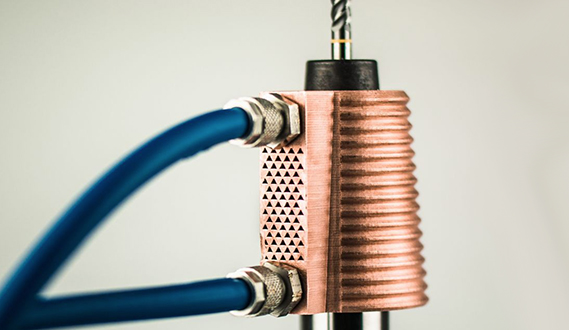
Two other FDM 3D printer makers offer copper. They call their copper filament “bound mental” materials but it functions in the same way. Desktop Metal and Markforged uses a metal powder that is bound in a plastic carrier. Printers from these manufacturers produce solid metal parts intended for industrial uses, such as machine tools, induction coils, heatsinks, and functional prototypes. These parts also require post-print removal of the polymer and sintering in a furnace.
One company from Chile called Copper3D produces a copper filled filament that doesn’t produce metal parts, but instead, ones that feature the antibacterial and antimicrobial properties of copper. According to the company, NASA is even testing the filament for use in “interplanetary microbial contamination.”
Copper-Enabled FDM 3D Printers
Copper Cold Spray and DED 3D Printers
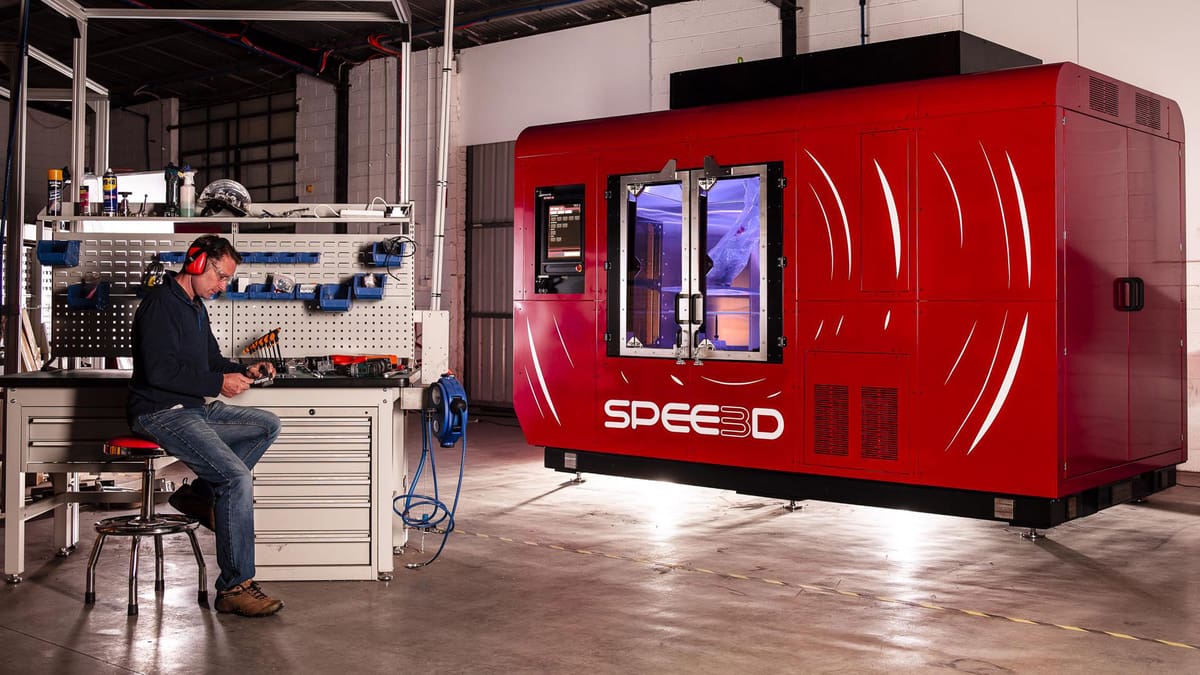
DED and cold spray technologies are increasingly used to produce or repair copper components in aerospace, energy, marine, and industrial settings. DED systems build up material with high-powered lasers and copper powder or wire, while cold spray uses supersonic gas streams to bond copper powder without melting it.
Although these two metal 3D printing methods do not typically group together, we’re combining them here because of their common application to coat metal parts with another metal and build up metal parts with metal powder layer by layer.
Directed energy deposition (DED) is a system developed by New Mexico-based Optomec for creating, enhancing, and repairing metal components. Similar to metal laser powder bed fusion, in DED high-powered lasers build 3D structures layer by layer, producing parts with high density and strength ideal for mechanical applications. In 2019, Optomec developed a new DED process for copper to produce heat exchangers for use in aerospace, chemical processing, and other industrial applications.
Spee3D’s WarpSpee3D is unique in its process, using supersonic 3D deposition to produce parts from a range of metal powder feedstocks, including copper and aluminum.
Cold spray is an additive manufacturing technology that injects metal powder into a supersonic stream of pressurized gas. Rather than melting the metal, cold spray bonds the metal in a process called plastic deformation. Companies like Spee3D use cold spray technology to apply an antimicrobial copper coating to doors, handrails, and touch plates, intended for use in hospitals, schools, and other public places.
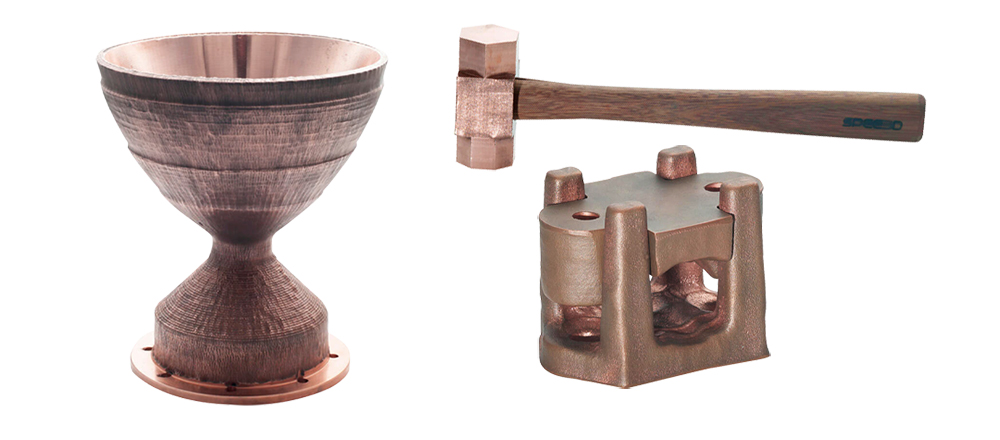
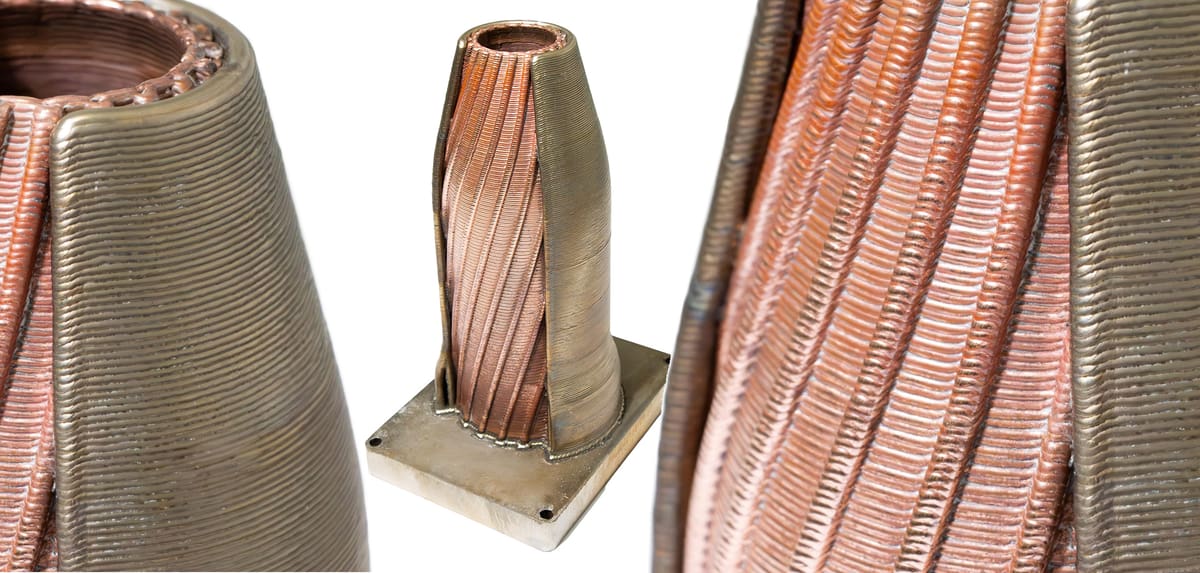
Cold spray is also the fastest metal 3D printing method. Spee3D printed a 17.9 kg aerospace rocket nozzle liner (pictured below) in pure copper on the WarpSpee3D in about three hours at a cost of just $716, the company says. Parts like these are typically machined out of solid wrought copper in a process that takes weeks and costs tens of thousands of dollars. The technology has matured well beyond its early trials — DED copper is now routinely used in heat exchangers, tooling, and power systems, though both methods remain limited in printing very fine geometries.
One disadvantage of DED and cold spray is that they are limited in the production of complex geometries.
Copper-Enabled Cold Spray and DED 3D Printers
Photopolymerization
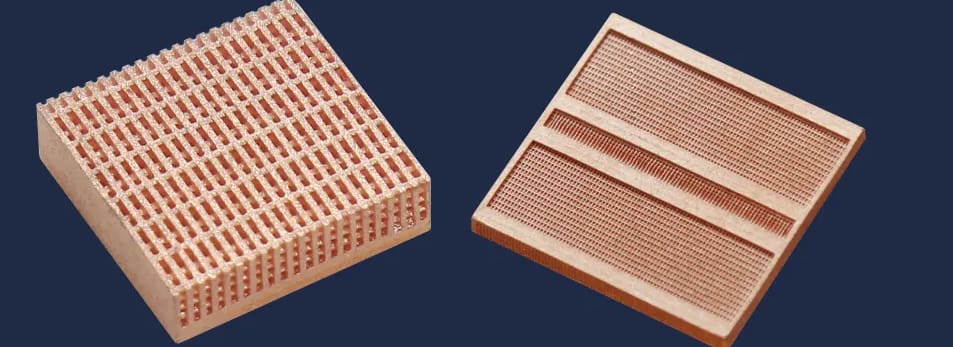
While not traditionally associated with metals, resin-based processes are becoming more common for high-resolution copper components.
HoloAM, now a Greene Group Industries company, continues to scale its proprietary copper photopolymerization technology for precision heat sinks and RF components. Meanwhile, Incus GmbH offers its lithography-based Hammer Lab35 system for copper printing in industrial and research settings. More players are exploring hybrid resin-slurry techniques for next-generation electronics.
3D printed with liquid resin is associated with fine detail and not usually thought of as a metal 3D printing process, but it is.
Metal resin 3D printing is similar to polymer resin 3D printing in that it uses UV light projected onto a vat of photosensitive liquid to solidify it layer by layer. Instead of a 100% polymer resin, metal resin 3D printers use a liquid polymer slurry with metal powder suspended in it and a small amount of binder. Once the parts are printed, they have more steps to go through before final metal parts.
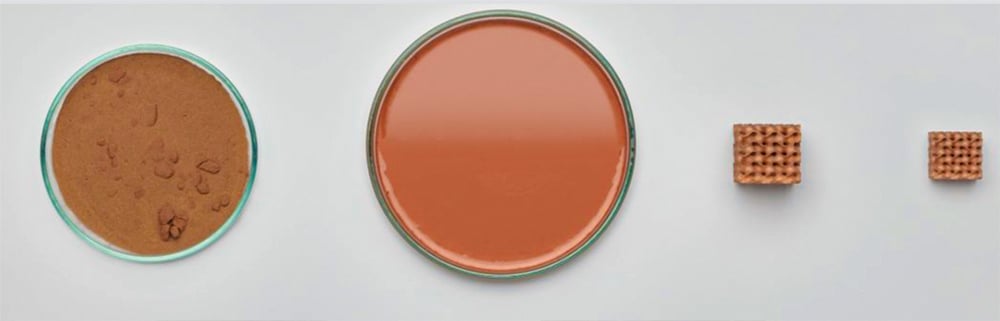
California-based start-up Holo recently completed a facility where it plans to 3D print pure copper parts on its proprietary 3D printers, which are not for sale. Holo will focus on providing 3D printed copper cooling solutions for high-performance computers, electric vehicles, RF antennae, and heat exchangers.
Austria-based Incus offers copper on its lithography-based metal additive manufacturing printer called the Incus Hammer Lab35.
Copper-Enabled Photopolymerization 3D Printers
Order Copper 3D Printed Parts
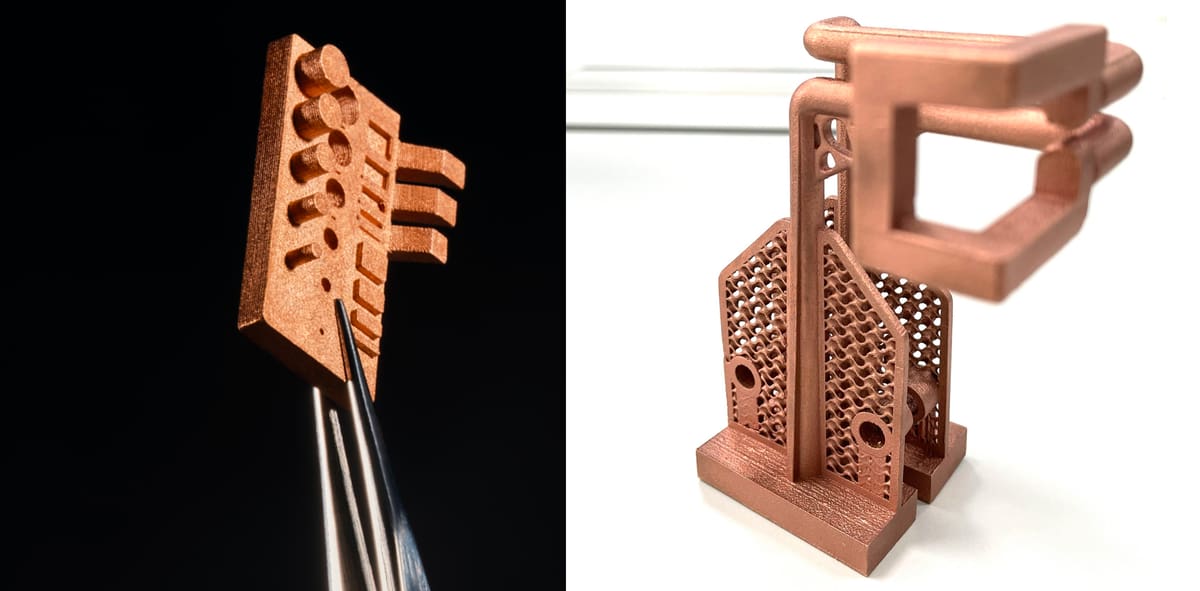
For some, buying a 3D metal printer for a copper part will be a larger investment than the job requires. In those situations, you can order 3D printed copper parts from Craftcoud, the 3D printing service marketplace. There, you can upload your part file and instantly compare metal 3D printing prices from a range of manufacturers. By comparing printing services based on cost and turnaround time, the Craftcloud platform saves you time and money.
If you’re looking for a specific copper process or material, check out our guide to the world’s top metal 3D printing service bureaus at the like below.
Sourcing Copper Materials for 3D Printing

Raw copper or copper alloy material will be a large part of your 3D printing cost, so it’s good to know what your options are. In some cases, your 3D printer is only approved for processing proprietary metal powder that you’ll get from your printer supplier. This may not mean that other powders won’t work, but that they haven’t been tested to be successful on the machine you’re using and you’d be taking an expensive and potentially time-consuming risk experimenting to get the print setting just right.
If your printer is a full-on open system, you have your choice of metal materials, which still requires some trial and error, but keep in mind that copper powder for additive manufacturing is specifically processed to form rounder particles than powder used in other metal manufacturing. Other factors, such as low interstitial content and the right flowability, are also important.
Because of the difficulty of tuning your printer to a specific metal powder, it’s more common for users to stick with “approved” powders from your manufacturer to avoid the upfront work.
Typically, the same copper powders used in laser powder bed fusion machines can apply to other powder-based 3D printing processes, such as DED, binder jetting, and cold spray.
All of the copper powder vendors listed below have products developed specifically for 3D printing.
You May Also Like:


Main photo source:
Copper parts in lead image: (top row) electric motor coil from Additive Drives, combustion chamber from EOS, component for a new generation of compact particle accelerators from Fraunhofer, coil from ExOne, (bottom row) heatsink made by Stratasys Direct Manufacturing, coil by Trumpf, weld shank by Markforged, heat exchanger by EOS.

License: The text of "The Complete Guide to Copper 3D Printing" by All3DP Pro is licensed under a Creative Commons Attribution 4.0 International License.